Wangchuk Denies Deal With Centre, Says He Ended Fast Fearing a Ladakh-Style Crackdown
Sonam Wangchuk denies deal with Centre claims, saying he ended his 26-day fast fearing a Ladakh-style crackdown and only after a written assurance shielding protesters from legal action.
Commentary & Analysis ·
Key facts
- Sonam Wangchuk posted a roughly 22-minute YouTube video late on Friday, 24 July 2026, rejecting allegations of a deal with the government
- He said he ended his 26-day fast fearing a crackdown in Delhi, recalling the 24 September 2025 police and CRPF firing in Leh that killed four
- The fast ended only after Union ministers J P Nadda and Jitendra Singh delivered a written assurance of no legal action against peaceful protesters
- Wangchuk said he deliberately did not raise Dharmendra Pradhan's resignation in negotiations, confident it would come anyway
- Pradhan resigned as education minister on 25 July 2026, a day after the video was posted
A Midnight Video That Reframes the Endgame
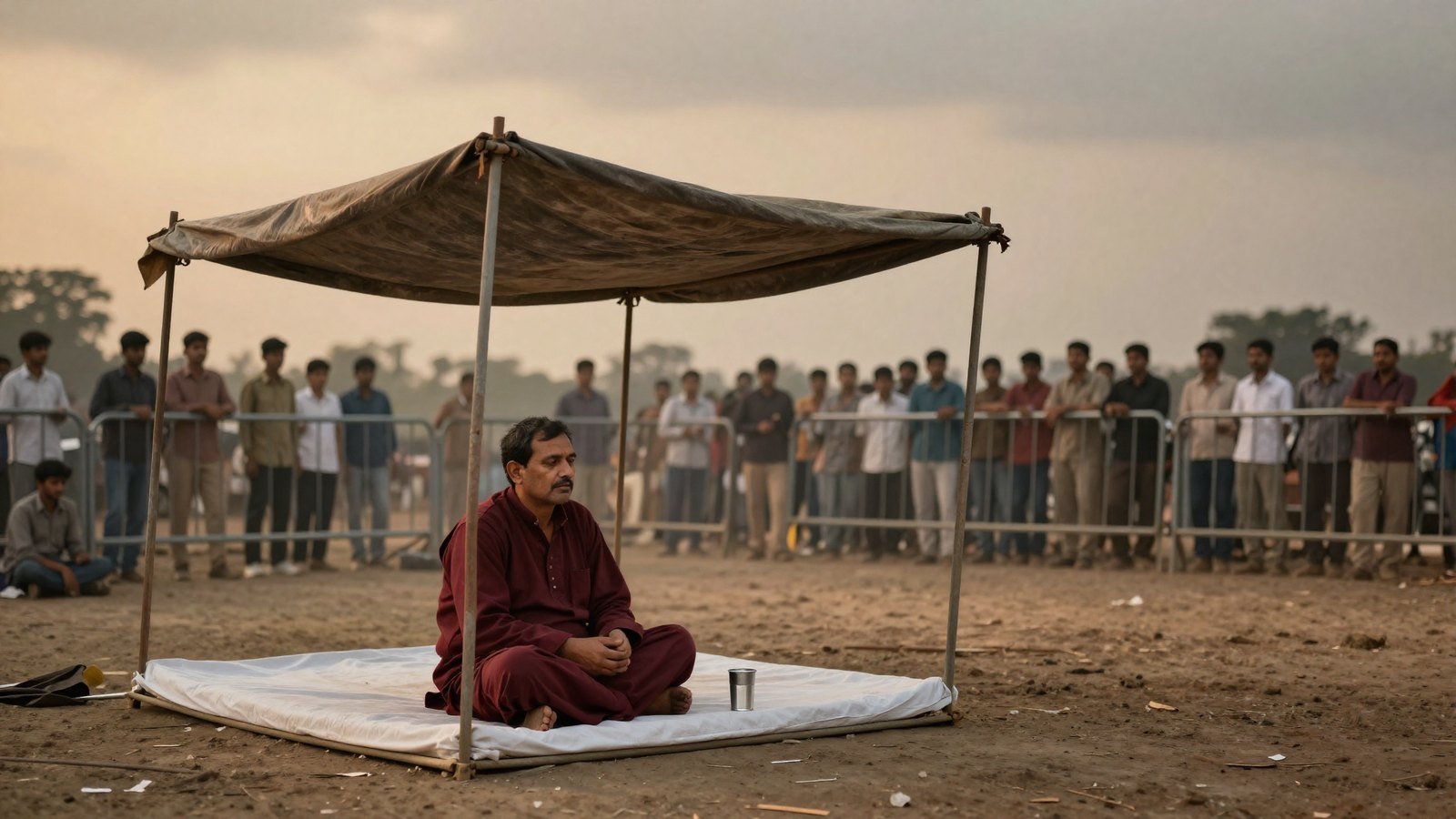
Sonam Wangchuk rarely leaves an argument unanswered for long. Late on Friday night, 24 July, the activist posted a roughly 22-minute video on YouTube that amounts to the most detailed personal account yet of how his 26-day hunger strike over the NEET-UG paper leak came to an end. The core of the message was a rebuttal: there was, he insisted, no deal with the Centre. The video also carried a short clip of his confrontation with security staff while leaving Delhi's Safdarjung Hospital on 21 July, a harassment allegation the hospital disputes, but that was a sideshow. What Wangchuk set out to address was the whisper that follows every negotiated end to an Indian protest movement: that the man who fasted had, in the end, folded. Within a day, events would lend his version considerable weight.
'Do I Still Need to Prove My Sincerity?'
The allegations gathered force because of the optics of the fast's end. Union ministers J P Nadda and Jitendra Singh were present when Wangchuk broke his fast, and images of that moment circulated widely. For critics, ministers at the bedside signalled a bargain. His response, reported by The Week, was blunt: "After 26 days of hunger, do I still need to prove my sincerity?" In the video he pushed back harder, asking, as reported, whether a man intent on bargaining would starve for 26 days on a Delhi roadside when he could have struck a deal in an air-conditioned room. The counter-question is rhetorically effective, but it also shows how corrosive the charge is for a movement built on one man's moral authority. If the figurehead is suspect, the assurances he secured become suspect too.
The Shadow of 24 September 2025
His actual explanation is darker than any deal. Wangchuk said he ended the fast because he feared an imminent crackdown on protesters in Delhi. "Last night around midnight, I was told the ministers had agreed to give the assurance in writing. I was in a hurry because the situation in Delhi was such; there was apprehension that a major crackdown could happen," he said in the video, according to reports in ThePrint and Business Standard. He said he was reminded of 24 September 2025, when police and CRPF personnel opened fire on young protesters in Leh during the statehood agitation, leaving four dead. That memory is not abstract for Wangchuk. He was blamed for the violence and detained under the National Security Act in its aftermath, a detention his wife challenged in court. For a man who has watched a peaceful movement end in gunfire once, the calculus in Delhi was straightforward: secure protection for the students first, and argue about everything else later.
What He Secured, and What He Deliberately Left Out
By his account, the fast ended only after a written assurance that no legal action would be taken against peaceful protesters, delivered by Nadda and Jitendra Singh, alongside commitments reported to include an evaluation of compensation for families of students who died by suicide after the paper leak and a parliamentary debate on examination accountability. The more revealing disclosure concerned what he did not ask for. Wangchuk said he deliberately kept Dharmendra Pradhan's resignation off the negotiating table. His reasoning, as he explained it, was that the safety of protesting students was immediate and non-negotiable, while the education minister's exit was a political inevitability that needed no bargaining. Demanding it in writing would have hardened the government's position and delayed the protections he wanted. On its face this was a risky judgement; resignations promised by street momentum have a way of not materialising.
Vindicated Within a Day
This one did. On Saturday, 25 July, Pradhan resigned from the Union council of ministers, handing his letter to Prime Minister Narendra Modi and saying he was stepping down in the larger interest of students, so that the young are not, in his words, trapped in a web of confusion. The sequencing matters for Wangchuk's credibility. Had the resignation been part of a quiet bargain, his silence on it in negotiations cost the government nothing; had he traded it away, it arrived anyway within a day of his video. The likelier reading is that Pradhan's exit was a political decision forced by nationwide anger, opposition pressure and resignation demands that had echoed for weeks, rather than a concession granted at anyone's bedside. Wangchuk's wager was that this pressure would do the work without his signature on it. He read the moment correctly, and vindication came faster than even he appears to have expected.
The Negotiator's Dilemma in Indian Protest Politics
The episode illuminates a structural problem for protest movements in India. Leaders who refuse to negotiate risk repression; leaders who negotiate are branded sell-outs, often by their own supporters. Wangchuk has now lived both ends of that dilemma. In Ladakh in 2025, stalled talks ended in firing, deaths and his own detention. In Delhi in 2026, a negotiated de-escalation earned him allegations of betrayal within hours. His answer, prioritising legal immunity for the movement's foot soldiers over trophy demands, insisting on assurances in writing and then explaining the reasoning publicly on video, amounts to a template other movements will study. It is also a reminder of the limits of the method: a written assurance has no statutory force, and its value will be tested the first time a NEET protester faces an FIR.
What to Watch Next
Several threads now run ahead of the video, and each will test whether Friday night's account settles the argument or merely pauses it.
The deal allegations may well fade now that Pradhan has gone, since the supposed price of the bargain was paid in full a day later. For now, the record shows a negotiator who asked for less than he could have and received more than he asked for. Of the available explanations for that outcome, a deal is the least persuasive.
- Whether the written assurance holds in practice: any FIR or detention involving NEET protesters in the coming weeks would reopen the breach instantly.
- The succession at the education ministry, and whether the promised parliamentary debate on examination accountability actually takes place.
- The compensation evaluation for families of students who died after the leak, which reports said the ministers agreed to take up.
- Wangchuk's own next move, including whether he returns to Ladakh's statehood campaign, where the underlying demands remain unresolved.
Sources
- ThePrint - Wangchuk says he ended fast fearing 'Ladakh-like' crackdown, denies deal with Centre (25 July 2026)
- Business Standard - Ended fast fearing crackdown like Ladakh: Wangchuk denies deal with Centre (25 July 2026)
- The Week - 'Do I still need to prove my sincerity?': Wangchuk rejects 'deal with government' claims (25 July 2026)
- The Week - Dharmendra Pradhan resigns as education minister, hands letter to PM Modi (25 July 2026)
- Kashmir Reader - Wangchuk rejects 'deal' with Centre charge (25 July 2026)
This article is original news analysis and commentary by The NE Times, based on reporting from the sources listed above.
You may also like to read
After 26 Days Without Food, Sonam Wangchuk's Slow Road Back Begins
A day after ending his 26-day Jantar Mantar fast, Sonam Wangchuk faces a carefully supervised recovery. What refeeding involves, and what he signalled about the NEET movement's next phase.
As the NEET-Leak Movement Moves South, It Meets a Region That Never Made Peace With the Exam
The CJP student movement over the NEET-UG 2026 paper leak is reaching Chennai, Bengaluru and Hyderabad, colliding with south India's older grievance against NEET.
Midnight at Jantar Mantar: How Protesters Reacted When Wangchuk Broke His Fast
The reaction at the protest site showed a movement experiencing relief, uncertainty and determination at the same time

Can the Government Force-Feed a Hunger Striker in India? The Sonam Wangchuk Case Tests Rights and Duties
A legal and medical explainer on whether Indian authorities can force-feed a competent hunger striker and how Article 21, consent and emergency duties interact
More from this section
More
Who Is Sonam Wangchuk? From SECMOL and Ice Stupas to a National Hunger Strike
A factual profile of Sonam Wangchuk’s work with SECMOL, alternative education and Ice Stupas, with a clear explanation of the disputed 3 Idiots connection
Is Sonam Wangchuk’s Hunger Strike About NEET or Ladakh? Clearing Up the Search Confusion
Conflicting search results describe the current fast as a NEET protest, a Ladakh protest or both. Here is how to separate the immediate campaign from Wangchuk’s wider activism
Why Jantar Mantar Matters: The Protest Space at the Centre of Sonam Wangchuk’s Hunger Strike
Jantar Mantar has become the physical centre of the CJP campaign, linking India’s tradition of public protest with modern digital mobilisation and court supervision