After 26 Days Without Food, Sonam Wangchuk's Slow Road Back Begins
A day after ending his 26-day Jantar Mantar fast, Sonam Wangchuk faces a carefully supervised recovery. What refeeding involves, and what he signalled about the NEET movement's next phase.
Commentary & Analysis ·
Key facts
- Wangchuk ended his indefinite hunger strike shortly after midnight on 24 July, at roughly 26 days, following talks with Union ministers and written government assurances.
- The Delhi High Court had earlier ordered daily medical monitoring while the fast continued.
- Doctors managing recovery after prolonged fasting typically guard against refeeding syndrome, reintroducing calories slowly and tracking phosphate, potassium and magnesium.
- The youth-led Cockroach Janta Party protest over the NEET-UG 2026 paper leak continued at Jantar Mantar after the fast was broken.
A Fast Ends, But the Medical Watch Does Not
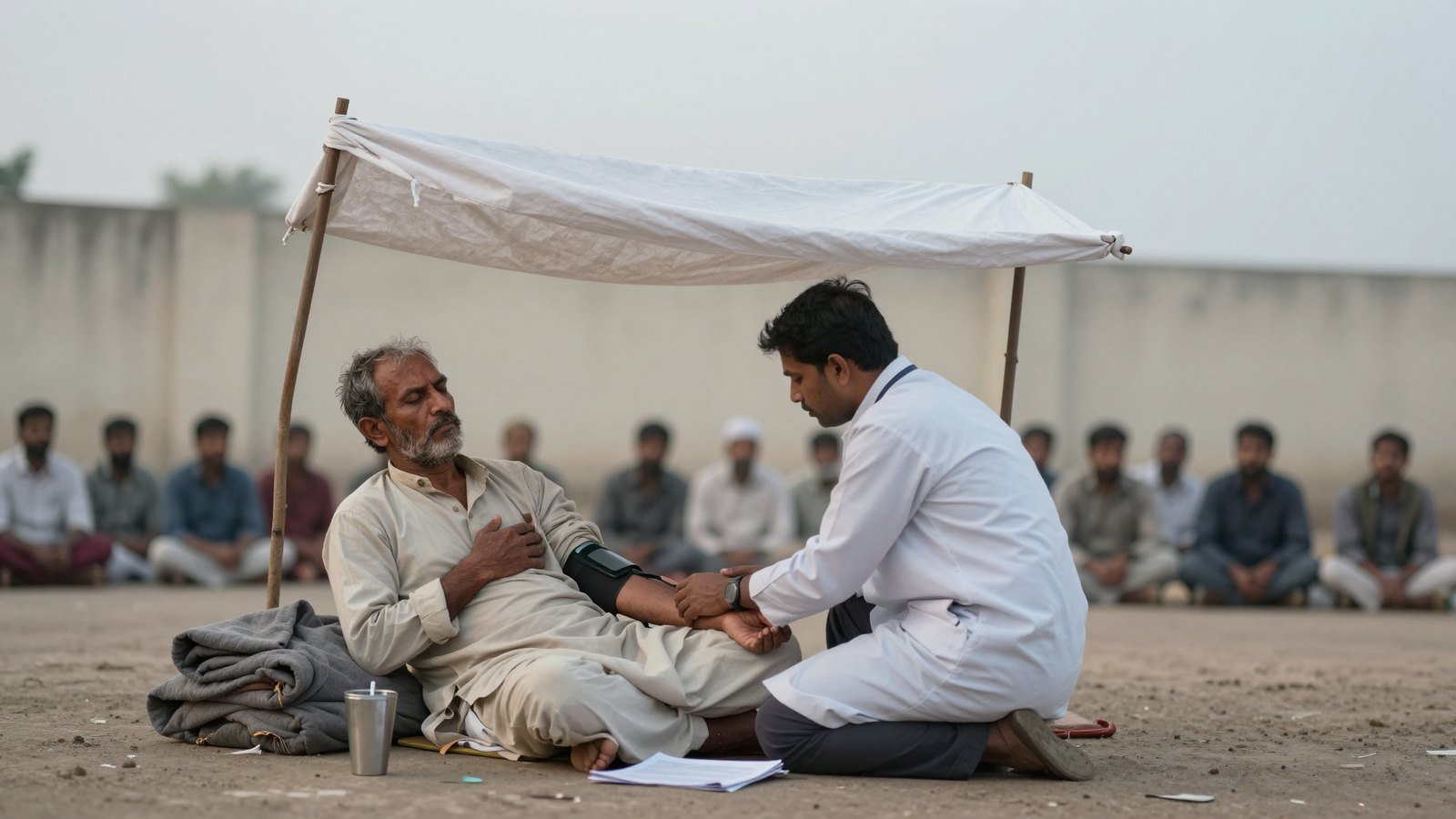
Sonam Wangchuk broke his fast in the small hours of 24 July, and by the standards of the drama that preceded it, the moment was almost quiet: a few sips, a monitored pulse, the slow unclenching of a movement that had held its breath for the better part of a month. But the ending of a 26-day hunger strike is not a finish line. In clinical terms, it is the start of the most delicate phase, and the day after has been less about celebration than about careful, minute observation.
The Delhi High Court's earlier order for daily medical monitoring was framed as a safeguard while the fast continued. That same logic now applies in reverse. The body of a person who has gone weeks with little or no food does not simply switch back on when food returns; it has to be coaxed, and the coaxing carries its own risks. For a public that has followed Wangchuk's ordeal at Jantar Mantar as a test of endurance and conscience, the coming days are a reminder that the hardest medicine often comes after the ordeal appears to be over.
What Weeks Without Food Do to a Body
Prolonged fasting forces the body into a survival economy. Once the ready stores of glucose are exhausted, it turns to fat and, eventually, to muscle, breaking down its own tissue for fuel. Heart rate and blood pressure tend to fall as the body conserves energy, and the kidneys work harder to clear the by-products of that internal breakdown. Dizziness, weakness and a dangerously slow or irregular heartbeat are among the well-documented hazards of extended hunger strikes.
Crucially, the blood's balance of minerals, the electrolytes such as potassium, phosphate and magnesium that keep the heart and muscles firing, drifts during starvation. Levels may look deceptively stable in the blood even as the body's total reserves are depleted, because the system is drawing down what it has. It is against this depleted backdrop that food, when it returns, becomes paradoxically dangerous.
Refeeding Syndrome: Why Doctors Go Slow
The specific danger clinicians guard against is refeeding syndrome, a potentially life-threatening reaction to the sudden reintroduction of nutrition after prolonged starvation. When food, and especially carbohydrate, arrives, insulin levels surge. That surge drives potassium, phosphate and magnesium out of the bloodstream and into the body's cells, causing blood levels of those minerals to crash. The consequences can include cardiac arrhythmias, fluid overload and, in severe cases, organ failure. It is precisely because the danger arrives with the food that a large meal after weeks of fasting is treated by physicians as a medical emergency waiting to happen, not a reward.
The standard response, drawn from established nutritional-medicine guidance, is deliberate slowness. Clinicians typically begin with a conservative number of calories, often well below a normal daily intake, and increase them gradually over days. Thiamine (vitamin B1) is commonly given before or alongside the first calories, because the body's stores of it are easily overwhelmed. Electrolytes are replenished cautiously and, in the highest-risk cases, nutrition may be delivered intravenously under close supervision rather than by mouth.
The Markers Being Watched Now
In a supervised recovery of this kind, the monitoring is granular and relentless. Standard practice is to check blood electrolytes daily through the first week, when the risk of refeeding syndrome is highest, before easing to every other day as the danger recedes. The numbers doctors watch most closely are the falling ones: a drop in phosphate is often the earliest red flag, with potassium and magnesium tracked alongside it.
Beyond the blood work, a recovering faster is typically watched for the visible signs of strain, the following among them:
For Wangchuk, now in his late fifties, age adds a layer of caution. Recovery is expected to be measured in weeks rather than days, and a return to public life is likely to be paced by his medical team rather than by the momentum of the movement he has come to symbolise.
- Heart rhythm and blood pressure, since arrhythmias are the gravest early risk of refeeding.
- Fluid balance and swelling, as the body can retain salt and water once feeding resumes.
- Mental alertness and strength, which reflect how well the brain and muscles are being re-supplied.
His First Words After Breaking the Fast
Wangchuk's first substantive statement after ending the fast is being reported less as a victory lap than as a handover. He is understood to have framed the written government assurances, that no cases would be pressed against peaceful protesters, that exam-reform steps would follow, and that fast-track courts would handle paper-leak prosecutions, as a beginning rather than a settlement. The tenor, by all accounts, was that a promise on paper is only as good as its delivery, and that the movement's task now is to hold the government to its word.
He is also expected to have turned attention back to the young people whose agitation his fast amplified. The Cockroach Janta Party, the youth-led formation that grew out of fury over the NEET-UG 2026 paper leak, did not fold when the fast ended; its sit-in at Jantar Mantar continued. Wangchuk's messaging, as reported, has been to caution that the next phase belongs to institutions and scrutiny, to watching whether reform bills are tabled and whether the promised courts are actually constituted, rather than to any single dramatic gesture.
From Spectacle to Follow-Through
There is a familiar arc to protests built around a fast. The hunger strike concentrates attention with brutal efficiency, converting an abstract grievance into a countable, visible human cost. But the same power that makes it effective also makes it fragile: once the faster stands down, the story's natural energy dissipates, and the harder, less photogenic work of implementation begins. The written assurances secured at Jantar Mantar will mean little if they are not converted into tabled legislation, staffed courts and demonstrable action against those who leaked an exam that millions of students staked their futures on.
The CJP's decision to keep sitting after the fast ended suggests its organisers understand this trap. The question for the movement is whether a leaderful youth agitation can sustain pressure through the slow grind of committees and court dates, the terrain on which reform promises usually live or die, without the galvanising image of a single body on the line.
The NE Times View
The NE Times reads the day after less as a resolution than as a test that has merely changed shape. Wangchuk's recovery and the movement's recovery are, in a sense, parallel: both require patience, both are vulnerable in the immediate aftermath of apparent victory, and both will be judged not by the intensity of the crisis but by the steadiness of what follows. The refeeding of a starved body is a useful metaphor for the refeeding of a stalled reform agenda, done too fast and carelessly, it does harm; done slowly and with honest monitoring, it restores.
For now, the responsible posture is neither triumphalism nor cynicism. The assurances are real and were hard-won; they are also, as yet, unfulfilled. The measure of this chapter will not be the courage it took to go 26 days without food, striking as that was, but whether the state keeps promises made to end it, and whether a young movement can hold the line long enough to find out. On both counts, the honest answer today is that it is too early to say, and that the watching, medical and political alike, has only just begun.
Sources
- Delhi High Court — coverage of the daily medical-monitoring order during the hunger strike (July 2026)
- Cleveland Clinic and StatPearls (NCBI) — clinical references on refeeding syndrome, symptoms and management
- Business Standard / ETV Bharat — explainer reporting on the physiological effects of prolonged hunger strikes (July 2026)
- Reported statements from Sonam Wangchuk and Cockroach Janta Party organisers after the fast was broken (24 July 2026)
This article is original news analysis and commentary by The NE Times, based on reporting from the sources listed above.
You may also like to read
After the Fast Ends: The Cockroach Janta Party's Hardest Test Begins Now
With Sonam Wangchuk's fast over and written assurances secured, the leaderless Cockroach Janta Party must now decide whether to stand down, stay a watchdog, or fracture.
Sonam Wangchuk Ends 26-Day Hunger Strike: The Agreement, the Timing and What Changed
Sonam Wangchuk ended his 26-day fast at a Gurugram hospital after negotiations and assurances from the Union government, but the student movement did

Sonam Wangchuk Recovery After 26 Days of Fasting: Refeeding, Monitoring and the Road Ahead
Breaking a prolonged fast begins a medically sensitive recovery phase in which gradual nutrition and clinical monitoring can matter as much as the
Is Sonam Wangchuk’s Hunger Strike About NEET or Ladakh? Clearing Up the Search Confusion
Conflicting search results describe the current fast as a NEET protest, a Ladakh protest or both. Here is how to separate the immediate campaign from Wangchuk’s wider activism
More from this section
More
Why Jantar Mantar Matters: The Protest Space at the Centre of Sonam Wangchuk’s Hunger Strike
Jantar Mantar has become the physical centre of the CJP campaign, linking India’s tradition of public protest with modern digital mobilisation and court supervision
Cockroach Janta Party Protest Keeps NEET Accountability and Sonam Wangchuk's Hunger Strike in the Spotlight
The CJP says the Centre has remained silent as Sonam Wangchuk's hunger strike enters its 18th day, keeping examination integrity and youth-led political protest in focus.

FIRs After Chalo Sansad: Charges, Due Process and the Government's Later Assurance
The coexistence of registered cases and a later political assurance creates urgent questions about withdrawal, investigation discretion and equal