Cockroach Janta Party Protest Keeps NEET Accountability and Sonam Wangchuk's Hunger Strike in the Spotlight
The CJP says the Centre has remained silent as Sonam Wangchuk's hunger strike enters its 18th day, keeping examination integrity and youth-led political protest in focus.
Commentary & Analysis ·
Verified key facts
- CJP founder Abhijeet Dipke criticised the Centre's response as Sonam Wangchuk's fast entered its 18th day on 15 July.
- The movement has focused on examination irregularities, the NEET controversy and a demand for political accountability.
- The satirical online movement has developed into a street protest supported by students and public figures.
A meme-born movement becomes a sustained protest
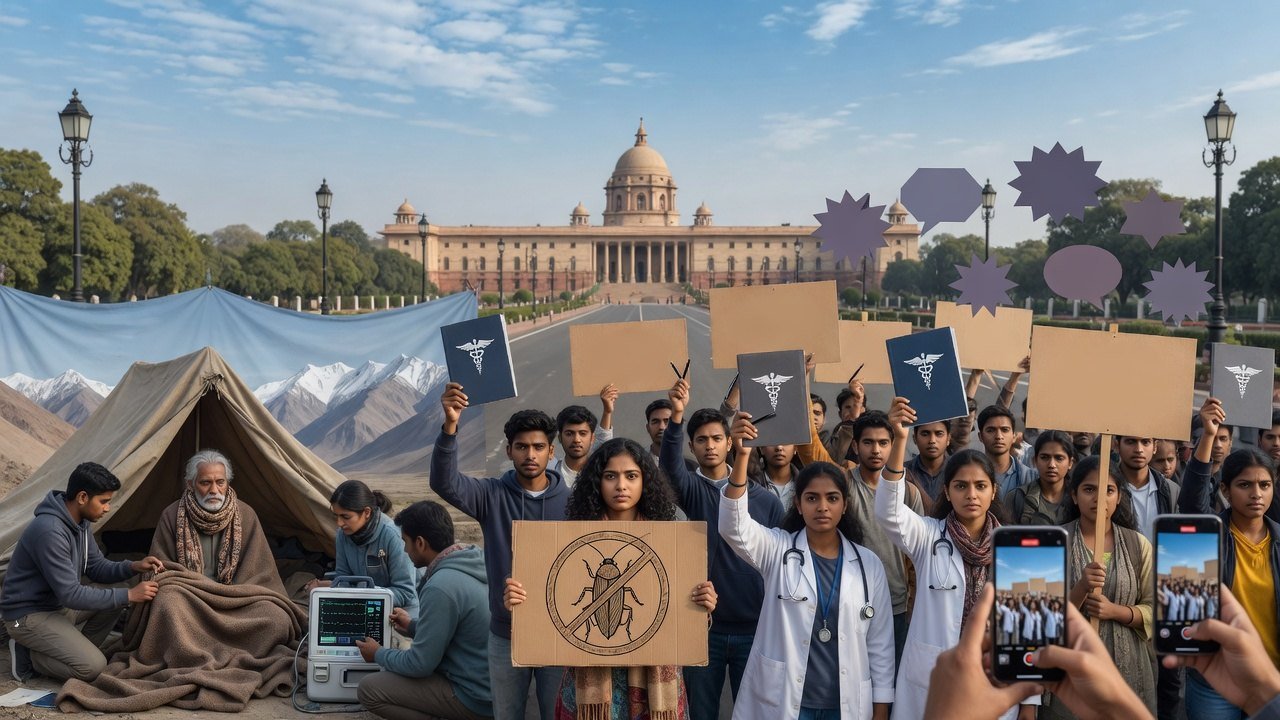
The Cockroach Janta Party, or CJP, is continuing to draw national attention as its leaders connect the NEET examination controversy with Sonam Wangchuk’s prolonged hunger strike and a broader demand for accountability in education. On 15 July, founder Abhijeet Dipke criticised what he described as silence from the Centre as Wangchuk’s fast entered its eighteenth day. The movement’s unusual name and satirical style initially made it appear like a short-lived internet campaign. Its persistence at Jantar Mantar, engagement with public figures and ability to keep exam integrity in the news have made it harder to dismiss. CJP’s evolution illustrates a new form of youth politics in which humour, video culture and deliberately absurd branding can become tools for organising real-world dissent.
Why NEET remains politically explosive
The National Eligibility cum Entrance Test determines access to medical education for a vast number of students. Allegations of paper leaks, irregularities or unfair administration therefore affect years of preparation and significant family expenditure. Even when authorities announce investigations or corrective measures, trust can remain damaged because candidates cannot repeat the lost time and emotional cost. Protesters argue that individual arrests are insufficient if institutional responsibility is not fixed. Their demand for the education minister’s resignation is a political claim, not a legal finding, but it reflects the belief that accountability should reach senior decision-makers when examination systems fail.
Sonam Wangchuk's role in the mobilisation
Wangchuk’s association gives the protest moral visibility beyond coaching centres and student groups. A hunger strike is an extreme method of political communication because it places the protester’s health at the centre of the dispute. Supporters see it as evidence that ordinary petitions have been ignored; critics may question whether fasting pressures institutions outside formal democratic channels. Whatever one’s view, the government has an obligation to monitor health, maintain dialogue and communicate its response. Silence can allow misinformation to spread and can turn a policy dispute into a contest over whether the state is indifferent to physical risk.
The power and danger of satirical politics
CJP uses self-deprecating language, memes and online performance to express a sense that young people are treated as disposable. That style lowers the barrier to political participation and helps complex grievances travel across social platforms. It can also blur factual distinctions. A joke, rumour and verified allegation may appear in the same feed with equal visual authority. For a movement seeking lasting influence, transparent sourcing and internal fact-checking will be essential. Satire can attract attention, but policy change requires specific demands, evidence and negotiation. The movement’s next phase will test whether it can maintain energy without becoming dependent on outrage.
Support from established political figures
Opposition leaders and cultural personalities have visited or endorsed aspects of the agitation, increasing coverage and legitimacy. Such support offers protesters access to Parliament and mainstream media, but it also creates a risk of partisan capture. The CJP’s appeal comes partly from presenting itself as a response to established parties. If it appears to become an auxiliary of one coalition, some young supporters may disengage. The movement can protect its independence by inviting all parties to answer the same public questions: what reforms will prevent leaks, how will exam agencies be audited, what compensation is available to affected candidates and who is accountable when safeguards fail?
What meaningful examination reform would include
A durable response requires more than changing the date of a test. Exam papers and digital systems need end-to-end security, independent audits and clear chain-of-custody records. Agencies should publish incident timelines and explain why particular remedies were selected. Whistleblower channels must protect staff who report vulnerabilities. Candidates need a predictable compensation framework when an examination is cancelled or materially compromised. Courts can review legality, but operational reform must come from administrators, cybersecurity specialists, state police and education experts. The government should also release enough information to rebut false claims without jeopardising active investigations.
Can CJP convert attention into institutional change?
The movement has already succeeded in keeping youth frustration visible. Its harder task is converting visibility into measurable reform. That may require a formal charter, representatives authorised to negotiate and a process for deciding when demands have been met. The health of a fasting activist should not become a spectacle or a countdown. Authorities should open communication, while protest leaders should publish verified updates and avoid escalating rhetoric that cannot be substantiated. The CJP story is trending because it combines internet culture, examination anxiety and distrust of institutions. Its long-term importance will depend on whether it helps produce safer exams and clearer accountability. The country does not need another viral cycle that ends when the hashtags move on; it needs systems that students can trust before they enter the examination hall.
Why this story matters beyond the headline
The protest's unusual name and online style have helped it attract attention, but the movement will be judged by whether it converts visibility into specific, verifiable demands. Students need more than symbolic solidarity: they need transparent exam procedures, predictable grievance mechanisms, protection from paper leaks and timely communication when results are disputed. Linking those concerns with Sonam Wangchuk's hunger strike broadens the campaign, yet it can also make the message harder to sustain unless organisers explain the common thread. Political parties may amplify the demonstrations, but participants will want to preserve credibility by publishing evidence, naming responsible institutions and avoiding misinformation. Authorities, for their part, should distinguish peaceful dissent from disruption and respond to substantive questions rather than the movement's satirical branding. The next stage will show whether the campaign develops an organisational structure, legal strategy and measurable goals. In a crowded news environment, those elements determine whether a youth protest becomes a lasting accountability effort or a brief viral moment.
Sources
- Times of India - CJP criticism as Wangchuk fast enters day 18
- The Indian Express - CJP and NEET protest coverage
- Associated Press - origins of the mock political movement
You may also like to read
Uddhav Thackeray Backs Cockroach Janta Party Protest as Youth Movement Plans 20 July Parliament March
A satirical online formation has grown into a wider campaign over examination accountability, drawing support from established political leaders while testing whether digital anger can sustain organised action.

Re-NEET UG 2026 Result: July Timeline and Counselling Steps
As Re-NEET UG 2026 candidates await the NTA result expected in July, attention turns to official timelines, counselling registration and the document checklist that follows the scores.
Expressway Pothole Row Puts Maharashtra Road Upkeep in Spotlight
Chief Minister Devendra Fadnavis' reported claim that the Pune-Mumbai Expressway has only two potholes has escalated a monsoon maintenance complaint into a statewide debate over highway accountability.
NEET-UG Retest 'Leak' Video Found Fake; NTA Launches Cyber Probe
The Centre and NTA have rejected a viral video claiming the June 21 NEET-UG retest paper was leaked on Telegram, with a cyber probe now under way to trace those behind the misleading content.