After the Fast Ends: The Cockroach Janta Party's Hardest Test Begins Now
With Sonam Wangchuk's fast over and written assurances secured, the leaderless Cockroach Janta Party must now decide whether to stand down, stay a watchdog, or fracture.
Commentary & Analysis ·
Key facts
- Sonam Wangchuk ended his roughly 26-day fast at Jantar Mantar on 24 July 2026 after the government issued written assurances on NEET-UG 2026 paper-leak accountability.
- The Cockroach Janta Party (CJP) began as online satire and grew into a loosely-led, youth-driven street movement associated with founder-figure Abhijeet Dipke.
- Students are reportedly divided over whether to demobilise now that assurances exist, or remain mobilised to verify that promises are kept.
- Global research shows partial concessions often fracture horizontal movements by satisfying some activists while disappointing others.
A Win That Raises Harder Questions
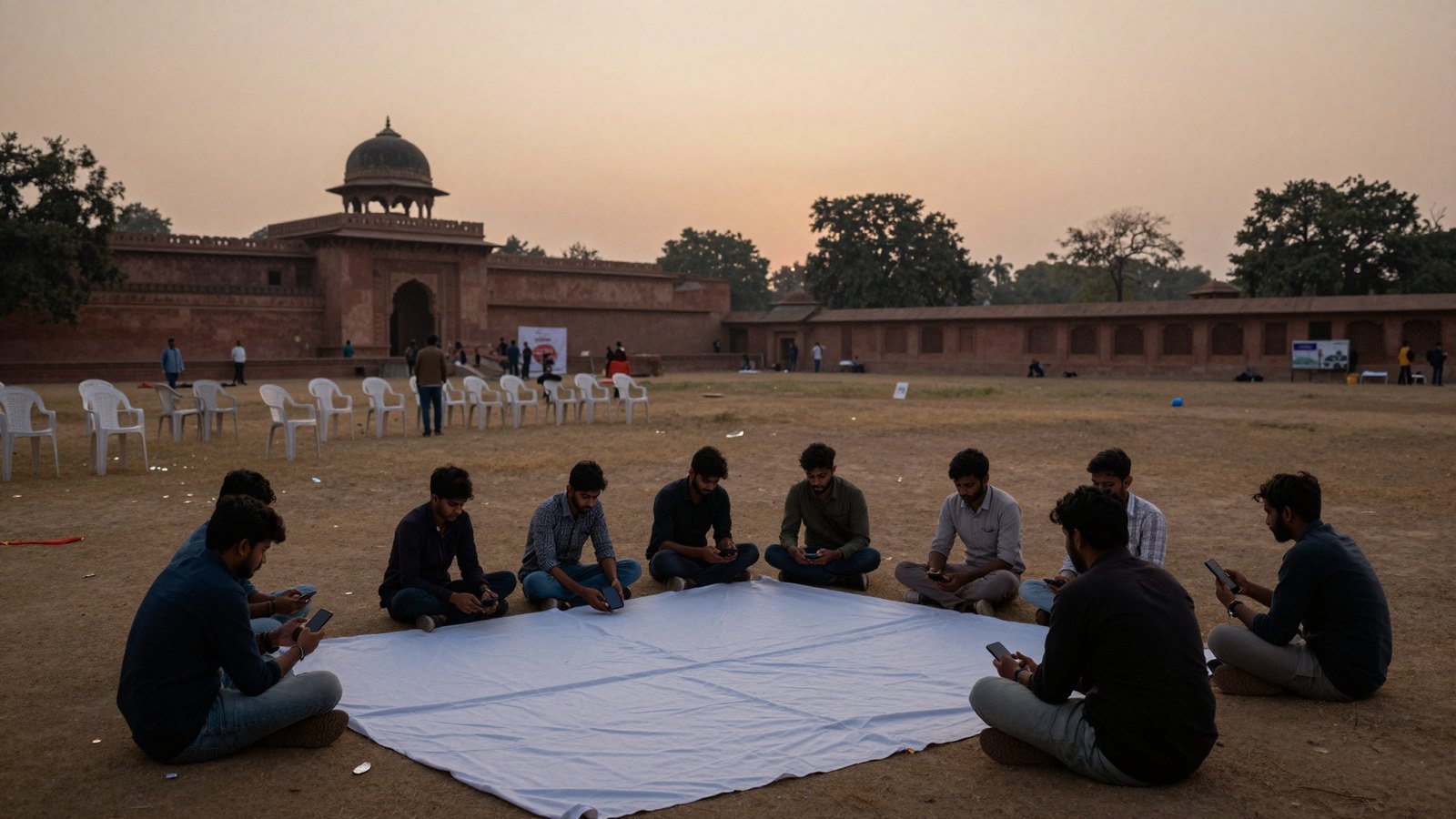
The hunger has ended, but the reckoning has not. When Sonam Wangchuk broke his roughly 26-day fast at Jantar Mantar on 24 July, the crowd that had gathered around the youth-led Cockroach Janta Party (CJP) had reason to claim a victory. The government had put its NEET-UG 2026 paper-leak assurances in writing. Yet the moment a movement wins something, its most difficult phase begins. The energy that fills a protest site is easy to summon and hard to hold. The CJP now faces a choice that has broken more movements than any police cordon ever has: what to do the morning after.
The question is not academic. A written assurance is a promise, not a policy. Between the two lies the long, unglamorous work of verification, and it is precisely in that gap that momentum tends to leak away.
Why the Morning After Is So Dangerous
Social-movement scholarship is unusually blunt on this point. Once protesters believe they have achieved their goal, the rational instinct is to stop investing time and risk, and mobilisation fades quickly. Concessions, researchers note, can act less as a reward than as a wedge, splitting a coalition between those who are satisfied and those who are not. The recent youth revolts in Kenya and Indonesia are instructive: governments withdrew a finance bill or legislator perks while refusing deeper demands, and partial wins fragmented movements that had looked, days earlier, unstoppable.
The CJP is structurally exposed to exactly this dynamic. Horizontal, decentralised and deliberately leaderless movements are fluid and fast, but they struggle to answer a basic question: who decides when the fight is over? Without an agreed answer, the decision gets made by default, one departing student at a time.
Three Roads From Jantar Mantar
Broadly, three futures are open to the movement. It can stand down, treating the written assurances as a settlement and folding the tents. It can stay mobilised in a lower-intensity form, converting street energy into a standing watchdog that tracks whether the government delivers. Or it can fracture, with a demobilising majority peeling away while a harder core, unconvinced by paper promises, pushes toward more confrontational tactics.
None of these is guaranteed, and the CJP is likely to experience all three impulses at once. The most probable near-term reality is not a clean decision but a messy negotiation among factions that never elected anyone to negotiate on their behalf.
The Verification Problem
The deepest challenge is trust, and specifically how a movement built on distrust verifies the word of the institution it distrusts. Many young supporters were drawn to the CJP precisely because they had stopped believing that political promises get realised. Handing that same cohort a written assurance does not automatically close the credibility gap; it can widen it, because now there is a document to be seen honoured or ignored.
This is where the movement's choices matter most. Research on accountability suggests that informal pressure fades, but formal mechanisms endure. Movements that translate demands into court proceedings, RTI filings, parliamentary questions and documented timelines force the state to answer on the record. Answerability, once formalised, is harder to walk back than a promise made to a crowd. A watchdog CJP would look less like a permanent sit-in and more like a distributed audit: tracking whether an investigation is actually staffed, whether re-tests happen, whether named officials face consequences.
The Twin Risks: Co-option and the Splinter
Two failure modes loom. The first is co-option. A leaderless movement has no one authorised to speak for it, which makes it easy for a sympathetic party, NGO or ambitious individual to claim its mantle and steer its energy toward their own ends. The very absence of hierarchy that made the CJP hard to behead also makes it hard to defend from capture.
The second is the radical splinter. If a section of students concludes the assurances are hollow, the frustrated fringe may reject the watchdog patience of the majority in favour of escalation. That path tends to alienate the broad, non-committed public whose sympathy is a movement's real currency, and it hands the state an easy story about disorder. History suggests leaderless uprisings in India have struggled where they let themselves be delegitimised rather than the establishment.
What Sustains a Digital Movement
Digital movements do not usually die of defeat. They die of boredom, of the slow evaporation that follows a peak. What sustains them is not a bigger hashtag but the unfashionable machinery of organisation: a single, legible demand people can rally behind; alliances beyond the campus, with parents, teachers and civil-society networks; and a credible, plural set of voices that can hold a line without becoming a personality cult.
The CJP's satirical origins are both its shield and its ceiling. Irony builds crowds and defies intimidation, but irony alone cannot file a petition or read a committee report. The movements that outlast their first victory are the ones that learn to be dull on purpose, trading the adrenaline of the square for the patience of the paper trail.
The NE Times View
The end of Sonam Wangchuk's fast is a beginning, not a conclusion. A written assurance is worth exactly as much as the follow-through it produces, and follow-through is measured in months, not moments. The CJP's real test is whether a movement born in satire can build the sober habits of accountability, tracking timelines, formalising demands and resisting both capture and self-destruction. If it can convert street energy into durable scrutiny, it will have modelled something new for a distrustful generation. If it cannot, this will read, in time, as one more win that quietly came undone.
Sources
- https://www.cnbc.com/2026/07/23/gen-z-protest-india-cockroach-modi-leadership.html
- https://www.giga-hamburg.de/en/publications/giga-focus/from-screens-to-streets-a-new-wave-of-youth-led-protests
- https://www.frontiersin.org/journals/communication/articles/10.3389/fcomm.2026.1867613/full
- https://www.ebsco.com/research-starters/social-sciences-and-humanities/four-stages-social-movements
This article is original news analysis and commentary by The NE Times, based on reporting from the sources listed above.
You may also like to read
After 26 Days Without Food, Sonam Wangchuk's Slow Road Back Begins
A day after ending his 26-day Jantar Mantar fast, Sonam Wangchuk faces a carefully supervised recovery. What refeeding involves, and what he signalled about the NEET movement's next phase.
After the Fast Ends, the Paperwork Begins: Tracking Wangchuk's Written Assurances
Sonam Wangchuk's fast is over, but the government's written promises on NEET-UG reform and paper-leak courts still await gazette notifications and formal orders.
Cockroach Janta Party Protest Keeps NEET Accountability and Sonam Wangchuk's Hunger Strike in the Spotlight
The CJP says the Centre has remained silent as Sonam Wangchuk's hunger strike enters its 18th day, keeping examination integrity and youth-led political protest in focus.
Carry the Tiranga, Avoid Party Flags: The CJP's Non-Violence Rules for Chalo Sansad
The organisers' published instructions were an effort to preserve a non-partisan identity, reduce provocation and show that participants had been
More from this section
More
FIRs After Chalo Sansad: Charges, Due Process and the Government's Later Assurance
The coexistence of registered cases and a later political assurance creates urgent questions about withdrawal, investigation discretion and equal

The Legal Aftermath of the NEET Protests: Why the Real Battle Now Moves to the Courtroom
With FIRs registered after the Chalo Sansad march, detentions and an internet blackout, the NEET-UG protest fallout is set to move into India's High Courts and the Supreme Court.

Sonam Wangchuk Ends 26-Day Hunger Strike: The Agreement, the Timing and What Changed
Sonam Wangchuk ended his 26-day fast at a Gurugram hospital after negotiations and assurances from the Union government, but the student movement did