Government Revises FCRA Penalties for Foreign-Funded NGOs
The Union government has revised penalties under the Foreign Contribution Regulation Act, tightening compliance rules for organisations receiving foreign funds, including violations such as breaching permitted administrative-expense limits.
Commentary & Analysis ·

The Union government has revised penalties under the Foreign Contribution Regulation Act (FCRA) framework, tightening the compliance regime for organisations that receive foreign funds. The orders, reported to have been notified by the Home Ministry, cover violations such as spending beyond permitted administrative-expense limits, and carry direct consequences for how non-governmental organisations manage their money. On the surface this looks like a technical, almost bureaucratic update to a regulatory schedule. In practice, for the thousands of foreign-funded NGOs operating across India, it is the kind of change that ripples through budgets, staffing decisions and long-term programme planning.
What has changed
The revised penalties sharpen the cost of non-compliance for FCRA-registered bodies. Among the violations specifically flagged is the use of foreign contributions beyond the administrative-expense ceiling permitted under the law, a recurring point of friction between regulators and organisations that argue overheads are unavoidable. This ceiling has long been a source of contention because it forces NGOs to draw a hard line between what counts as core programme spending and what counts as administration, a distinction that is not always clean in practice, particularly for smaller organisations with lean staff who often wear multiple hats.
Because the rules are issued through notification rather than fresh legislation, they apply immediately across the universe of registered recipients. This is an important structural point: the Home Ministry does not need to go back to Parliament to recalibrate enforcement, giving it a direct and relatively swift lever to enforce stricter standards on the sector. That administrative flexibility is precisely what makes such notifications powerful, and also what makes them contentious, since the executive can adjust the compliance burden on civil society without the same level of legislative scrutiny that a new law would invite.
Why FCRA compliance is high-stakes for NGOs
FCRA compliance is not a peripheral concern for foreign-funded organisations; it shapes their very ability to operate. Registration, periodic renewal, the inflow of funds and day-to-day operational planning all hinge on staying within the rules. A penalty or lapse can disrupt grant timelines and force organisations to rework budgets mid-cycle, sometimes at short notice. For many groups working in health, education, relief and development, foreign grants are a significant share of resources, meaning that any disruption to fund flow is not merely an accounting inconvenience but a threat to programmes that communities may depend on, from school feeding schemes to disaster relief operations.
Tighter penalties therefore raise the premium on robust accounting, clear reporting and conservative interpretation of expense limits. Organisations that previously treated the administrative-expense ceiling as a soft guideline will now need to build in wider margins of caution, potentially redirecting staff time towards compliance and documentation rather than frontline work. For well-resourced NGOs with dedicated finance teams, this is manageable, if irritating. For smaller, grassroots organisations operating with a handful of staff, the burden of proving compliance to the letter of a revised schedule can be disproportionately heavy, even when their intentions and use of funds are entirely legitimate.
Accountability versus operating space
Supporters of the move view stricter penalties as a legitimate tool for accountability, ensuring that foreign money entering the country is used transparently and for stated purposes. From this vantage point, a government has every right, and arguably a duty, to track how funds originating outside its borders are deployed within its territory, particularly given the scale of foreign contributions flowing into the non-profit sector each year. Clear, well-defined penalties can, in theory, provide certainty: an organisation that knows exactly where the line is drawn can plan its finances accordingly and avoid falling foul of the law through simple miscalculation.
Civil-society groups, on the other hand, are likely to watch closely how the rules are applied in practice, wary that aggressive enforcement could squeeze the operating space of genuine organisations. The concern is not necessarily with the existence of penalties themselves, but with how discretion is exercised around them. FCRA has, over the years, acquired a reputation among some in the sector as a tool that can be applied unevenly, with registration cancellations or funding freezes sometimes appearing to track an organisation's public positions as much as its bookkeeping. Whether the revised penalty structure narrows or widens that space for selective enforcement will be the real test of its character.
The practical road ahead for NGOs
The practical impact will become clear only as the revised penalties are enforced and as organisations adjust their financial controls in response. In the near term, expect finance and compliance teams within larger NGOs to review their expense classifications, tighten internal audit processes and possibly seek external legal or accounting advice to ensure their administrative spending sits comfortably within the permitted ceiling. Smaller organisations without in-house compliance expertise may need to lean on umbrella bodies, sector networks or pro bono support to interpret the new penalty schedule correctly.
There is also a broader behavioural question. Faced with a stricter penalty regime, some organisations may become more conservative in how they categorise spending, potentially under-reporting legitimate administrative costs to stay well clear of any threshold, which could itself create distortions in how NGO finances are represented. Others may choose to reduce the scale or scope of foreign-funded activity altogether if the compliance overhead becomes too costly relative to the size of the grant. Either outcome would represent a meaningful shift in how India's foreign-funded civil-society sector operates, even though the notification itself is framed narrowly around penalty schedules.
The NE Times View
FCRA sits on a genuine tension: states have a legitimate interest in tracking foreign money, but the law has often been wielded to throttle inconvenient civil society. Clearer penalties can cut arbitrary enforcement, or they can add another compliance cudgel, depending entirely on how they are applied. The test is consistency: are well-run NGOs given certainty, or does discretion still let licences be cancelled selectively? Transparency in enforcement matters as much as the rules.
A revised penalty schedule, on its own, is neutral. It becomes either a genuine accountability mechanism or a instrument of selective pressure depending on how uniformly the Home Ministry applies it across NGOs of different sizes, sectors and political visibility. If the same infractions are treated the same way regardless of who commits them, the sector gains a predictable rulebook to work within. If enforcement instead tracks which organisations are politically inconvenient, the revised penalties risk becoming another chapter in a long-running story about the shrinking space for foreign-funded civil society in India. Observers, donors and the NGOs themselves would do well to track not just the text of the notification but the pattern of its enforcement over the coming months.
Key takeaways
- The Union government, through the Home Ministry, has notified revised FCRA penalties targeting violations including spending beyond permitted administrative-expense limits.
- Because the change came via notification rather than new legislation, it applies immediately across all FCRA-registered organisations without additional parliamentary process.
- FCRA compliance directly affects registration, renewal, fund inflows and operational planning, making tighter penalties consequential for organisations reliant on foreign grants in health, education, relief and development work.
- Supporters frame the move as strengthening accountability over foreign funds, while civil-society groups are watching closely for signs of uneven or selective enforcement.
- The real impact will depend on how consistently the revised penalties are applied, a question that will only be answered as enforcement unfolds in practice.
You may also like to read

Centre Amends FCRA Rules for Foreign-Funded Organisations
The Home Ministry has tightened FCRA reporting on foreign nationals among key functionaries, raising the compliance bar for NGOs, charities and research bodies that take overseas funds.

Centre Tightens FCRA Rules For NGOs Receiving Foreign Funds
India has amended its Foreign Contribution Regulation Act rules, adding disclosure and compliance demands for NGOs taking overseas donations and excluding proselytisation from permitted faith-based activity.

FCRA Rule Changes Put NGO Foreign Funding Under Sharper Scrutiny
Amended FCRA rules will require NGOs to specify why they seek foreign funds, where they operate and who controls them, while excluding proselytisation from permitted faith-based activities.

Tamil Nadu's Thai Maman Gold Ring Scheme: One-Gram Gold For Newborns in Government Hospitals
Chief Minister Vijay's Thai Maman Gold Ring Scheme will give every baby born in a Tamil Nadu government hospital a one-gram gold ring, reviving the welfare-versus-cost debate.
More from this section
More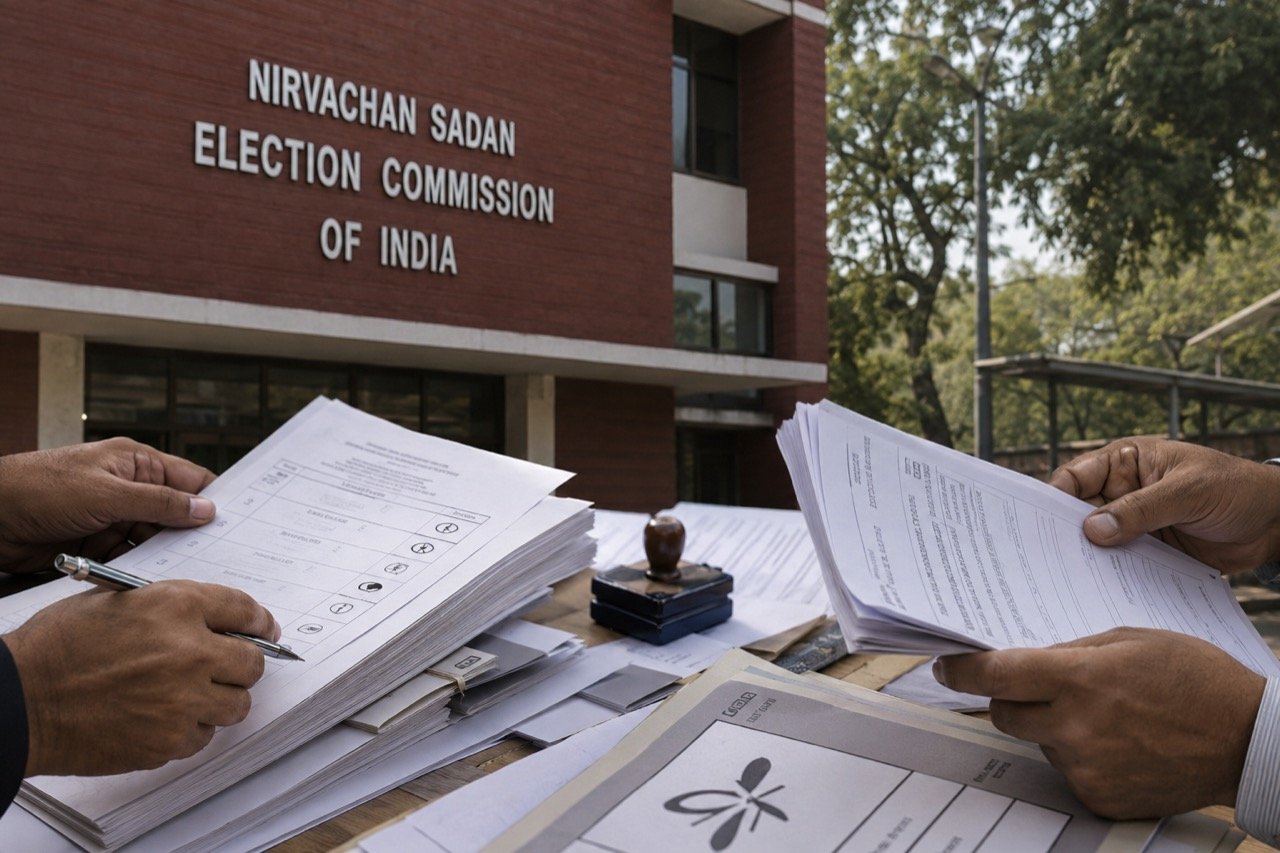
K Kavitha Party Denied TRS Name by Election Commission
The Election Commission has refused to register K Kavitha's Telangana Rakshana Sena under the TRS acronym after objections, forcing a branding reset for the new party at a politically sensitive moment in Telangana.
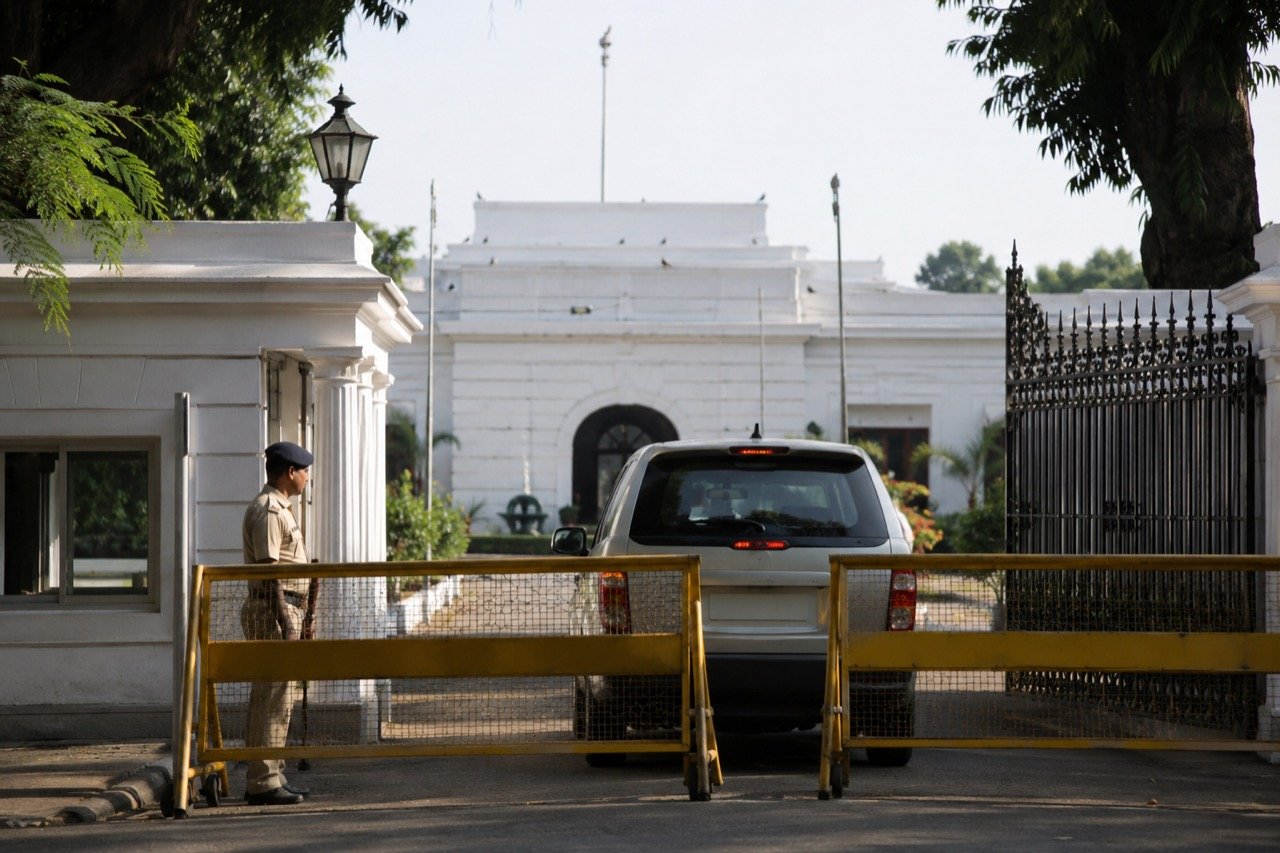
Lalu Prasad Yadav Security Downgrade, Bungalow Order Stir Bihar
A government order downgrading Lalu Prasad Yadav's security cover and asking him to vacate an official bungalow has opened a fresh political flashpoint in Bihar, with the RJD chief's reaction fuelling the row.

Manipur CM's Churachandpur Visit: First Since 2023 Unrest
The Manipur Chief Minister travelled to Churachandpur for a BJP MLA's funeral, his first visit to the district since the 2023 violence, lending the sombre occasion an unmistakable political significance.