The Legal Aftermath of the NEET Protests: Why the Real Battle Now Moves to the Courtroom
With FIRs registered after the Chalo Sansad march, detentions and an internet blackout, the NEET-UG protest fallout is set to move into India's High Courts and the Supreme Court.
Commentary & Analysis ·
Key facts
- Sonam Wangchuk ended his roughly 26-day fast on 24 July 2026 as the NEET-UG paper-leak protests continued
- FIRs were registered against protesters after the 'Chalo Sansad' march, alongside detentions in some cities and a mobile-internet suspension
- The government issued a written assurance of 'no cases against peaceful protesters', which sits in tension with FIRs already filed
- Petitioners are expected to invoke Section 528 BNSS (formerly Section 482 CrPC) to seek quashing, and Anuradha Bhasin (2020) on internet-shutdown proportionality
When the Streets Go Quiet, the Petitions Begin
The end of Sonam Wangchuk's marathon fast on 24 July did not close the chapter on the student agitation over the NEET-UG 2026 paper leak. It merely shifted its centre of gravity. With the 'Chalo Sansad' march now behind them, the organisers of the Coalition for Justice and Protest (CJP) face a familiar Indian sequel: the aftermath of a mass movement is fought less on the pavement than in the corridors of the High Courts and, eventually, the Supreme Court.
That aftermath is already taking shape. FIRs have been registered against named and unnamed protesters. Detentions were reported in several cities. Mobile-internet services were suspended in pockets where crowds gathered. And, cutting against all of it, the government has put out a written assurance that there will be 'no cases against peaceful protesters.' The gap between that promise and the paperwork already lodged at police stations is precisely where the coming legal contest will be decided.
The Right to Protest Is Not Absolute, But It Is Constitutional
Any assessment of what the courts are likely to do must begin with the constitutional baseline. The Supreme Court has repeatedly located the right to peaceful protest in Article 19(1)(a), the freedom of speech and expression, and Article 19(1)(b), the right to assemble peaceably and without arms. In the Ramlila Maidan case of 2012, the Court held that peaceful assembly and protest are fundamental rights that cannot be curtailed by arbitrary executive action, and it treated even the hunger strike as a legitimate, historically accepted form of protest.
That right, however, is not unqualified. Article 19 allows the state to impose reasonable restrictions in the interests of public order, the sovereignty and integrity of India, and the prevention of offences. The legal question is therefore rarely whether the right exists; it is whether a particular restriction, FIR or detention was a proportionate response to a genuine threat, or an over-broad reaction that swept in peaceful participants. Courts have tended to scrutinise that distinction closely.
How Courts Weigh Protest-Related FIRs
An FIR is not a conviction; it is the opening of an investigation. But for the individuals named, the mere existence of a case can carry lasting consequences, and that is why the power of the High Courts to quash proceedings matters so much here. Under Section 528 of the Bharatiya Nagarik Suraksha Sanhita, 2023, the successor to the old Section 482 of the Code of Criminal Procedure, a High Court retains inherent power to quash an FIR to secure the ends of justice or prevent abuse of process.
The guiding framework remains the celebrated catalogue set out in the Bhajan Lal case: an FIR may be quashed where the allegations, even taken at face value, disclose no cognizable offence; where they are inherently improbable or absurd; or where the case appears to have been filed with mala fide intent or for an oblique purpose. More recent rulings have reaffirmed that a High Court need not wait for an investigation to mature; it may intervene at a nascent stage where no prima facie offence is made out.
In protest cases in particular, the courts have shown willingness to read the freedom of expression into that analysis. Where an FIR is grounded in slogans, speeches or peaceful assembly rather than violence or property damage, petitioners are likely to argue that no genuine cognizable offence is disclosed and that prosecution would chill a constitutionally protected activity.
The Assurance Versus the FIR
The government's written undertaking that peaceful protesters will not face cases is politically significant and legally usable, but it does not by itself erase an FIR. Once a first information report is registered, its life is governed by statute and by the courts, not by an administrative promise. This creates the central tension of the aftermath: an executive assurance on one side, and live criminal paperwork on the other.
Petitioners are expected to deploy that assurance as an interpretive tool. If the state has itself conceded that peaceful protest is not to be prosecuted, that concession can be cited to argue that FIRs targeting peaceful participants run contrary to the government's own stated position, strengthening the case that they are mala fide or over-broad. The state, for its part, is likely to draw a line between peaceful demonstrators and those it alleges committed specific unlawful acts, insisting the FIRs concern only the latter.
Detentions and the Twenty-Four-Hour Ceiling
The detentions reported in some cities raise a separate set of questions. Where preventive powers were used, such as arrest to forestall a cognizable offence under the provision that succeeds Section 151 CrPC, the law is clear that such power is exceptional and preventive rather than punitive. A person held under it cannot ordinarily be kept beyond twenty-four hours without further legal authorisation, and courts have insisted it be invoked only where there is definite information of an imminent design to breach the peace.
Any detainee held beyond permissible limits, or without adequate justification, could seek relief through a habeas corpus petition or challenge the detention as disproportionate. The Constitution's procedural guarantees under Articles 21 and 22 remain the backdrop against which such claims are tested.
The Internet Shutdown and the Bhasin Test
The suspension of mobile-internet services is perhaps the most legally exposed of the government's measures. In Anuradha Bhasin v. Union of India (2020), the Supreme Court held that access to the internet is intertwined with the freedom of speech and expression, and that any shutdown must be temporary, limited, lawful, necessary and proportionate. Crucially, the Court required that shutdown orders be made public so they can be challenged, and subjected them to the proportionality test drawn from the Puttaswamy privacy judgment.
Petitioners challenging the NEET-protest suspension are likely to argue, following Bhasin, that a blanket blackout is rarely the least restrictive means of maintaining order, and that the burden lies on the state to justify its necessity and duration. Whether the underlying orders were published, reasoned and time-bound will be decisive.
How the Petitions Will Move, and How Long They May Take
The likely vehicles are twofold: individual quashing petitions filed by those named in FIRs, and public interest litigation raising the broader questions of protest rights, detentions and the internet suspension. Quashing petitions typically travel to the relevant High Court, where interim protection from arrest may be sought early even as the substantive hearing unfolds over months. PILs, by contrast, may be filed before a High Court or directly before the Supreme Court where a question of national importance is pressed.
Timelines in such matters are notoriously elastic. Interim orders, a stay on arrest, a direction to place shutdown orders on record, can come within weeks. Final adjudication, especially where constitutional questions are argued, can stretch across many months or longer. The realistic near-term outcome is not a definitive verdict but a series of interim protections that shape the ground while the larger questions await hearing.
The NE Times View
The measure of a democracy is often taken not during a protest but in its aftermath, when the crowds have dispersed and the state decides whom to pursue. The government's assurance is welcome, but assurances are not self-executing; the FIRs already on file will test whether that promise is honoured in practice or contradicted in police stations. India's courts have, over two decades, built a reasonably clear architecture, on quashing, on proportionality, on the publication of restriction orders, precisely for moments like this. The coming petitions will show whether that architecture holds when it is needed most.
Sources
- https://www.livelaw.in/supreme-court/s-482-crpcs528-bnss-supreme-court-lays-down-four-step-test-for-high-courts-to-quash-criminal-cases-303320
- https://www.lawctopus.com/clatalogue/clat-pg/anuradha-bhasin-v-union-of-india-internet-shutdown/
- https://vajiramandravi.com/current-affairs/right-to-protest-in-india/
- https://www.legalserviceindia.com/Legal-Articles/delhi-cjp-protest-fir-legal-rights-bail-guide/
This article is original news analysis and commentary by The NE Times, based on reporting from the sources listed above.
You may also like to read
As the NEET-Leak Movement Moves South, It Meets a Region That Never Made Peace With the Exam
The CJP student movement over the NEET-UG 2026 paper leak is reaching Chennai, Bengaluru and Hyderabad, colliding with south India's older grievance against NEET.
The Human Cost of the NEET Leak: When a Fair Exam Is the Only Ladder Out
Behind the NEET-UG 2026 paper leak and protests lie first-generation aspirants and low-income families for whom a fair exam is a once-in-a-lifetime mobility ladder.
Nagpur Protests and the 45 Detentions Dispute: Why Organiser Attribution Matters
The Nagpur episode demonstrates why reporters must distinguish official CJP actions from independent gatherings that use similar slogans or symbols

Why Delhi Schools Shifted to Hybrid Classes During the CJP Mobilisation
The shift to hybrid schooling illustrates how a national protest can create second-order effects for younger students, parents, transport operators and
More from this section
More
What a Real Examination Reform Package Should Include After the NEET Crisis and Hunger Strike
The hunger strike has created pressure for reform. A credible response needs secure paper handling, independent audits, transparent investigations and support for affected students
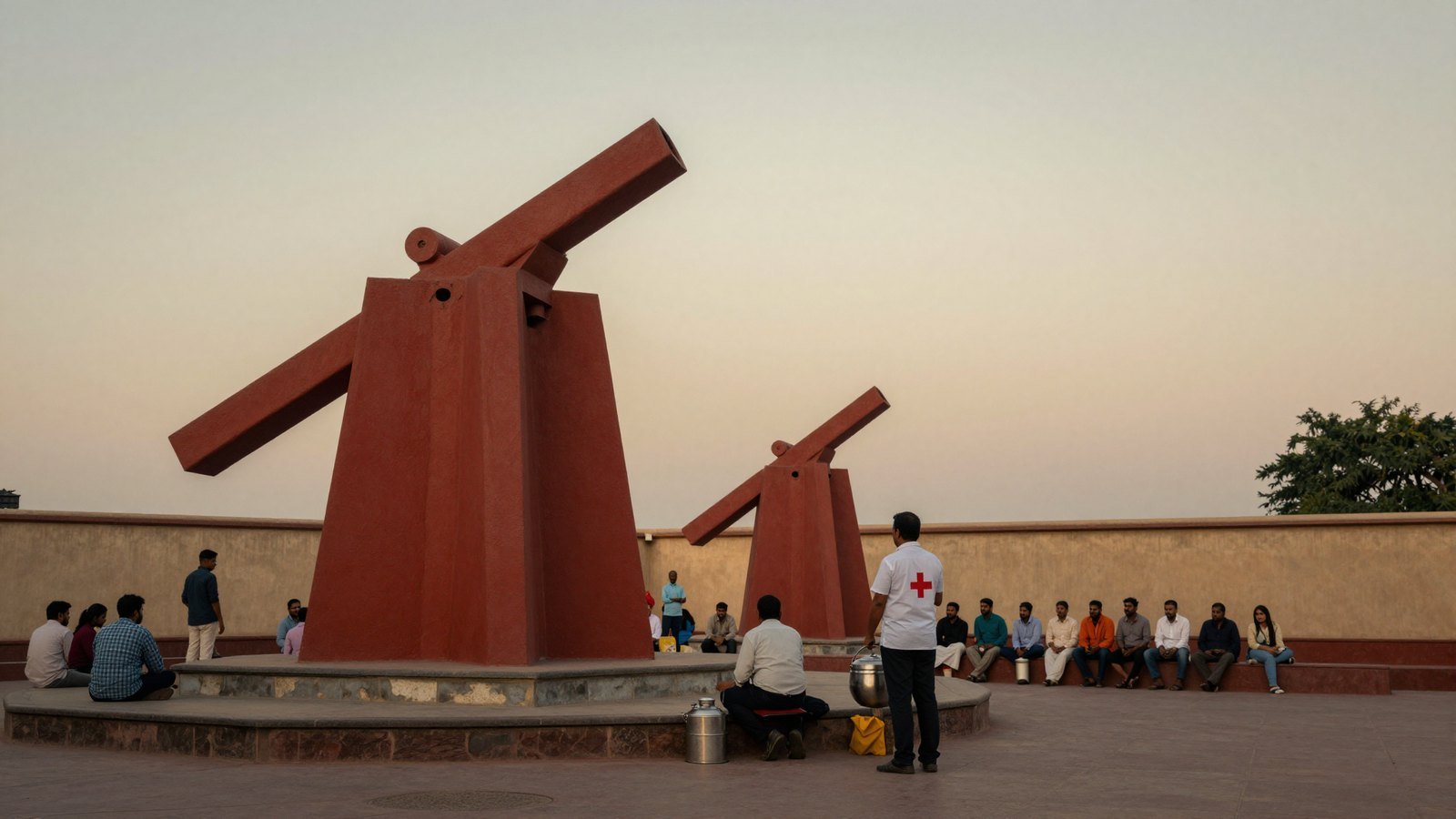
Why Jantar Mantar Matters: The Protest Space at the Centre of Sonam Wangchuk’s Hunger Strike
Jantar Mantar has become the physical centre of the CJP campaign, linking India’s tradition of public protest with modern digital mobilisation and court supervision
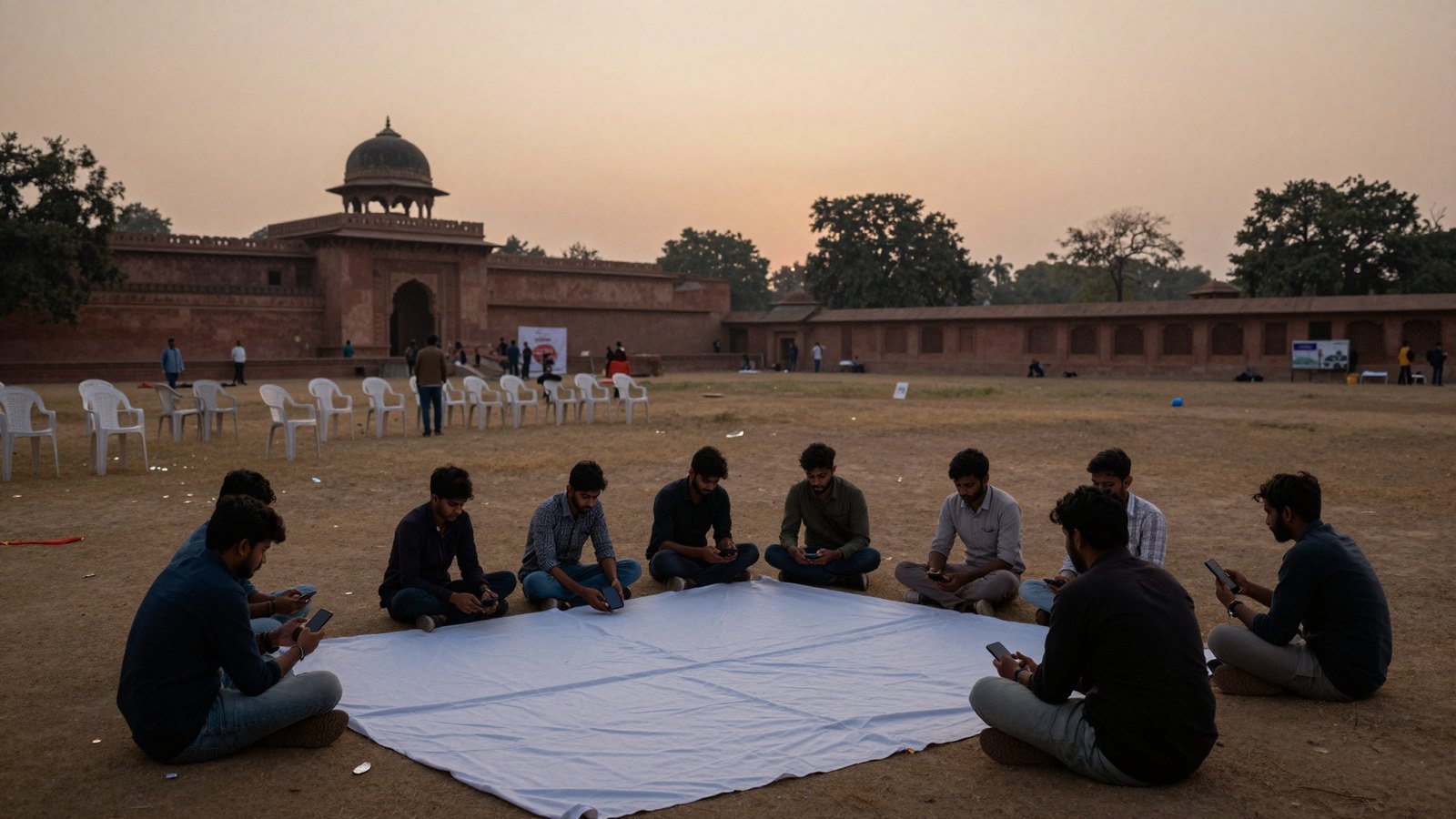
After the Fast Ends: The Cockroach Janta Party's Hardest Test Begins Now
With Sonam Wangchuk's fast over and written assurances secured, the leaderless Cockroach Janta Party must now decide whether to stand down, stay a watchdog, or fracture.