What a Real Examination Reform Package Should Include After the NEET Crisis and Hunger Strike
The hunger strike has created pressure for reform. A credible response needs secure paper handling, independent audits, transparent investigations and support for affected students
Commentary & Analysis ·

Key facts
- NTA conducted a nationwide re-examination after cancellation of the original NEET-UG 2026 test.
- The crisis exposed weaknesses in prevention, communication, recovery and accountability.
- Protesters want reforms that go beyond conducting a second examination.
- Parliamentary scrutiny provides an opportunity to turn demands into enforceable policy.
Secure the full question-paper chain
Exam security is only as strong as its weakest handoff. Authorities need a documented chain from question creation through printing, encryption, transport, storage and opening at centres. Access should be limited, logged and independently audited. Where digital systems are used, keys should be separated so that no single contractor or official can reconstruct protected material. Where physical packets are used, tamper evidence and real-time tracking should be standard. Security design must assume insider risk, not only outside hacking.
Create independent audits and red teams
The agency that runs an examination should not be the only body assessing whether its security is adequate. Independent technical and operational teams can test processes before the exam, simulate leak attempts and review vendor compliance. Findings need not reveal sensitive details, but Parliament and an oversight board should receive meaningful summaries. Repeated failures are more likely when audits are internal, irregular or treated as paperwork. A permanent exam-integrity unit could build expertise across NEET, recruitment tests and other national examinations.
Improve crisis communication
When allegations emerge, silence creates rumours. Authorities should have a published protocol for acknowledging complaints, preserving evidence and informing candidates. Updates should distinguish confirmed breaches from investigation, explain why a cancellation is or is not necessary and give realistic timelines. A single verified dashboard would reduce dependence on leaked messages and social-media speculation. Communication is not public relations; it is part of fairness because candidates make travel, study and financial decisions based on official information.
Support candidates when the state fails
A re-examination shifts the cost of institutional failure onto students unless support is automatic. Fee refunds, travel assistance for low-income candidates, accessible rescheduling and counselling should be triggered when a national test is cancelled. Special arrangements are needed for disabled candidates and those facing clashes with other examinations. Compensation cannot erase stress, but it signals that authorities recognise the burden they created. NTA’s fee-refund process is a useful starting point, though the broader recovery framework should be standardised in law or regulation.
Make accountability visible
Investigations should identify criminal networks, but administrative accountability is also necessary. Contracts may need termination, officials may face disciplinary review and security recommendations should have named owners and deadlines. A public action tracker can show which reforms are complete. Without visible consequences, every promise is treated as temporary. At the same time, accountability must follow evidence and due process rather than public anger alone.
Address the pressure system around exams
Paper security will not solve the entire student crisis. India’s high-stakes entrance model concentrates opportunity into a few tests, creating a vast coaching economy and intense psychological pressure. Policymakers should expand quality seats, improve school counselling, review how many decisions depend on one day’s performance and create credible alternative pathways. The hunger strike is about an immediate failure, but its popularity reflects deeper frustration. A reform package that ignores that wider context may secure the paper while leaving the system brittle.
What readers and publishers should monitor
Readers following this angle should track parliamentary committee recommendations, new NTA security standards, audit publication, candidate-support rules, and implementation deadlines and responsible officials. Because this is a fast-moving protest, every figure and procedural claim should carry a date. Health information should come from doctors or court records; protest logistics should come from organisers and police; legal conclusions should be tied to the actual order; and allegations about examination wrongdoing should remain attributed until established by investigation or judgment. The primary keyword should appear naturally in the headline, introduction, one subheading, image alt text and conclusion. Secondary terms should be used only where they answer a genuine reader question. Repeating a phrase mechanically can reduce readability and search quality. The strongest publication strategy is to update the article rather than create a misleading new headline for every minor development. Add a timestamp, preserve the earlier context, explain what has changed and correct outdated numbers visibly. That approach serves readers, protects credibility and prevents the hunger strike from being reduced to a stream of disconnected viral claims.
A final editorial perspective
A final point is that the issue should be covered as a democratic accountability story rather than a contest of personal endurance. The policy questions concern secure examinations, public responsibility, student welfare and the state’s response to peaceful dissent. The human question concerns how to protect a protester’s life without erasing autonomy or turning medical risk into spectacle. Good reporting keeps both dimensions visible. It presents competing arguments fairly, marks uncertainty, uses precise dates and returns repeatedly to the people most affected: students and families who need a trustworthy system. The article should also explain what would count as evidence of progress, which institution has authority to act, and how readers can distinguish an official update from a political claim. That additional context makes the piece useful after the immediate search spike fades.
Sources
- NTA official re-examination and fee-refund notices.
- Times of India report on parliamentary review of NEET conduct.
- AP and CJP statements outlining demands for a credible examination system.
- Economic Times timeline of the 2026 leak controversy.
This article is original news analysis and commentary by The NE Times, based on reporting from the sources listed above.
You may also like to read
Sonam Wangchuk Ends 26-Day Hunger Strike: The Agreement, the Timing and What Changed
Sonam Wangchuk ended his 26-day fast at a Gurugram hospital after negotiations and assurances from the Union government, but the student movement did
Beyond NEET: Government Recruitment Leaks and the National Exam-Integrity Crisis
The movement resonated nationally because medical entrance testing is only one part of a wider system on which young people depend for education and
NEET-UG 2026 Paper-Leak Investigation: Arrests, the Alleged Network and What Is Proven
The criminal investigation is the evidentiary core of the controversy, and it must be reported separately from political claims made at the protest

Can the Government Force-Feed a Hunger Striker in India? The Sonam Wangchuk Case Tests Rights and Duties
A legal and medical explainer on whether Indian authorities can force-feed a competent hunger striker and how Article 21, consent and emergency duties interact
More from this section
More
Who Is Sonam Wangchuk? From SECMOL and Ice Stupas to a National Hunger Strike
A factual profile of Sonam Wangchuk’s work with SECMOL, alternative education and Ice Stupas, with a clear explanation of the disputed 3 Idiots connection
Is Sonam Wangchuk’s Hunger Strike About NEET or Ladakh? Clearing Up the Search Confusion
Conflicting search results describe the current fast as a NEET protest, a Ladakh protest or both. Here is how to separate the immediate campaign from Wangchuk’s wider activism
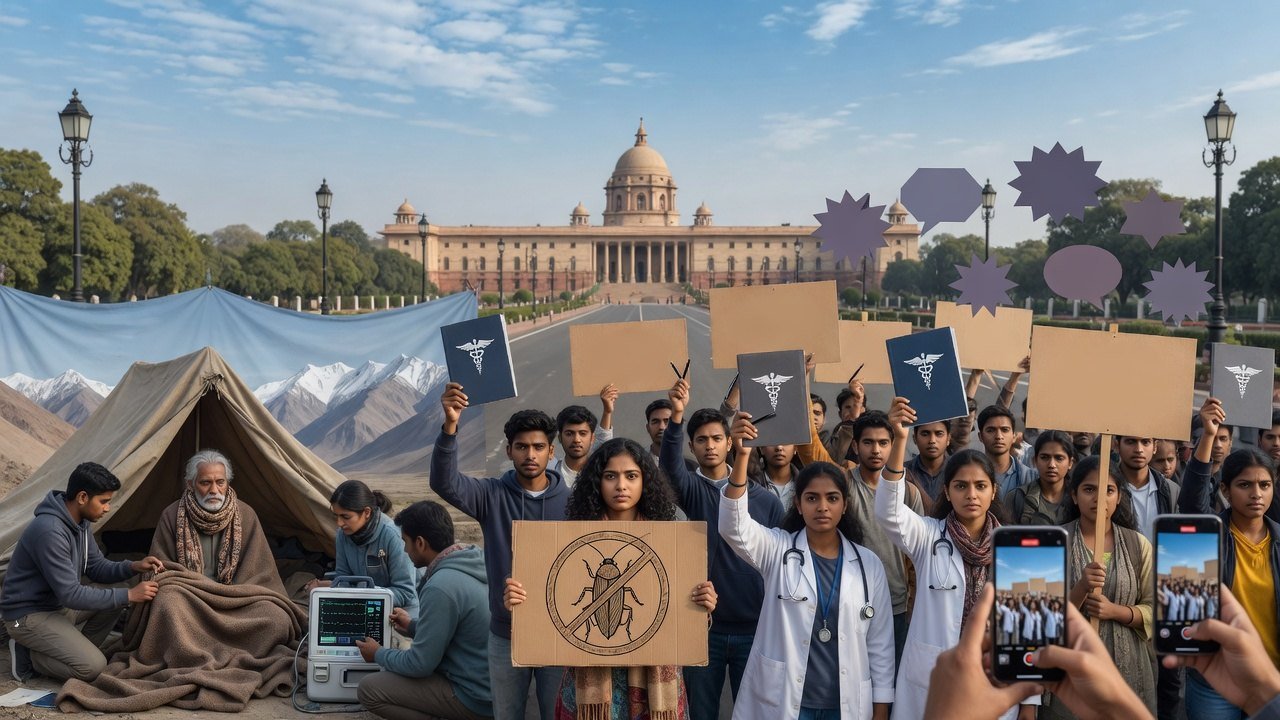
Cockroach Janta Party Protest Keeps NEET Accountability and Sonam Wangchuk's Hunger Strike in the Spotlight
The CJP says the Centre has remained silent as Sonam Wangchuk's hunger strike enters its 18th day, keeping examination integrity and youth-led political protest in focus.