Can the Government Force-Feed a Hunger Striker in India? The Sonam Wangchuk Case Tests Rights and Duties
A legal and medical explainer on whether Indian authorities can force-feed a competent hunger striker and how Article 21, consent and emergency duties interact
Commentary & Analysis ·

Key facts
- A PIL asked the Delhi High Court to ensure urgent medical aid and raised the possibility of stronger intervention.
- The court initially chose daily monitoring and necessary medical care rather than issuing a general force-feeding command.
- Article 21 protects life and personal liberty, while medical treatment ordinarily depends on informed consent.
- The legal position becomes more complicated if a person loses decision-making capacity or faces an immediate, preventable threat to life.
Why the question has no simple yes-or-no answer
Searches asking whether the government can force-feed Sonam Wangchuk often assume that Indian law contains a single rule. In reality, several principles pull in different directions. A competent adult generally has control over medical decisions. Peaceful protest is protected by constitutional freedoms, subject to reasonable restrictions. The state also has a duty to protect life, especially when authorities know that a person is in serious danger. Courts must examine capacity, consent, medical urgency and the circumstances of the protest. That is why the High Court began with monitoring: it needed current evidence before considering an intervention that could be physically invasive and constitutionally controversial.
Article 21 protects more than survival
Article 21 is frequently summarised as the right to life, but constitutional jurisprudence has treated it as protection for life with dignity and personal liberty. That wider meaning matters. Preserving a heartbeat at any cost is not the only legal value; dignity, autonomy and freedom from arbitrary state action also count. Yet Indian courts have also said that the right to life does not create an unrestricted right to die. A hunger strike sits in the difficult space between those propositions. The protester may not describe the objective as death, but prolonged refusal of food can create a foreseeable risk of death, making state inaction legally and morally difficult.
Medical consent and decision-making capacity
Doctors ordinarily require informed consent before treatment. Consent must be voluntary, based on adequate information and given by a person capable of understanding the consequences. A hunger striker who is alert, oriented and able to explain the decision presents a different case from someone who is confused, unconscious or suffering organ failure. Capacity can also change over time. Daily examinations therefore have legal importance: they document whether Wangchuk continues to understand the risks and communicate a consistent choice. If capacity is lost, emergency treatment may be justified under principles that allow doctors to act in a patient’s best interests.
Why force-feeding is medically and ethically sensitive
Force-feeding is not a neutral administrative procedure. Depending on the method, it can involve restraint and insertion of a tube, creating risks of injury, aspiration and trauma. International medical ethics has often treated forced feeding of a competent hunger striker as unacceptable, while allowing carefully supervised voluntary nutrition and treatment. Indian courts are not automatically bound by every international professional statement, but those standards help explain why judges proceed cautiously. A less intrusive approach - monitoring, counselling, offering fluids, documenting refusal and preparing emergency care - may protect life while respecting autonomy for as long as the protester remains competent.
The state’s strongest argument for intervention
The government’s strongest case would arise if reliable doctors conclude that death or irreversible organ damage is imminent and that Wangchuk can no longer make an informed decision. Authorities could argue that failing to act would violate their positive duty to protect life and create a preventable public tragedy. They may also point to crowd safety and the wider consequences of a death at a major protest. Even then, the response should be proportionate. Hospitalisation for assessment is legally different from compelled nutrition, and emergency stabilisation is different from indefinite treatment against a competent person’s wishes.
A rights-respecting path out of the conflict
The best legal solution is the one that makes coercion unnecessary. Independent doctors can provide transparent assessments; a trusted intermediary can discuss medical options; government representatives can open talks; and organisers can define a dignified basis for suspending the fast. Such steps reduce the chance that a court must choose between apparent abandonment and forced treatment. The Sonam Wangchuk case is therefore not only about the outer limit of state power. It is also about whether political institutions can respond early enough that the most invasive legal questions never have to be answered.
What readers and publishers should monitor
Readers following this angle should track medical findings on capacity, the language of future High Court orders, whether Wangchuk accepts voluntary treatment, ethical guidance cited by doctors, and any negotiated suspension of the fast. Because this is a fast-moving protest, every figure and procedural claim should carry a date. Health information should come from doctors or court records; protest logistics should come from organisers and police; legal conclusions should be tied to the actual order; and allegations about examination wrongdoing should remain attributed until established by investigation or judgment. The primary keyword should appear naturally in the headline, introduction, one subheading, image alt text and conclusion. Secondary terms should be used only where they answer a genuine reader question. Repeating a phrase mechanically can reduce readability and search quality. The strongest publication strategy is to update the article rather than create a misleading new headline for every minor development. Add a timestamp, preserve the earlier context, explain what has changed and correct outdated numbers visibly. That approach serves readers, protects credibility and prevents the hunger strike from being reduced to a stream of disconnected viral claims.
Sources
- Delhi High Court PIL coverage in The Indian Express and Hindustan Times, July 15-17, 2026.
- News24 legal explainer on Article 21 and hunger strikes, July 17, 2026, used as secondary commentary.
- World Medical Association principles on hunger strikers, referenced for general medical ethics.
This article is original news analysis and commentary by The NE Times, based on reporting from the sources listed above.
You may also like to read
Sonam Wangchuk Ends 26-Day Hunger Strike: The Agreement, the Timing and What Changed
Sonam Wangchuk ended his 26-day fast at a Gurugram hospital after negotiations and assurances from the Union government, but the student movement did

Who Is Sonam Wangchuk? From SECMOL and Ice Stupas to a National Hunger Strike
A factual profile of Sonam Wangchuk’s work with SECMOL, alternative education and Ice Stupas, with a clear explanation of the disputed 3 Idiots connection
Cockroach Janta Party Protest Keeps NEET Accountability and Sonam Wangchuk's Hunger Strike in the Spotlight
The CJP says the Centre has remained silent as Sonam Wangchuk's hunger strike enters its 18th day, keeping examination integrity and youth-led political protest in focus.
Why Is Sonam Wangchuk on Hunger Strike? The Demands Behind the Jantar Mantar Protest
The current Jantar Mantar fast centres on examination accountability, the demand for Dharmendra Pradhan’s resignation and wider reforms to protect students
More from this section
More
Is Sonam Wangchuk’s Hunger Strike About NEET or Ladakh? Clearing Up the Search Confusion
Conflicting search results describe the current fast as a NEET protest, a Ladakh protest or both. Here is how to separate the immediate campaign from Wangchuk’s wider activism

What a Real Examination Reform Package Should Include After the NEET Crisis and Hunger Strike
The hunger strike has created pressure for reform. A credible response needs secure paper handling, independent audits, transparent investigations and support for affected students
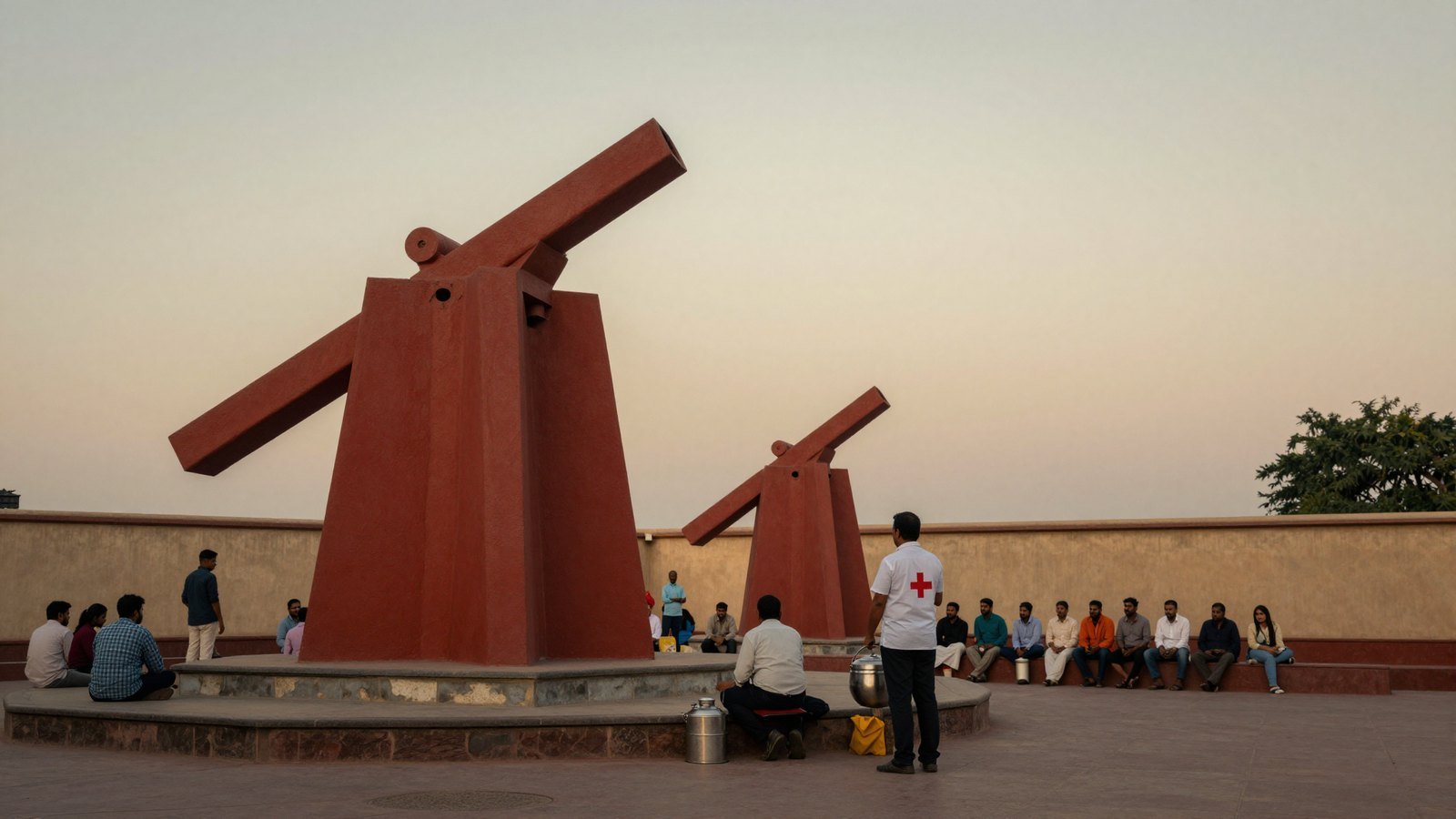
Why Jantar Mantar Matters: The Protest Space at the Centre of Sonam Wangchuk’s Hunger Strike
Jantar Mantar has become the physical centre of the CJP campaign, linking India’s tradition of public protest with modern digital mobilisation and court supervision