After the Fast Ends, the Paperwork Begins: Tracking Wangchuk's Written Assurances
Sonam Wangchuk's fast is over, but the government's written promises on NEET-UG reform and paper-leak courts still await gazette notifications and formal orders.
Commentary & Analysis ·
Key facts
- Wangchuk's roughly 26-day fast ended after midnight on 24 July following written assurances from Union ministers.
- The four commitments cover no cases against peaceful protesters, exam reform, fast-track courts for paper-leak cases, and review of a senior official's role.
- In Indian practice, a promise becomes legally binding only through gazette notifications, office memoranda or cabinet-cleared amendments, not a signed letter.
- The Public Examinations (Prevention of Unfair Means) Act, 2024 already provides the legal scaffolding the reforms would build on.
The morning after a settlement
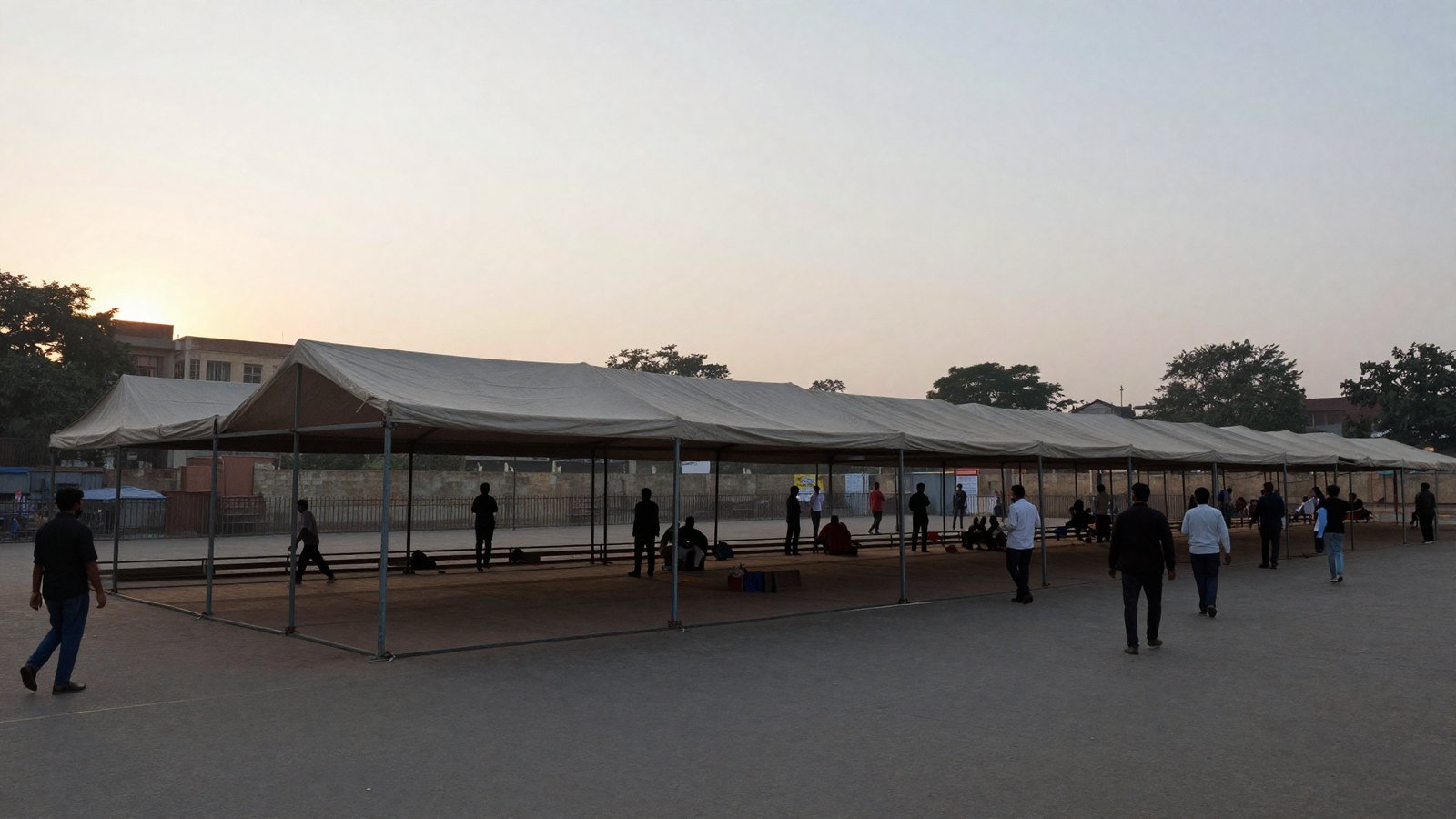
The tent at Jantar Mantar came down in the small hours of 24 July. Sonam Wangchuk, whose roughly 26-day fast had become the visible centre of the Cockroach Janta Party's campaign for accountability over the NEET-UG 2026 paper-leak crisis, accepted juice from a doctor and a written set of assurances from two Union ministers. The immediate political story is a resolution. The harder story, the one that will define whether this settlement is remembered as a turning point or a footnote, begins now.
The four assurances are clear enough on paper: no cases against peaceful protesters, a package of examination-reform steps, fast-track courts to try paper-leak offences, and a review of a senior education official's role in the crisis. What is far less clear, 24 to 48 hours on, is how many of these have moved from the register of political promise into the register of official record. That distance, between an announcement and a notification, is where past protest settlements in India have quietly succeeded or failed.
Why a signed letter is not yet a rule
In the machinery of the Indian state, a minister's word carries political weight but limited legal force. An assurance becomes binding through specific instruments: a notification published in the Gazette of India, an office memorandum issued by the relevant department, a cabinet note that clears an amendment, or a formal court designation. The distinction is not pedantry. The Supreme Court has held that a government notification acquires the force of law only upon publication in the Official Gazette, not merely on being uploaded to a website or announced from a podium.
This is the lens through which the CJP's assurances should be read today. A written commitment signed by ministers is a strong political undertaking and can be cited later, but it does not by itself alter the legal position of a single accused, examinee or official. Each of the four promises has a different bureaucratic path to travel before it becomes something a citizen could enforce, and each path moves at its own speed.
The four promises, and where each stands
Take them in turn. The undertaking not to file cases against peaceful protesters is, in practice, the easiest to honour and the hardest to verify, because it is a promise of inaction. It would typically be given effect through instructions to the Delhi Police and local administration rather than a public order, meaning the public may only learn it has held, or failed, if an FIR later surfaces.
The fast-track courts for paper-leak cases have the firmest existing scaffolding. The Public Examinations (Prevention of Unfair Means) Act, 2024, already in force, provides the offence framework, and a specially designated fast-track court has previously been notified at Delhi's Rouse Avenue complex to try such matters. Expanding this into a wider network, as reform advocates want, would require fresh notifications designating courts and, in several states, concurrence from the respective High Courts. That is administratively achievable but is yet to be formally notified in the terms the settlement implies.
The exam-reform package is the most diffuse. Reforms to how the National Testing Agency conducts NEET-UG, whether through revised rules, encrypted question-paper logistics or structural changes, would generally require amendments to statutory rules or fresh guidelines, each carrying its own consultation and notification cycle. A cabinet-cleared draft Bill to strengthen the 2024 Act, reportedly carrying heavier penalties and time-bound trials, would still need parliamentary passage before it is law. None of this happens in 48 hours.
The review of a senior education official's role is the most politically charged and the least procedurally defined. A 'review' can mean anything from an internal departmental inquiry to a transfer awaiting a report to no visible action at all. Without an order constituting the review, naming its scope and setting a timeline, the word remains an intention rather than a process.
The lesson of past settlements
India's recent history of protest settlements offers a sober precedent. Agitations that ended on the strength of written assurances have often found that the paperwork lagged the applause. Committees promised at the point of settlement were sometimes constituted late or narrowly; assurances to withdraw cases were honoured unevenly across jurisdictions; and reform commitments that required legislation stalled when the political urgency that produced them faded.
The pattern is not usually bad faith so much as institutional drift. Once the cameras leave and the tent is folded, the file re-enters the ordinary queue of government business, competing with everything else for attention and drafting time. This is precisely why movements that survive their own victories tend to insist on dated, documented follow-through, and why the CJP's supporters are likely to treat the coming fortnight, not the midnight signing, as the real test.
What formalisation would actually look like
If the government intends to convert its assurances into durable commitments quickly, the markers to watch are concrete. On protesters, a written communication to the police withdrawing or forgoing proceedings. On the official review, an order constituting an inquiry with named terms of reference. On fast-track courts, gazette notifications designating specific courts. On exam reform, either notified rule amendments or a Bill formally listed for introduction.
None of these are extraordinary demands; they are the routine grammar of government when it means to act. Their presence would signal that the settlement is being built into the permanent record. Their prolonged absence would suggest the assurances remain, for now, a ceasefire rather than a resolution. It is worth stressing that as of today none of the four items should be assumed formalised simply because it was promised; each awaits its own instrument.
The NE Times View
Wangchuk's fast ended not because the problem was solved but because both sides had reason to step back from a standoff. That is a legitimate outcome, and the written assurances give the movement something concrete to hold the state to. But a settlement is only as strong as its paper trail. The meaningful accountability the CJP set out to secure will not be measured by the words exchanged at Jantar Mantar; it will be measured in gazette pages, office memoranda and court notifications over the coming weeks. Until those appear, the honest description of most of these commitments is not 'done' but 'promised', and the responsible thing, for supporters and sceptics alike, is to keep watching the file.
Sources
- Supreme Court on gazette publication and force of law (Law Trend)
- Business Today explainer: Public Examinations (Prevention of Unfair Means) Act, 2024
- The Tribune: fast-track courts under the Public Examinations Act
- Careers360: Centre notifies rules under the anti-paper-leak law
This article is original news analysis and commentary by The NE Times, based on reporting from the sources listed above.
You may also like to read

After Wangchuk's Fast, the Real Test: What a Credible Exam-Reform Panel Must Look Like
The Centre has promised an exam-system review to end Sonam Wangchuk's fast. Whether the oversight panel is real reform or symbolism depends on how it is built.
After the Fast Ends: The Cockroach Janta Party's Hardest Test Begins Now
With Sonam Wangchuk's fast over and written assurances secured, the leaderless Cockroach Janta Party must now decide whether to stand down, stay a watchdog, or fracture.

What Happens Next in Sonam Wangchuk’s Hunger Strike? Five Scenarios After the July 20 Mobilisation
The next phase could involve talks, hospitalisation, a mass Parliament march or prolonged stalemate. Each scenario carries different risks for Wangchuk, CJP and the government
What Did the Centre Promise Sonam Wangchuk? A Clause-by-Clause Guide to the Assurances
The settlement that ended the fast is best understood by separating broad political language from specific commitments that students can monitor
More from this section
More
Inside the High-Level Talks That Ended the Fast: Amit Shah, JP Nadda and Jitendra Singh's Roles
A reported high-level meeting became the turning point in a confrontation that had combined medical danger, street pressure and a widening political cost
From Fast to Floor: How the NEET Leak Crisis Becomes a Monsoon Session Flashpoint
As Sonam Wangchuk ends his fast over the NEET-UG 2026 paper leak, the crisis moves to Parliament. A look at what opposition motions can and cannot achieve.

One Week On: A Scorecard for the Government's NEET Protest Promises
Sonam Wangchuk ended his fast on written government assurances. One week on, here is a benchmark-by-benchmark scorecard of what is delivered, pending and rhetorical.