US Imposes 10% Forced-Labour Tariff on Indian Goods After Delhi's Trade Policy Change
The US has imposed a 10% forced-labour tariff on India under Section 301 from 24 July 2026, softened from a proposed 12.5% after New Delhi amended its Foreign Trade Policy on 13 July.
Commentary & Analysis ·
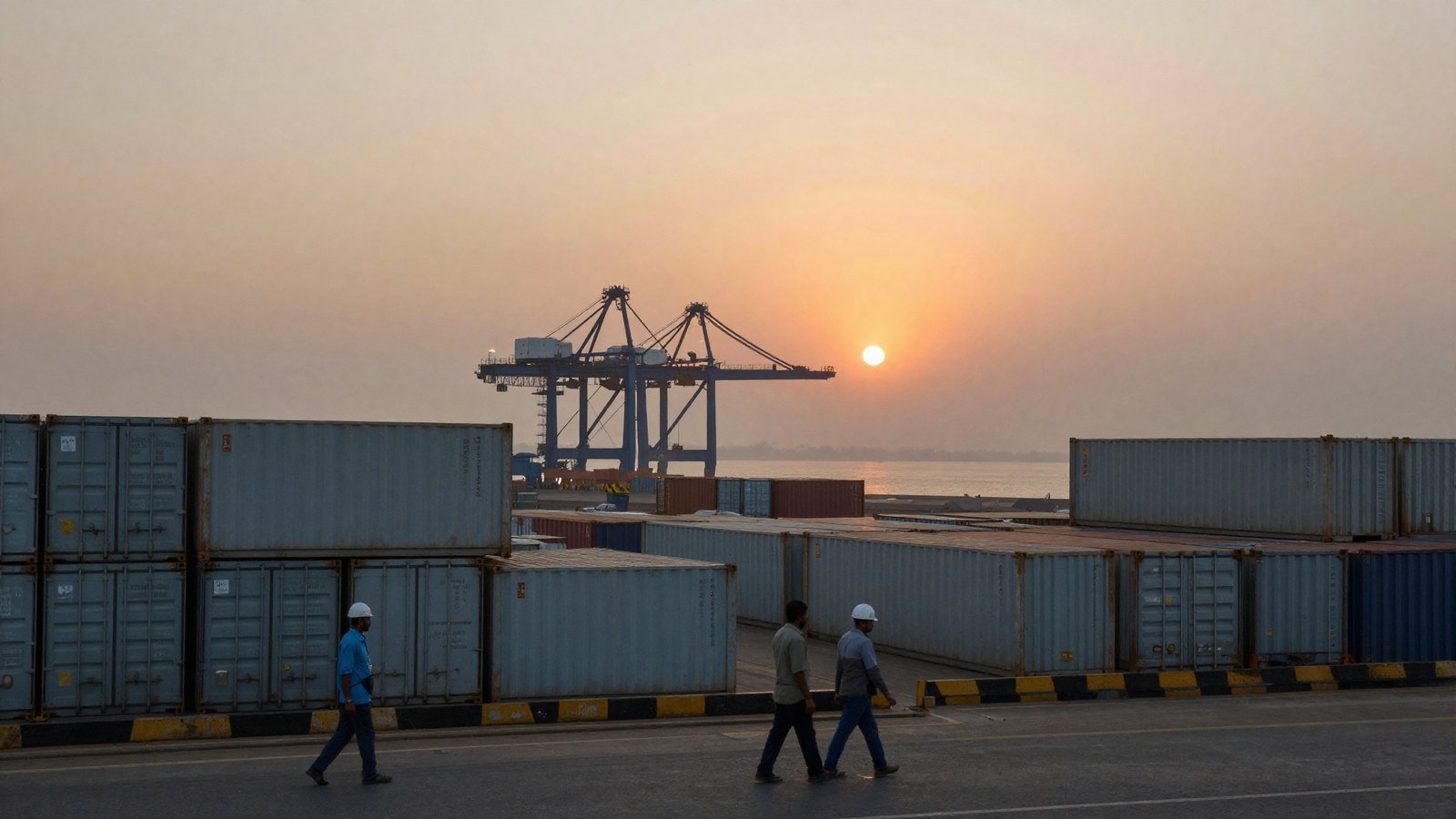
Key facts
- US began collecting a 10% Section 301 duty on most Indian goods from 12:01 am Eastern Time on 24 July 2026
- USTR's 2 June proposal had placed India in the higher 12.5% tier of the forced-labour action
- India amended its Foreign Trade Policy on 13 July 2026 to prohibit imports of goods made with forced labour, securing the lower rate
- India is among 17 economies at 10%, while most of the 43 others, including China and Vietnam, face 12.5%
- The tariff has no expiry date and remains until the USTR determines compliance benchmarks have been met
A Tariff Number That Delhi Helped Move
From 12:01 am Eastern Time on 24 July, the United States began collecting an additional 10 per cent duty on most goods imported from India, under a Section 301 action aimed at economies that Washington says have failed to keep forced-labour products out of global supply chains. India is one of 60 economies covered by the action, and one of 17 placed in the lower of its two tariff tiers, reports said.
The headline number is less interesting than the story of how it was reached. When the US Trade Representative first proposed the action on 2 June, India was slotted for a 12.5 per cent duty. The final rate came down to 10 per cent only after New Delhi amended its Foreign Trade Policy on 13 July to prohibit imports of goods made with forced labour. That sequence, in which an Indian regulatory change directly moved a US tariff decision within six weeks, is rare enough to deserve attention in its own right.
What Section 301 Is, in Plain Terms
Section 301 of the US Trade Act of 1974 gives the US Trade Representative the power to investigate foreign government policies it considers unreasonable or discriminatory and a burden on American commerce, and to retaliate, most commonly with tariffs. It is the same instrument Washington deployed against China from 2018. In March this year, the USTR opened 60 parallel Section 301 investigations on a novel theory: that the targeted economies had failed to impose and enforce a prohibition on importing goods produced with forced labour, allowing such goods to circulate in supply chains that feed the American market. On 2 June it determined that the practices of all 60 economies were actionable, and proposed tariffs as the remedy.
How 12.5 Became 10
The June proposal set out two tiers: 10 per cent for economies that had adopted a full or partial prohibition on forced-labour imports, and 12.5 per cent for everyone else. India, which had no such import ban on its books at the time, fell into the higher tier. Written comments were due by 6 July, and a public hearing was held on 7 July.
New Delhi's answer came on 13 July, when the Directorate General of Foreign Trade notified an amendment to the Foreign Trade Policy, 2023, inserting a provision that prohibits the import of goods produced wholly or partly through forced labour. The provision borrows its definition from the ILO Forced Labour Convention of 1930, covering work extracted under the menace of penalty and without voluntary consent, sets up an inquiry mechanism under the DGFT, and takes effect 30 days after publication in the gazette. Officials indicated that the change was expected to earn India relief, according to reports, and it did: the final action placed India in the 10 per cent tier.
The Company India Keeps
According to the reported final list, the 17 economies at 10 per cent are Argentina, Bangladesh, Cambodia, Canada, Ecuador, El Salvador, Guatemala, Honduras, India, Indonesia, Jordan, Malaysia, Mexico, Pakistan, Sri Lanka, Trinidad and Tobago, and the United Kingdom. Most of the remaining 43 economies, including China and Vietnam, face 12.5 per cent, while a few, such as the European Union and Taiwan, instead pay the higher of 10 per cent or their existing tariff rate.
That distribution matters commercially. In apparel, footwear, home textiles and light manufacturing, India's most direct competitors are China, Vietnam and, in some categories, Cambodia and Bangladesh. A 2.5-percentage-point gap against China and Vietnam is not transformative, but in thin-margin categories it is enough to influence sourcing decisions, and Indian exporters will take any relative advantage after a bruising eighteen months of tariff volatility.
Which Indian Exports Are Exposed
The duty applies to nearly all products of the covered economies, with exemptions listed in annexes to the action. Trade-law analyses of the notice say the exclusions broadly track the carve-outs used in earlier global tariff actions: pharmaceuticals, certain electronics, energy products, selected agricultural goods, minerals and metals not available in sufficient quantity in the United States, and civil aircraft and parts.
That leaves the labour-intensive heart of India's export basket exposed: readymade garments and textiles, gems and jewellery, leather goods, carpets, engineering goods, chemicals and seafood. Textiles carry a specific worry. The action includes a special mechanism for textile products, and Indian industry voices warned during the comment period that stacked duties on some Indian textile lines could reach 30 to 40 per cent once the new levy sits on top of existing tariffs, reports said. Because the 10 per cent generally applies in addition to existing duties rather than replacing them, the arithmetic for individual products depends heavily on what they already pay.
A Rebuilt Tariff Wall
The timing is not incidental. The action took effect just as Washington's temporary global baseline tariff of 10 per cent was expiring, and months after the US Supreme Court struck down most of the administration's emergency-powers tariffs. Section 301, which rests on firmer statutory ground, has become the preferred vehicle for rebuilding the tariff wall, and the forced-labour framing gives the new duties a policy rationale that is harder to attack politically than a bare revenue measure. Notably, the action carries no expiry date: the duties remain in force until the USTR determines that an economy has met its compliance benchmarks. That open-endedness is leverage, but it also creates a defined exit, since an economy that satisfies Washington's conditions has a documented route to removal.
The Trade-Deal Backdrop
The tariff lands in the middle of ongoing India-US negotiations on a wider trade agreement, and the talks are expected to address New Delhi's concerns over the Section 301 investigations, according to reports. India has sought a review of the action, and Indian commentators have questioned its factual basis, arguing that Washington has not published evidence that India imports forced-labour goods on any significant scale. For Delhi, the July experience nonetheless offers a template: a targeted, low-cost regulatory change bought a measurable tariff concession. Indian negotiators can be expected to probe whether further compliance steps, such as enforcement rules under the new FTP provision, can buy further relief, up to and including removal from the list.
What to Watch Next
Several threads will determine whether 24 July marks a settled outcome or merely an opening position.
For now, the sober reading is this: Indian goods face a new, open-ended 10 per cent duty in their largest export market, and the consolation, that it could have been 12.5 and that Delhi's own policy pen helped shave the difference, is real but partial. The negotiation behind the number is not over.
- Enforcement of India's new FTP prohibition, which takes effect in mid-August; the DGFT's inquiry mechanism is untested and Washington will watch how it is used.
- The fine print of the textile mechanism and any product-level exclusions the USTR grants during implementation.
- Whether the India-US trade-deal talks fold the 10 per cent duty into a broader settlement, and on what timetable.
- Legal challenges in US courts, where the Supreme Court's earlier tariff ruling has encouraged importers to test each new statute.
- Whether China, Vietnam and other 12.5 per cent economies enact compliance changes of their own, which would narrow India's relative advantage quickly.
Sources
- Business Standard - US slaps 10% tariff on India under Section 301 probe linked to forced labour (24 July 2026)
- The Tribune - US imposes 10% tariff on India over forced labour concerns, detailing the action and its scope (24 July 2026)
- The Federal - Why the US imposed a 10 per cent forced-labour tariff on India and which sectors are most exposed (24 July 2026)
- The CSR Journal - India among 17 economies facing 10% US tariff under forced labour rules, with the full country list (24 July 2026)
- Business Standard - India expects relief in US Section 301 tariff after forced-labour curbs to Foreign Trade Policy (15 July 2026)
This article is original news analysis and commentary by The NE Times, based on reporting from the sources listed above.
You may also like to read
India-US Ministerial Trade Talks Open in New Delhi as Both Sides Chase a Tariff Deal
Commerce Minister Piyush Goyal and US Trade Representative Jamieson Greer have begun ministerial-level talks in New Delhi, aiming to narrow gaps on tariffs, agriculture and digital trade before a possible bilateral package.
Counting the Cost: What Central Delhi's Protest Shutdown Meant for Its Street Economy
As the NEET-UG protest fast ends, we examine who bore the economic cost of central Delhi's disruptions, from daily-wage traders to gig workers, and how such losses are estimated.
India and US Resume High-Level Trade Talks in Delhi to Finalise First Phase of Pact
Commerce Minister Piyush Goyal says his US counterpart is in Delhi for ministerial talks, with reports naming USTR Jamieson Greer for two days of negotiations on tariffs and market access.
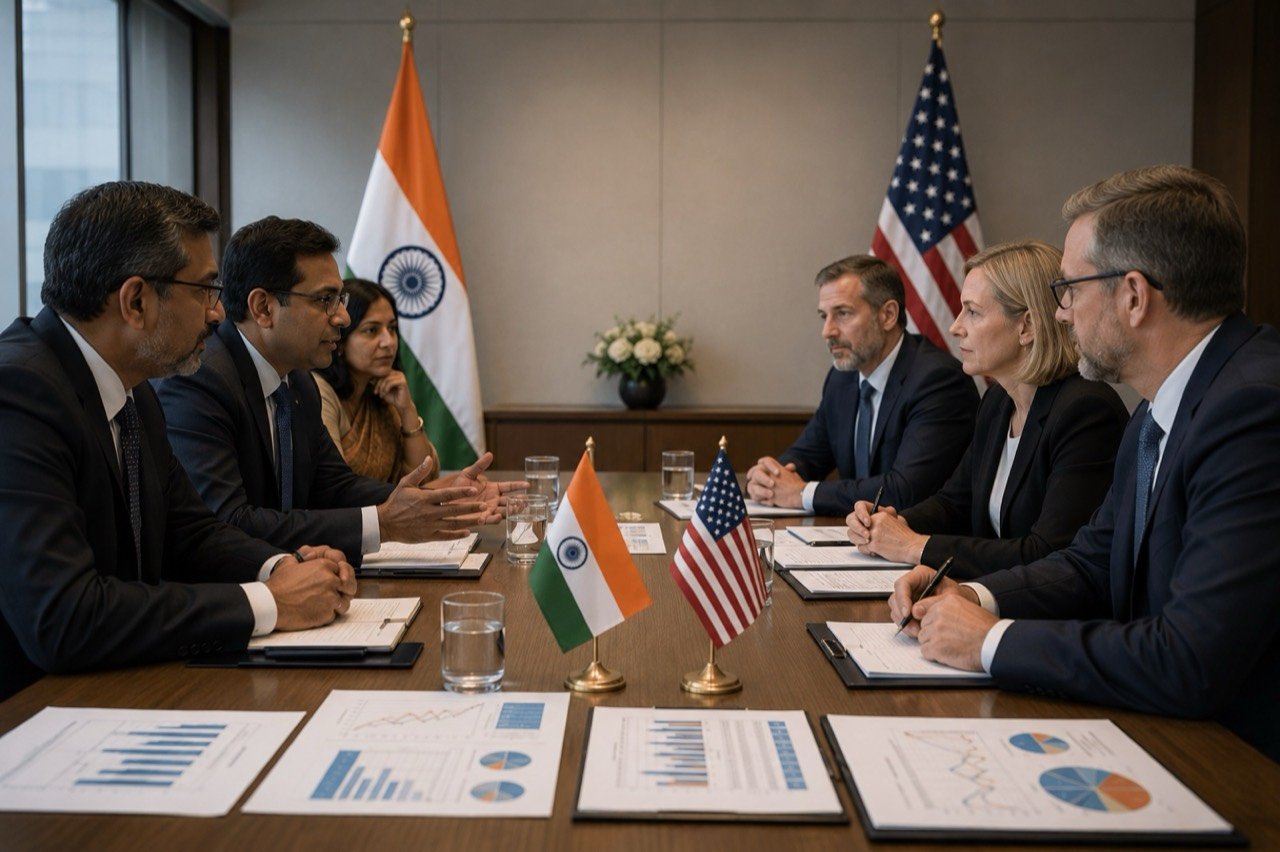
India Pushes for Tariff Advantage Over Rivals in US Trade Deal, Says Goyal
India is seeking a US trade agreement that gives its exporters a comparative tariff edge over rival economies, Commerce Minister Piyush Goyal said, even as talks run long over the central question of tariff treatment.
More from this section
More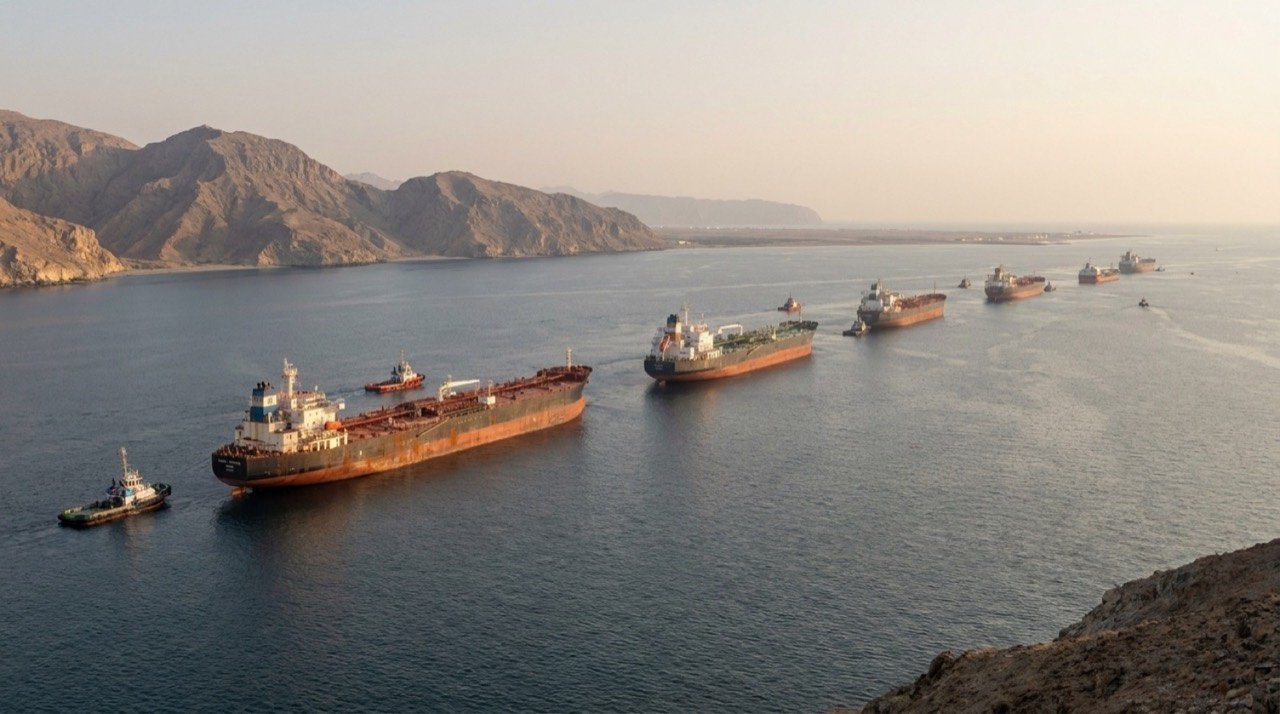
India-Bound Vessels Cross Strait of Hormuz After US-Iran De-escalation
Tankers carrying oil, gas and fertiliser bound for India have crossed the Strait of Hormuz after signs of US-Iran de-escalation, easing immediate fears over a critical energy supply lane.
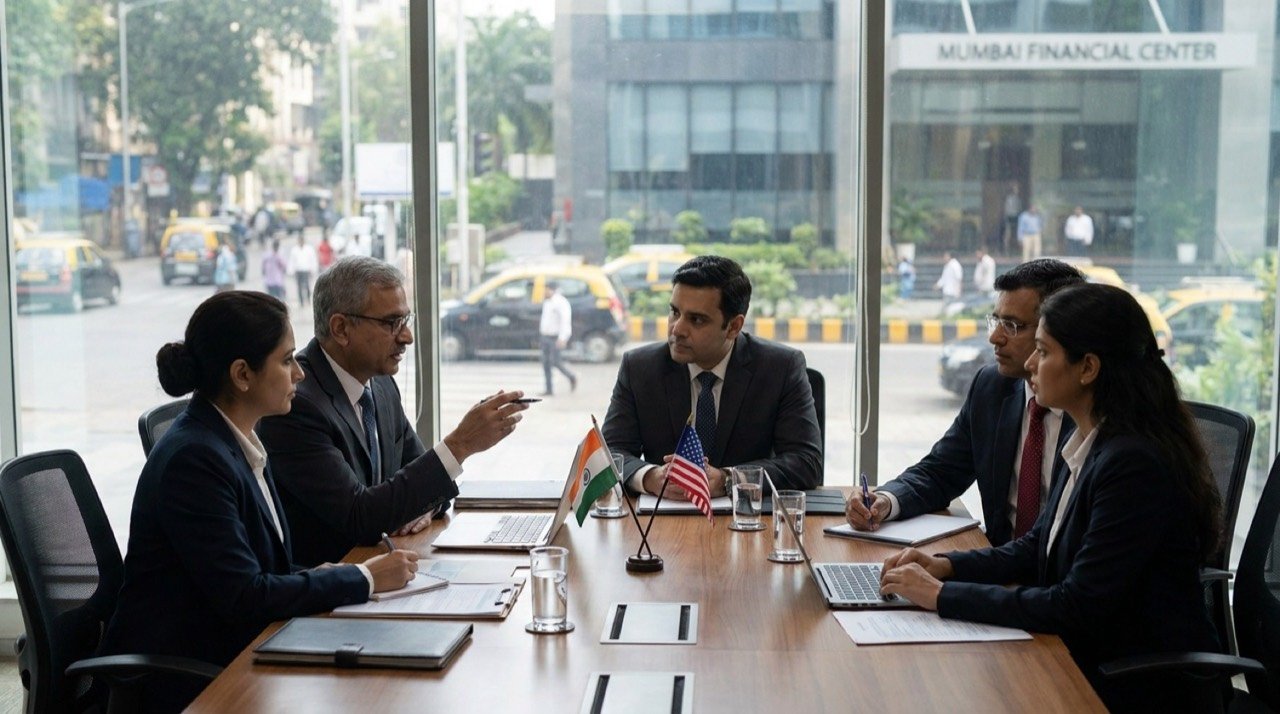
India-US Interim Trade Deal Enters Final Stretch Ahead of July Tariff Deadline
With a July tariff deadline looming, New Delhi and Washington are racing to seal an interim trade pact that shields sensitive sectors while securing predictable access to India's largest export market.
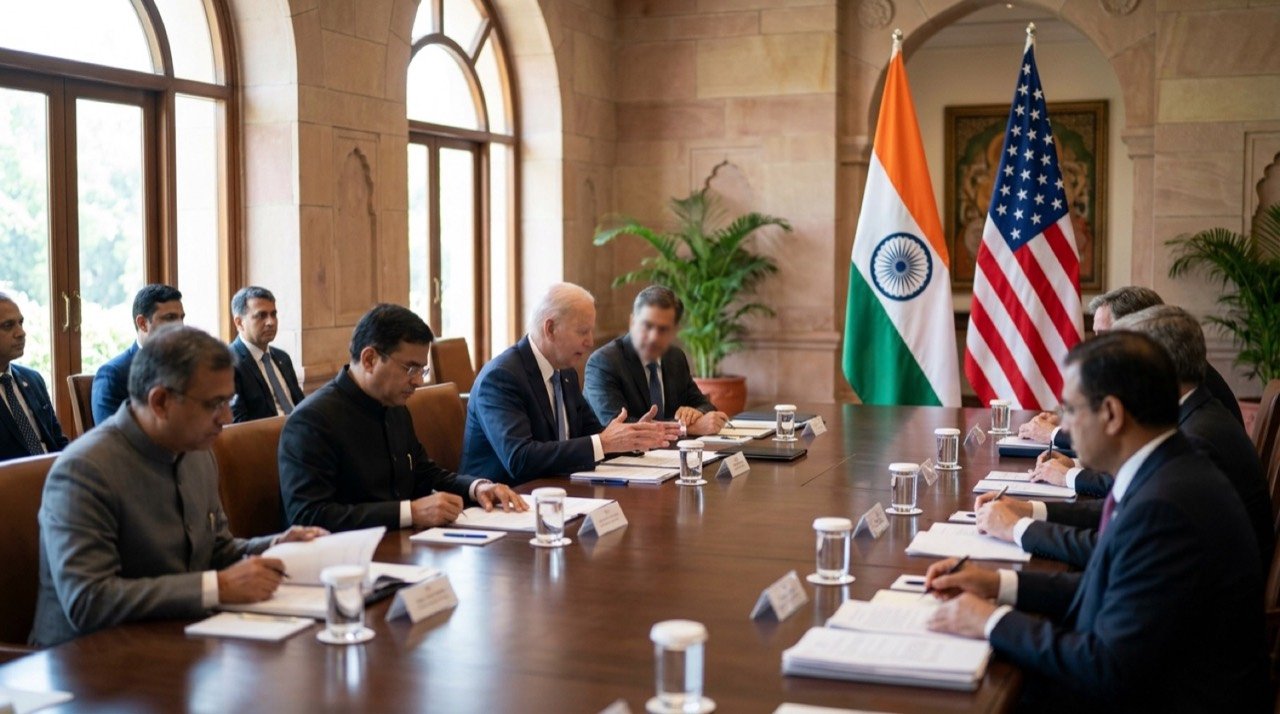
India-US Trade Talks Resume in Delhi as Exporters Seek a Competitive Edge
Piyush Goyal and US Trade Representative Jamieson Greer have begun a fresh round of negotiations on an interim deal, with India pressing for terms that hand its exporters a clear advantage over rivals.