Supreme Court Recall of Ban on Retrospective Green Clearances Sparks Pollution-Law Debate
A 2-1 majority recall of the 2025 verdict outlawing ex post facto environmental clearances has reopened a fierce debate over whether penalties can substitute for prior approval on major projects.
Commentary & Analysis ·
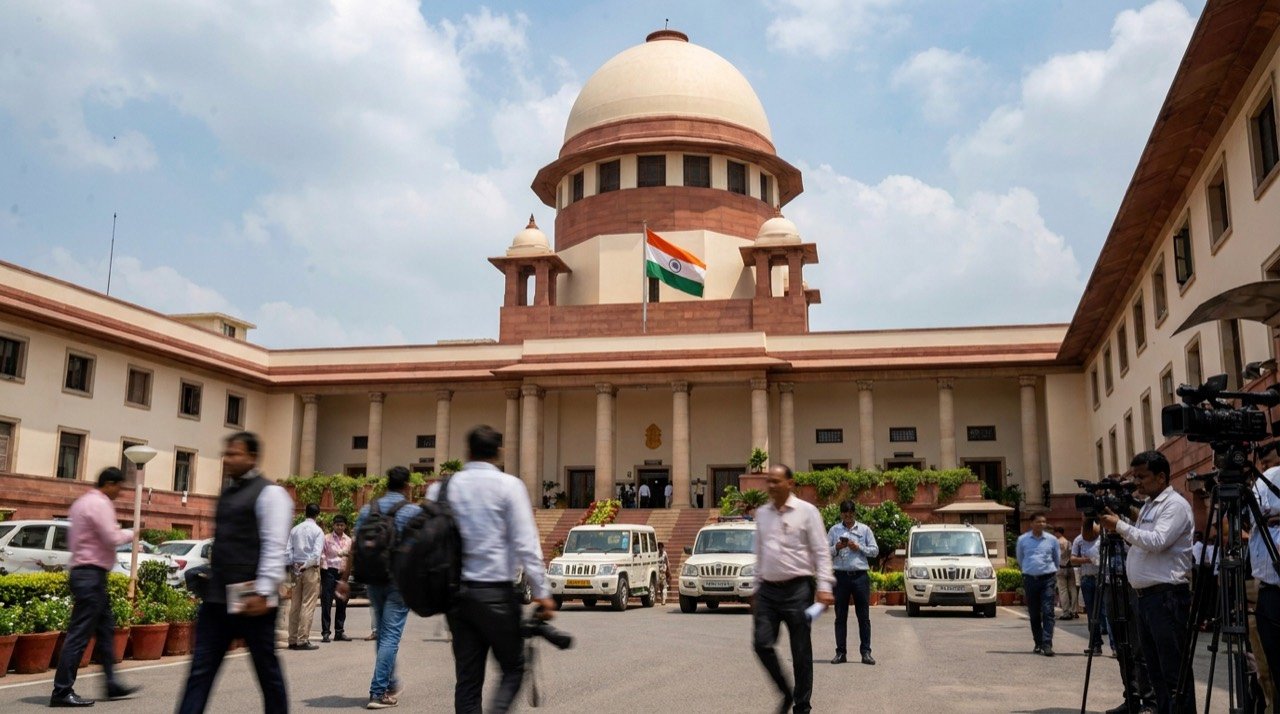
A contentious Supreme Court decision recalling its own 2025 ruling that had declared retrospective environmental clearances illegal has continued to draw sharp legal scrutiny through late June, as petitioners and environmental groups urge the bench to draw a firm line on projects that begin construction before securing approval. The reversal, arriving barely more than a year after the original prohibition, has reopened one of the most consequential questions in Indian environmental jurisprudence: whether the promise of prior appraisal can survive if violations can simply be priced and paid for after the fact.
From prohibition to penalty
In May 2025, the court had struck down notifications allowing ex post facto, or after-the-fact, clearances, calling them a gross illegality and an anathema to environmental jurisprudence that violated the precautionary principle. That ruling was unambiguous in its language and its intent: environmental clearance was to be sought and granted before a shovel touched the ground, not negotiated afterwards as a formality to legitimise work already under way. The precautionary principle, as invoked by the court at the time, rests on a simple premise; that when the potential for serious or irreversible environmental harm exists, the burden falls on the project proponent to prove safety in advance, not on regulators to undo damage after it has occurred.
By a 2-1 majority, the court later recalled that verdict, reasoning that the blanket bar would stall critical public infrastructure and cause heavy economic losses. The majority cited central projects worth around Rs 8,293 crore and state projects worth about Rs 11,168 crore that had been left pending by the earlier order, a combined figure approaching Rs 20,000 crore. That is a substantial sum by any measure, and it explains why the majority felt compelled to act: an outright ban, applied retroactively to projects already in motion, threatened to freeze investment across highways, dams, mines and industrial works simultaneously, regardless of how far along or how environmentally sensitive each project actually was. The effect of the recall is to permit projects that flouted the clearance process to seek approval later, on payment of penalties, effectively converting what had been an absolute bar into a monetised route back into compliance.
A pointed dissent
Justice Ujjal Bhuyan dissented strongly, describing the recall as a retrogression and a violation of the precautionary principle. A dissent of this kind, on a bench of only three judges, carries particular weight. It signals that the reversal was not achieved through consensus but through a narrow majority, and it puts on record a judicial voice warning that the court may be walking back ground it had only recently and forcefully claimed. Critics, echoing that dissent, warn that the regime risks creating a perverse incentive: a developer can start work without clearance, cause environmental harm, pay a penalty and then obtain approval regardless. Under such a structure, the penalty functions less as a deterrent and more as a toll, payable by those with the financial means to absorb it, while the environmental consequences of construction undertaken without scrutiny remain largely irreversible.
Petitioners have pressed the court to treat the issue as what one described as a many-headed hydra, arguing that monetising violations weakens the deterrent that prior appraisal is meant to provide. Their submission distilled the core anxiety driving this litigation: allowing violators to pay and proceed risks turning the precautionary principle into a price list, as petitioners told the court. That framing captures precisely what is at stake, that a system built to prevent harm before it happens is at risk of being reduced to a tariff schedule for harm already done.
Why it matters nationally
The dispute sits at the heart of India's effort to balance rapid infrastructure expansion with constitutional guarantees that the Supreme Court has read into Article 21, including the right to a clean and healthy environment. This is not a narrow procedural dispute confined to a handful of projects. It touches the entire architecture of how India regulates industrial and infrastructural growth, an architecture that has long struggled to reconcile the urgency of development with the slower, more deliberative demands of environmental assessment. With the Ministry of Environment, Forest and Climate Change drawn into the proceedings, the eventual settlement will shape how strictly the country enforces prior appraisal for highways, dams, mines and industrial projects for years to come.
The scale of the money involved, nearly Rs 20,000 crore across central and state projects, illustrates why governments at both levels are anxious for clarity. Projects of this magnitude typically involve years of planning, financing commitments, and contractual obligations to contractors and lenders. A prolonged legal freeze on such projects has consequences that ripple well beyond the construction sites themselves, into employment, regional development timelines and public finances. At the same time, the environmental groups and petitioners pressing the court to reconsider are not arguing against infrastructure as such; their concern is procedural discipline, that clearance must precede construction, not follow it as an afterthought once damage is already visible on the ground.
The regulatory and legal stakes ahead
What happens next matters as much as what has already been decided. The court has not closed this chapter; it remains under active scrutiny, with petitioners pushing for the bench to draw a firmer line distinguishing which categories of ex post facto applications, if any, should be permitted, and under what conditions. The Ministry of Environment, Forest and Climate Change's involvement suggests that any final resolution will likely require the executive to clarify or revise the underlying notifications that permitted retrospective clearances in the first place, rather than leaving the matter to be settled by judicial interpretation alone.
For project proponents, the uncertainty itself carries a cost. Businesses planning large infrastructure investments need predictability about whether starting work ahead of clearance is a viable, if penalised, strategy, or an outright legal risk that could halt a project indefinitely. For environmental regulators, the outcome will determine whether prior appraisal retains its teeth or becomes, in practice, an optional first step that can be skipped and settled later. For communities near project sites, the stakes are the most immediate and the least abstract, since it is their local ecosystems, water sources and forests that bear the consequences of construction undertaken without prior scrutiny.
The NE Times View
Recalling the ban on retrospective green clearances by a 2-1 margin is a consequential and worrying turn. Prior environmental scrutiny exists precisely to stop irreversible damage before it happens; allowing fines to launder it after the fact invites projects to build first and pay later. Penalties are no substitute for permission when ecosystems, once destroyed, cannot be refunded. The Rs 20,000 crore figure cited by the majority speaks to a genuine and pressing economic concern, but economic urgency has never, in principle, been sufficient justification for diluting a constitutional safeguard rooted in Article 21. Justice Bhuyan's dissent deserves to be read carefully by the full court as this matter proceeds, not as a footnote to the majority's reasoning but as a warning about where this path leads if left uncorrected.
Key takeaways
- The Supreme Court's May 2025 ruling had banned retrospective, or ex post facto, environmental clearances outright, calling them a gross illegality.
- A subsequent 2-1 majority recall permits penalty-based regularisation, citing nearly Rs 20,000 crore in stalled central and state projects.
- Justice Ujjal Bhuyan's dissent warned the recall represents a retrogression that undermines the precautionary principle.
- Petitioners argue that monetising violations turns environmental protection into a price list rather than a deterrent.
- The Ministry of Environment, Forest and Climate Change's involvement signals the final outcome will shape prior-appraisal enforcement nationwide for years to come.
You may also like to read
Supreme Court Fines Chhattisgarh Rs 2 Lakh in Decades-Old Land Compensation Case
The Supreme Court has fined the Chhattisgarh government Rs 2 lakh and upheld compensation with interest for landowners whose plot was taken for a road in 1986 without payment.
Supreme Court Strength Rises To 37 As Five New Judges Take Oath
The Centre has notified the appointment of five new judges to the Supreme Court, lifting its working strength to 37 and including a rare direct elevation from the Bar.
Supreme Court Pulls Up CARA Over Adoption Delays For Waiting Families
The Supreme Court has questioned an alleged obstructionist approach by the Central Adoption Resource Authority, spotlighting the long delays faced by children and prospective parents seeking permanent families.
Supreme Court to Weigh Ethanol Allocation Row Hitting 20% Goal
The Supreme Court will examine a challenge to a Karnataka High Court order reopening the 2025-26 ethanol allocation process, a dispute that could ripple through India's 20 percent petrol blending programme.
More from this section
More
AICTE Industry Fellowship 2026: Rs 1.5 Lakh Scheme Closes July 5
The AICTE Industry Fellowship Programme 2026, which places technical-education faculty inside leading companies on a Rs 1.5 lakh monthly stipend, reached its application deadline on July 5.
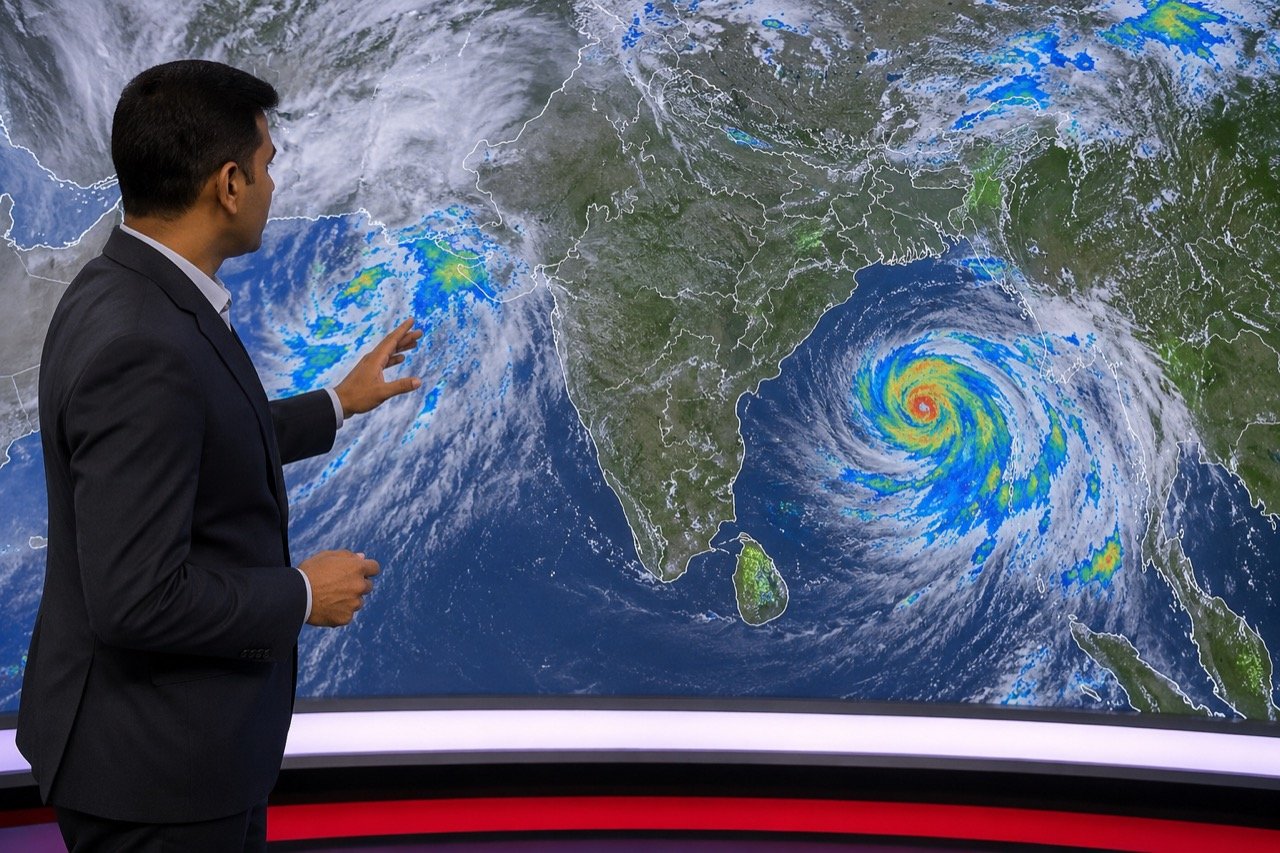
Bay of Bengal Low Pressure System Revives Monsoon Over Western India
A low-pressure system over the Bay of Bengal has pushed the monsoon back into an active phase, bringing steady heavy rain to Kerala, coastal Karnataka and Maharashtra, and putting Mumbai and Pune on preparedness watch.
Bishnoi Gang Suspects Injured in Haryana Encounter as Police Tighten Net
A joint Haryana-Delhi Police operation in Bahadurgarh left two suspected Lawrence Bishnoi gang members injured, spotlighting the multi-state coordination now central to India's fight against organised crime networks.