Supreme Court calls homemakers 'nation builders', fixes Rs 30,000 monthly value for domestic care
In a judgment recognising the economic worth of unpaid domestic work, the court set a benchmark notional income for assessing the loss of a homemaker's contribution in motor accident claims.
Commentary & Analysis ·
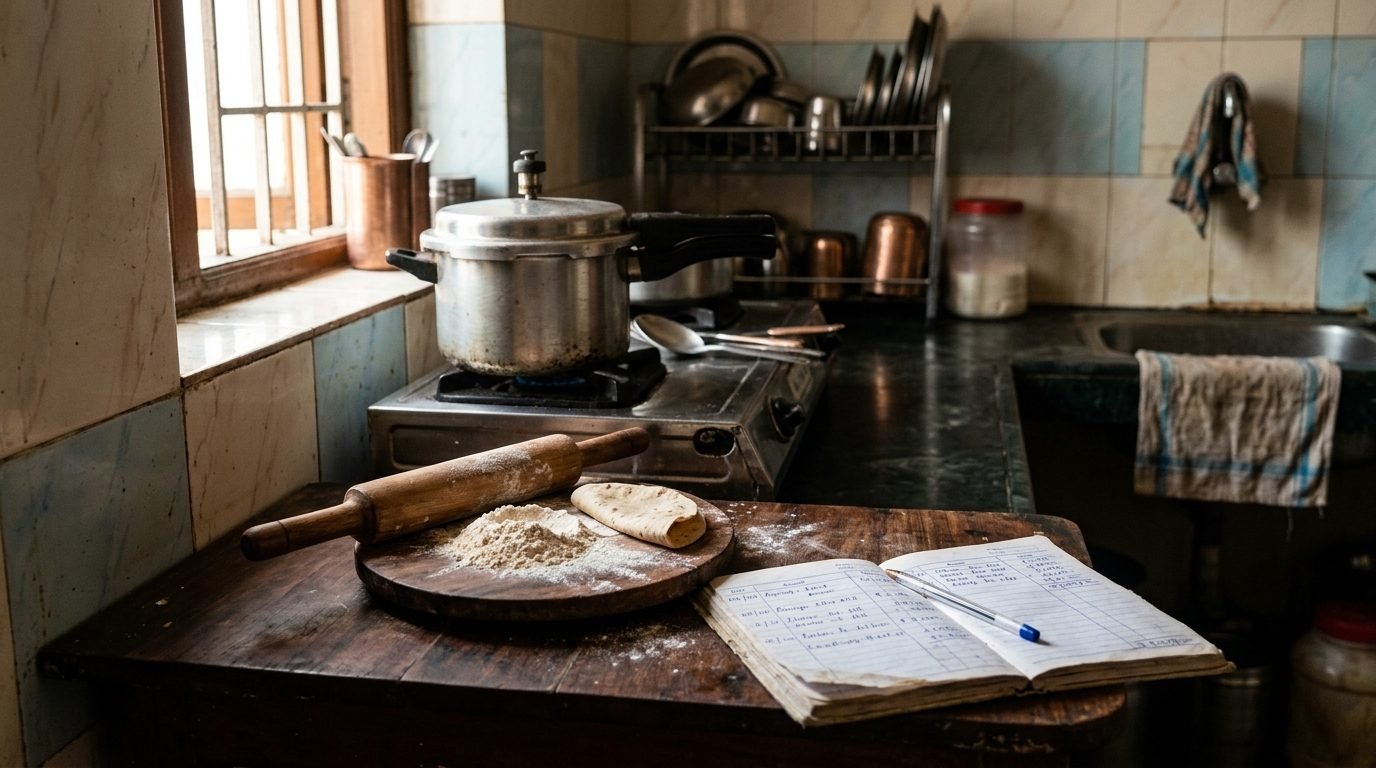
The Supreme Court has delivered a significant judgment recognising the economic and social value of homemakers, ruling that their contribution to the household must be quantified at a minimum of Rs 30,000 a month when calculating compensation in motor accident claims. Describing homemakers as 'nation builders', the court said their work extends well beyond domestic chores and carries substantial worth that the law has too often overlooked.
The verdict, pronounced on 11 June by a bench of Justices Sanjay Karol and N Kotiswar Singh, addresses a long-standing difficulty in compensation jurisprudence, where the absence of a salary for unpaid domestic work has frequently led tribunals to assign homemakers a low notional income. The court sought to correct that by establishing a clearer national benchmark.
What the court held
The bench fixed a notional monthly income of Rs 30,000 for assessing the loss of domestic care services, and said this should be treated as a distinct head of compensation. In cases involving the death of a homemaker, the court directed that Motor Accident Claims Tribunals, High Courts and the Supreme Court itself should award an additional lump-sum amount under the category of 'loss of domestic care'.
The judges observed that the contribution of a homemaker carries substantial economic and social value, encompassing the running of the household, the care of children and the elderly, and the unseen labour that sustains family life. The court said this value must not be diminished simply because it does not generate a wage.
Correcting an old undervaluation
Indian courts have for decades grappled with how to value the work of a homemaker in accident claims. Earlier rulings recognised the principle that such work has economic value, but tribunals often relied on conservative notional income figures that critics said understated the real loss to a family. By prescribing a minimum benchmark and a separate head of compensation, the latest judgment seeks to bring greater consistency and fairness to these assessments.
- Notional monthly income for homemakers' domestic care fixed at a minimum of Rs 30,000
- Loss of domestic care to be treated as a separate head of compensation
- Additional lump-sum award directed in cases involving the death of a homemaker
- Tribunals, High Courts and the Supreme Court bound to apply the benchmark
- Court directed faster disposal of motor accident compensation claims
A directive on delays
Beyond the question of valuation, the bench also turned to the pace of litigation. The court directed High Courts to monitor motor accident compensation claims more closely, stressing that such cases should be resolved without prolonged delays. Compensation disputes can stretch on for years, a burden that falls hardest on families who have lost their primary caregiver or earner.
Legal observers noted that while the immediate context is motor accident law, the judgment's language about the worth of unpaid domestic work carries broader significance for how the legal system regards the contribution of women, who make up the overwhelming majority of homemakers in India.
Outlook
The ruling is expected to influence how tribunals across the country compute awards in the years ahead, providing a floor where previously there was wide discretion. Whether the benchmark figure is periodically revised to account for inflation, and how consistently lower courts apply the separate head of compensation, will determine the judgment's practical reach.
For families navigating the aftermath of a fatal road accident, the decision offers a clearer and more dignified basis for claiming the loss of a homemaker's care. For the wider debate on the economic recognition of unpaid work, the court's framing of homemakers as nation builders is likely to be cited well beyond the courtroom.
The NE Times View
By putting a number on unpaid domestic labour, the court has done what economics textbooks long resisted: acknowledged that homemakers underwrite the formal economy. The Rs 30,000 benchmark is modest, and limited to accident-claim arithmetic, but its symbolic weight is large in a country where women's care work stays invisible in GDP. The real question is whether this reasoning eventually nudges policy on pensions, insurance and social security beyond the courtroom.
This article is original commentary and analysis by The NE Times. Background facts were referenced from LiveLaw and India TV News.
You may also like to read
Supreme Court Fines Chhattisgarh Rs 2 Lakh in Decades-Old Land Compensation Case
The Supreme Court has fined the Chhattisgarh government Rs 2 lakh and upheld compensation with interest for landowners whose plot was taken for a road in 1986 without payment.
Supreme Court Pulls Up CARA Over Adoption Delays For Waiting Families
The Supreme Court has questioned an alleged obstructionist approach by the Central Adoption Resource Authority, spotlighting the long delays faced by children and prospective parents seeking permanent families.
Supreme Court Strength Rises To 37 As Five New Judges Take Oath
The Centre has notified the appointment of five new judges to the Supreme Court, lifting its working strength to 37 and including a rare direct elevation from the Bar.
Supreme Court Refuses to Review Collegium Recommendation Process
The Supreme Court declined a Himachal Pradesh judicial officer's plea, warning that scrutiny of confidential collegium deliberations could open a difficult precedent in judicial appointments.
More from this section
More
AICTE Industry Fellowship 2026: Rs 1.5 Lakh Scheme Closes July 5
The AICTE Industry Fellowship Programme 2026, which places technical-education faculty inside leading companies on a Rs 1.5 lakh monthly stipend, reached its application deadline on July 5.
Bay of Bengal Low Pressure System Revives Monsoon Over Western India
A low-pressure system over the Bay of Bengal has pushed the monsoon back into an active phase, bringing steady heavy rain to Kerala, coastal Karnataka and Maharashtra, and putting Mumbai and Pune on preparedness watch.
Bishnoi Gang Suspects Injured in Haryana Encounter as Police Tighten Net
A joint Haryana-Delhi Police operation in Bahadurgarh left two suspected Lawrence Bishnoi gang members injured, spotlighting the multi-state coordination now central to India's fight against organised crime networks.