India's Senior Living Market Booms as Retirees Choose Managed Communities
India's senior living market is projected to surge from about $4.47 billion in 2026 to $14.14 billion by 2031, as ageing retirees increasingly opt for safe, service-led managed communities.
Commentary & Analysis ·
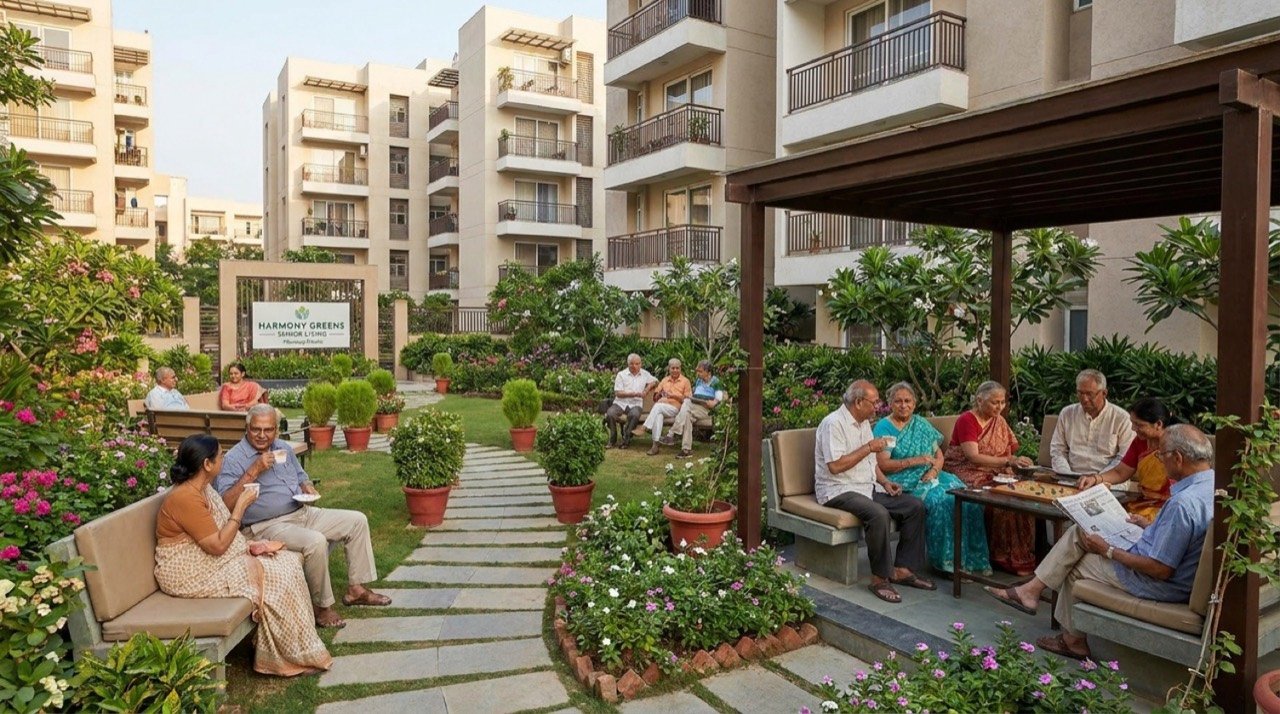
India's senior living market is on course for sharp growth as more older citizens choose purpose-built, managed communities over the traditional path of simply returning to a hometown home. The shift reflects a quiet but profound change in how Indian families think about ageing, care and independence, and it is unfolding at a pace that has caught the attention of developers, healthcare providers and investors alike. What was once a marginal category within Indian real estate is beginning to look like a durable, fast-growing segment in its own right.
A market poised to more than triple
Market estimates cited in recent reports project the sector rising from about $4.47 billion in 2026 to $14.14 billion by 2031. That trajectory would make senior living one of the faster-growing niches in Indian real estate. A tripling of market size within five years is not a modest forecast, and it signals that those tracking the sector expect demand to compound rather than merely tick upward. For an economy where housing has traditionally been organised around the joint family and the multigenerational home, this is a meaningful departure. It suggests that senior living is shifting from a curiosity serving a small, wealthy, urban minority into a category with genuine mainstream potential.
The growth is underpinned by demographics. India's population is ageing steadily, and a rising share of older citizens now has the urban wealth and the inclination to pay for housing designed around their needs. This combination of scale and spending power is precisely what draws commercial interest: a large and growing cohort of retirees who can afford, and are willing to pay for, dedicated care-oriented housing is the kind of addressable market that real estate developers and healthcare operators build long-term strategies around.
Why retirees are rethinking the move home
For decades, the assumption was that retirees would spend their later years in the family home, often supported by adult children. This was less a lifestyle choice than a default, baked into the structure of Indian family life. Smaller families, dual-income households and the migration of younger relatives to cities and abroad have all chipped away at that model. As households shrink and adult children disperse for work, the practical infrastructure of care that once existed within a family home, someone present, someone able to respond in an emergency, someone to share daily life with, has thinned out considerably.
Managed communities offer an alternative: secure campuses with on-site healthcare access, assisted living options and the social companionship that can be hard to find in isolation. Safety and ready medical support are repeatedly cited as decisive factors. This is a telling detail. It suggests the appeal of these communities is not primarily about luxury or lifestyle branding, but about a more basic anxiety: the fear of growing old alone, without anyone nearby who would notice if something went wrong. Managed communities, in effect, are being asked to substitute for the family support structures that urbanisation and migration have eroded.
What is driving demand
The market's expansion rests on a cluster of converging trends rather than any single cause, from longer lifespans to changing attitudes about institutional care. Taken together, these factors explain why growth projections for the sector are so steep:
- A steadily ageing population across India
- Better and more accessible healthcare within communities
- Rising urban wealth among older citizens
- Demand for safer, professionally managed assisted living
- Smaller and more dispersed families changing care patterns
None of these trends is new or sudden in itself. India's demographic transition has been under way for years, urban incomes have been rising steadily, and family structures have been shifting for at least a generation. What appears to be happening now is a convergence: enough of these forces have matured simultaneously that a market which previously lacked critical mass is starting to reach it. This is often how niche categories tip into mainstream ones, not through a single breakthrough but through the slow alignment of several underlying conditions.
How developers are responding
Developers are responding with formats that range from independent-living apartments to full-care assisted facilities, often bundling healthcare, dining and recreation. This spectrum of offerings matters because it reflects the reality that "senior living" is not a single product. Some retirees want an active, independent lifestyle with the reassurance of on-site medical support in reserve. Others require more intensive, ongoing assisted care. A sector that can serve both ends of that spectrum, and the many gradations in between, has a much larger addressable market than one offering only high-end retirement resorts or only clinical care homes.
The challenge will be maintaining quality and affordability as the sector scales beyond the metros into smaller cities. Expansion into tier two and tier three cities is likely to be the real test of whether this growth is durable. Metro markets can support premium pricing because urban wealth is concentrated there, but the broader ageing population, including many who will eventually need this kind of support, lives well beyond the largest cities. Whether operators can replicate the service standards of flagship metro projects at price points accessible to a wider population will determine whether the projected $14.14 billion figure by 2031 is realistic or optimistic.
What is at stake as the sector scales
If the projected growth materialises, senior living could move from a niche offering to a mainstream housing category within a few years, reshaping both the real estate market and the social expectations around how Indians spend their retirement. That is a significant social shift in its own right. It would mean a gradual normalisation of the idea that ageing well does not necessarily require living with one's children, and that paying for professionally managed care is a legitimate and respectable choice rather than a sign of family failure or abandonment. Cultural attitudes toward ageing and filial duty are deeply entrenched in India, and a market of this scale succeeding would itself be evidence that those attitudes are evolving alongside the economics.
For families, the rise of managed communities offers a genuine alternative at a moment when the traditional support model is under real strain from migration and smaller households. For investors and developers, it offers a rare combination in Indian real estate: a demographic tailwind that is easy to forecast, since population ageing does not reverse, paired with rising willingness to pay. For healthcare providers, it offers a chance to build recurring, embedded relationships with a population that will need increasing levels of medical support over time.
The NE Times View
A market tripling in five years reflects a real demographic shift: longer lifespans, smaller and more dispersed families, and rising means among urban retirees. The opportunity is genuine, but so is the risk of a lightly regulated sector overselling care it cannot deliver. Retirees making this choice are often doing so precisely because they lack the family safety net that would otherwise catch problems early, which makes them a more, not less, vulnerable customer base if standards slip.
India needs clear standards for medical support, pricing transparency and resident protections before the boom outruns oversight. A fast-growing, capital-intensive sector selling long-term promises of care to elderly residents is exactly the kind of market where early regulatory groundwork pays off, and where its absence is punished only later, when it is harder to fix. Done right, managed communities fill a real gap, done carelessly, they exploit a vulnerable cohort. The next few years, as the sector moves from metro pilot projects into smaller cities and a broader income bracket, will show which version of this story India ends up with.
Key takeaways
- India's senior living market is projected to grow from about $4.47 billion in 2026 to $14.14 billion by 2031, among the fastest-growing niches in Indian real estate.
- Demand is driven by an ageing population, rising urban wealth, smaller and more dispersed families, and demand for safer, professionally managed assisted living.
- Retirees are increasingly choosing managed communities over the traditional hometown home, citing safety and ready medical support as decisive factors.
- Developers are scaling formats from independent-living apartments to full-care facilities, with the real test being affordability and quality as the sector expands beyond metros.
- The NE Times cautions that regulatory standards on medical care, pricing transparency and resident protections must keep pace with growth to prevent exploitation of a vulnerable population.
You may also like to read
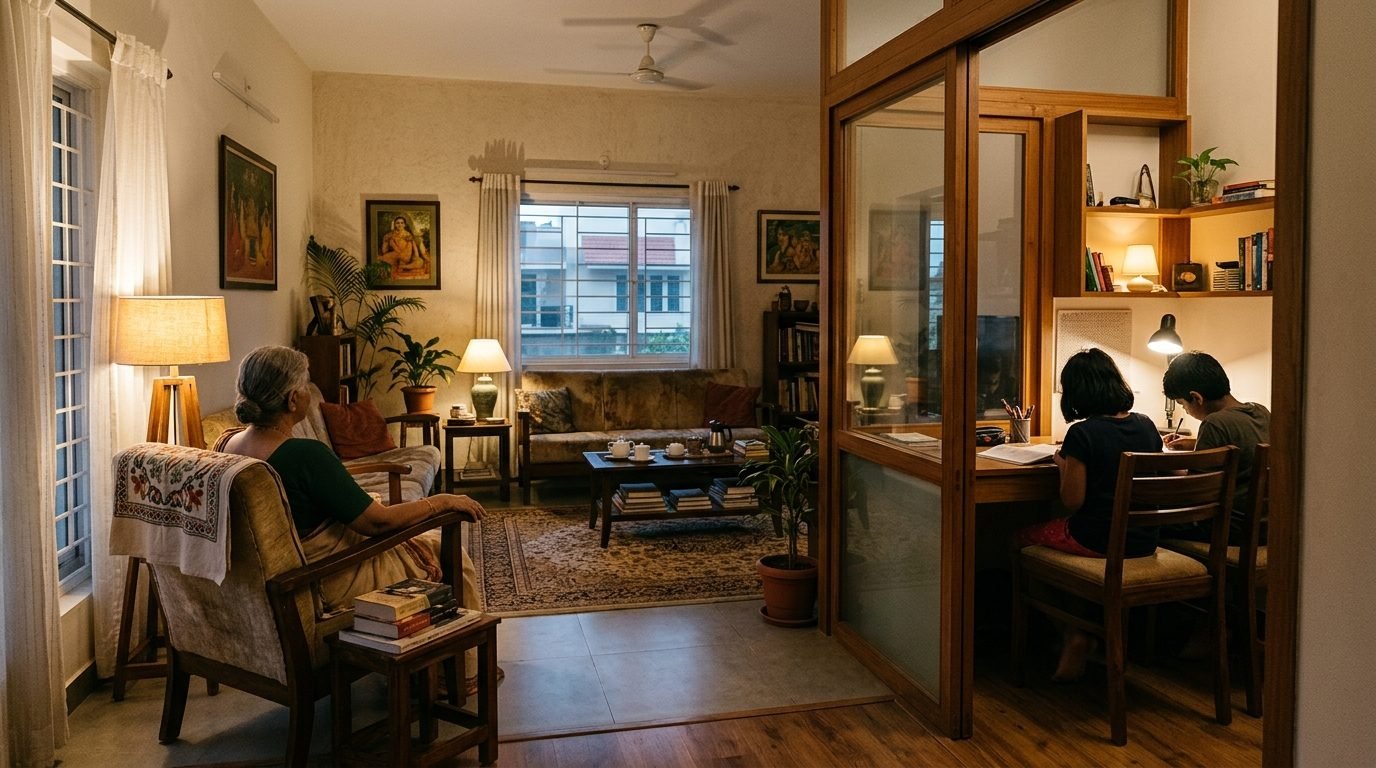
The Joint Family, Redesigned: Multigenerational Living Returns to Indian Homes
Rising real-estate and living costs are reviving the multigenerational household, but the 2026 version is built on flexible rooms, work-from-home corners and shared smart systems.

Slow Living and Wellness Travel Catch On With Urban Indians
Burnt out by always-on city life, a growing number of Indians are seeking quieter holidays, mindful routines and digital detoxes.

Ambubachi Mela Opens at Kamakhya Temple, Drawing Pilgrims and Livelihoods
The annual Ambubachi Mela at Guwahati's Kamakhya Temple has begun, drawing lakhs of pilgrims, sadhus and traders to one of India's most revered Shakti Peethas on Nilachal Hill.
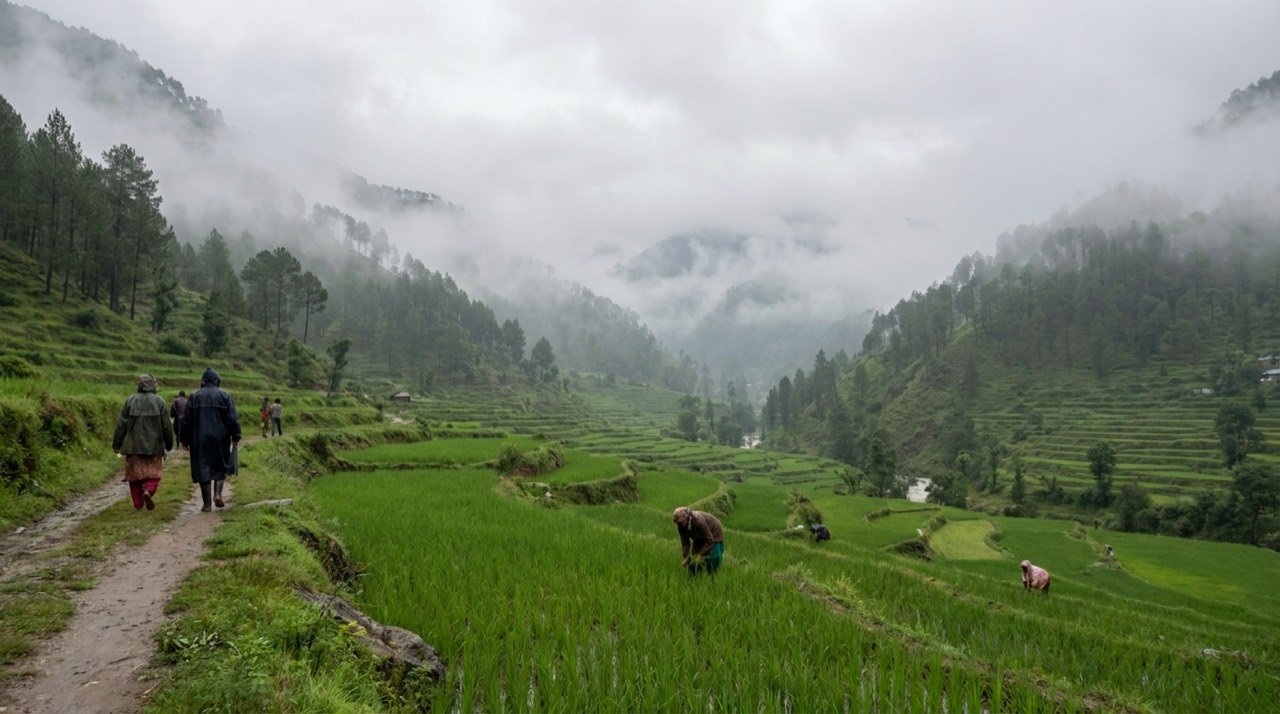
Misty Valleys and Cheaper Fares: India's Offbeat Monsoon Travel Boom in 2026
With domestic fares falling sharply and travellers seeking solitude, offbeat Himalayan hamlets, the rain-soaked Northeast and Ladakh's rain-shadow deserts are redrawing India's monsoon travel map in 2026.
More from this section
More
Bengaluru Lamborghini-Auto Swap: Entrepreneur's Gesture Goes Viral
A Bengaluru entrepreneur's spontaneous decision to trade seats with an auto-rickshaw driver, putting the cabbie behind a Lamborghini's wheel, has charmed social media and become the city's feel-good story of the week.
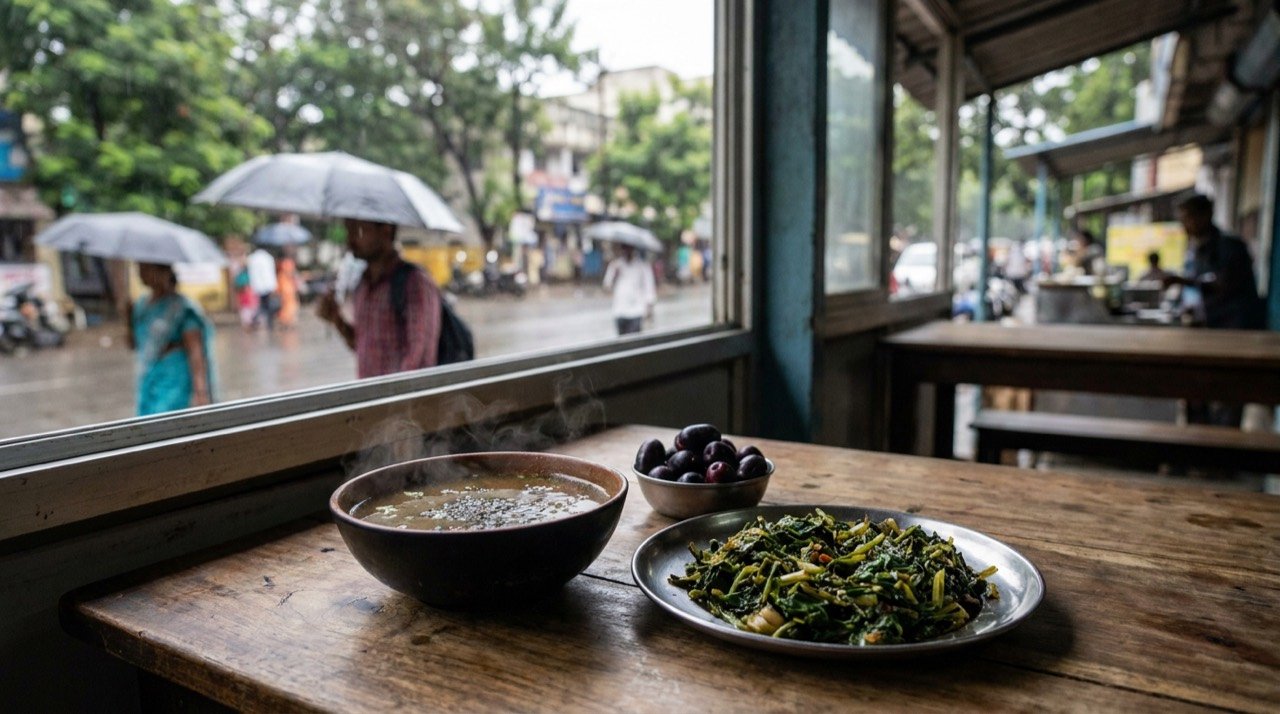
India's Monsoon Plate Returns to Its Roots as Seasonal Eating Goes Mainstream in 2026
From Kerala's ten-leaf stir-fries to jamun, rasam and warming spices, India's monsoon kitchens are blending ancestral ritucharya wisdom with the 2026 obsession with gut health and immunity.
Misty Valleys and Cheaper Fares: India's Offbeat Monsoon Travel Boom in 2026
With domestic fares falling sharply and travellers seeking solitude, offbeat Himalayan hamlets, the rain-soaked Northeast and Ladakh's rain-shadow deserts are redrawing India's monsoon travel map in 2026.