India Holds Chintan Shivir on Green Trade Barriers and FTA Risks for Exporters
A two-day workshop in New Delhi examines how environment-linked non-tariff measures and carbon rules could squeeze market access for Indian exporters across key sectors.
Commentary & Analysis ·
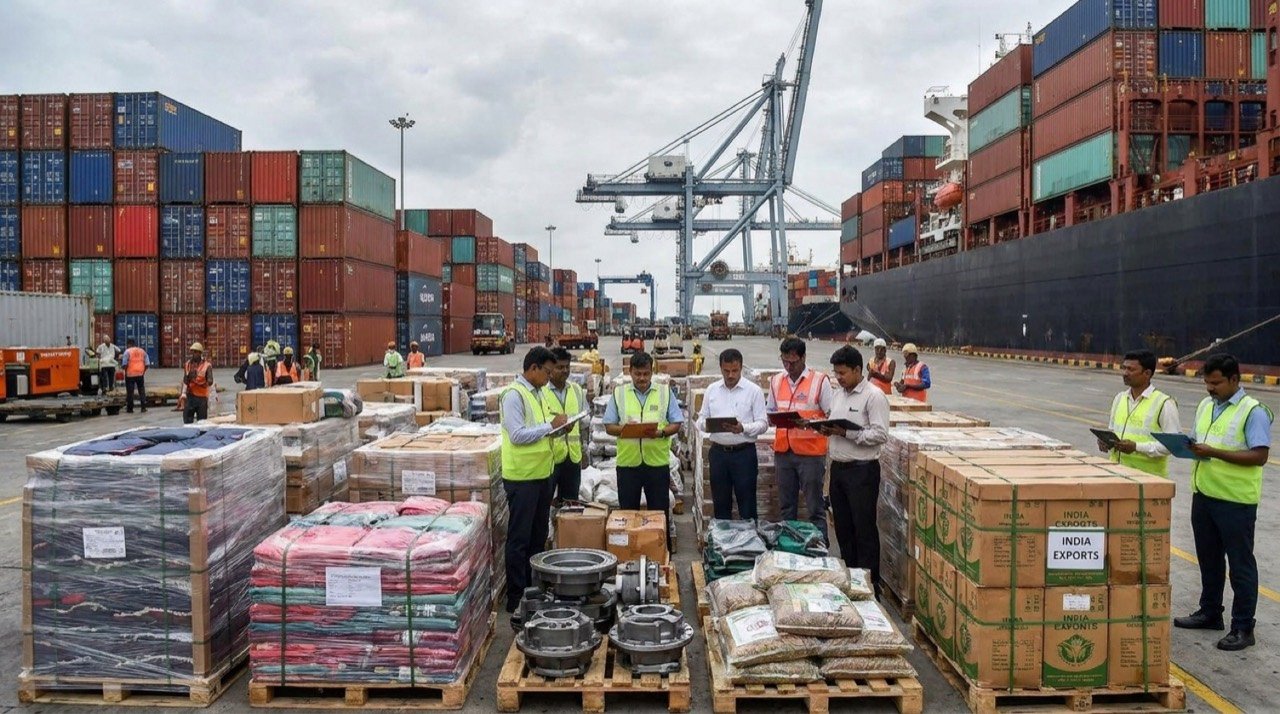
A two-day national Chintan Shivir on environment-related non-tariff measures and free trade agreements has begun in New Delhi, bringing officials and trade experts together to assess a growing risk for Indian exporters: rules that increasingly link market access to environmental compliance rather than tariffs alone. The workshop, though modest in format, addresses a shift in the architecture of global trade that has been building for several years and is now moving from the margins of policy discussion to the centre of India's export strategy.
For decades, Indian exporters competed chiefly on price, quality and delivery reliability. That calculus is changing. As major markets embed carbon and sustainability conditions into their trade regimes, exporters must now also satisfy compliance and reporting demands that have little to do with the traditional metrics of competitiveness. This is the backdrop against which the Chintan Shivir, literally a "contemplation camp" or brainstorming retreat, has been convened.
Who convened the workshop and why
The workshop was organised by the Department of Commerce alongside the Centre for WTO Studies and the Centre for Research in International Trade at the Indian Institute of Foreign Trade. This pairing of a government department with two specialist trade-research institutions signals an intent to move beyond routine consultation towards a more rigorous, evidence-based assessment of the challenge. The Centre for WTO Studies in particular has long tracked how environmental measures interact with multilateral trade rules, making it a natural partner for a discussion of this kind.
The stated focus is on climate and sustainability-linked trade measures, including technical barriers to trade, carbon-related requirements and deforestation-linked rules that may affect Indian goods abroad. These are not hypothetical concerns. Major trading partners have been steadily introducing mechanisms that condition market access on environmental performance, and India, as one of the world's largest exporting economies, cannot afford to treat these developments as someone else's problem. The discussion matters precisely because global trade rules are increasingly tied to environmental standards, and the pace of that shift appears to be accelerating rather than slowing.
Which sectors are exposed
According to the workshop's framing, Indian exporters in metals, textiles, agriculture, engineering and chemicals could face new documentation, certification and carbon-reporting burdens. These are sectors that together account for a substantial share of India's outbound trade and employ millions of workers, from large integrated manufacturers to small workshops that supply components and finished goods into global value chains.
It is worth pausing on why smaller firms are singled out as especially vulnerable. Large exporters typically have the capital, technical staff and legal counsel to absorb new compliance obligations, even if grudgingly. Small and medium enterprises rarely have this cushion. For them, the cost of meeting new requirements, and of proving compliance through audits, certifications and reporting systems, may prove as significant as any tariff, and in some cases more damaging, because tariffs are visible and predictable while compliance costs are diffuse, recurring and administratively burdensome. A small textile exporter in Tiruppur or a metals fabricator in the Delhi-NCR belt does not have the same capacity to absorb a sudden new carbon-reporting mandate as a large conglomerate does.
Shaping the rules rather than absorbing them
Officials at the workshop said its aim is to help India formulate responses through World Trade Organization processes and FTA negotiations, rather than absorbing these measures passively. This is a meaningful distinction. A passive approach would mean Indian exporters simply adapting, sector by sector, to whatever conditions foreign markets impose, with the government reacting after the fact. An active approach means India tries to shape the rules themselves, and simultaneously prepares its industry to meet them, in parallel.
This dual-track approach reflects a broader lesson many developing economies have drawn from recent trade history: measures framed as environmental protection can, intentionally or not, function as protectionism against exporters who lack the infrastructure to comply quickly. India's position in WTO negotiations and in bilateral or plurilateral FTA talks will need to press two points simultaneously, that legitimate environmental goals deserve serious engagement, and that compliance timelines and cost burdens must account for the realities facing developing-economy exporters, particularly smaller firms.
The compliance pressures ahead
The workshop identified a cluster of pressures that Indian exporters should expect to navigate in the coming years. Technical barriers to trade will increasingly require new product standards specific to environmental performance. Carbon-related requirements and emissions reporting will demand data systems many firms do not yet have in place. Deforestation-linked rules will affect agricultural and commodity exports, an area where traceability across long and often informal supply chains is notoriously difficult to establish. On top of these substantive requirements sit additional certification and documentation costs that accumulate regardless of firm size, but that weigh disproportionately on smaller exporters who lack dedicated compliance teams.
Taken together, these pressures describe a trading environment in which market access is no longer just about clearing customs and meeting quality specifications. It is about demonstrating, often through third-party certification, that a product's production process meets environmental benchmarks set by the importing country or bloc. The Department of Commerce, in comments cited at the workshop, said plainly that its aim is to help India formulate responses through WTO processes and FTA negotiations, a formulation that underscores the government's preference for shaping outcomes rather than merely reacting to them.
What is at stake for India's trade position
The outcome of this exercise could shape how India protects the competitiveness of its exporters while engaging seriously with sustainable trade standards. This is not a binary choice between resistance and compliance. The more difficult, and more consequential, task is calibrating the balance between resisting measures India sees as protectionist in substance if not in name, and preparing domestic industry to meet legitimate environmental standards that are likely here to stay regardless of India's objections.
The balance the country strikes will influence its trade position for years. Get it wrong in either direction, by resisting too broadly and appearing indifferent to genuine environmental concerns, or by absorbing every new measure without pushing back on unfair terms, and Indian exporters could find themselves either isolated diplomatically or squeezed commercially. Getting it right requires sustained institutional capacity: negotiators who understand both trade law and environmental science, industry bodies that can translate shopfloor realities into policy input, and a government willing to invest in the data infrastructure that credible emissions reporting requires.
The NE Times View
Carbon border levies and green non-tariff measures are the next frontier of protectionism, and Indian exporters are right to be alarmed. Workshops of this kind are useful only if they convert into a strategy: faster decarbonisation of key sectors, robust emissions data systems, and hard-nosed negotiation in FTAs so that India is not penalised for being a developing economy still building its compliance infrastructure. The cost of inaction is not dramatic or immediate. It is lost market access, accruing quietly, sector by sector, as importing countries tighten conditions that Indian exporters are not yet equipped to meet. A single national conclave cannot solve this on its own, but it can, if followed through, mark the start of a more deliberate and better-resourced response.
Key takeaways
- The Department of Commerce, the Centre for WTO Studies and the Centre for Research in International Trade at IIFT are jointly running a two-day Chintan Shivir in New Delhi on environmental non-tariff measures and FTA risk.
- Metals, textiles, agriculture, engineering and chemicals exporters face rising exposure to technical barriers, carbon-reporting requirements and deforestation-linked rules, with smaller firms bearing disproportionate compliance costs.
- Officials say the goal is to shape WTO and FTA outcomes proactively rather than absorb green trade measures passively.
- India's ability to balance resistance to protectionist measures with genuine preparation for legitimate environmental standards will shape its trade competitiveness for years to come.
- Without follow-through, in decarbonisation, emissions data and negotiating leverage, the workshop risks becoming a talking exercise while market access erodes sector by sector.
You may also like to read
India-US Trade Deal '99% Done' as Modi-Trump G7 Meeting Looms
Negotiators wrapped a four-day round in New Delhi with most of a bilateral pact settled, but agriculture and dairy access remain the stubborn final hurdle.
Board of Trade Meets as Exporters Press on FTAs and GST Refunds
Commerce Minister Piyush Goyal chaired a Board of Trade meeting where exporters pushed for faster GST refunds, lower logistics costs and workable free trade agreements amid global demand uncertainty.
India-US Trade Talks Resume in Delhi as Exporters Seek a Competitive Edge
Piyush Goyal and US Trade Representative Jamieson Greer have begun a fresh round of negotiations on an interim deal, with India pressing for terms that hand its exporters a clear advantage over rivals.
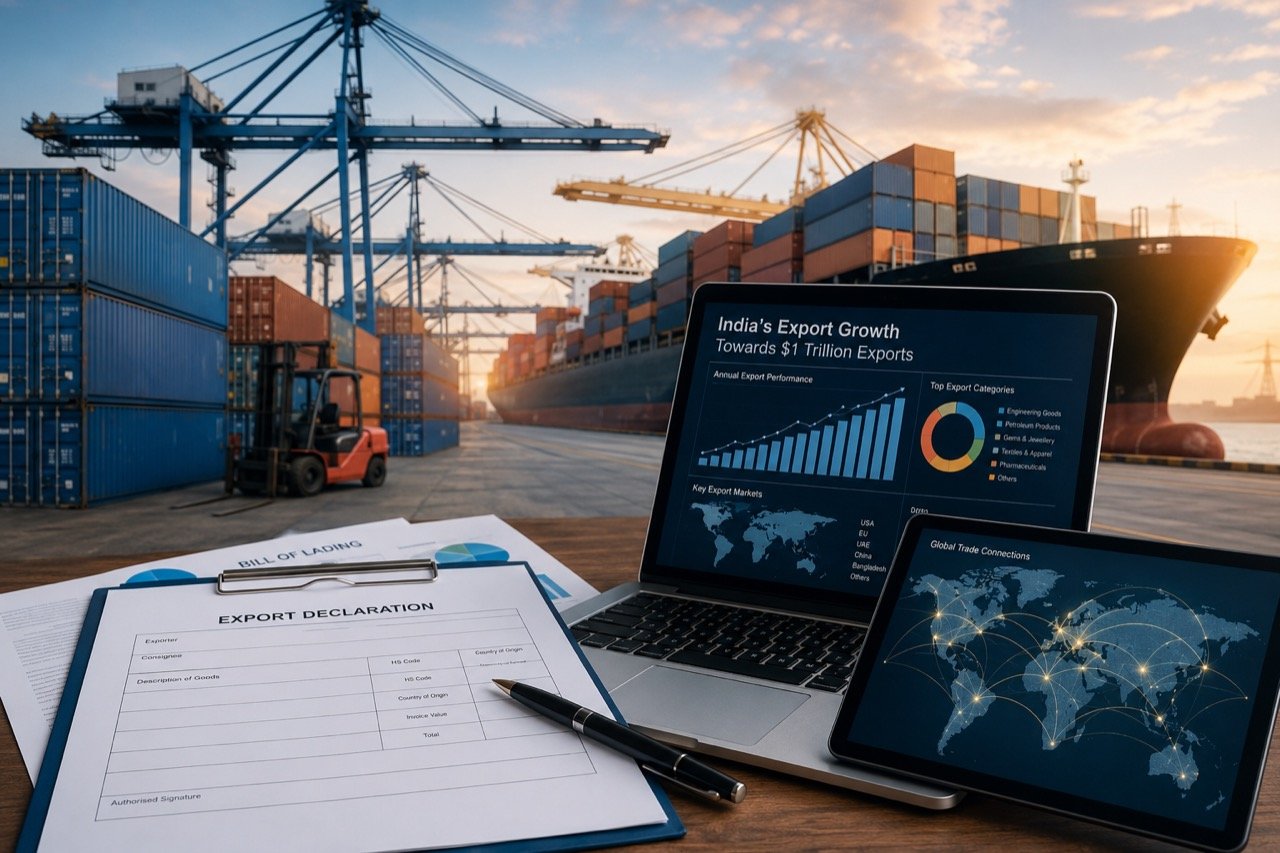
India Targets $1 Trillion in FY26 Exports as Trade Push Widens
The commerce ministry has reaffirmed a $1 trillion export goal for FY26 at a Board of Trade meeting led by Piyush Goyal, leaning on a seven-point action plan spanning merchandise, services and defence exports.
More from this section
More
Adani Case: US DOJ Pushes for Permanent Dismissal of Charges
The US Department of Justice has urged a judge to permanently dismiss charges against Gautam Adani, calling the case legally flawed — a reversal with consequences for markets, diplomacy and cross-border enforcement.

Akasa Air Inducts 40th Aircraft in Indian Aviation Scale-Up
Akasa Air's 40th aircraft, ferried to Bengaluru via Seattle, Reykjavik and Cairo, marks a fleet milestone for the young carrier and a fresh signal that India's aviation market remains firmly in expansion mode.
BARC Ratings Suspension Leaves Indian TV Industry Flying Blind
BARC's pause on television ratings has put India's broadcast measurement system under fresh scrutiny, leaving broadcasters, advertisers and media planners without the weekly audience data that anchors the TV economy.