India-US Trade Deal '99% Done' as Modi-Trump G7 Meeting Looms
Negotiators wrapped a four-day round in New Delhi with most of a bilateral pact settled, but agriculture and dairy access remain the stubborn final hurdle.
Commentary & Analysis ·
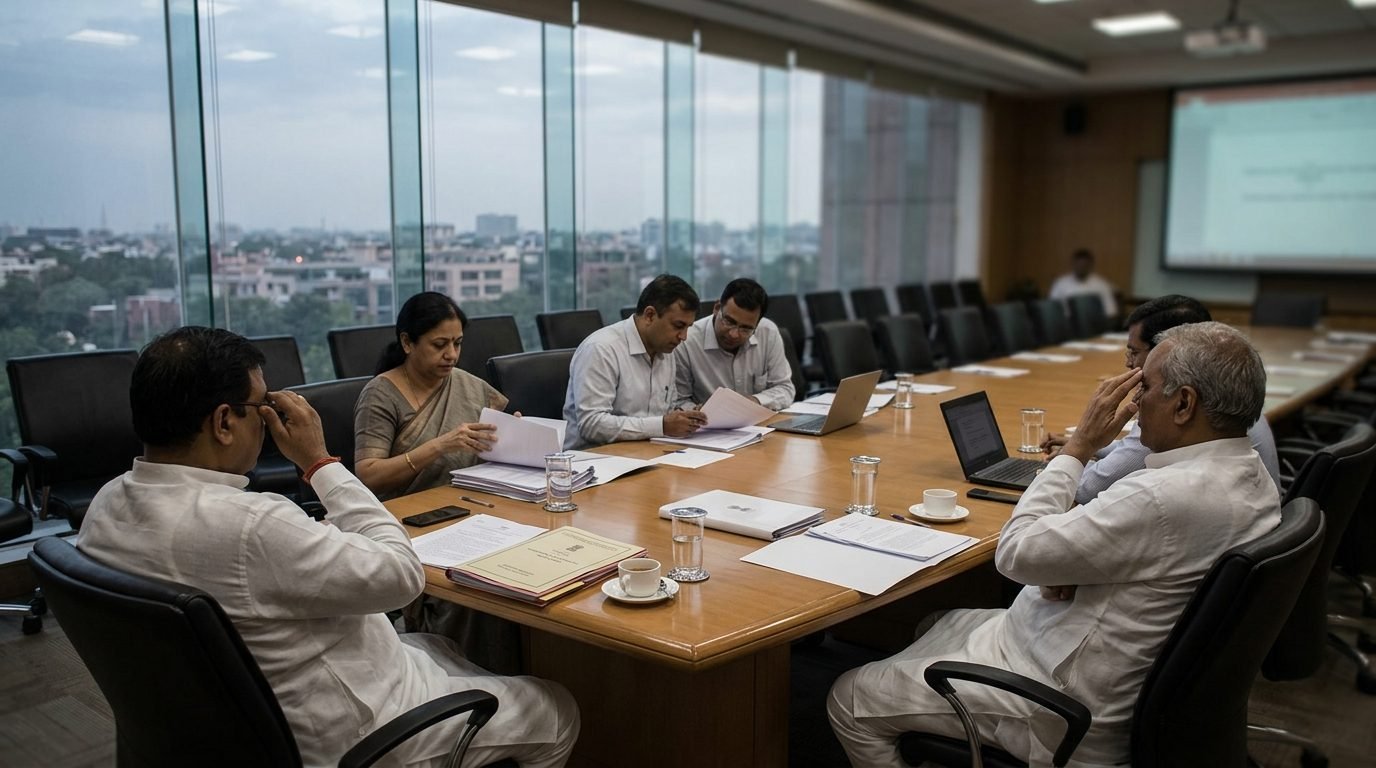
India and the United States have concluded a four-day negotiating round in New Delhi with both sides reaffirming their commitment to a Bilateral Trade Agreement, and officials briefed on the talks saying as much as 99 percent of the deal is now settled. After years of false starts, the characterisation of the pact as all but complete marks a significant advance in one of the world's most consequential trade relationships.
The optimism is tempered, however, by the nature of the unresolved portion. In trade negotiations, the final fraction is rarely the easiest, and the issues still outstanding between New Delhi and Washington are precisely the ones that have proved intractable for the best part of a decade.
What the deal would deliver
Under the framework taking shape, Washington would cut its reciprocal tariff on Indian goods from 25 percent to 18 percent, a meaningful easing for exporters in textiles, gems and engineering goods. A seven-percentage-point reduction in tariffs would directly improve the competitiveness of Indian products in the US market, lowering the price disadvantage that has weighed on key labour-intensive export sectors.
For industries like textiles and gems, which support large workforces and are sensitive to price, even incremental tariff relief can translate into meaningful order flows. Engineering goods, a fast-growing slice of India's export basket, would similarly benefit, making the prospective deal a tangible boost for some of the country's most employment-heavy export categories.
The familiar sticking point
The remaining one percent is the hardest. Agriculture, genetically modified crops and dairy market access have blocked an India-US trade pact for years, with New Delhi reluctant to open sectors that support tens of millions of smallholder farmers. These are not merely economic questions but deeply political ones, touching the livelihoods of a vast rural constituency that no Indian government can easily disregard.
Dairy in particular is a sensitive frontier, both for its scale as a source of rural income and for cultural and dietary considerations around imported products. Genetically modified crops raise their own regulatory and public-sentiment hurdles. These are the issues that have repeatedly stalled negotiations, and clearing them will require political will as much as technical compromise.
- Four-day negotiating round concluded in New Delhi.
- Officials say as much as 99 percent of the deal is settled.
- US reciprocal tariff on Indian goods would fall from 25% to 18%.
- Textiles, gems and engineering goods are key beneficiaries.
- Agriculture, GM crops and dairy access remain unresolved.
A leaders' meeting in the wings
Attention now turns to the G7 summit in France, where Prime Minister Narendra Modi and President Donald Trump are expected to meet in person. A leaders' handshake could provide the political cover needed to close the outstanding issues. Difficult final compromises in trade deals are often unlocked at the highest level, where leaders can make the politically sensitive concessions that negotiators cannot.
A face-to-face meeting offers both an opportunity and a deadline. The summit setting creates momentum and a natural moment for an announcement, but it also raises the stakes: a meeting that fails to bridge the final gap could just as easily stall progress as accelerate it. The dynamic between the two leaders will be closely watched.
A finalised deal would be a relief for markets that have been rattled by tariff threats and the related weakness in the rupee through much of 2026. Removing the overhang of tariff uncertainty would support exporter confidence and could ease pressure on the currency. With the bulk of the agreement reportedly done, the coming weeks, and the G7 encounter in particular, will determine whether the last and hardest one percent can finally be bridged.
The NE Times View
In trade talks the last one percent is the entire negotiation. Agriculture and dairy are unresolved precisely because they touch the livelihoods of millions of Indian farmers, and no G7 photo-op should pressure Delhi into conceding that floor for the optics of a signed pact. A deal that protects manufacturing access while shielding the rural economy is worth waiting for; a rushed one is not.
This article is original commentary and analysis by The NE Times. Background facts were referenced from Deccan Herald, Trading Economics.
You may also like to read
India-US Trade Talks Enter Final Lap as Limited Deal Takes Shape
Negotiators in New Delhi and Washington push toward a limited trade pact that could ease tariffs and widen market access for India's textiles, gems, engineering goods and farm exports.
India-US Ministerial Trade Talks Open in New Delhi as Both Sides Chase a Tariff Deal
Commerce Minister Piyush Goyal and US Trade Representative Jamieson Greer have begun ministerial-level talks in New Delhi, aiming to narrow gaps on tariffs, agriculture and digital trade before a possible bilateral package.
India And US Close In On First Tranche Of Trade Deal As Negotiators Call It 99 Per Cent Done
After three days of talks in New Delhi, India and the United States say the first tranche of their interim trade agreement is all but complete, with signatures expected within weeks.
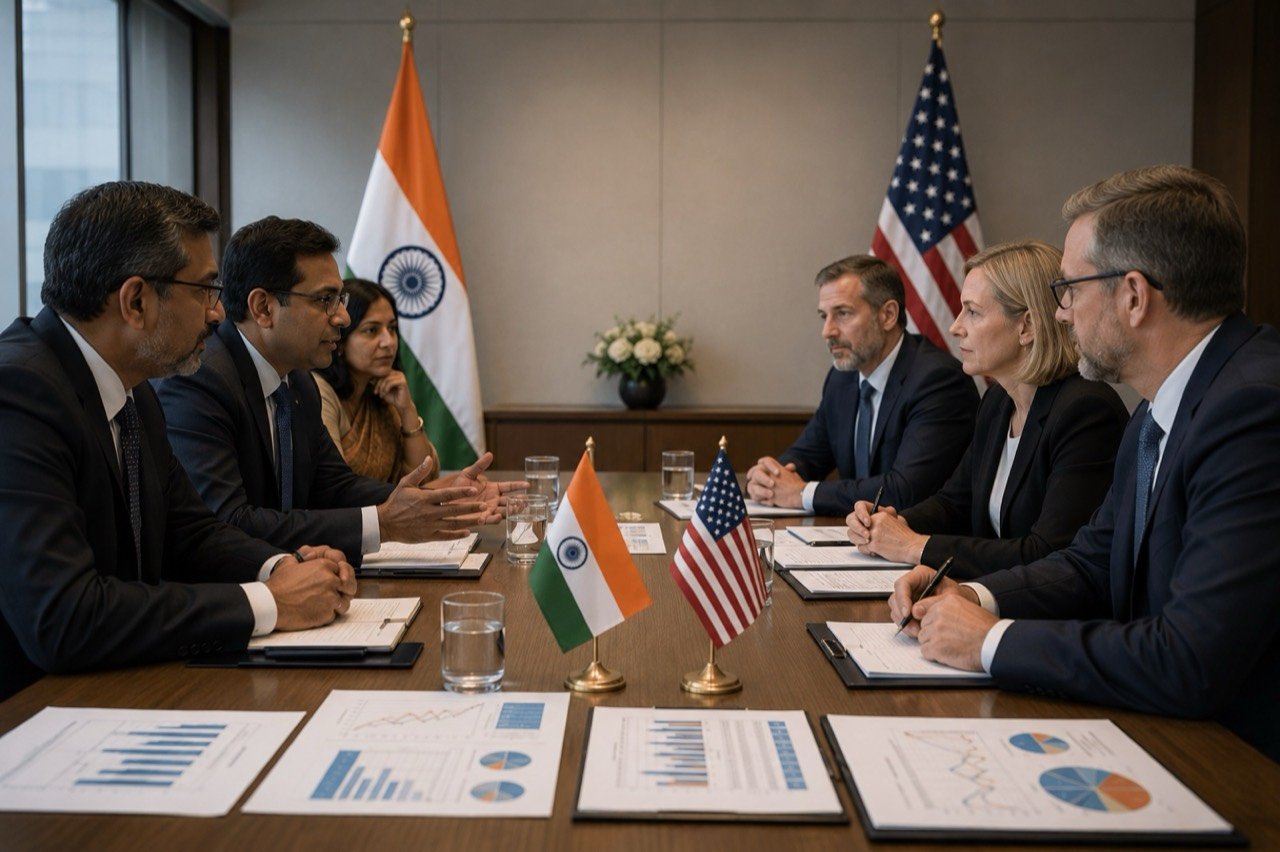
India Pushes for Tariff Advantage Over Rivals in US Trade Deal, Says Goyal
India is seeking a US trade agreement that gives its exporters a comparative tariff edge over rival economies, Commerce Minister Piyush Goyal said, even as talks run long over the central question of tariff treatment.
More from this section
More
Adani Case: US DOJ Pushes for Permanent Dismissal of Charges
The US Department of Justice has urged a judge to permanently dismiss charges against Gautam Adani, calling the case legally flawed — a reversal with consequences for markets, diplomacy and cross-border enforcement.

Akasa Air Inducts 40th Aircraft in Indian Aviation Scale-Up
Akasa Air's 40th aircraft, ferried to Bengaluru via Seattle, Reykjavik and Cairo, marks a fleet milestone for the young carrier and a fresh signal that India's aviation market remains firmly in expansion mode.
BARC Ratings Suspension Leaves Indian TV Industry Flying Blind
BARC's pause on television ratings has put India's broadcast measurement system under fresh scrutiny, leaving broadcasters, advertisers and media planners without the weekly audience data that anchors the TV economy.