India Seeks Preferential Market Access in US Trade Talks, Says Goyal
Commerce Minister Piyush Goyal says India wants a US trade deal that hands its exporters a competitive edge, with market access, tariff lines and rules of origin now at the heart of negotiations.
Commentary & Analysis ·
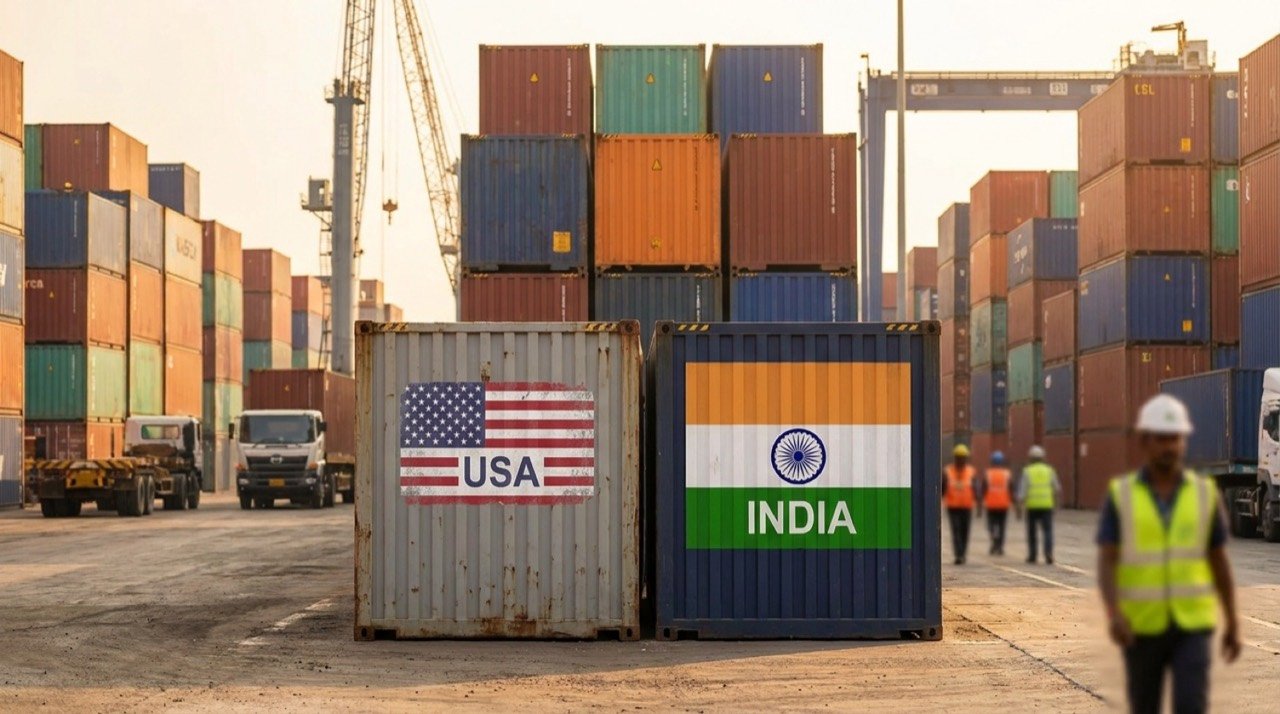
India is pressing for preferential market access in its trade negotiations with the United States, Commerce and Industry Minister Piyush Goyal has said, framing the talks around a concrete goal: terms that give Indian exporters a measurable competitive edge over rival suppliers rather than merely a level playing field. The comments come as US Trade Representative Jamieson Greer is expected in New Delhi for a fresh round of discussions, a visit that negotiators on both sides are likely to treat as a marker of how close, or how far, the two countries remain from a workable agreement.
An edge for exporters, not just parity
At the core of India's pitch is the demand for an arrangement that improves the standing of its goods in the American market relative to competing exporters from other economies. This is a meaningfully different ask from simple non-discrimination. Equal treatment would still leave Indian exporters competing on cost and quality alone against rivals who may already enjoy their own preferential arrangements or structural advantages. Preferential access, by contrast, would bake in a tariff or procedural edge that shows up directly in landed prices and order books. Goyal has indicated that India is not letting external tariff deadlines dictate the pace of talks, a signal that New Delhi would rather hold out for favourable terms than sign quickly under pressure. That posture reflects a calculation that a well-structured deal could reshape pricing, investment flows and supply-chain decisions for years to come, which makes the substance of any eventual agreement considerably more important than the timing of its announcement.
This is a negotiating stance with real risk attached. Deadlines, even ones set unilaterally by Washington, tend to concentrate minds and create pressure that can be used to extract concessions. By appearing unhurried, India is betting that the value of the American market to its exporters is matched by the value of Indian market access to American firms and farmers, and that this rough balance gives New Delhi room to wait for better terms rather than accept a rushed compromise.
The sectors with the most at stake
Indian exporters compete directly with several Asian economies across textiles, engineering goods, pharmaceuticals, gems and jewellery, electronics and agricultural products. These are not marginal categories for the Indian economy; they represent some of its largest employment-intensive export industries, and shifts in their competitiveness in the American market can ripple through factory towns and clusters that depend heavily on export orders. Preferential access in these categories could translate into stronger order books and fresh capacity investment, giving manufacturers the confidence to expand rather than merely defend existing market share. For labour-intensive sectors such as textiles and gems and jewellery in particular, even a modest tariff differential relative to competitors can determine whether an order goes to an Indian supplier or one elsewhere in Asia.
The flip side of this ambition is reciprocity. Washington is expected to seek concessions of its own, and India must weigh export gains against the need to shield politically sensitive domestic sectors from a sudden surge of imports. Agriculture and dairy have historically been the most guarded areas of Indian trade policy, reflecting both the economic weight of smallholder farming and its political sensitivity. Any US push on these fronts is likely to test how far New Delhi is willing to go in exchange for the preferential terms it is seeking elsewhere.
Why the fine print will matter more than the announcement
The detail will matter more than the headline. Negotiators are expected to grapple with specific tariff lines, rules of origin, services access and the question of whether an interim pact can be concluded ahead of a broader, comprehensive agreement. Tariff lines determine exactly which products benefit and by how much, and a deal that sounds sweeping in a joint statement can turn out to be narrow once the underlying schedules are examined. Rules of origin are equally consequential: they determine how much of a product's value must be created within India for it to qualify for preferential treatment, and stringent rules can blunt the practical benefit of an otherwise favourable tariff outcome. Services access, an area where India has long argued it holds genuine comparative strength, could also feature prominently, though the article's account centres primarily on goods trade.
The prospect of an interim pact ahead of a comprehensive agreement is a familiar pattern in trade diplomacy, allowing both governments to bank early wins and demonstrate momentum while more difficult questions are worked out over a longer horizon. For Indian exporters, an early harvest arrangement could bring some relief sooner, even if the fuller picture on market access takes longer to resolve.
What businesses and policymakers should watch next
Goyal has framed the Indian position succinctly: India is seeking a comparative advantage for its exporters, not just a level field. The next signals from the Greer visit, particularly on tariff schedules and the scope of any early harvest arrangement, will tell exporters how soon the talks could move from negotiation to tangible advantage. For now, India appears intent on trading patience for a sharper edge, a stance that assumes the eventual gains will outweigh the cost of a longer, more uncertain negotiating process.
Exporters in the affected sectors have practical reasons to watch this process closely rather than wait for a final announcement. Investment decisions on capacity expansion, hiring and supply-chain commitments are often made well ahead of a deal's formal signing, based on the trajectory negotiators appear to be on. A visible commitment to preferential tariff lines for textiles or pharmaceuticals, for instance, could prompt earlier investment than a vaguer assurance of continued market access.
The NE Times View
Goyal is staking out an ambitious position: India wants not just a deal but an edge. That is a defensible negotiating stance, yet preferential access is a two-way street, and Washington will press on agriculture, dairy and the tariff walls India has historically guarded closely. The real test is whether Delhi can trade meaningful concessions for durable market gains rather than settle for a symbolic agreement that reads well in a press release but delivers little measurable benefit to exporters. Given how much is riding on tariff schedules and technical definitions, the headline framing of the talks, whether they are described as a success or a stalemate, will matter far less than the granular terms that eventually get published. Watch the rules-of-origin fine print in particular; that is where value is won or lost, since even a generous tariff preference can be rendered largely symbolic by an origin requirement that few Indian manufacturers can actually meet.
Key takeaways
- India is seeking preferential, not merely equal, market access in the United States, aiming for a competitive edge over rival Asian exporters.
- Commerce Minister Piyush Goyal says external tariff deadlines are not the sole driver of the pace of talks, signalling a willingness to wait for better terms.
- Textiles, pharmaceuticals, engineering goods, gems and jewellery, electronics and agricultural products are the sectors with the most riding on the outcome.
- Washington is expected to press reciprocal demands, likely including sensitive areas such as agriculture and dairy, and an interim pact may precede a wider comprehensive agreement.
- The Greer visit's signals on tariff schedules and rules of origin will be the clearest early indicator of how substantive any eventual deal will be.
You may also like to read
India Pushes for Tariff Advantage Over Rivals in US Trade Deal, Says Goyal
India is seeking a US trade agreement that gives its exporters a comparative tariff edge over rival economies, Commerce Minister Piyush Goyal said, even as talks run long over the central question of tariff treatment.
India and US Resume High-Level Trade Talks in Delhi to Finalise First Phase of Pact
Commerce Minister Piyush Goyal says his US counterpart is in Delhi for ministerial talks, with reports naming USTR Jamieson Greer for two days of negotiations on tariffs and market access.
US Trade Chief Greer's India Visit Puts First Tranche of Trade Deal in Focus
USTR Jamieson Greer's New Delhi talks with Piyush Goyal have pushed the long-stalled India-US trade agreement into a decisive phase, with tariffs, market access and an early package on the table.

India Targets $1 Trillion in FY26 Exports as Trade Push Widens
The commerce ministry has reaffirmed a $1 trillion export goal for FY26 at a Board of Trade meeting led by Piyush Goyal, leaning on a seven-point action plan spanning merchandise, services and defence exports.
More from this section
More
Adani Case: US DOJ Pushes for Permanent Dismissal of Charges
The US Department of Justice has urged a judge to permanently dismiss charges against Gautam Adani, calling the case legally flawed — a reversal with consequences for markets, diplomacy and cross-border enforcement.

Akasa Air Inducts 40th Aircraft in Indian Aviation Scale-Up
Akasa Air's 40th aircraft, ferried to Bengaluru via Seattle, Reykjavik and Cairo, marks a fleet milestone for the young carrier and a fresh signal that India's aviation market remains firmly in expansion mode.
BARC Ratings Suspension Leaves Indian TV Industry Flying Blind
BARC's pause on television ratings has put India's broadcast measurement system under fresh scrutiny, leaving broadcasters, advertisers and media planners without the weekly audience data that anchors the TV economy.