Delhi Waits for Monsoon Relief Amid Rain Deficit and Persistent AQI Watch
As June ends, Delhi faces a rainfall deficit and uncertain monsoon timing while PM2.5 and PM10 levels keep air quality in a moderate-to-poor zone, raising stakes for water, power and public health.
Commentary & Analysis ·
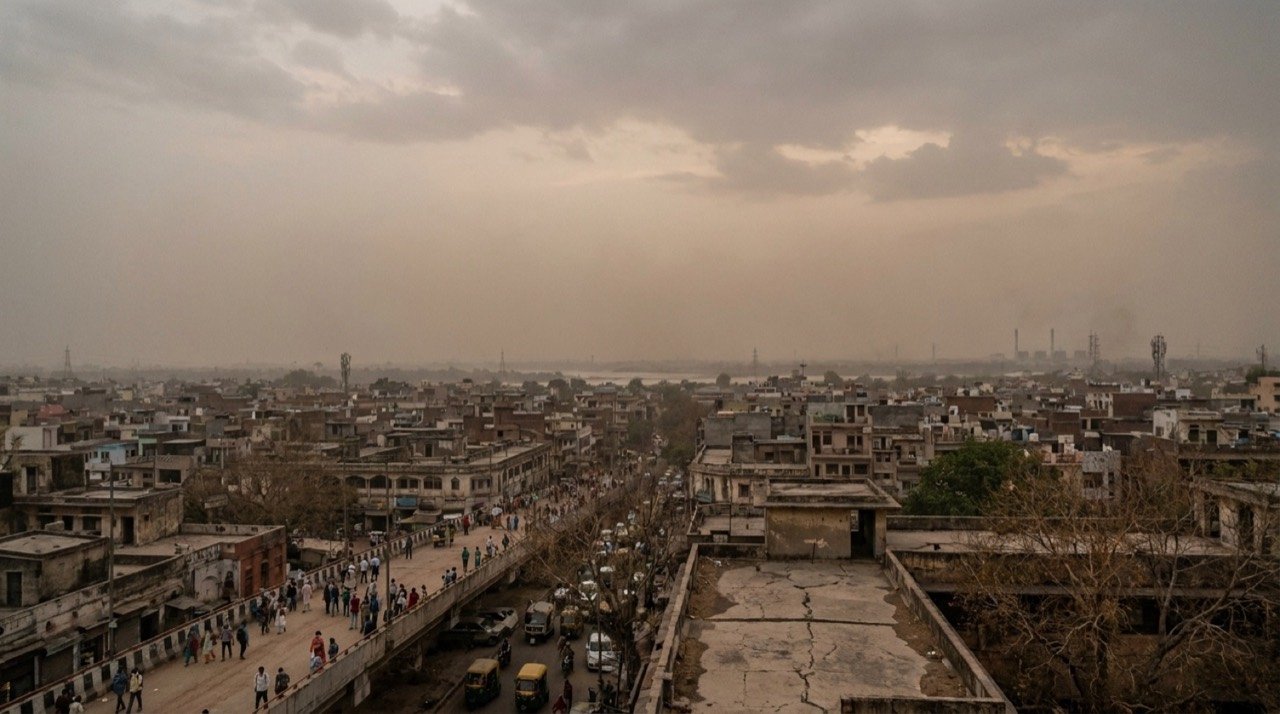
Delhi has entered the final week of June with a rainfall deficit and continued weather uncertainty, as residents wait for clearer signs of the monsoon's arrival. For a capital of the size and density of Delhi, this is not merely a matter of umbrellas and inconvenience. It is a question that touches water supply, power demand, public health and the daily working conditions of millions, all riding on the timing of clouds that have, so far, declined to settle in. The wait carries practical consequences for a city where the balance between too little rain and too much can quickly tip into stress, and where neither extreme is easily managed by existing infrastructure.
A month of below-normal rain
Reports citing India Meteorological Department data said the city had received less rain than normal for the month, leaving a shortfall as the season's main wet spell approaches. Forecasts pointed to only limited relief before the next likely round of rain. This kind of deficit is not simply a statistical footnote. June rainfall in Delhi typically sets the tone for how the rest of the monsoon season is read by planners, farmers in the surrounding region, and city agencies that must decide how aggressively to ration or manage water supply. A below-normal June, even if followed by a wetter July, leaves a shortfall that is not always fully recovered, particularly in reservoirs and groundwater tables that respond slowly to sudden bursts of rain.
The deficit has kept the timing of a fuller monsoon onset under a cloud, with the city caught between lingering heat and the promise of showers that have yet to settle in. This in-between state is itself a source of strain. Unlike a clear dry spell or a clear wet spell, an uncertain, delayed onset makes planning difficult for everyone from municipal water engineers to daily-wage labourers who must decide whether to expect a rain-shortened workday.
Air quality stays on watch
Air-quality readings have remained part of daily public concern, with PM2.5 and PM10 levels keeping Delhi in a moderate-to-poor watch zone at different times. Pollution that lingers without the cleansing effect of steady rain adds to the discomfort of the pre-monsoon stretch. Rain is one of the few natural mechanisms that reliably scrubs particulate matter from Delhi's air, settling dust and washing pollutants out of the lower atmosphere. Without it, the city is left dependent on wind patterns and whatever emission controls are already in place, neither of which has historically been sufficient on its own to keep readings consistently in the healthy range.
For residents with respiratory conditions, the combination of heat and particulate pollution makes the daily outlook a matter of health as much as comfort. This is a population that includes children, the elderly, outdoor workers and anyone with pre-existing asthma or cardiovascular conditions, groups for whom a moderate-to-poor air quality reading is not an abstract number but a determinant of how safely they can go about an ordinary day. The persistence of this watch-zone status, even as the city waits for rain, underscores how intertwined Delhi's air and water challenges have become.
Why the pattern matters
The weather pattern shapes water demand, power use, the working conditions of outdoor labourers, traffic and public health across the capital. Each of these is a system under its own separate strain, and each responds differently depending on which way the monsoon tips. A delayed or weak monsoon can intensify heat stress, pushing up electricity demand for cooling at a time when the power grid is already under pressure, while also increasing the burden on municipal water supply as reservoirs and groundwater are drawn down faster than they are replenished.
A sudden, heavy burst of rain, on the other hand, can trigger waterlogging on Delhi's roads, a familiar and recurring problem that disrupts traffic, damages property and creates its own public health risks through stagnant water and overwhelmed drainage. Delhi recorded below-normal rainfall for June, per IMD-linked data, and forecasts suggested only limited relief before the next wet spell. PM2.5 and PM10 kept air quality in a moderate-to-poor zone at times. Water demand, power use and outdoor work are all affected by the pattern, and the risk profile of the city shifts sharply depending on whether the monsoon arrives as a gentle, sustained spell or a sudden deluge after a prolonged dry stretch.
As The NE Times noted in its analysis of the pattern, a delayed or weak monsoon can intensify heat stress, but sudden heavy rain can bring waterlogging; Delhi must prepare for both. This is the essential tension facing the city this year: the same delayed onset that is currently prolonging heat and pollution exposure also raises the odds that when rain does arrive, it may come in a more concentrated, disruptive form, rather than the steady, moderate spells that ease both water stress and drainage pressure simultaneously.
A capital caught between two extremes
The capital's challenge, in the end, is readiness for both extremes at once, managing heat and pollution if the rain stays away, while bracing drainage and traffic systems for the deluge that often follows a delayed onset. This dual preparedness is more easily stated than achieved. Heat and pollution management call for measures such as public health advisories, cooling shelters and continued vigilance on emission sources, while flood and waterlogging preparedness call for drain desilting, traffic contingency planning and monitoring of low-lying areas, entirely different sets of institutional priorities that nonetheless must be pursued in parallel, often by the same overstretched municipal agencies.
As the monsoon's timing remains uncertain, residents and authorities alike are watching the skies and the air-quality index in equal measure. This dual vigilance, one eye on the clouds and one on the pollution monitors, has become something of an annual ritual in Delhi, and it speaks to how closely the city's environmental fortunes are tied to a single seasonal event whose behaviour grows harder to predict with confidence each year.
The NE Times View
Delhi's annual gamble on a late monsoon exposes how little the capital has done to build resilience against the swings of water scarcity and foul air. Waiting for rain is not a water or pollution policy. It is, at best, a coping mechanism, one that has persisted for years precisely because the underlying vulnerabilities, ageing water infrastructure, patchy drainage networks and inconsistent emission control, have not been addressed with the urgency the recurring pattern warrants.
The deficit should sharpen investment in storage, leak-proof supply and year-round emission controls, so that public health does not hang on whether clouds arrive on schedule. A city of Delhi's scale cannot continue to treat the monsoon as a binary event to be endured or celebrated depending on its timing. What is needed instead is a structural shift towards resilience that reduces dependence on any single season's rainfall to solve problems that persist across the calendar year, from groundwater depletion to particulate pollution that has little to do with rain at all and everything to do with vehicular and industrial emissions, construction dust and seasonal stubble burning in the wider region.
Key takeaways
- Delhi recorded below-normal rainfall for June, according to IMD-linked data, with forecasts pointing to only limited relief before the next wet spell.
- PM2.5 and PM10 readings have kept the city in a moderate-to-poor air quality zone at times, a problem compounded by the absence of rain to help clear particulate matter.
- The uncertain monsoon pattern affects water demand, power use, outdoor labour conditions, traffic and public health across the capital simultaneously.
- A delayed or weak monsoon raises the risk of heat stress, while a sudden, heavy burst of rain risks waterlogging, meaning the city must prepare for both extremes at once.
- The NE Times View holds that the recurring deficit should drive investment in storage, leak-proof water supply and year-round emission controls rather than reliance on the monsoon's timing.
You may also like to read
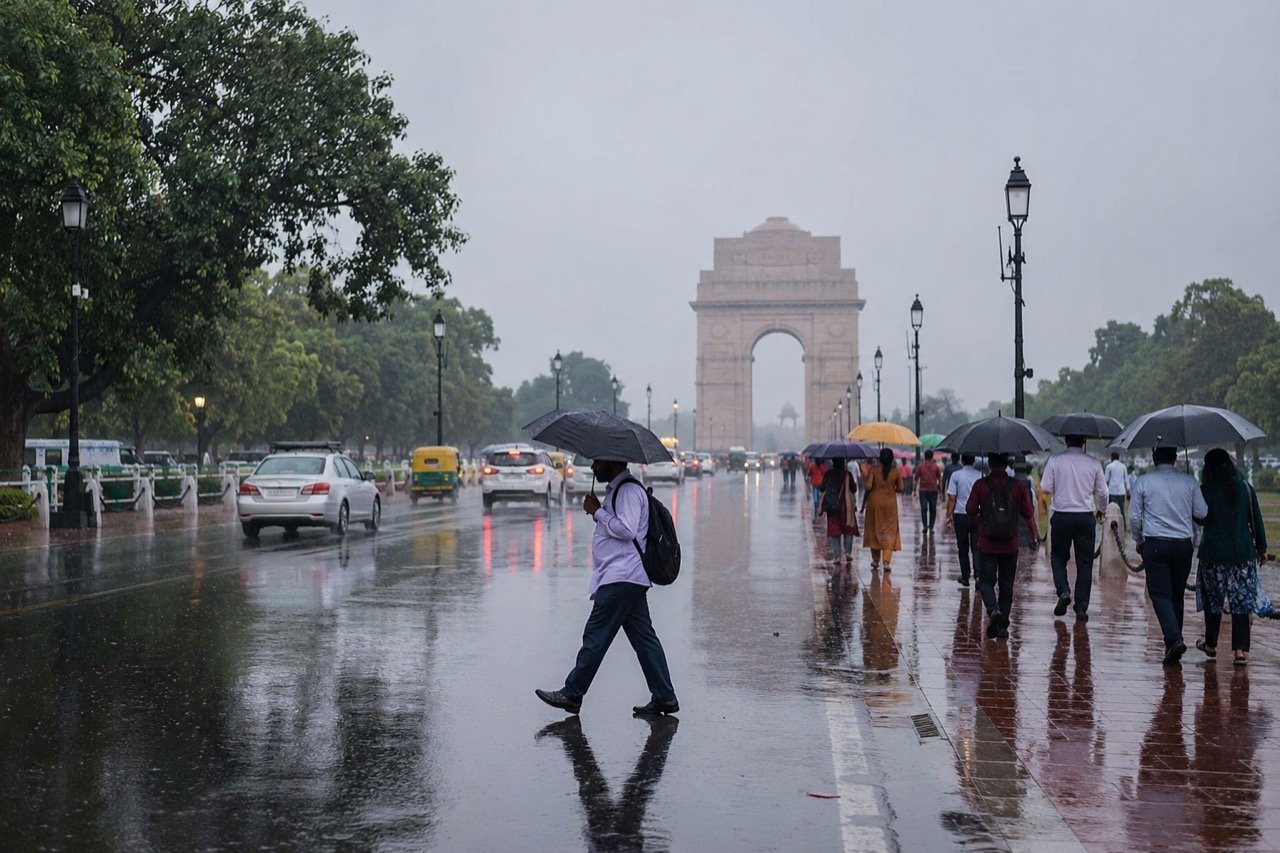
Delhi Weather: Warmest July Day in Two Years, Orange Rain Alert Next
Delhi's maximum temperature climbed to 38.6 degrees Celsius on Sunday, its warmest July day in two years, even as the IMD issued an orange alert for moderate rain on Monday.
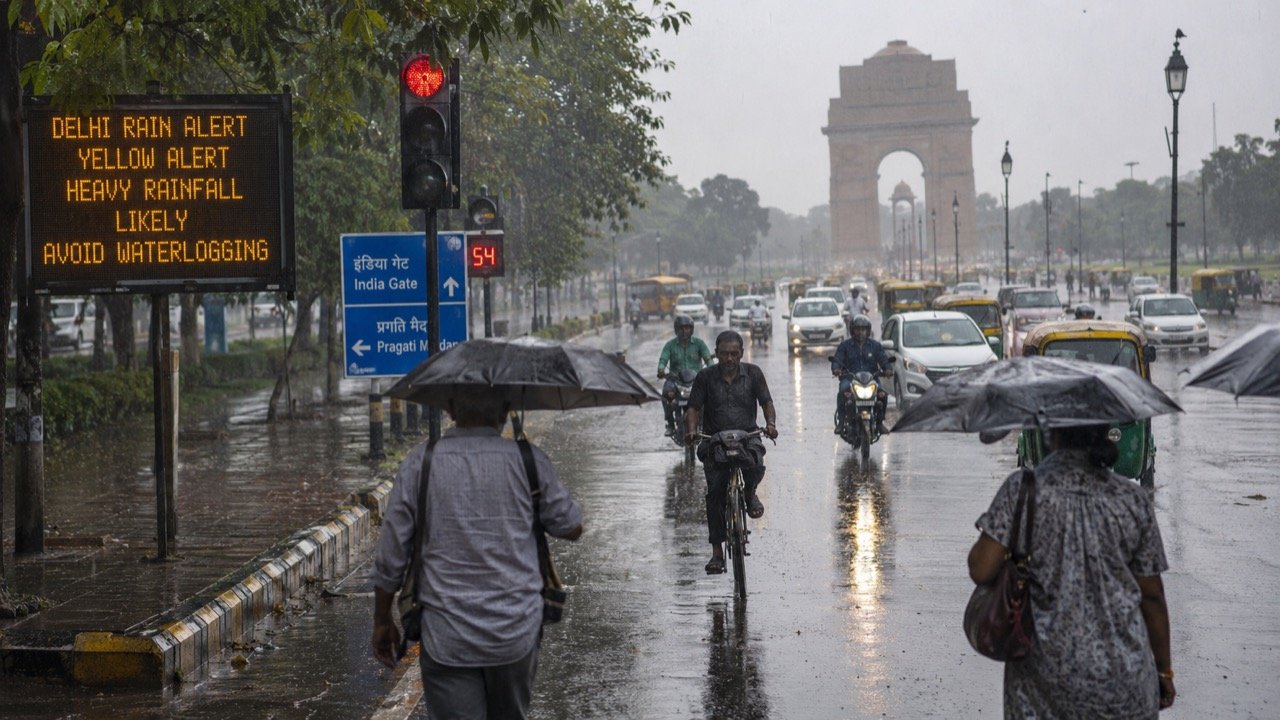
Delhi Rain Alert: Monsoon Travel and Civic Readiness Under Watch
Delhi's monsoon rain watch has residents tracking weather alerts and traffic advisories, as even moderate showers test the capital's drainage, underpasses and last-mile travel networks.
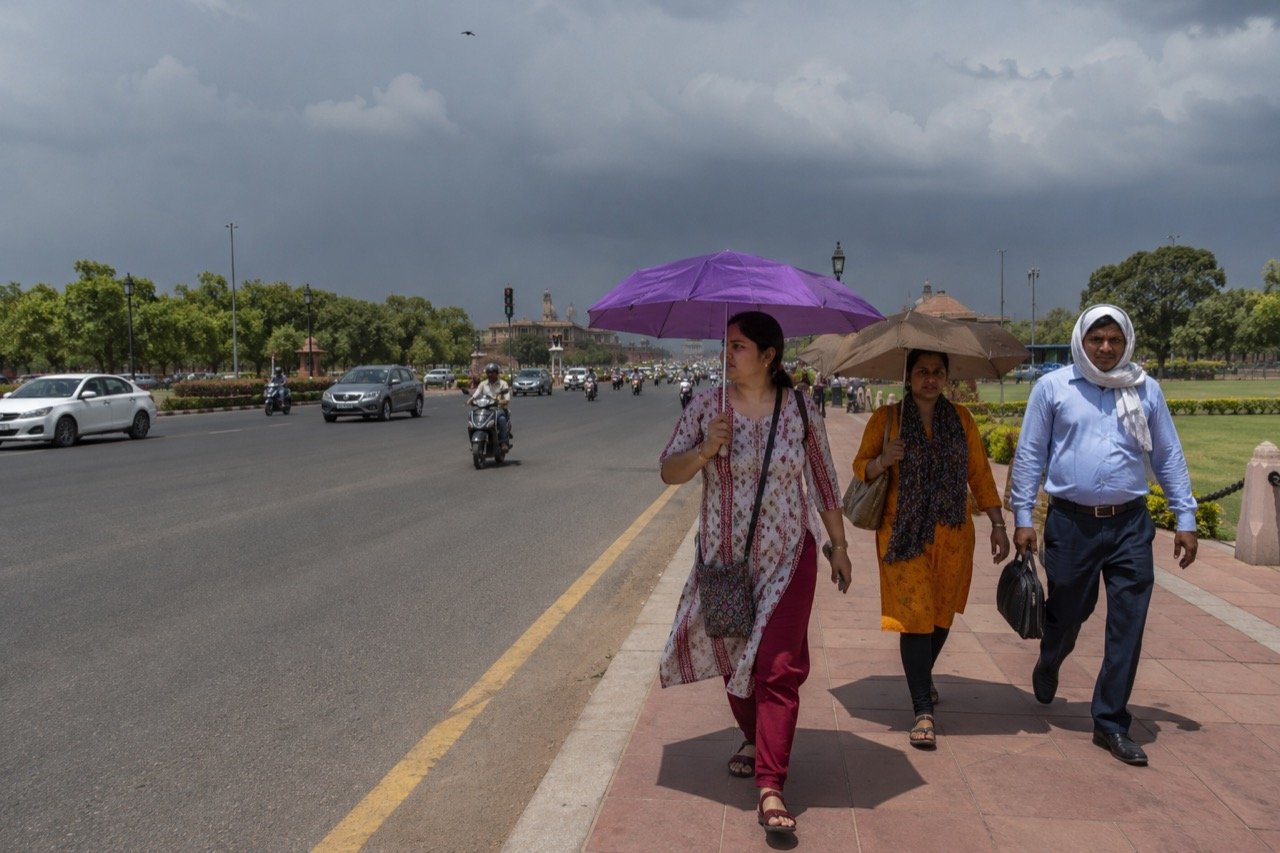
Delhi's Monsoon Wait Stretches On as IMD Flags Slow Advance
The India Meteorological Department says the southwest monsoon is unlikely to reach Delhi over the next five days, prolonging heat stress in the capital even as Mumbai is drenched by intense showers.
Monsoon 2026 Begins Under An El Nino Shadow As IMD Warns Of A Deficit
With the southwest monsoon now advancing across the country, the IMD has cautioned that rainfall could fall below normal this season, raising concern for farms, reservoirs and the wider economy.
More from this section
More
AICTE Industry Fellowship 2026: Rs 1.5 Lakh Scheme Closes July 5
The AICTE Industry Fellowship Programme 2026, which places technical-education faculty inside leading companies on a Rs 1.5 lakh monthly stipend, reached its application deadline on July 5.
Bay of Bengal Low Pressure System Revives Monsoon Over Western India
A low-pressure system over the Bay of Bengal has pushed the monsoon back into an active phase, bringing steady heavy rain to Kerala, coastal Karnataka and Maharashtra, and putting Mumbai and Pune on preparedness watch.
Bishnoi Gang Suspects Injured in Haryana Encounter as Police Tighten Net
A joint Haryana-Delhi Police operation in Bahadurgarh left two suspected Lawrence Bishnoi gang members injured, spotlighting the multi-state coordination now central to India's fight against organised crime networks.