Chennai Metro readies its first double-decker corridor along Arcot Road
Part of the Phase II network, the stacked viaduct on Arcot Road places two metro corridors one above the other, with services on the Poonamallee Bypass to Vadapalani stretch cleared for operations and the Porur section moving toward commissioning.
Commentary & Analysis ·
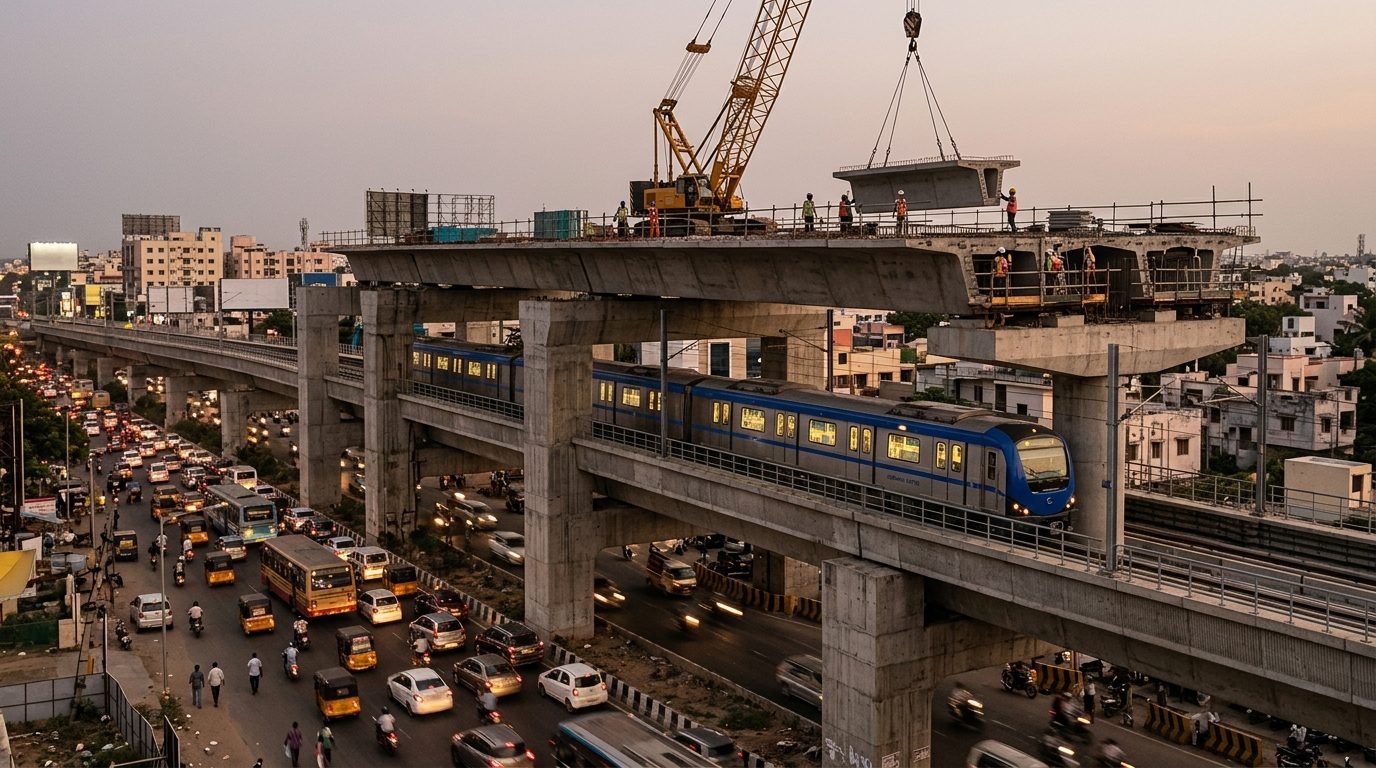
Chennai's expanding metro network is preparing to open one of its most striking pieces of engineering: a double-decker corridor along Arcot Road where two metro lines run one directly above the other. The stacked viaduct is part of the city's large Phase II programme, which is steadily adding new routes across the metropolitan area.
On the double-decker stretch, one corridor is carried on the lower tier and a second on the level above, allowing two separate routes to share the same alignment along a constrained arterial road. The design is intended to make the most of limited road width while serving two corridors that converge along the same stretch.
How the stacked design works
The double-decker section places Corridor 4 on the lower deck and Corridor 5 above it, creating a unified structure that carries both routes through the area around Arcot Road. Where the two corridors overlap, they share stations built into the multi-level structure, an arrangement designed to integrate the lines rather than build parallel viaducts side by side.
Such stacked metro construction is relatively uncommon and is generally adopted where space is tight and two lines need to occupy the same corridor. The approach concentrates the footprint of the railway, reducing the land and road width consumed compared with laying out two separate elevated tracks.
Phasing the opening
Chennai Metro Rail Limited has been working to bring Phase II stretches into service in stages as sections become ready. A stretch running from Poonamallee Bypass to Vadapalani received safety authorisation earlier in the year, with the metro railway safety authority clearing it for operations, marking a key milestone for the new phase.
- The double-decker corridor forms part of the multi-line Phase II expansion of the Chennai network.
- Corridor 4 runs on the lower deck and Corridor 5 on the upper deck of the shared viaduct.
- The Poonamallee Bypass to Vadapalani stretch has been cleared for operations.
- Remaining stations on the Porur Junction to Kodambakkam section are to be commissioned as they are completed.
Bridging the gaps
To keep services useful while construction continues, the corporation has at points adopted interim measures, such as extending trains through the double-decker stretch between key stations without intermediate stops until the remaining stations are ready. Stations on the section between Porur Junction and Kodambakkam are being commissioned as each is completed.
This phased approach allows commuters to begin using new sections of the network sooner, rather than waiting for an entire corridor to be finished before any trains run. It also lets the operator test and ramp up services incrementally along the new alignment.
Part of a city-wide build-out
The Phase II project is one of the largest urban transport undertakings in the city, adding multiple corridors and dozens of stations to a network that has grown rapidly over the past decade. The Arcot Road double-decker is among its most visible features, given the way the stacked viaduct reshapes the streetscape of a busy arterial route.
For commuters along the corridor, the new lines promise faster, more reliable journeys on a route that has long struggled with road congestion. The integration of two corridors into a single structure is also intended to make interchange and connectivity smoother where the lines meet.
The road ahead
As more stations are commissioned and additional Phase II stretches clear their safety checks, the network is set to extend its reach further across the metropolitan area. The double-decker corridor stands as a marker of the kind of engineering the city has turned to in order to fit a growing metro into an already dense urban fabric.
With key stretches cleared and others approaching completion, Chennai's metro is moving steadily toward a larger, more connected system, with the Arcot Road viaduct among its signature additions.
The NE Times View
Stacking two metro corridors on a single viaduct is the kind of land-smart engineering Indian cities, choking on right-of-way disputes, badly need. Arcot Road's double-decker shows that dense urban transit can be built upward when sprawl is not an option. The caveat is cost and maintenance complexity, but if Chennai delivers this cleanly, it offers a replicable template for other metros wrestling with the same constraint of too little space and too much traffic.
This article is original commentary and analysis by The NE Times. Background facts were referenced from The Daily Jagran and Chennai Metro Rail Limited.
You may also like to read
Metro Network Expansion Promises to Ease the Daily City Commute
New corridors and station upgrades are set to cut travel times for millions, as cities double down on public transit.
Pune Metro Line 3 Enters Safety Inspection, First Stretch Nears Launch
India's first public-private metro corridor is undergoing statutory safety checks in mid-June, clearing the way for a planned opening of its initial 12-station section to commuters.
Bengaluru's Airport Metro Nears Finish Line As Blue Line Works Target Completion
Karnataka officials say construction on the Silk Board-K R Puram-airport corridor is on course for completion this month, promising the city a long-awaited rail link to its airport.
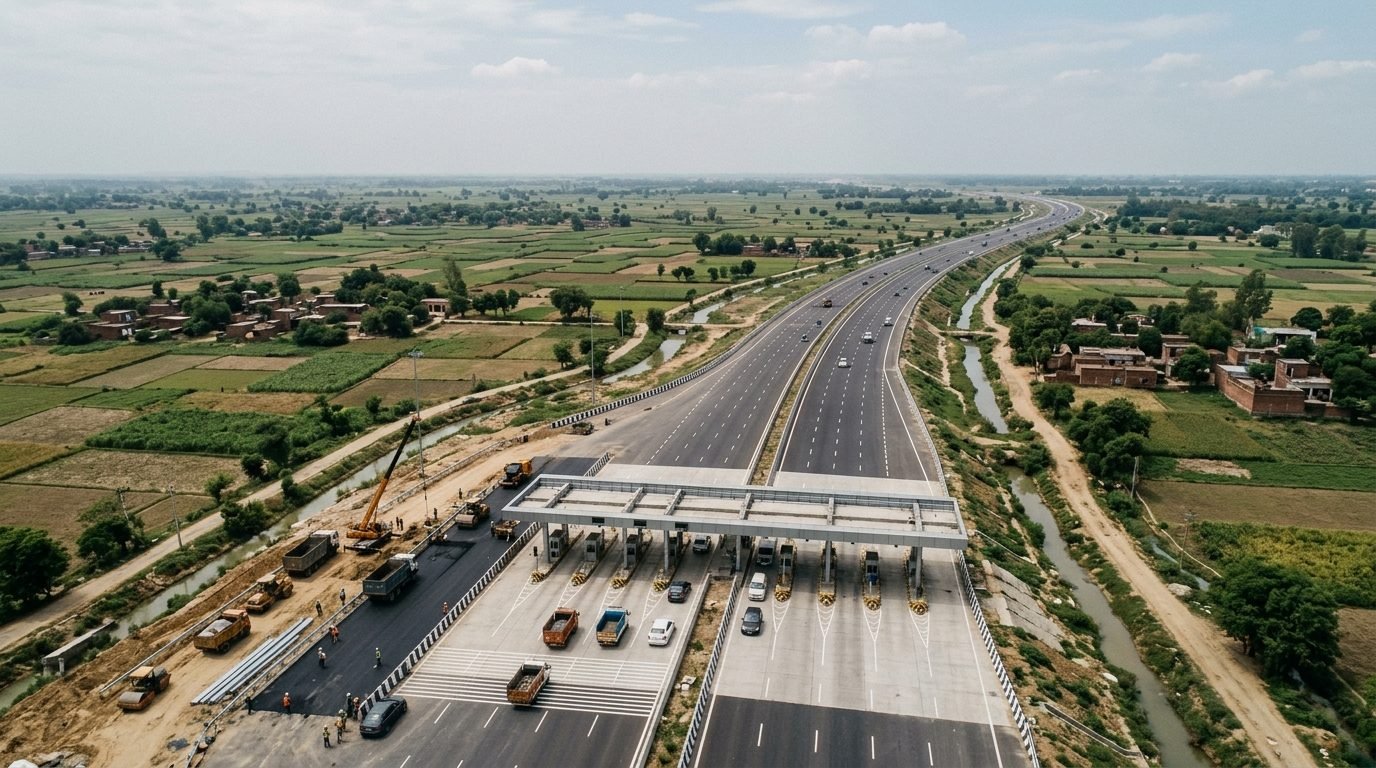
Delhi-Kolkata Six-Lane Corridor Nears Completion as Highway Push Accelerates
The 31,700-crore-rupee, roughly 610-km expressway across four states is being readied for completion, part of a broader expansion of India's high-speed road network.
More from this section
More
AICTE Industry Fellowship 2026: Rs 1.5 Lakh Scheme Closes July 5
The AICTE Industry Fellowship Programme 2026, which places technical-education faculty inside leading companies on a Rs 1.5 lakh monthly stipend, reached its application deadline on July 5.

Bay of Bengal Low Pressure System Revives Monsoon Over Western India
A low-pressure system over the Bay of Bengal has pushed the monsoon back into an active phase, bringing steady heavy rain to Kerala, coastal Karnataka and Maharashtra, and putting Mumbai and Pune on preparedness watch.
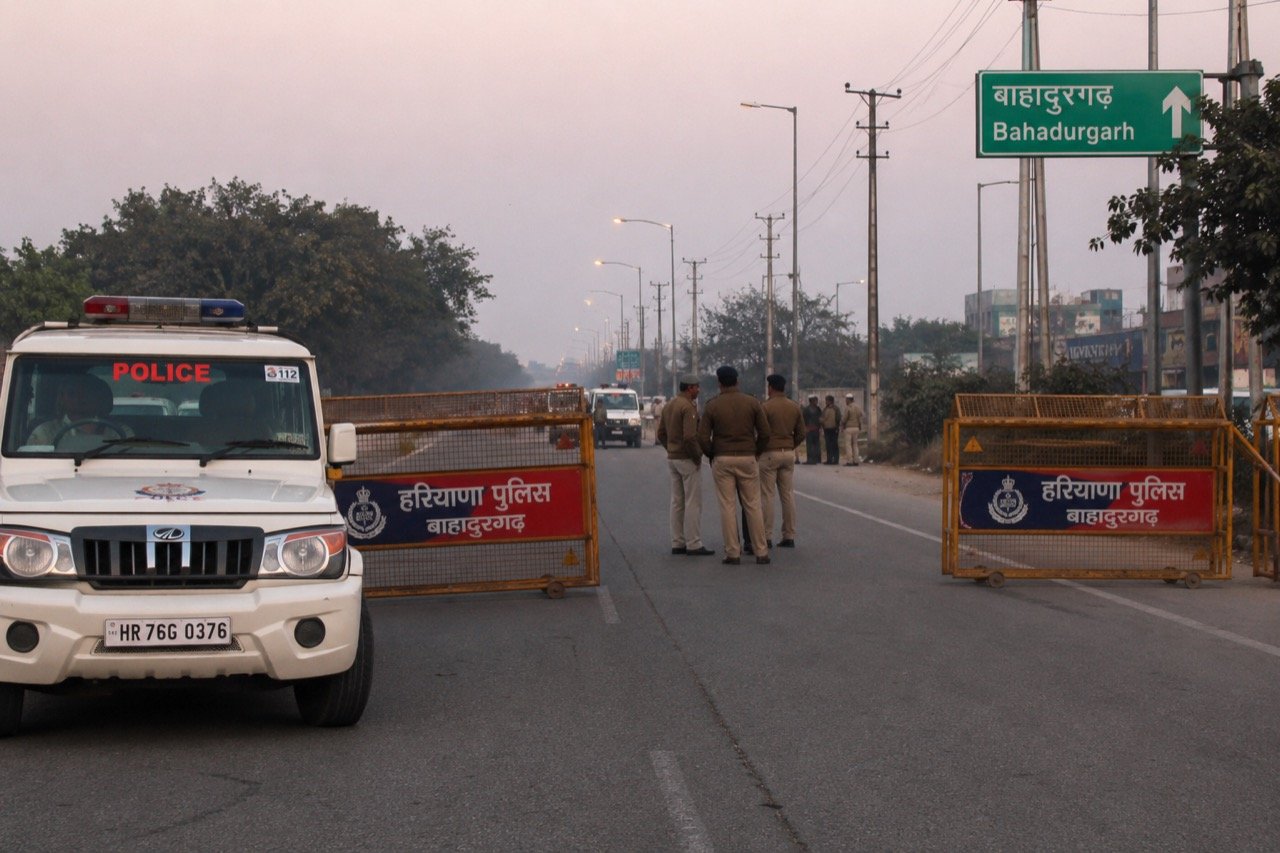
Bishnoi Gang Suspects Injured in Haryana Encounter as Police Tighten Net
A joint Haryana-Delhi Police operation in Bahadurgarh left two suspected Lawrence Bishnoi gang members injured, spotlighting the multi-state coordination now central to India's fight against organised crime networks.