CBSE Class 10 Second Board Result Delay Drives Search Surge as Students Wait for an Official Date
The CBSE Class 10 second board result has become one of the day's most searched education topics as students wait for an official announcement.
Commentary & Analysis ·
Key facts
- CBSE conducted the Class 10 second board examination from May 15 to May 21, 2026.
- At the latest official check on July 16, the result had not been declared and CBSE had not confirmed a specific release time.
- Students are expected to access results through official CBSE portals, DigiLocker and other authorised services once announced.
A result wait becomes one of India's top searches
The CBSE Class 10 second board result has become one of the day's most searched education topics as students wait for an official announcement. The examination ended on May 21, and reports describe more than six lakh candidates awaiting scores. At the latest check, CBSE's official pages had not confirmed a release time. That distinction matters because result-date speculation spreads quickly through education websites, messaging groups and social media. A likely window is not an official date. Students should rely on CBSE, the result portal and DigiLocker rather than headlines claiming that marks will appear within a particular hour.
Why the delay affects more than anxiety
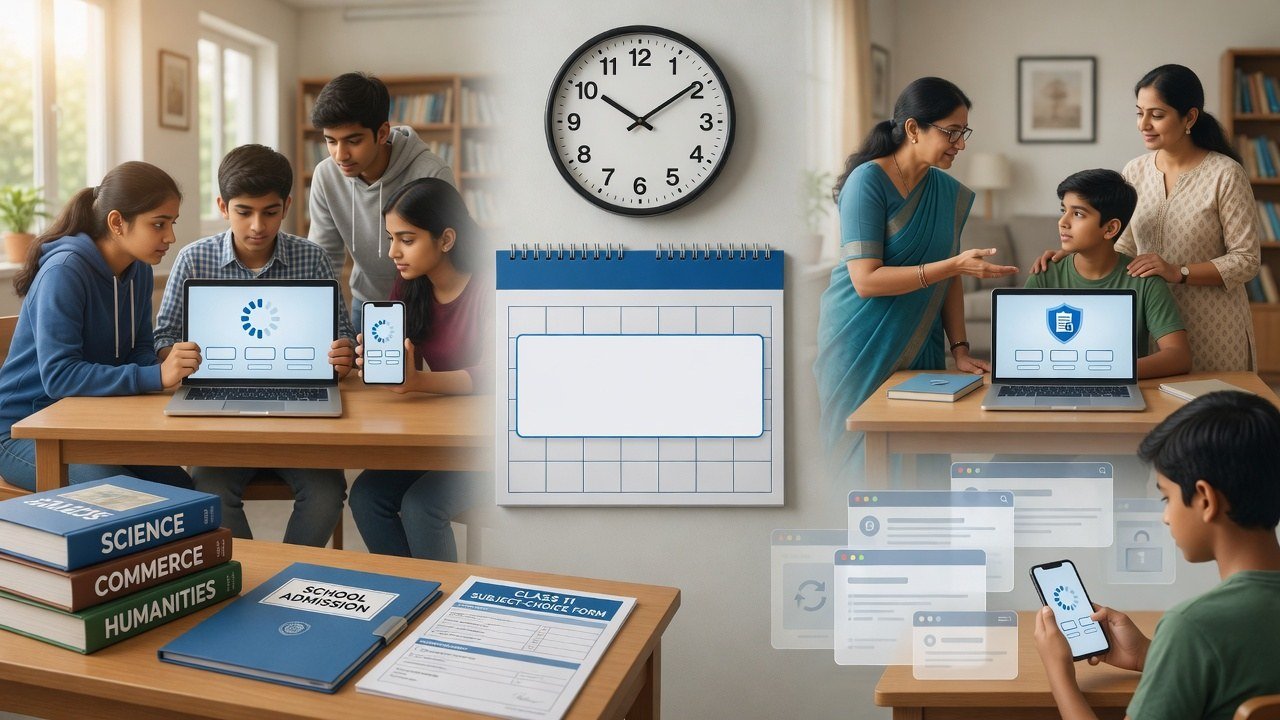
Class 10 results influence Class 11 subject choices, school transfers and admission paperwork. Students who took the second board examination may be trying to improve scores or meet a requirement for a preferred stream. A long wait can leave schools uncertain about seat allocation and can force families to make provisional decisions. The board must balance speed with accurate evaluation and data processing. At the same time, clear communication can reduce unnecessary stress even when the result is not ready. A brief official status update is often more useful than silence because it limits the market for fabricated notices.
How the new second-board system is being tested
The second examination is part of a changing assessment structure intended to provide another opportunity within the same academic year. That objective is attractive because one poor performance need not define a student's entire result. Implementation is complex. The board must manage registration, question papers, evaluation, score integration and rules for retaining or improving marks. Students and schools need clarity about which score will appear on the final document and how improvement affects admission. The first large cycles of a new system inevitably expose operational questions. The result process will therefore be judged not only by pass percentages but by whether the rules are understandable and consistently applied.
Official ways to check the result
Once declared, students should use CBSE's official website, the dedicated result portal or DigiLocker. They may need a roll number, school number, admit-card identifier, date of birth or security credentials. It is sensible to keep these details ready but not share them with strangers. DigiLocker can provide a digital marksheet linked to the student's account. Heavy traffic may make one portal temporarily slow, so authorised alternatives are useful. A delay in loading does not mean the result has been cancelled or changed. Students should avoid repeatedly paying third-party sites for information that official services provide without such charges.
Result scams rise during uncertainty
Periods of high search interest attract fake links, phishing messages and claims that marks can be changed for money. No legitimate official will ask for a one-time password through a messaging app or offer to increase scores privately. Students should check the domain carefully and avoid downloading unknown result applications. Schools can help by circulating a single verified notice and warning parents about impersonation. If a fake circular appears, it should be reported rather than forwarded with a vague warning that increases its reach. Cyber safety is now part of result-day preparation.
What students can do while waiting
Candidates can organise admission documents, review stream requirements and speak with schools about provisional arrangements. They should also remember that a result is one input into an educational decision, not a complete measure of ability. Families can support students by avoiding constant comparison and by limiting exposure to speculative updates. If anxiety becomes overwhelming, a trusted teacher or counsellor can help. The uncertainty is real, but refreshing a website every few minutes will not change the release schedule. A planned check at intervals is healthier and more efficient.
What CBSE should communicate
The board should publish a clear notice when the evaluation and result compilation reach the final stage. The announcement should state the release date, official access channels, score-retention rule, verification process and timetable for any post-result request. It should also clarify whether the digital document is immediately valid for admission. A frequently asked questions page would reduce pressure on schools and helplines. Because the second-board model is still new, communication is part of policy implementation, not merely public relations. CBSE could also publish a timestamped status banner that remains unchanged until there is verified progress, reducing the incentive for students to chase anonymous countdowns. Schools need the same information simultaneously so that one institution does not appear to possess privileged access. A standard message in English and Hindi, with accessibility-friendly formatting, would reach more families and give local administrators a reliable text to circulate.
The story should end with the official notice
Education publishers often keep result live blogs running for days because search demand is high. That coverage should be updated prominently when an earlier prediction proves wrong. The final article must link readers to official information and remove ambiguous language such as anytime soon once a date is confirmed. Until then, the accurate headline is that students are waiting and no specific time has been officially announced. The result will eventually replace speculation with marks, but the current episode already offers a lesson: examination reform requires reliable communication as much as a new timetable. Students deserve information that reduces uncertainty rather than monetising it.
Sources
- CBSE official website and examination circular pages (checked 16 July 2026)
- India TV News - Students raise concern over result delay (16 July 2026)
- Jagran Josh - CBSE second board result live update and official links (16 July 2026)
This article is original news analysis and commentary by The NE Times, based on reporting from the sources listed above.
You may also like to read

Supreme Court Notes CBSE Policy for West Asia Class 12 Students, Disposes Plea
The Supreme Court closed a Saudi Arabia-based candidate's petition after the Centre cited a fresh CBSE policy to declare Class 12 results for West Asian students whose board exams were cancelled amid regional conflict.
CBSE Issues Revised Class 12 Marksheets After Re-Evaluation: What Students Must Do
CBSE has directed schools to collect original Class 12 marksheets and issue revised documents to students whose scores changed after re-evaluation, a step with real stakes for admissions, scholarships and verification.

CBSE's Gulf Class 12 Assessment Formula Explained for Overseas Indian Students
With thousands of CBSE students in the Gulf, the board's assessment formula for Class 12 has drawn fresh attention over how marks are computed for schools outside India.
Two-Term Board Exams and Curriculum Overhaul Reshape Indian Schooling in 2026
From a twice-a-year Class 10 board format to thinner, competency-based textbooks in several states, India's school system is entering its biggest assessment shift in years.
More from this section
More
Murshidabad School Van-Train Collision Kills Three and Renews Level-Crossing Safety Questions
The Murshidabad collision is devastating because it involved children travelling on an ordinary school morning.

Gujarat Anti-Radicalisation SOP Faces Profiling Questions Over Beard, Niqab and Arabic-Language Indicators
The controversy around Gujarat's anti-radicalisation standard operating procedure turns on a basic distinction.

Bombay High Court Tests Maharashtra's Maratha Quota Against Political Power and the 50 Percent Ceiling
The Bombay High Court is not merely deciding whether a 10 percent figure is politically popular or administratively convenient.