Bombay High Court Tests Maharashtra's Maratha Quota Against Political Power and the 50 Percent Ceiling
The Bombay High Court is not merely deciding whether a 10 percent figure is politically popular or administratively convenient.
Commentary & Analysis ·
Key facts
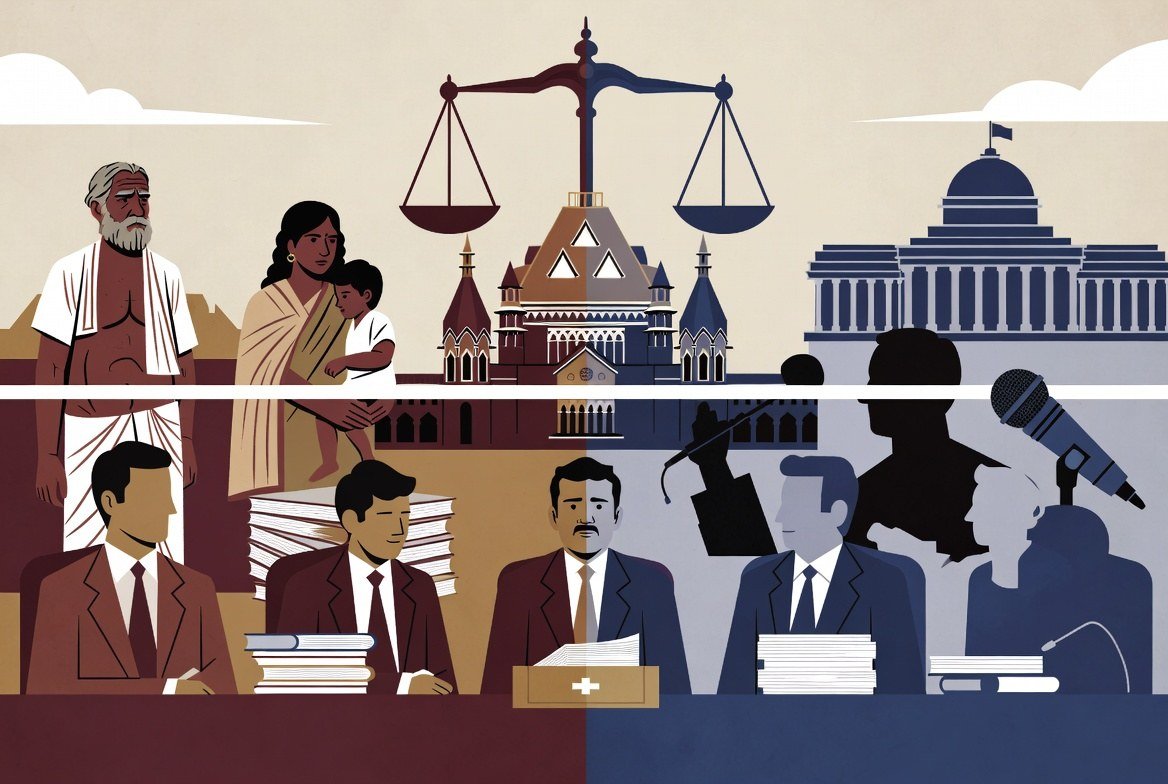
- Maharashtra is defending the SEBC Act, 2024, which grants a 10 percent reservation for the Maratha community in education and public employment.
- A three-judge bench led by Acting Chief Justice Ravindra V. Ghuge is hearing challenges and has questioned how a politically influential community fits the test of social and educational backwardness.
- The state argues that the prominence of some Marathas cannot determine the condition of the entire community and points to agrarian distress, land fragmentation and other socioeconomic evidence.
- The case is shaped by earlier failed reservation attempts, including the 2018 law that the Supreme Court invalidated while reaffirming limits on crossing the 50 percent ceiling except in extraordinary circumstances.
The legal question is larger than one percentage
The Bombay High Court is not merely deciding whether a 10 percent figure is politically popular or administratively convenient. It must examine whether Maharashtra had a constitutionally sufficient basis to classify Marathas as a socially and educationally backward class and whether circumstances are exceptional enough to push total reservations beyond the 50 percent ceiling. These are demanding questions because the Supreme Court has repeatedly treated the ceiling as a central equality safeguard, even while recognising limited exceptions. The state must therefore show more than economic difficulty or a large population seeking opportunity. It needs reliable, contemporary evidence of structural disadvantage and a clear explanation of why existing measures are inadequate. The challengers, meanwhile, must confront the possibility that visible political power can coexist with hardship across a broad community.
Political influence versus social backwardness
The bench's questions about political influence go to the heart of the dispute. Marathas have had substantial representation in Maharashtra's politics, cooperatives and local institutions. Critics argue that this history is inconsistent with a claim of exclusion from the mainstream. The state responds that elite visibility should not be used to generalise about millions of people, especially rural families facing debt, shrinking landholdings and limited access to secure employment. Both arguments contain an important warning. A few powerful leaders cannot automatically prove collective advancement, but a reservation category also cannot be justified solely by the hardship of poorer members if the constitutional test requires social and educational backwardness. The court must assess distribution within the community, not only averages or prominent examples.
The meaning of exceptional circumstances
Crossing the 50 percent limit requires an exceptional justification under existing precedent. That phrase is not a blank cheque for any state facing political pressure. Courts have looked for unusual conditions supported by quantifiable data and careful identification of backward classes. Maharashtra argues that the scale and character of Maratha disadvantage meet that threshold. Petitioners contend that the law effectively recreates a quota already rejected and weakens a constitutional boundary. The High Court will need to examine the commission report, methodology, sampling, definitions and comparison groups. If 'exceptional' becomes too easy to establish, the ceiling loses practical force. If it becomes impossible, states may be unable to respond to genuine patterns not captured by older classifications. The judgment could therefore influence reservation litigation well beyond Maharashtra.
The shadow of the 2018 law
Maharashtra's previous SEBC law provided a larger Maratha quota and was ultimately struck down by the Supreme Court. That history means the 2024 law enters court under unusually close scrutiny. The state must demonstrate that the new exercise is not simply the same policy with a lower number and a fresh report. It needs to show new data, a corrected legal foundation and a reasoned response to the Supreme Court's findings. Challengers will search for continuity in methodology and conclusions. The High Court's task is not to assess legislative sincerity, but constitutional adequacy. A legislature can act with strong public support and still fail if the evidence does not satisfy equality principles.
Agrarian distress and reservation policy
Maratha mobilisation has been closely connected with rural distress. Fragmented land, volatile crop income, debt and limited non-farm jobs create real insecurity. The difficult legal question is how those conditions map onto reservation doctrine. Economic hardship is relevant, but social and educational backwardness has historically involved more than income. India also has a separate framework for economically weaker sections, adding another layer to the analysis. The state may argue that agrarian disadvantage has produced persistent educational and occupational exclusion across generations. Opponents may say broad rural problems should be addressed through farm policy, scholarships, regional investment and general employment programmes rather than caste-based reservation. The court will evaluate the classification, not design the entire rural-development response, but the policy context matters.
Impact on existing reserved groups
Any quota that crosses the ceiling raises concerns among communities already receiving reservation. They may fear reduced open-category opportunities, future competition within reserved spaces or political bargaining that dilutes constitutional protections. The state says the Maratha quota is separately structured, but the overall opportunity pool remains finite. Courts often ask whether a measure balances competing claims rather than responding only to the loudest mobilisation. Transparent data on admissions, recruitment and vacancy patterns would help explain the practical effect. Public debate should avoid framing communities as enemies. The legal system is being asked to allocate limited state opportunities amid broad inequality; hostility does not improve the evidence. Whatever the outcome, governments will still need to expand education and employment so that distribution is not treated as a zero-sum struggle.
What the bench may demand from the state
The bench is likely to examine whether the backwardness commission used credible criteria, whether the data is current, how the community was compared with the state population and whether contradictory evidence was addressed. It may also ask why less restrictive measures would not achieve the stated objective. The quality of legislative debate and the reasons recorded for exceeding the ceiling can matter. A defensible law should show a chain from evidence to classification to percentage. Political statements outside the statute cannot substitute for that chain. The court may uphold, modify or invalidate the measure, but its reasoning will be more important than the immediate headline because it will guide future state commissions and quota laws.
A ruling with national consequences
Reservation cases sit at the intersection of constitutional law, identity, education and electoral politics. A judgment on the Maratha quota could clarify how political representation should be weighed, what evidence counts as contemporary backwardness and how strictly the 50 percent rule applies after newer constitutional developments. Appeals are likely whichever side loses, so the High Court may not have the final word. Still, its factual analysis will shape the national debate. Responsible reporting should avoid predicting the outcome from oral questions alone; judges often test both sides aggressively. The verified story is that the law is under searching review and that the state must justify both the classification and the ceiling breach. The eventual written judgment, not courtroom snippets, will define the legal result.
Sources
- The Indian Express, legal report on the Bombay High Court hearing in the Maratha quota challenge, July 17, 2026.
This article is original news analysis and commentary by The NE Times, based on reporting from the sources listed above.
You may also like to read
Bombay High Court Says Clean Drinking Water Is a Fundamental Right
The Bombay High Court has held that access to clean, potable drinking water is a fundamental right, questioning why Maharashtra citizens must still approach courts for a basic service decades after Independence.
Supreme Court Questions Patna High Court Reasoning in Attempt-to-Rape Ruling, Renewing Focus on Judicial Sensitivity
The Supreme Court's criticism of reasoning used in a Patna High Court judgment has become a major legal and public debate.
Expressway Pothole Row Puts Maharashtra Road Upkeep in Spotlight
Chief Minister Devendra Fadnavis' reported claim that the Pune-Mumbai Expressway has only two potholes has escalated a monsoon maintenance complaint into a statewide debate over highway accountability.
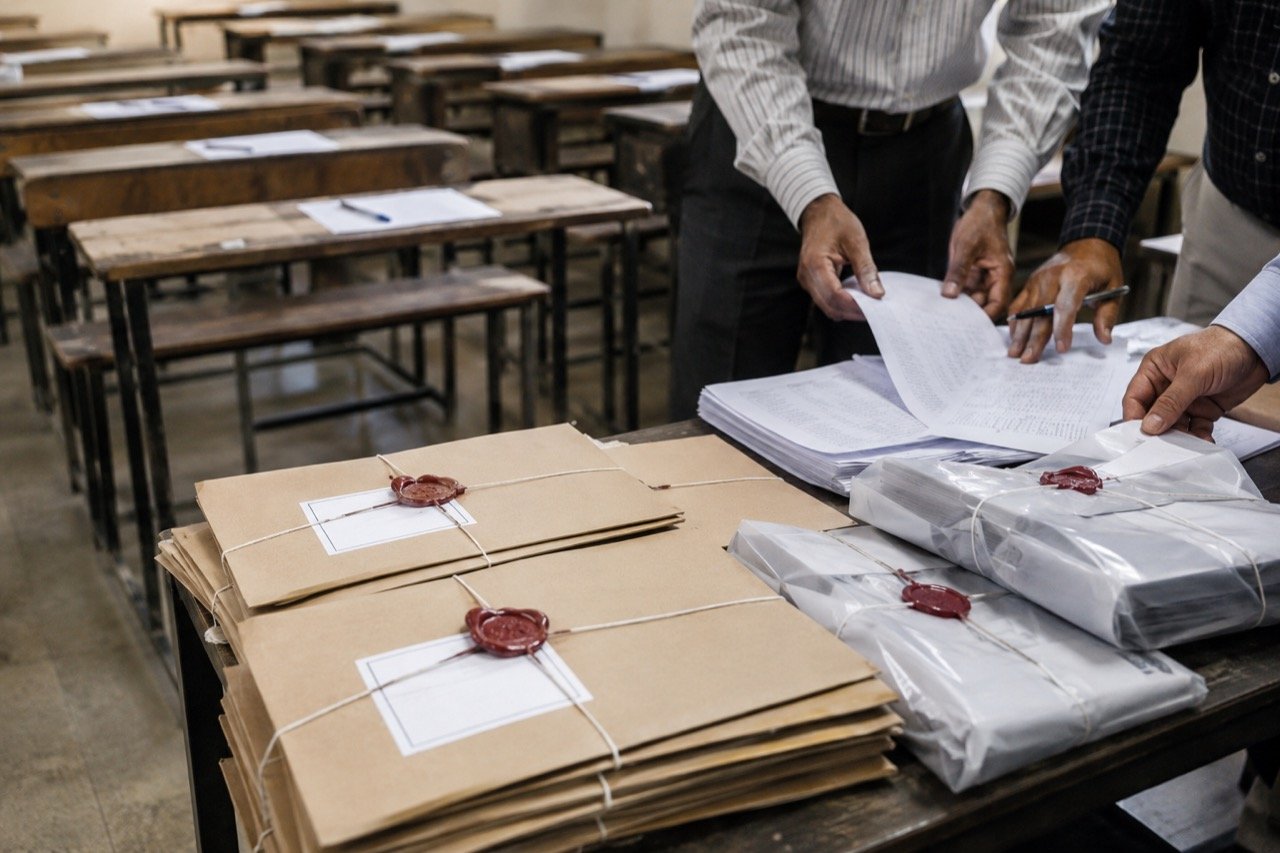
Maharashtra Weighs MCOCA Charges In TET Paper Leak Crackdown
Maharashtra may invoke the stringent organised crime law MCOCA against those accused in the TET exam paper leak, while a chief secretary-led panel examines whether state exams should move online.
More from this section
More
Murshidabad School Van-Train Collision Kills Three and Renews Level-Crossing Safety Questions
The Murshidabad collision is devastating because it involved children travelling on an ordinary school morning.

Gujarat Anti-Radicalisation SOP Faces Profiling Questions Over Beard, Niqab and Arabic-Language Indicators
The controversy around Gujarat's anti-radicalisation standard operating procedure turns on a basic distinction.

CBSE Class 10 Second Board Result Delay Drives Search Surge as Students Wait for an Official Date
The CBSE Class 10 second board result has become one of the day's most searched education topics as students wait for an official announcement.