Gujarat Anti-Radicalisation SOP Faces Profiling Questions Over Beard, Niqab and Arabic-Language Indicators
The controversy around Gujarat's anti-radicalisation standard operating procedure turns on a basic distinction.
Commentary & Analysis ·

Key facts
- Gujarat has operationalised anti-radicalisation cells and approved 139 posts as part of a new prevention and monitoring framework.
- Reported SOP indicators include sudden changes in beard or niqab use, increased use of Arabic expressions, reactions to overseas incidents involving Muslims and use of encrypted communication tools.
- The reported framework also contains more conduct-based indicators, including suspicious acquisition of dual-use chemicals, unusual LPG storage, extremist contacts, cryptocurrency movement and overseas links.
- Rajya Sabha MP John Brittas asked Chief Minister Bhupendra Patel to pause the SOP for review, while a senior police officer said the initiative was not intended to target any religion or caste and emphasised prevention and rehabilitation.
The central dispute: behaviour or identity
The controversy around Gujarat's anti-radicalisation standard operating procedure turns on a basic distinction. Security agencies may legitimately investigate credible indicators of preparation for violence, recruitment or material support. But changes in dress, facial hair, language or religious expression are not by themselves evidence of criminal intent. When such characteristics appear on an official indicator list, officers may give identity more weight than conduct. That creates a risk that ordinary religious practice will be treated as suspicious while genuinely dangerous behaviour is lost in a flood of false positives. The state says the programme is not aimed at any religion or caste. To make that assurance meaningful, the written rules, training and oversight must ensure that investigations begin with evidence of harm rather than visible markers of faith.
Why John Brittas has asked for a pause
Rajya Sabha MP John Brittas has urged the Gujarat chief minister to suspend implementation until the SOP is reviewed. His intervention reflects concern that some reported indicators could institutionalise profiling. A temporary review would not require abandoning prevention work. It could allow independent legal, policing, psychological and community experts to test whether the criteria are evidence-based, proportionate and compatible with constitutional protections. The government could also clarify which version of the document is operative, because public debate can be distorted by incomplete or leaked material. A transparent review would help distinguish legitimate intelligence practices from vague signals that invite prejudice. If the SOP is defensible, publication of safeguards should strengthen it rather than weaken it.
The problem with appearance-based indicators
A beard can change for fashion, health, age, grief or religious observance. A niqab can reflect personal belief, family tradition or individual choice. Arabic expressions are used by millions of people in ordinary prayer and conversation. None of these facts indicates a pathway to violence. Their inclusion can encourage officers or informants to interpret normal life through a security lens. It may also make communities less willing to cooperate with police, because seeking religious knowledge or adopting visible practice could feel dangerous. Effective prevention depends on trust: families and local leaders are more likely to report genuine threats when they believe authorities will distinguish belief from violence. Appearance-based screening undermines that distinction and can consume resources investigating people who pose no risk.
Conduct-based signals require careful thresholds too
Some reported criteria are more directly connected to operational risk, such as unusual acquisition of dual-use chemicals, large unexplained storage of fuel, contact with designated extremist groups or money flows linked to violent networks. Even these indicators require context and lawful thresholds. Chemicals may have agricultural or industrial uses; encrypted apps are common in business and personal communication; cryptocurrency ownership is not inherently criminal. Officers need corroboration, documentation and supervisory approval before intrusive action. A checklist should never replace professional judgment or judicial safeguards. The strongest SOP would rank indicators by evidentiary value, require multiple independent signals and record why a case was opened. That would improve both rights protection and investigative quality.
Prevention and rehabilitation need definition
Police officials have described the cells as preventive and rehabilitative, not only punitive. That objective can be valuable if it means early support for individuals being recruited into violence, counselling for families and pathways away from extremist networks. But rehabilitation programmes can become coercive if people are referred based on identity or political opinion rather than credible risk. The state should define who can make a referral, what consent is required, what records are kept and whether participation affects employment, travel or policing databases. Independent evaluation is especially important because success is difficult to measure. A programme cannot claim effectiveness simply because it monitored many people; it should demonstrate reduced risk without discriminatory harm.
Constitutional and policing implications
India's constitutional framework protects equality, personal liberty, religious freedom and expression, subject to lawful restrictions. Security policies that differentiate in practice by religion can face judicial challenge even if their text claims neutrality. Profiling also affects day-to-day policing. Once an indicator is embedded in training, it can influence stops, questioning, surveillance and local intelligence reports. Those records may follow a person for years without any charge. Clear deletion rules, complaint mechanisms and audits are therefore essential. Courts and oversight bodies may eventually examine proportionality: whether the measure pursues a legitimate aim, is rationally connected to that aim, uses the least restrictive means and balances harm against benefit.
What a rights-respecting SOP could look like
A revised framework should focus on articulated threats and observable actions: attempts to obtain weapons, instructions for attacks, recruitment into violent organisations, financing, target surveillance or credible incitement to imminent violence. Religious practice, lawful protest and controversial opinion should be explicitly excluded unless linked by evidence to criminal conduct. Officers should receive bias training and written examples of both valid and invalid referrals. High-risk actions should require senior authorisation, and aggregate data should be published on referrals, closures, demographic impact and outcomes. An independent board could audit cases without exposing operational secrets. These measures would not eliminate error, but they would make the system more accountable and more likely to identify real threats.
Security is strengthened by precision
The debate is sometimes framed as a choice between public safety and civil liberties. In practice, imprecise profiling can damage both. It alienates communities whose cooperation is essential, wastes investigative capacity and creates legal vulnerabilities. A narrowly targeted system based on conduct is more defensible and more useful than one influenced by clothing or language. Gujarat now has an opportunity to clarify the SOP before questionable indicators harden into routine practice. The government can publish safeguards, engage affected communities and invite expert scrutiny without revealing sensitive intelligence methods. The goal should be a prevention model that detects movement toward violence while protecting the ordinary religious, cultural and political diversity of citizens. Precision is not an obstacle to security; it is one of its conditions.
Sources
- The Indian Express, report on Gujarat's anti-radicalisation SOP and John Brittas's letter, July 17, 2026.
- Further verification should use the final operative SOP, official Gujarat Police clarification and any judicial or legislative review.
This article is original news analysis and commentary by The NE Times, based on reporting from the sources listed above.
You may also like to read

Supreme Court Questions Patna High Court Reasoning in Attempt-to-Rape Ruling, Renewing Focus on Judicial Sensitivity
The Supreme Court's criticism of reasoning used in a Patna High Court judgment has become a major legal and public debate.
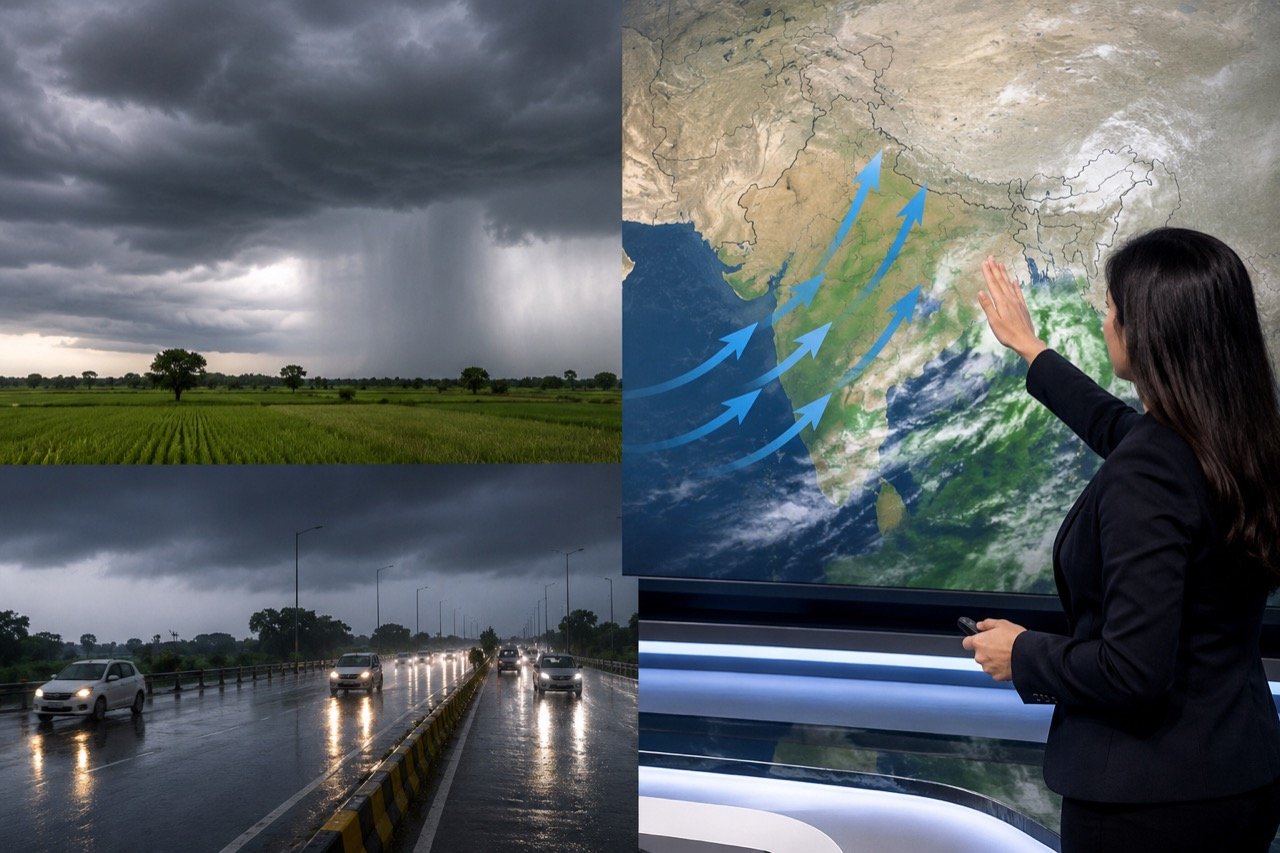
Monsoon Marches North: IMD Flags Heavy Rain for Gujarat to Punjab
The southwest monsoon is set to push into Gujarat, Punjab, Haryana and Rajasthan, with the IMD warning of extremely heavy rainfall over Konkan and Gujarat between July 4 and 7.

PM Modi Launches Over Rs 22,600 Crore Of Projects In Gujarat And Daman
On a single-day visit, the Prime Minister inaugurated and laid foundation stones for projects spanning highways, power transmission, ports and healthcare worth more than Rs 22,600 crore.

Brahmapur-Udhna Amrit Bharat Express Goes Daily, Boosting Odisha Link
The Brahmapur-Udhna Amrit Bharat Express is set to run every day, giving passengers travelling between Odisha and Gujarat a more dependable and affordable long-distance rail option for work, study and family journeys.
More from this section
More
Murshidabad School Van-Train Collision Kills Three and Renews Level-Crossing Safety Questions
The Murshidabad collision is devastating because it involved children travelling on an ordinary school morning.

Bombay High Court Tests Maharashtra's Maratha Quota Against Political Power and the 50 Percent Ceiling
The Bombay High Court is not merely deciding whether a 10 percent figure is politically popular or administratively convenient.

CBSE Class 10 Second Board Result Delay Drives Search Surge as Students Wait for an Official Date
The CBSE Class 10 second board result has become one of the day's most searched education topics as students wait for an official announcement.