No 24x7 Courtroom Entertainment: Supreme Court Bars Viral Clips of Live-Streamed Hearings
The Supreme Court has barred posting, editing or monetising clips of live-streamed hearings without prior permission, exempting news reporting from the interim order passed on 24 July.
Commentary & Analysis ·
Key facts
- Interim order passed on 24 July 2026 by a bench of CJI Surya Kant and Justices Joymalya Bagchi and V. Mohana
- Order bars extraction, editing, posting, reposting, circulation and monetisation of clips of live-streamed court proceedings without prior permission
- Permission must come from the Supreme Court's Secretary General or the Registrar General of the concerned High Court
- Bench clarified that regular news reporting is unaffected and the direction is not a gag order on the media
- Order passed in a PIL filed by Harshita Grover; notice issued to the Centre and states, with all High Courts impleaded
An Interim Order With Sweeping Reach
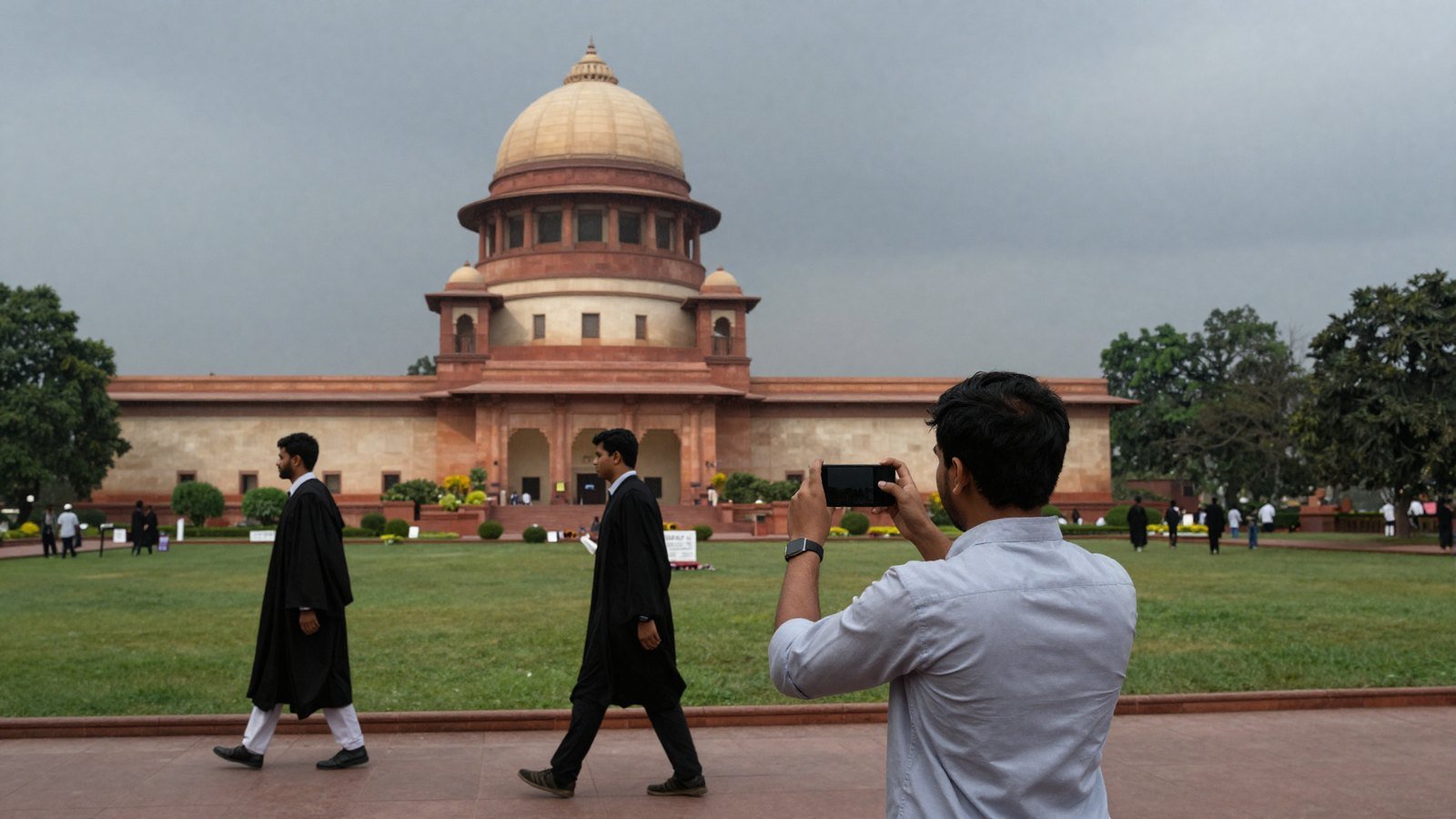
The Supreme Court on 24 July passed an interim order restraining the extraction, modification, editing, posting, reposting, circulation, uploading or monetisation of clips of live-streamed judicial proceedings on social media or any other digital platform without prior permission. The direction came from a bench of Chief Justice of India Surya Kant and Justices Joymalya Bagchi and V. Mohana, according to reports in Bar and Bench and LiveLaw.
Permission, the bench directed, must be sought from the Secretary General of the Supreme Court for apex court footage, or from the Registrar General of the jurisdictional High Court for proceedings streamed by that court. The order is an interim measure in a pending public interest litigation, not a final code of conduct. The bench also issued notice to the Union government and the states, and impleaded all High Courts, signalling that a country-wide framework is under construction rather than settled.
There Cannot Be 24x7 Courtroom Entertainment
"There cannot be 24x7 courtroom entertainment. That belittles the justice system," the Chief Justice observed during the hearing, according to Republic World. The remark distils the bench's discomfort with what live-streaming has become in its viral afterlife, and the CJI reportedly said recent incidents had forced the judiciary to rethink how streamed proceedings are accessed and circulated.
The concern is not abstract. Oral observations made from the bench are provisional and exploratory by design, yet they are routinely packaged online as verdicts. A judge's sharp question to a lawyer becomes a supposed rebuke in a caption; a stray lighter moment becomes a meme. None of it carries legal weight, but it shapes public perception of judges who have no practical means of replying.
The Petition Behind the Order
The order was passed on a public interest litigation filed by Harshita Grover, described in reports as a journalist, seeking guidelines to regulate the clipping, editing, dissemination and monetisation of audio-visual recordings of court proceedings on digital platforms. Senior advocate Vikas Singh, appearing for the petitioner, told the bench the plea did not oppose live-streaming itself but targeted its downstream misuse, reports said.
According to the petition, isolated exchanges are extracted from lengthy hearings, stripped of context and dressed in misleading captions and sensational commentary to maximise engagement and advertising revenue. This, the petitioner argued, exposes judges, advocates and litigants to trolling and reputational harm while building distorted public narratives about what actually happened in court.
The AI Warning That Sharpened the Urgency
Solicitor General Tushar Mehta added a harder edge to the hearing, flagging the threat posed by artificial intelligence tools capable of altering courtroom recordings. AI, he cautioned, can change the words spoken while retaining identical lip movements, making fabricated videos appear entirely authentic, reports said.
That elevates the problem from unflattering editing to outright fabrication. A deepfaked clip of a sitting judge would be unusually hard to debunk precisely because the underlying footage comes from genuine, official streams. The bench's decision to cite AI manipulation alongside selective clipping suggests the court sees the two as points on the same continuum of distortion, differing in degree rather than kind.
News Reporting Is Exempt, and That Caveat Matters
The bench expressly clarified that the interim order shall have no bearing on news reporting, and that it should not be construed as a gag order on the media, according to Bar and Bench and The Federal. Journalists remain free to report proceedings, quote courtroom exchanges and use footage in the course of legitimate coverage.
The caveat is doing important work. Without it, an order of this breadth would have amounted to prior restraint on court journalism, an outcome constitutionally difficult to defend. But the boundary is not self-defining. Is a monetised YouTube channel run by a lawyer explaining the day's hearings news reporting or a clip operation? Legal-education creators, independent court reporters and commentary outlets sit in a grey zone the interim order does not map, and the final guidelines will need to.
From Open Court to Open Internet
Live-streaming was itself a transparency project. In Swapnil Tripathi v Supreme Court of India (2018), the court held that hearings of constitutional importance should be broadcast, rooting the idea in the principle of open justice. The full court operationalised it in September 2022, when Constitution bench hearings began streaming on YouTube to audiences that ran into lakhs, and several High Courts launched or expanded channels of their own.
The 24 July order is not a retreat from that project; the streams continue. It is an attempt to separate access from appropriation: citizens may watch justice being done, but official footage is not to become raw material for an engagement economy. Whether that line can hold on an internet built for clipping is the question the court has now set for itself.
Can It Be Enforced Against Anonymous Clip Accounts?
Enforcement is the hardest part. The judiciary's model live-streaming framework already barred reproduction of recordings without authorisation, yet clip channels have flourished for years. A judicial order adds contempt jurisdiction as a backstop, but contempt proceedings against pseudonymous accounts, often operating through mirror handles or from outside India, are slow and largely symbolic.
Realistic enforcement will more likely run through platforms than uploaders: takedown requests under the IT Rules, demonetisation of offending channels by YouTube and Meta, and downranking in search. The bench's direction to the Union government to identify nodal ministries capable of implementing the reliefs sought points the same way. The court appears to be assembling an executive enforcement pipeline, not merely issuing a declaration.
What to Watch Next
The case now becomes a live test of whether judicial transparency and institutional dignity can be engineered together. Several markers over the coming months will show which way it is heading.
Equally worth watching is the chilling-effect question. An interim order framed this broadly could deter legitimate legal commentary long before final guidelines arrive. The bench has insisted this is not a gag; the proof will lie in how the permission authorities treat the first wave of applications from creators who inform rather than distort.
- Responses from the Centre, the states and the High Courts, including the reports sought on adoption of the model live-streaming guidelines and the impact of continuous streaming.
- Whether the registries publish a workable permission process, covering who may apply, on what criteria and how quickly, since an opaque regime would function as a de facto ban.
- How platforms respond in practice: proactive demonetisation of court-clip channels would change the economics faster than any contempt notice.
Sources
- Bar and Bench - Supreme Court restrains posting, circulating clips of live-streamed court hearings without permission (24 July 2026)
- LiveLaw - Supreme Court bans uploading and sharing of audio-video recordings of court hearings without prior permission (24 July 2026)
- Republic World - CJI Surya Kant's 'there can't be 24x7 courtroom entertainment' remark during the hearing (24 July 2026)
- The Federal - SC bars uploading court proceedings on social media without prior permission; news reporting unaffected (24 July 2026)
- ANI - Supreme Court bars unauthorised sharing and monetisation of court proceedings; notice issued to Centre and states (24 July 2026)
This article is original news analysis and commentary by The NE Times, based on reporting from the sources listed above.
You may also like to read
The Legal Aftermath of the NEET Protests: Why the Real Battle Now Moves to the Courtroom
With FIRs registered after the Chalo Sansad march, detentions and an internet blackout, the NEET-UG protest fallout is set to move into India's High Courts and the Supreme Court.
Supreme Court Questions Patna High Court Reasoning in Attempt-to-Rape Ruling, Renewing Focus on Judicial Sensitivity
The Supreme Court's criticism of reasoning used in a Patna High Court judgment has become a major legal and public debate.
Supreme Court Recall of Ban on Retrospective Green Clearances Sparks Pollution-Law Debate
A 2-1 majority recall of the 2025 verdict outlawing ex post facto environmental clearances has reopened a fierce debate over whether penalties can substitute for prior approval on major projects.
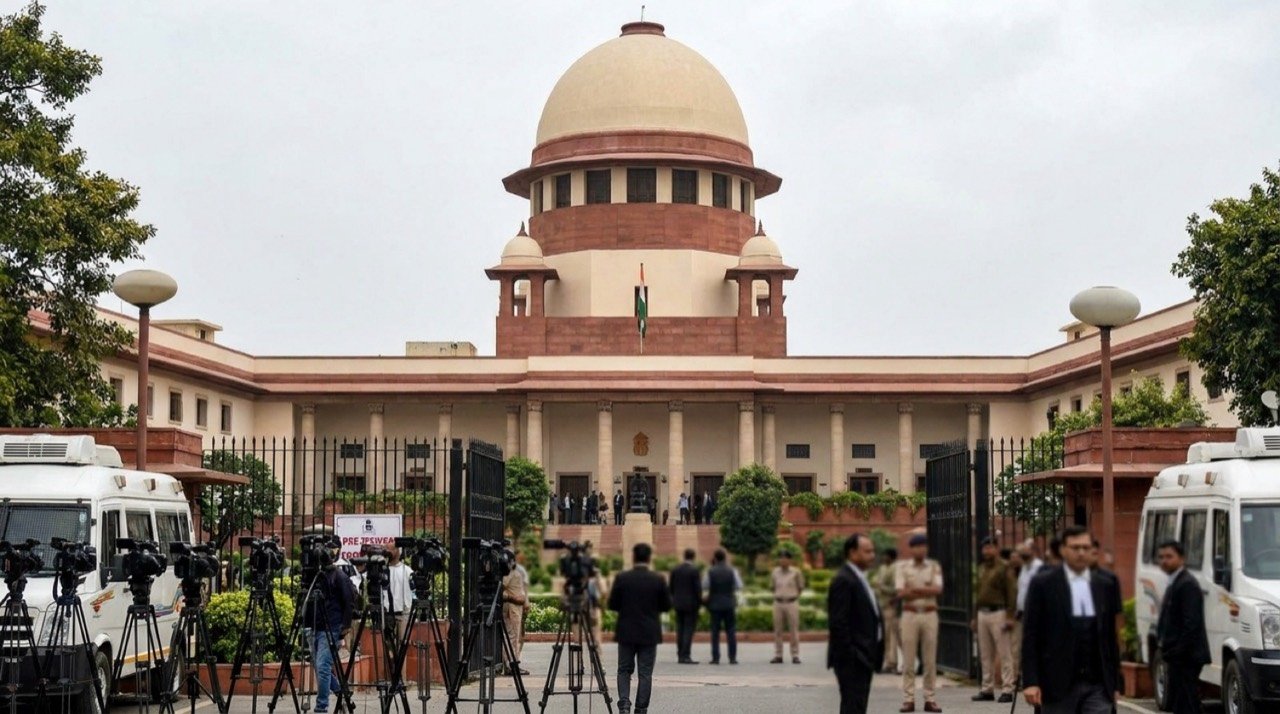
Supreme Court Stays Early Release of 1993 Bowbazar Blast Convict
The Supreme Court has stayed a Delhi High Court order directing the premature release of Mohammed Rashid Khan, a life convict in the 1993 Bowbazar blasts that killed 69 people in Kolkata.
More from this section
More
The Human Cost of the NEET Leak: When a Fair Exam Is the Only Ladder Out
Behind the NEET-UG 2026 paper leak and protests lie first-generation aspirants and low-income families for whom a fair exam is a once-in-a-lifetime mobility ladder.
NTA Sacks 47 Officials as Centre Mounts Its Biggest-Ever Overhaul of Exam Machinery
The NTA overhaul began on 24 July 2026 with 47 officials removed, specialist hires in cybersecurity and forensics, revamped outsourcing, and a reported multi-day computer-based NEET-UG 2027.
Delhi University and the Association of Indian Universities Respond: Appeals, Backlash and Campus Politics
University bodies entered the controversy when appeals to end the fast and messages seen as supportive of the government triggered debate about