Sensex Surges About 800 Points as IT and Banking Stocks Defy Weak Global Cues
An intraday gain of about 800 points in the Sensex is large enough to dominate financial headlines, yet one session cannot establish a durable bull market.
Commentary & Analysis ·
Key facts
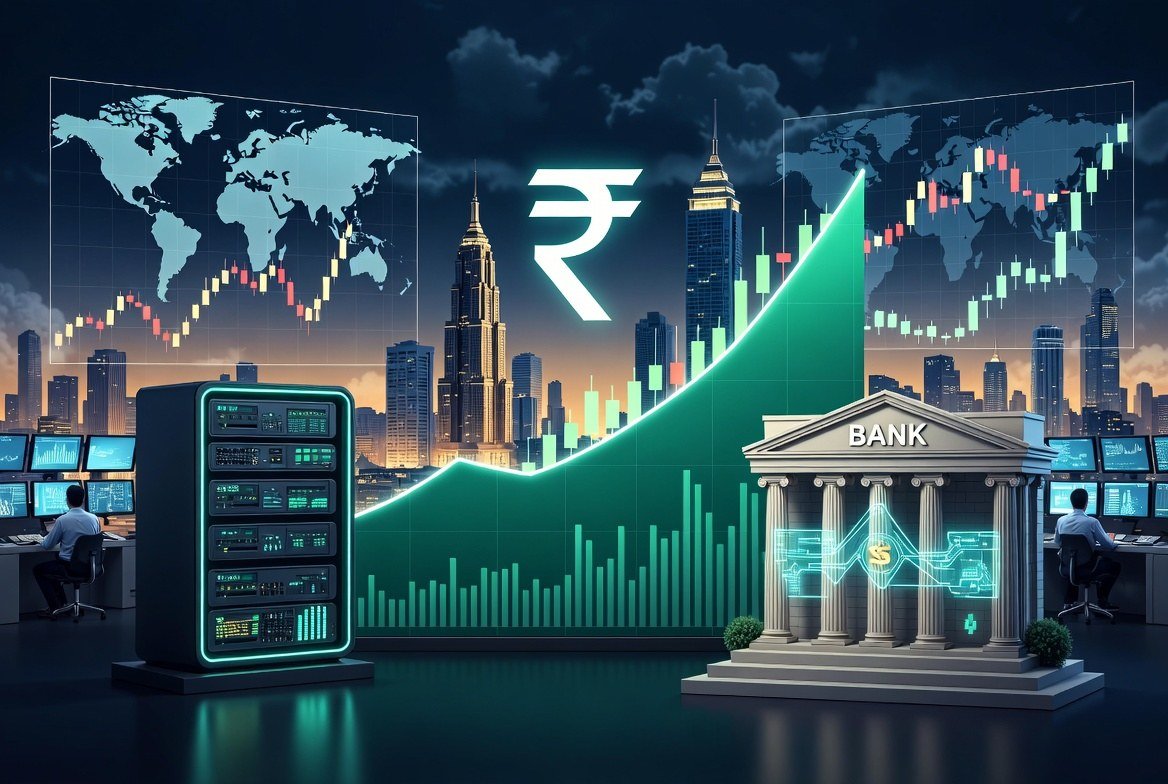
- Indian benchmark indices rose sharply during trading on July 17, with the Sensex gaining roughly 750-800 points at points in the session and the Nifty moving above 24,250.
- Market reports attributed the advance to strength in information-technology and banking shares, improved expectations around quarterly earnings and a firmer rupee.
- The move came despite weak global cues and continuing geopolitical uncertainty, showing that domestic and sector-specific factors dominated the session.
- Intraday levels are not final closing values; readers should check the official exchange close before using the figures in investment or publication decisions.
A strong session, but not a complete trend
An intraday gain of about 800 points in the Sensex is large enough to dominate financial headlines, yet one session cannot establish a durable bull market. The move on July 17 reflected a combination of sector buying, earnings expectations, currency movement and technical positioning. Investors who had reduced exposure during earlier uncertainty may also have returned when key index levels were crossed. Because the rally developed against weak global cues, it appeared to be driven by domestic factors rather than a broad international risk-on move. That distinction matters. A market supported by local earnings and liquidity can remain resilient, but it is still exposed to global rates, oil prices and geopolitical shocks. The closing level and follow-through in subsequent sessions will be more informative than the biggest intraday number.
Why IT stocks led attention
Information-technology companies are sensitive to expectations about overseas demand, currency movements and client spending. A firmer rupee can reduce the value of foreign earnings when translated into local currency, but investors may still buy IT stocks if quarterly commentary suggests stable deal pipelines, cost control or an improvement in discretionary technology spending. The sector also attracts investors seeking large, liquid companies when the wider market feels uncertain. Reports of an IT-led rally should be assessed company by company because index gains can be concentrated in a few heavyweights. Strong price action does not automatically mean the entire sector's earnings outlook has changed. Results, guidance and order-book quality remain the fundamental tests.
Banking shares and the domestic economy
Banks have a major weight in Indian indices, so a broad move in financial stocks can add hundreds of points to the Sensex. Investors watch credit growth, deposit costs, bad loans, margins and the direction of interest rates. Optimism about economic activity or asset quality can lift the sector quickly. At the same time, banks face pressure if deposit competition remains intense or if slower consumption affects loan demand. The July 17 advance suggests that buyers were willing to add financial exposure, but it does not remove those structural questions. The most useful analysis will compare public and private banks, retail and corporate lending trends and management commentary rather than treat the sector as a single trade.
The role of the rupee
Currency movement influences Indian equities through several channels. A stronger rupee can signal improved capital flows or reduced import pressure, and it can help companies dependent on imported inputs. It may be less helpful for exporters whose revenues are largely in dollars. Foreign investors also care about the rupee because equity gains can be reduced or increased when converted back into their home currency. Reports linked the day's sentiment partly to rupee strength, but currency markets themselves respond to oil, central-bank expectations and global risk. The relationship is therefore dynamic rather than one-directional. Investors should avoid assuming that every rupee gain is automatically positive for every stock.
Earnings optimism and the danger of expectations
Quarterly earnings seasons often produce index volatility before companies report because investors position around forecasts. Optimism can support prices, but it also raises the bar. A company may report profit growth and still fall if the market expected more, while a weak headline number can be overlooked if management signals recovery. The July 17 rally suggests that traders were leaning toward constructive outcomes in some large companies. That view will be tested by actual revenue, margins, guidance and cash flow. News coverage should distinguish results already announced from expectations about results still pending. Mixing the two can make speculation sound like evidence.
Technical breakouts and short covering
Market reports also referred to technical strength. When an index moves above a level watched by traders, automated strategies and short sellers can accelerate the move. Short covering occurs when investors who bet on a decline buy shares or futures to close positions, adding demand without necessarily reflecting new long-term confidence. Technical activity helps explain why an index can rise rapidly in a few hours. It is useful for understanding market mechanics, but it should not be confused with economic fundamentals. A breakout gains credibility if volumes are healthy, market breadth is broad and the index holds the level after the initial surge. Otherwise, the move can reverse just as quickly.
What retail investors should not infer
A dramatic green screen can create fear of missing out. Retail investors may feel pressure to buy after prices have already moved, especially when social-media posts describe the rally as the start of a historic run. That is not a reliable investment process. A single session does not change a person's risk capacity, time horizon or need for diversification. Leveraged trading is particularly dangerous during volatile moves because gains and losses can expand quickly. Readers should treat market news as information, not personalised advice. The relevant questions remain valuation, business quality and whether an investment fits a long-term plan. Intraday points are a snapshot, not a guarantee.
What to watch at the close and next week
The final breadth of the rally will matter: whether gains were spread across sectors or concentrated in a small group of index heavyweights. Investors will also watch foreign and domestic institutional flows, the closing position of the rupee, crude-oil prices and upcoming corporate results. If the Nifty holds above the reported breakout zone and earnings support the move, confidence may strengthen. If global weakness deepens or results disappoint, the session may be remembered as a short-lived rebound. Accurate reporting should update intraday figures with the official close and avoid carrying an 11 a.m. level into an evening headline. The July 17 surge is a meaningful market event, but its durability remains an open question.
Sources
- The Economic Times, The Times of India, ET Now and India TV market reports on the July 17 intraday rally.
- Official BSE and NSE closing data should replace intraday figures in any article published after the market close.
This article is original news analysis and commentary by The NE Times, based on reporting from the sources listed above.
You may also like to read
Sensex Crashes Nearly 900 Points as Global Risk-Off Mood Hits Indian Markets
Indian equities tumbled on Tuesday as the Sensex shed about 893 points and the Nifty slipped below 23,900, dragged by weak global cues, IT and metal selling and foreign outflow fears.
Sensex Tumbles 893 Points as IT and Metal Stocks Lead Broad Market Selloff
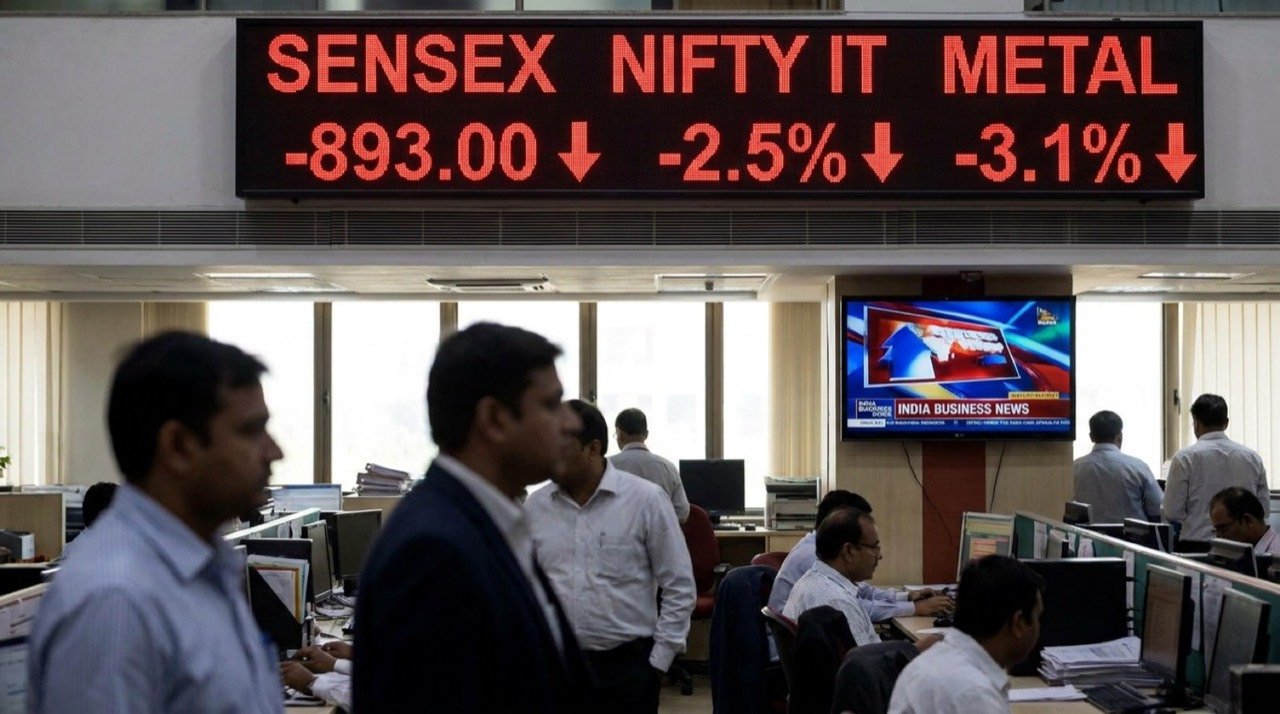
Indian equities slid sharply on 23 June, with the Sensex down 893 points and the Nifty closing at 23,824, as IT, metals and PSU banks led a broad-based selloff driven by weak global cues.
Sensex Sheds 893 Points as Global Risk and West Asia Tensions Weigh on Indian Equities
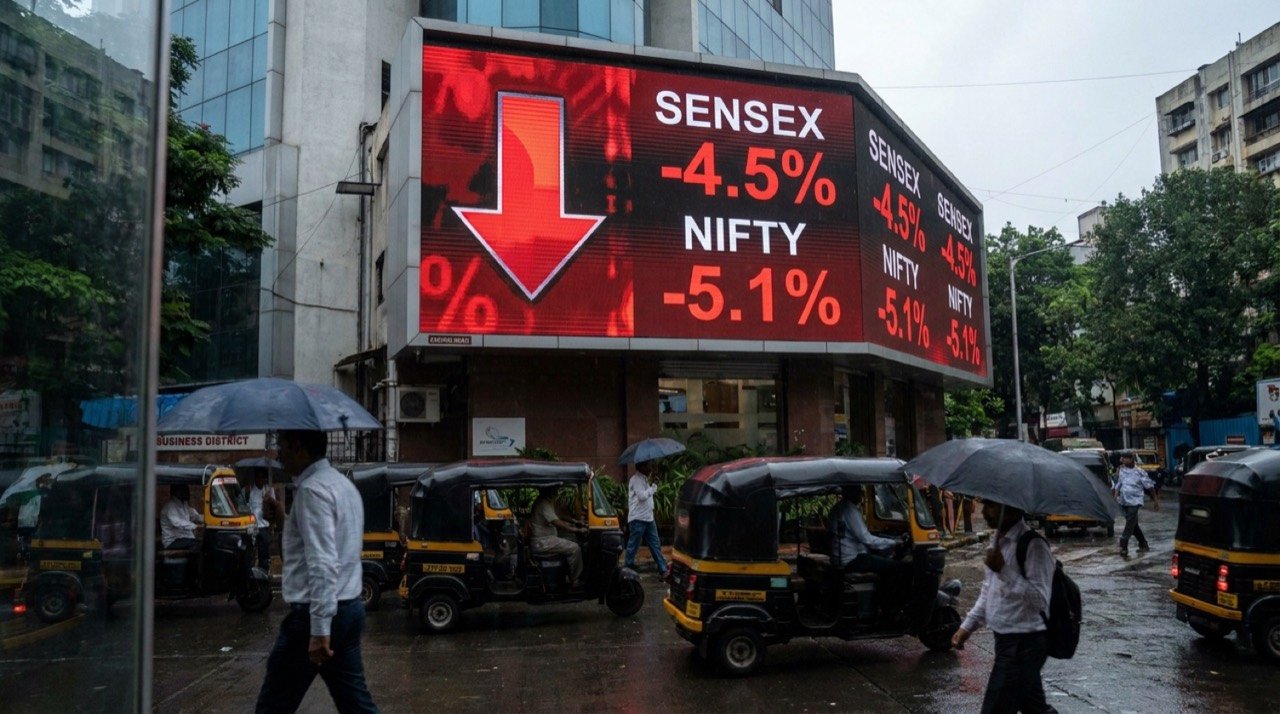
Indian benchmark indices closed sharply lower on June 23 as weak global cues and West Asian uncertainty dragged the Sensex below 76,300 and the Nifty under 23,850.

TCS Earnings, Crude Oil and Global Cues Set to Steer Dalal Street
Indian equities head into a cue-heavy week as the June-quarter earnings season opens with TCS, while crude oil prices and global risk signals shape how investors position across sectors.
More from this section
More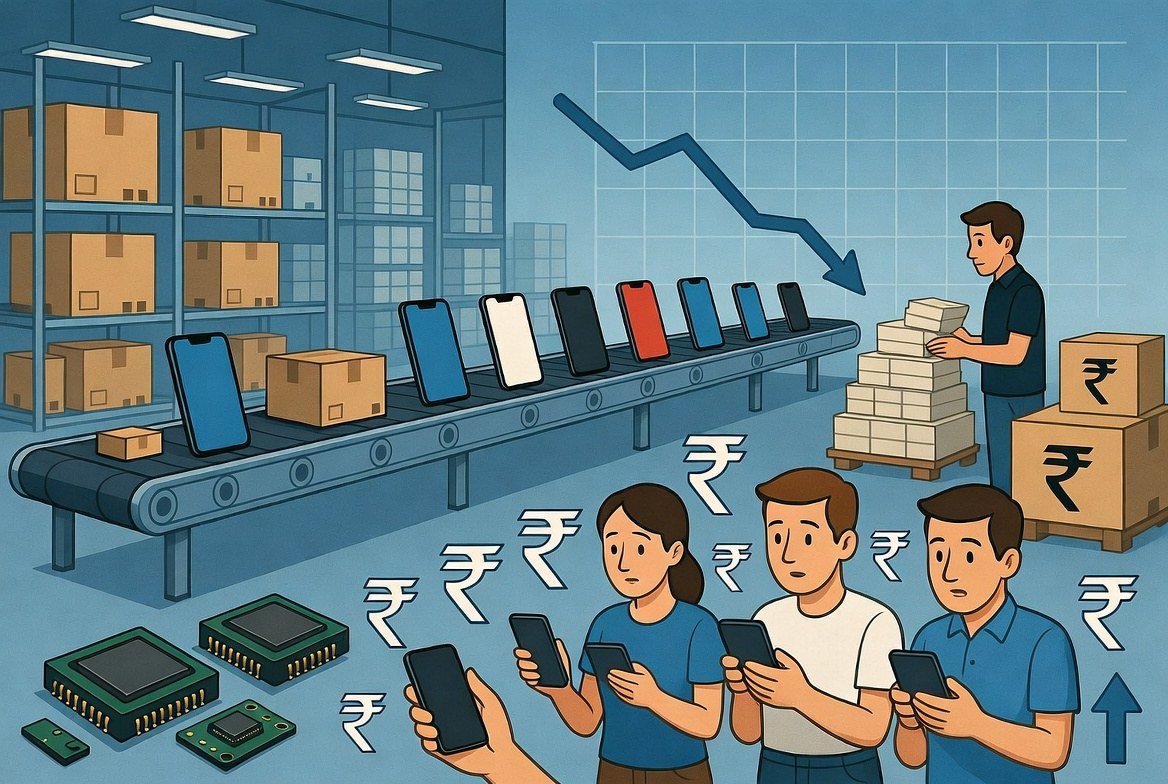
India Smartphone Shipments Fall 10 Percent in Q2 2026 as Rising Prices Hit Affordable Demand
India remains one of the world's largest smartphone markets, so a double-digit quarterly shipment decline is a significant signal for manufacturers, retailers, app businesses and telecom operators.

India-UK CETA Takes Effect, Opening a New Test for Exporters, Services Firms and Consumers
The India-UK Comprehensive Economic and Trade Agreement has moved from negotiation and ceremony into implementation. That transition is the real beginning of the story.

E20 Fuel Dispute Reaches Consumer Court as Car Maker Is Ordered to Replace Vehicle or Pay Compensation
A consumer commission in Raipur has ordered a vehicle manufacturer and dealer to replace a Maruti Grand Vitara Strong Hybrid with an E20-compatible vehicle or provide monetary relief reported at more...