Sensex Sheds 893 Points as Global Risk and West Asia Tensions Weigh on Indian Equities
Indian benchmark indices closed sharply lower on June 23 as weak global cues and West Asian uncertainty dragged the Sensex below 76,300 and the Nifty under 23,850.
Commentary & Analysis ·
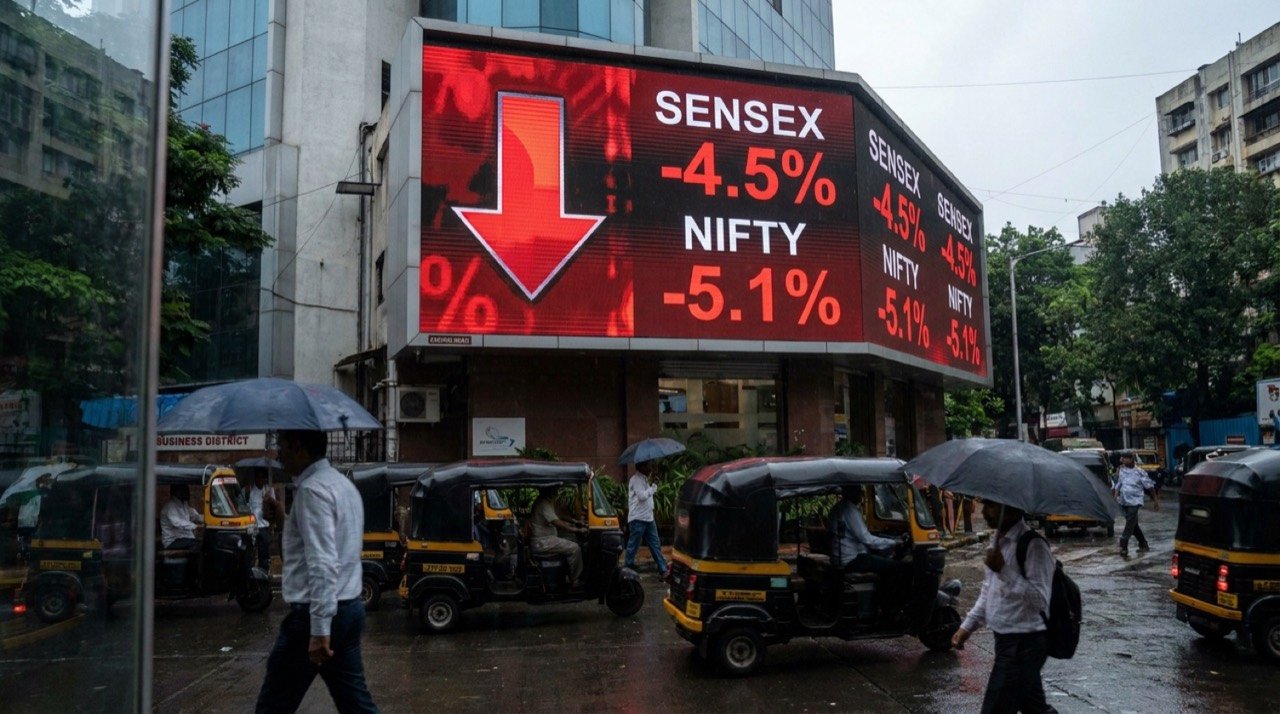
Indian equities ended a bruising session on June 23 as a fresh wave of global risk aversion, fuelled by uncertainty across West Asia, pushed investors toward the exits. The benchmark indices closed firmly in the red, with both the Sensex and the Nifty surrendering more than a percent in a broad-based decline that spared few sectors.
How the indices moved
The BSE Sensex tumbled 893.39 points, or 1.16 percent, to settle at 76,200.68, while the NSE Nifty 50 shed 278.80 points, also 1.16 percent, to close at 23,824.10. The synchronised fall pulled the Nifty back below the psychologically watched 23,850 mark, a level traders had hoped would hold through the volatile global stretch.
The weakness was not confined to large caps. Broader market gauges followed the headline indices lower, with both midcap and smallcap segments closing in negative territory, a sign that selling pressure had spread well beyond the heavyweights.
Sectors under pressure
Cyclical and rate-sensitive pockets bore the brunt of the sell-off. Information technology, metal, telecom, public-sector bank and realty counters were among the worst performers as risk appetite drained away. The IT pack, closely tied to global growth and dollar revenue, is often the first to feel the chill when overseas markets wobble.
There were pockets of resilience. Pharma and healthcare stocks outperformed the wider market, drawing safe-haven flows as investors rotated into defensive sectors that tend to hold up better when sentiment sours.
What drove the slide
The proximate trigger was a soft handover from global markets, compounded by geopolitical anxiety surrounding West Asia. Heightened tensions in the region raise the spectre of disrupted energy supplies and firmer crude prices, both of which are sensitive issues for an oil-importing economy like India.
- Sensex closed down 893.39 points (1.16 percent) at 76,200.68
- Nifty fell 278.80 points (1.16 percent) to 23,824.10
- Midcap and smallcap indices also ended lower
- IT, metal, telecom, PSU bank and realty led the losses
- Pharma and healthcare outperformed as defensive plays
The rupee added to the cautious mood, ending marginally weaker at 94.73 against the US dollar. A softer currency reflects both the firmer dollar abroad and the risk of costlier imports should crude prices stay elevated, a combination that can squeeze corporate margins and stoke imported inflation.
“When West Asia is in the headlines, oil and the rupee become the market's nervous system, and equities simply follow the mood.”
— Mumbai-based market strategist
Analysts expect choppy trade to persist until clarity emerges on the geopolitical front. With domestic fundamentals broadly intact, much of the near-term direction is likely to be dictated by crude prices, global cues and foreign-investor flows, leaving traders watching support levels around the Nifty's recent range.
The NE Times View
A second sharp sell-off in days, this time on West Asian tensions, underlines how geopolitics now sits squarely in India's market risk. With the Sensex below 76,300, the worry is less the fall itself than the oil-and-rupee transmission a wider conflict could trigger. India's macro buffers are stronger than in past crises, but investors should treat this volatility as a stress test, not a buying frenzy or a reason to panic.
This article is original commentary and analysis by The NE Times. Background facts were referenced from Moneycontrol.
You may also like to read

Sensex Crashes Nearly 900 Points as Global Risk-Off Mood Hits Indian Markets
Indian equities tumbled on Tuesday as the Sensex shed about 893 points and the Nifty slipped below 23,900, dragged by weak global cues, IT and metal selling and foreign outflow fears.

Sensex Drops 372 Points, Nifty Slips Below 24,000 On IT, Auto Drag
Indian benchmarks closed lower on June 29 as the Sensex fell 372 points to 76,728 and the Nifty ended at 23,946, with IT, auto and oil and gas stocks dragging while pharma outperformed.
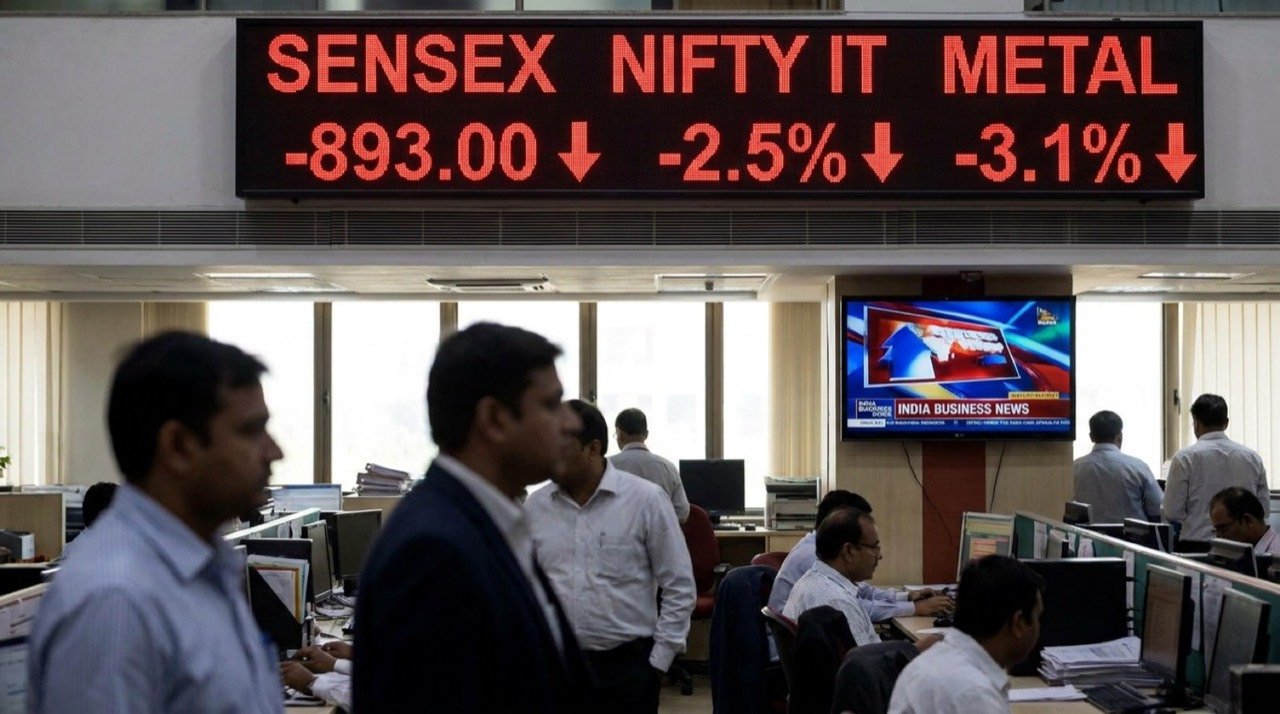
Sensex Tumbles 893 Points as IT and Metal Stocks Lead Broad Market Selloff
Indian equities slid sharply on 23 June, with the Sensex down 893 points and the Nifty closing at 23,824, as IT, metals and PSU banks led a broad-based selloff driven by weak global cues.

Sensex Climbs Around 291 Points, Nifty Closes Above 24,100 as IT and Pharma Shares Lift Market
Indian equities rebounded on June 22, 2026, with the Sensex gaining about 291 points and the Nifty closing above 24,100, led by IT and pharmaceutical stocks despite lingering Middle East tensions.
More from this section
More
Adani Case: US DOJ Pushes for Permanent Dismissal of Charges
The US Department of Justice has urged a judge to permanently dismiss charges against Gautam Adani, calling the case legally flawed — a reversal with consequences for markets, diplomacy and cross-border enforcement.

Akasa Air Inducts 40th Aircraft in Indian Aviation Scale-Up
Akasa Air's 40th aircraft, ferried to Bengaluru via Seattle, Reykjavik and Cairo, marks a fleet milestone for the young carrier and a fresh signal that India's aviation market remains firmly in expansion mode.
BARC Ratings Suspension Leaves Indian TV Industry Flying Blind
BARC's pause on television ratings has put India's broadcast measurement system under fresh scrutiny, leaving broadcasters, advertisers and media planners without the weekly audience data that anchors the TV economy.