Sensex Crashes Nearly 900 Points as Global Risk-Off Mood Hits Indian Markets
Indian equities tumbled on Tuesday as the Sensex shed about 893 points and the Nifty slipped below 23,900, dragged by weak global cues, IT and metal selling and foreign outflow fears.
Commentary & Analysis ·

Indian equities closed sharply lower on Tuesday, June 23, 2026, snapping a relatively resilient run as a global wave of caution swept through Asian markets. The benchmark BSE Sensex fell roughly 893 points to end the session deep in the red, while the broader NSE Nifty 50 slipped below the closely watched 23,900 mark. The decline wiped out a significant slice of investor wealth in a single session and underscored how quickly sentiment can shift when external triggers align.
What dragged the indices down
Market participants pointed to a combination of factors rather than a single shock. Weak overnight global cues set a nervous tone, while technology and metal counters bore the brunt of the selling. After a recent rally that had lifted valuations, several investors chose to book profits, adding to the downward pressure. Renewed caution around the trajectory of US interest rates and fresh volatility across Asian bourses compounded the slide.
Concerns about foreign portfolio investor outflows also weighed on sentiment. When overseas funds turn cautious, the impact is felt disproportionately in large-cap, liquid names, which is part of why the headline indices fell faster than some pockets of the broader market.
Why this correction matters
The fall is notable precisely because it arrived after a period of relative stability for domestic equities. Analysts said the episode signals that valuations, corporate earnings momentum and global liquidity are once again moving to the centre of investor decision-making. After months in which steady domestic inflows cushioned the market, the renewed sensitivity to global risk is a reminder that India does not trade in isolation.
Market breadth was weak through the session, suggesting the selling was broad rather than confined to a handful of stocks. That kind of breadth is often read by technical analysts as a sign of underlying caution rather than a one-off reaction.
Pockets of strength
Not every corner of the market sold off. Healthcare and pharmaceutical shares showed pockets of strength, acting as a partial cushion as defensive sectors drew buyers seeking shelter from the volatility. Such rotation into defensives is typical during risk-off phases, when investors trim exposure to high-beta sectors like IT and metals.
- Sensex fell about 893 points; Nifty closed below 23,900.
- IT and metal shares led the declines amid global risk aversion.
- Profit booking followed a recent rally that had stretched valuations.
- Foreign fund outflow worries and US rate uncertainty added pressure.
- Pharma and healthcare offered relative support as defensive plays.
“The message for retail investors is not panic but discipline: review asset allocation, avoid leveraged bets and watch whether key support zones hold.”
— Markets analysts
Looking ahead, traders will be watching whether the Nifty defends important technical support levels in the coming sessions, alongside cues from global central banks and the next batch of corporate earnings. For long-term retail investors, market watchers stressed measured behaviour over reactive selling, recommending a focus on quality, diversification and time-tested allocation rather than chasing or fleeing short-term swings.
The NE Times View
A 900-point fall driven by global risk-off mood and foreign outflow fears is a reminder of how exposed Indian equities remain to sentiment they cannot control. The IT and metal selling reflects external rate and demand worries rather than a domestic crack. The NE Times view is that long-term investors should read this as volatility, not verdict; the worry is only if outflows harden into a sustained retreat from emerging markets.
This article is original commentary and analysis by The NE Times. Background facts were referenced from Moneycontrol and the Times of India.
You may also like to read
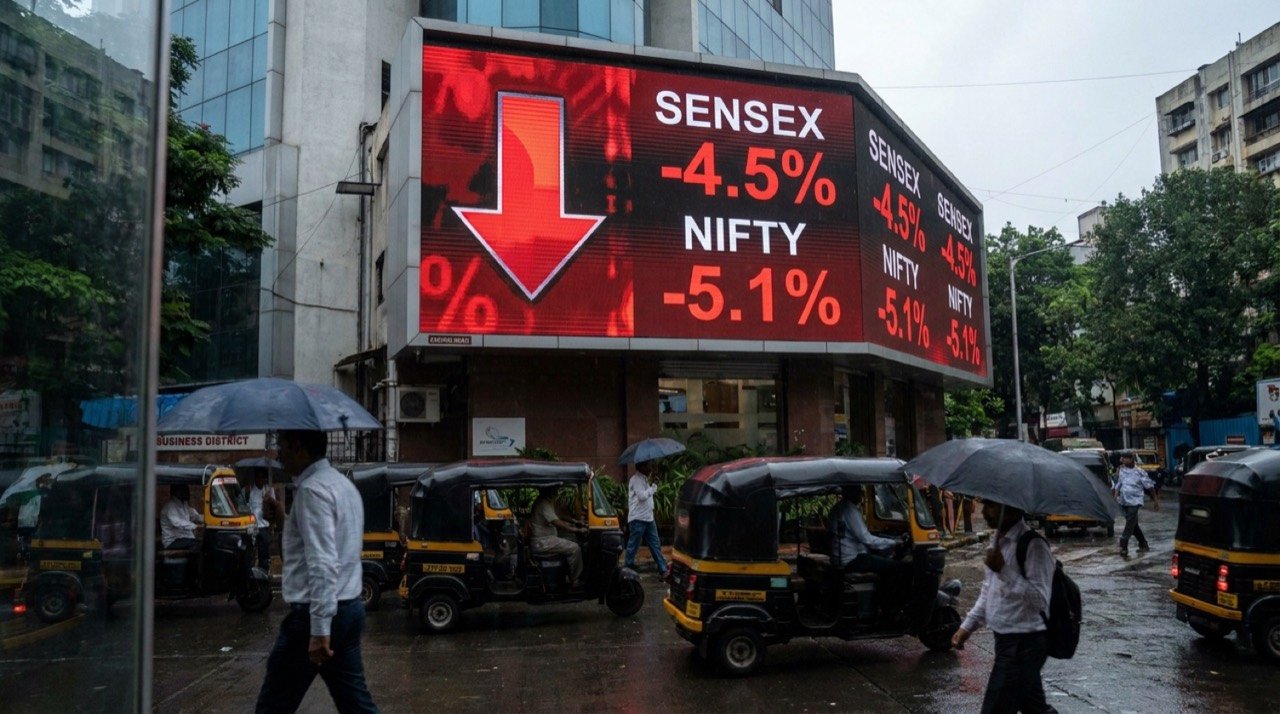
Sensex Sheds 893 Points as Global Risk and West Asia Tensions Weigh on Indian Equities
Indian benchmark indices closed sharply lower on June 23 as weak global cues and West Asian uncertainty dragged the Sensex below 76,300 and the Nifty under 23,850.
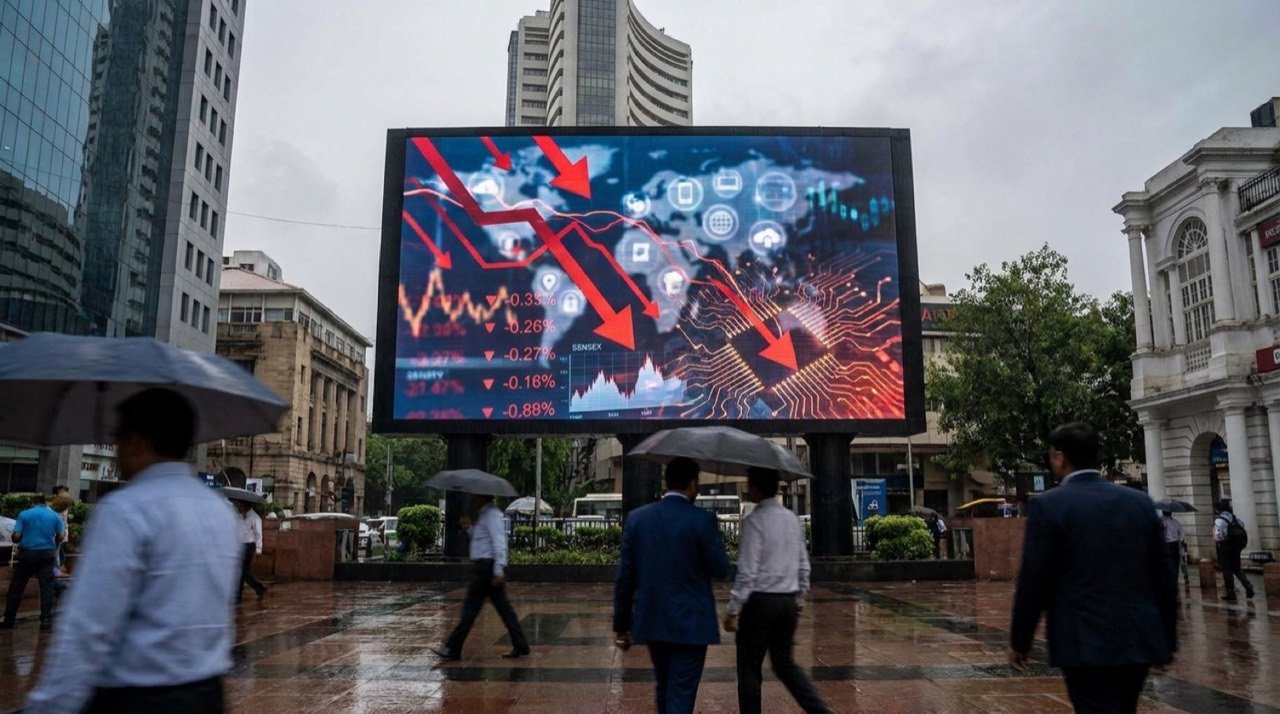
Sensex and Nifty Slide as Global Tech Selloff Hits Indian Market Sentiment
Indian equities fell on Tuesday as weak global cues, including a sharp slide in South Korean technology shares, dragged the Sensex down nearly 900 points and pulled the Nifty lower.

Sensex Drops 372 Points, Nifty Slips Below 24,000 On IT, Auto Drag
Indian benchmarks closed lower on June 29 as the Sensex fell 372 points to 76,728 and the Nifty ended at 23,946, with IT, auto and oil and gas stocks dragging while pharma outperformed.
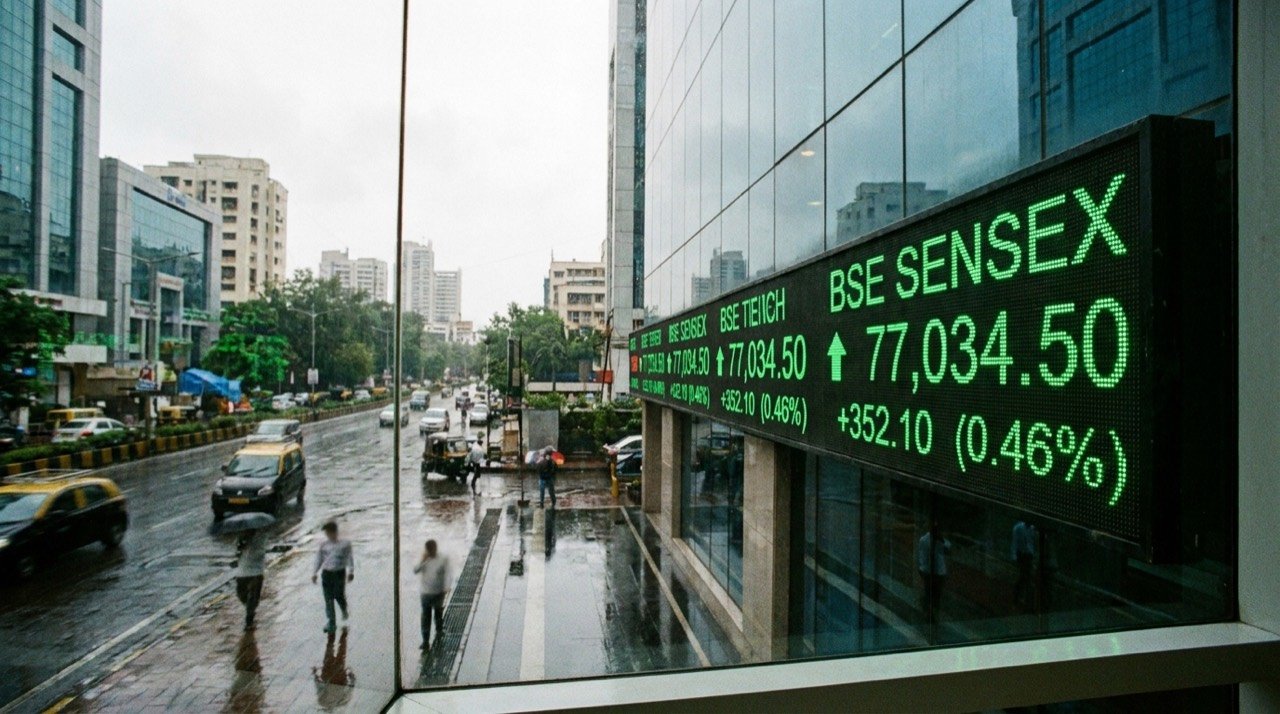
Sensex Holds Above 77,000 As Crude Pullback And RBI Liquidity Push Lift Indian Markets
Indian benchmarks extended gains around 24 June 2026 as easing crude prices, calmer West Asia tensions and fresh RBI liquidity support kept financial and auto stocks firmly in demand.
More from this section
More
Adani Case: US DOJ Pushes for Permanent Dismissal of Charges
The US Department of Justice has urged a judge to permanently dismiss charges against Gautam Adani, calling the case legally flawed — a reversal with consequences for markets, diplomacy and cross-border enforcement.

Akasa Air Inducts 40th Aircraft in Indian Aviation Scale-Up
Akasa Air's 40th aircraft, ferried to Bengaluru via Seattle, Reykjavik and Cairo, marks a fleet milestone for the young carrier and a fresh signal that India's aviation market remains firmly in expansion mode.
BARC Ratings Suspension Leaves Indian TV Industry Flying Blind
BARC's pause on television ratings has put India's broadcast measurement system under fresh scrutiny, leaving broadcasters, advertisers and media planners without the weekly audience data that anchors the TV economy.