Sensex Jumps 1,695 Points as Oil Slides on Peace-Deal Hopes
Indian equities staged one of their strongest sessions of the year after crude prices fell on reports of a possible US-Iran agreement, easing pressure on the oil-importing economy.
Commentary & Analysis ·

The BSE Sensex surged 1,695 points, or 2.3%, to close at 75,527.95 on 12 June, while the Nifty 50 climbed about 2% to settle near 23,623, as a sharp drop in oil prices lifted sentiment across Indian markets. The session ranked among the strongest of the year and offered a vivid illustration of how closely India's equity mood tracks the price of crude.
For a market that had spent much of 2026 contending with conflict-driven volatility and a soft rupee, the rally read as a collective exhale. The catalyst was less any domestic development than a shift in the global energy picture, a reminder that for an economy of India's size and import profile, the cost of oil can move sentiment as decisively as earnings or policy.
Crude-sensitive stocks lead gains
The rally followed reports that the United States and Iran were close to a deal that could reopen the Strait of Hormuz, sending Brent crude toward the high-$80s a barrel, its lowest in nearly two months. The advance was led by gains in financials, capital-goods and auto names, the broad cyclical sectors that tend to benefit most when investors turn optimistic about growth and lower input costs.
The Strait of Hormuz is the world's most critical oil chokepoint, and any prospect of it staying open removes a major risk premium from crude prices. That single piece of news rippled outward: cheaper oil eases the cost pressure on a huge swathe of corporate India, from manufacturers to logistics firms, which is why the buying was so broad rather than confined to a handful of stocks.
Where the relief landed hardest
Oil-sensitive sectors benefited directly, with airlines and oil-marketing companies among the top performers as lower input costs improved their margin outlook. A firmer rupee added to the positive tone, since a stronger currency reduces the local-currency cost of dollar-denominated oil imports and tends to draw foreign inflows back toward Indian assets.
Airlines are particularly leveraged to fuel, which can account for a large share of operating costs, so a fall in crude flows almost immediately into their margin expectations. Oil-marketing companies, meanwhile, see their refining and retailing economics improve when input prices ease. The rupee's firmness reinforced the loop, tightening the link between a calmer energy market and a healthier reading on India's external accounts.
- Sensex closed up 1,695 points (2.3%) at 75,527.95.
- Nifty 50 rose about 2% to near 23,623.
- Brent crude fell toward the high-$80s, a near two-month low.
- Financials, capital goods and autos led the advance.
- Airlines, oil-marketing companies and a firmer rupee added support.
Why it matters for India
As the world's third-largest oil importer, India is highly sensitive to crude swings, and the session reflected relief that an easing of the conflict could lower the country's import bill and current-account pressures. Lower oil prices ease three things at once: the trade deficit, imported inflation, and the strain on the rupee, which is why a single crude move can lift the whole market.
The mechanics are straightforward but powerful. A cheaper barrel shrinks the dollars India must spend abroad, which supports the currency, which in turn calms inflation expectations and gives policymakers more room to manoeuvre. The June rally was the market pricing in that virtuous chain before it had fully materialised.
The durability of the gains, however, rests on a deal that was still only reported rather than signed. Should the US-Iran talks stall or the conflict flare again, crude could rebound and unwind much of the optimism just as quickly. For now the session stands as a clear signal of how much Indian investors have riding on a de-escalation in West Asia, and how sharply the market is prepared to reward any sign of one.
The NE Times View
A 1,695-point leap powered by hope is exactly as fragile as it sounds. India's market is effectively trading the price of oil it must import, and a single peace-deal rumour erasing the geopolitical risk premium shows how exposed the rally is to reversal. Enjoy the relief, but treat it as a barometer of crude, not a verdict on domestic fundamentals.
This article is original commentary and analysis by The NE Times. Background facts were referenced from Business Standard and Investing.com.
You may also like to read

Sensex Crashes Nearly 900 Points as Global Risk-Off Mood Hits Indian Markets
Indian equities tumbled on Tuesday as the Sensex shed about 893 points and the Nifty slipped below 23,900, dragged by weak global cues, IT and metal selling and foreign outflow fears.
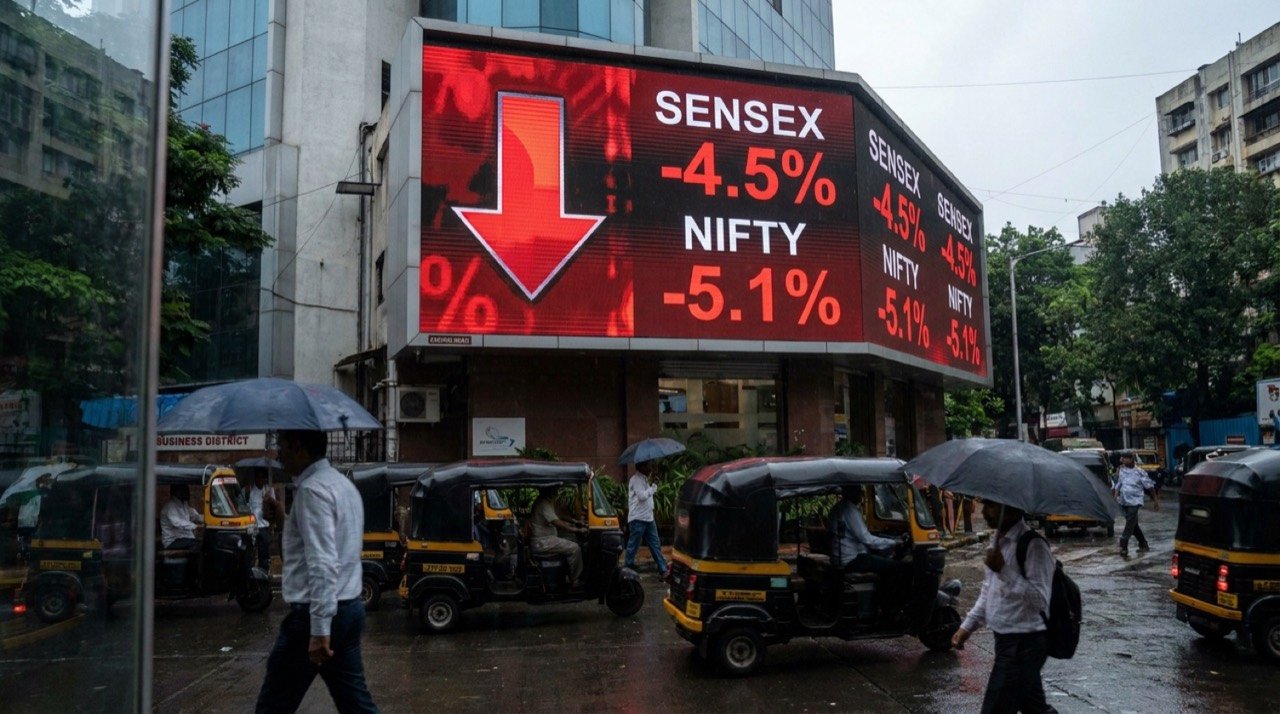
Sensex Sheds 893 Points as Global Risk and West Asia Tensions Weigh on Indian Equities
Indian benchmark indices closed sharply lower on June 23 as weak global cues and West Asian uncertainty dragged the Sensex below 76,300 and the Nifty under 23,850.
Rupee Claws Back To 94.55 As US-Iran Deal Hopes Ease Oil Fears
The rupee recovered to around 94.55 against the dollar by mid-June 2026, rebounding from a record low near 97 as reports of a US-Iran agreement to reopen the Strait of Hormuz lifted sentiment.
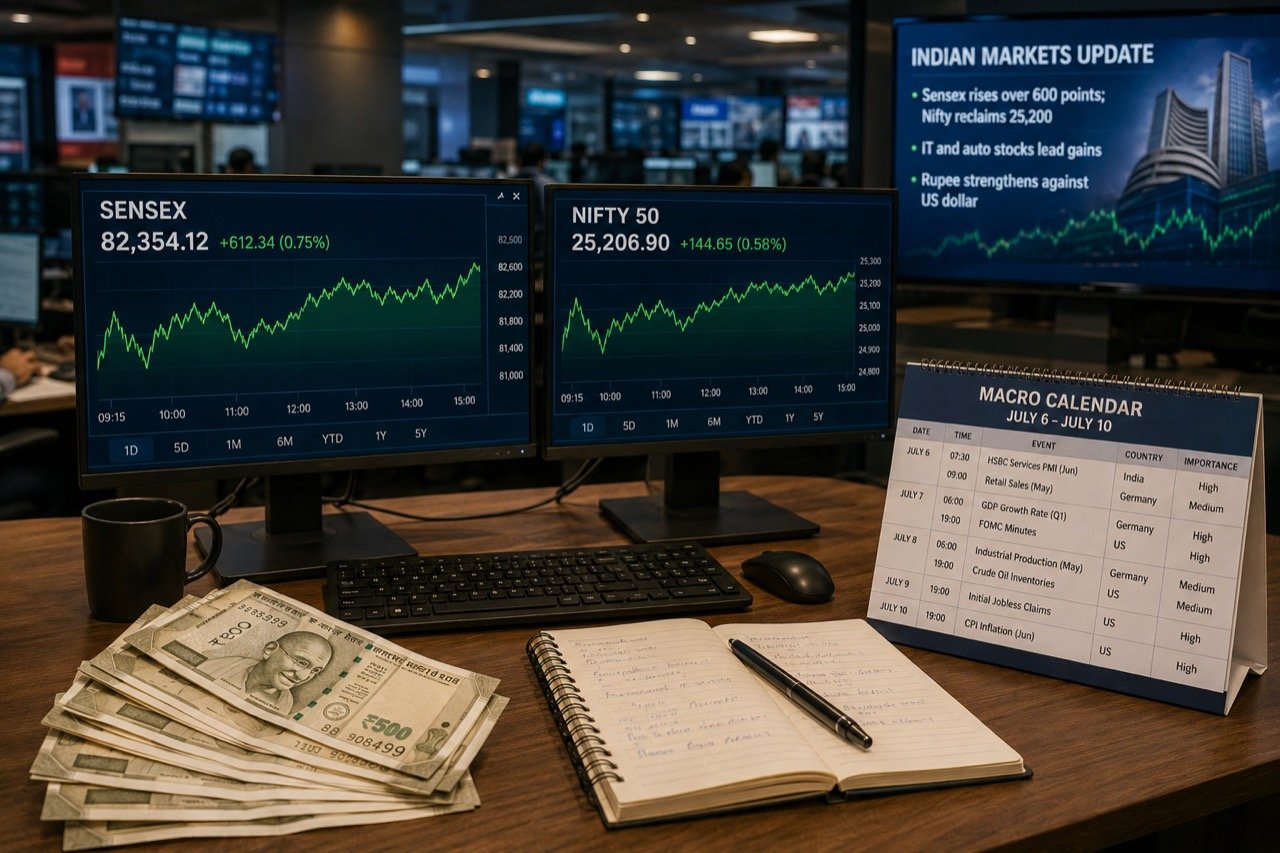
Sensex, Nifty Week Ahead: Trade Deal Hopes and Q1 Earnings in Focus
Indian equities enter a news-heavy week with trade-deal expectations, quarterly earnings, foreign flows and global cues all converging to set the direction for the Sensex and Nifty.
More from this section
More
Adani Case: US DOJ Pushes for Permanent Dismissal of Charges
The US Department of Justice has urged a judge to permanently dismiss charges against Gautam Adani, calling the case legally flawed — a reversal with consequences for markets, diplomacy and cross-border enforcement.

Akasa Air Inducts 40th Aircraft in Indian Aviation Scale-Up
Akasa Air's 40th aircraft, ferried to Bengaluru via Seattle, Reykjavik and Cairo, marks a fleet milestone for the young carrier and a fresh signal that India's aviation market remains firmly in expansion mode.
BARC Ratings Suspension Leaves Indian TV Industry Flying Blind
BARC's pause on television ratings has put India's broadcast measurement system under fresh scrutiny, leaving broadcasters, advertisers and media planners without the weekly audience data that anchors the TV economy.