India Smartphone Shipments Fall 10 Percent in Q2 2026 as Rising Prices Hit Affordable Demand
India remains one of the world's largest smartphone markets, so a double-digit quarterly shipment decline is a significant signal for manufacturers, retailers, app businesses and telecom operators.
Commentary & Analysis ·
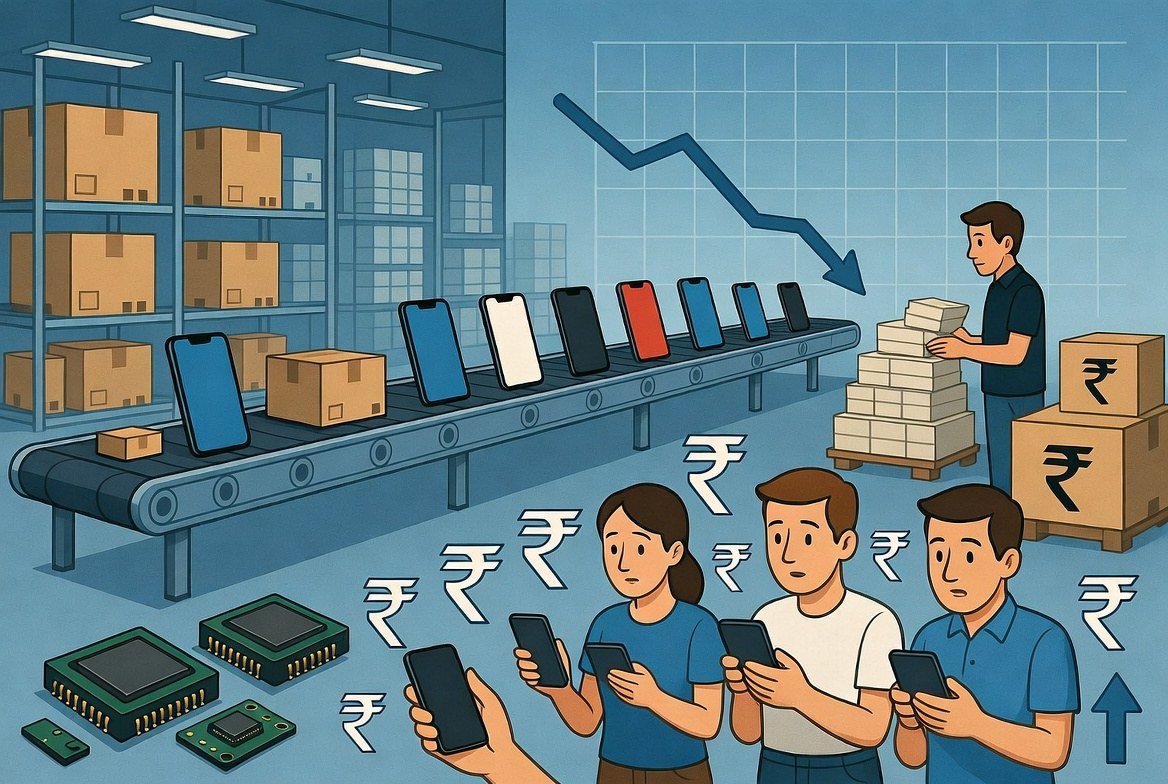
Key facts
- Counterpoint Research reported a 10 percent year-on-year fall in India smartphone shipments during the second quarter of 2026.
- The decline was described as the steepest for a June quarter in six years.
- Rising memory and component costs contributed to higher device prices, while weak discretionary spending reduced replacement demand.
- Shipment data measures devices sent into sales channels and should not be treated as identical to final retail sales or active-user numbers.
Why a 10 percent fall matters
India remains one of the world's largest smartphone markets, so a double-digit quarterly shipment decline is a significant signal for manufacturers, retailers, app businesses and telecom operators. Counterpoint Research's reported 10 percent year-on-year fall suggests that the market is no longer able to rely on automatic volume growth. Many households already own smartphones and replace them only when a device fails or a new model offers clear value. When prices rise and income confidence weakens, replacement cycles lengthen. The result is especially painful for brands dependent on high unit sales in affordable segments. Premium models may continue to attract buyers, but they represent a smaller part of the population. The headline therefore points to a widening gap between aspirational demand and purchasing power.
Component costs are reaching consumers
Memory chips, displays, processors, batteries and camera modules determine a large share of a phone's bill of materials. When those inputs become more expensive, brands can absorb the increase, reduce specifications or raise retail prices. Each choice has consequences. Absorbing costs damages margins; cutting features makes a new model less compelling; price increases push it beyond the budget of its intended buyer. The reported pressure from memory prices is particularly important because even entry-level phones need enough storage and RAM to run modern applications. Consumers notice when a new device offers little improvement at a higher price. That can make repairing an old phone or buying a previous-generation model more attractive.
Affordable demand is the market's foundation
India's smartphone story has been built on progressively lower barriers to internet access. Affordable Android devices brought video, payments, education and government services to millions. Weakness in this segment is therefore not only a consumer-electronics issue. It can slow digital inclusion for first-time buyers and families sharing devices. A person buying a phone below a certain price cannot easily switch to a premium model when costs rise. They may postpone the purchase entirely. Brands need to protect essential performance, software support and battery quality instead of using low headline prices for devices that quickly become frustrating. Financing can help, but instalments do not make an overpriced phone cheaper; they only spread the payment.
Shipments are not the same as sales
Market reports often use shipments because manufacturers and distributors can provide channel data before complete retail figures are available. A shipment records a device entering the sales chain, not necessarily reaching a consumer. Brands may cut shipments because retailers already hold excess inventory, even if final sales are stable. Conversely, large shipments can create the appearance of growth while unsold stock accumulates. The 10 percent figure should therefore be read alongside retail sell-through, inventory days and average selling price. A cautious channel may be correcting after earlier overstock rather than signalling a permanent collapse. Analysts and publishers should explain this distinction so that readers do not interpret one quarterly metric as the entire health of the smartphone economy.
What the decline means for Chinese and Indian brands
The Indian market is intensely competitive, with Chinese-origin brands, global companies and domestic firms fighting across price tiers. A shrinking quarter usually increases promotional pressure because each company wants to protect market share. Consumers may see exchange offers and bank discounts, but brands may also reduce the number of models or concentrate on higher-margin products. Domestic manufacturing policy has expanded local assembly, yet many high-value components remain connected to global supply chains. This means international chip and currency movements still affect prices. Indian brands have an opportunity if they can offer dependable devices and support, but competing at scale requires software updates, retail reach and quality control, not only patriotic marketing.
Longer replacement cycles change product strategy
When consumers keep phones for four or five years, software support becomes a central purchasing factor. A low-cost device that stops receiving security updates after a short period can become unsafe before its hardware fails. Brands that promise longer updates may gain trust even if the initial price is slightly higher. Repairability also matters. Affordable screen and battery replacement can extend a phone's life and reduce electronic waste. The shipment decline may encourage companies to design for durability and services rather than annual replacement. It could also expand the organised refurbished-phone market, where warranties and verified device condition are essential to protect buyers. A mature market rewards lifecycle value more than novelty.
Telecom and app-economy implications
Telecom operators benefit when users upgrade to devices that support newer network features and consume more data. Slower replacement can delay adoption of advanced 5G capabilities, although many existing phones already support basic 5G. App developers must also optimise for older hardware if a large share of users does not upgrade. Heavy applications that assume abundant storage and memory can exclude budget users. Financial services, education platforms and government apps have a particular responsibility to work reliably on modest devices. The smartphone slowdown therefore feeds into broader questions about whether India's digital services remain accessible when hardware prices rise.
What could revive the market
A recovery could come from lower component prices, stronger income growth, festive discounts or genuinely useful product innovation. Artificial-intelligence features may attract attention, but buyers in affordable segments will prioritise battery life, camera reliability, storage and software longevity. Manufacturers may also redesign portfolios to reduce duplication and improve value at key price points. Policymakers can support competition, domestic component capacity and clear repair rules without trying to manufacture demand artificially. The next two quarters will show whether Q2 was a temporary inventory correction or a deeper affordability problem. For now, the message is clear: India's smartphone market is large, but it is not immune to price pressure and cautious household spending.
Sources
- Counterpoint Research, India smartphone market assessment for Q2 2026, as reported July 17, 2026.
- The Indian Express and Hindustan Times reports on the 10 percent shipment decline and component-cost pressure, July 17, 2026.
This article is original news analysis and commentary by The NE Times, based on reporting from the sources listed above.
You may also like to read

India-UK CETA Takes Effect, Opening a New Test for Exporters, Services Firms and Consumers
The India-UK Comprehensive Economic and Trade Agreement has moved from negotiation and ceremony into implementation. That transition is the real beginning of the story.
India Retail Inflation Rises to 4.38% in June 2026 as Food Prices Push CPI Above RBI’s Target
The first breach of the central bank’s 4% midpoint in 17 months puts household budgets, monsoon conditions and the interest-rate outlook back in focus.

FMCG Demand Outlook Brightens on Rural Recovery and Stable Prices
Consumer goods companies are turning more upbeat as rural demand recovers, input costs hold steady and everyday purchases pick up, offering a telling read on the health of Indian household spending.

Gold Prices Ease Across Indian Cities: What the July 4 Dip Means
Gold rates for 24-karat and 22-karat metal edged lower across Delhi, Mumbai, Bengaluru, Chennai and Hyderabad on July 4, offering a window for buyers weighing jewellery and investment purchases.
More from this section
More
Sensex Surges About 800 Points as IT and Banking Stocks Defy Weak Global Cues
An intraday gain of about 800 points in the Sensex is large enough to dominate financial headlines, yet one session cannot establish a durable bull market.

E20 Fuel Dispute Reaches Consumer Court as Car Maker Is Ordered to Replace Vehicle or Pay Compensation
A consumer commission in Raipur has ordered a vehicle manufacturer and dealer to replace a Maruti Grand Vitara Strong Hybrid with an E20-compatible vehicle or provide monetary relief reported at more...

India’s New IIP Base Year 2022-23: Why the Industrial Production Index Has Been Rebuilt
The revised index aims to capture today’s manufacturing structure more accurately, but users must understand what changed before comparing new and old growth numbers.