Sabarimala to Get AI-Powered Crowd Control for 2026 Pilgrimage Season
Kerala temple authorities are readying an AI-enabled system of smart cameras, drones and GIS mapping to monitor crowds and predict congestion at Sabarimala ahead of the busy pilgrimage season.
Commentary & Analysis ·
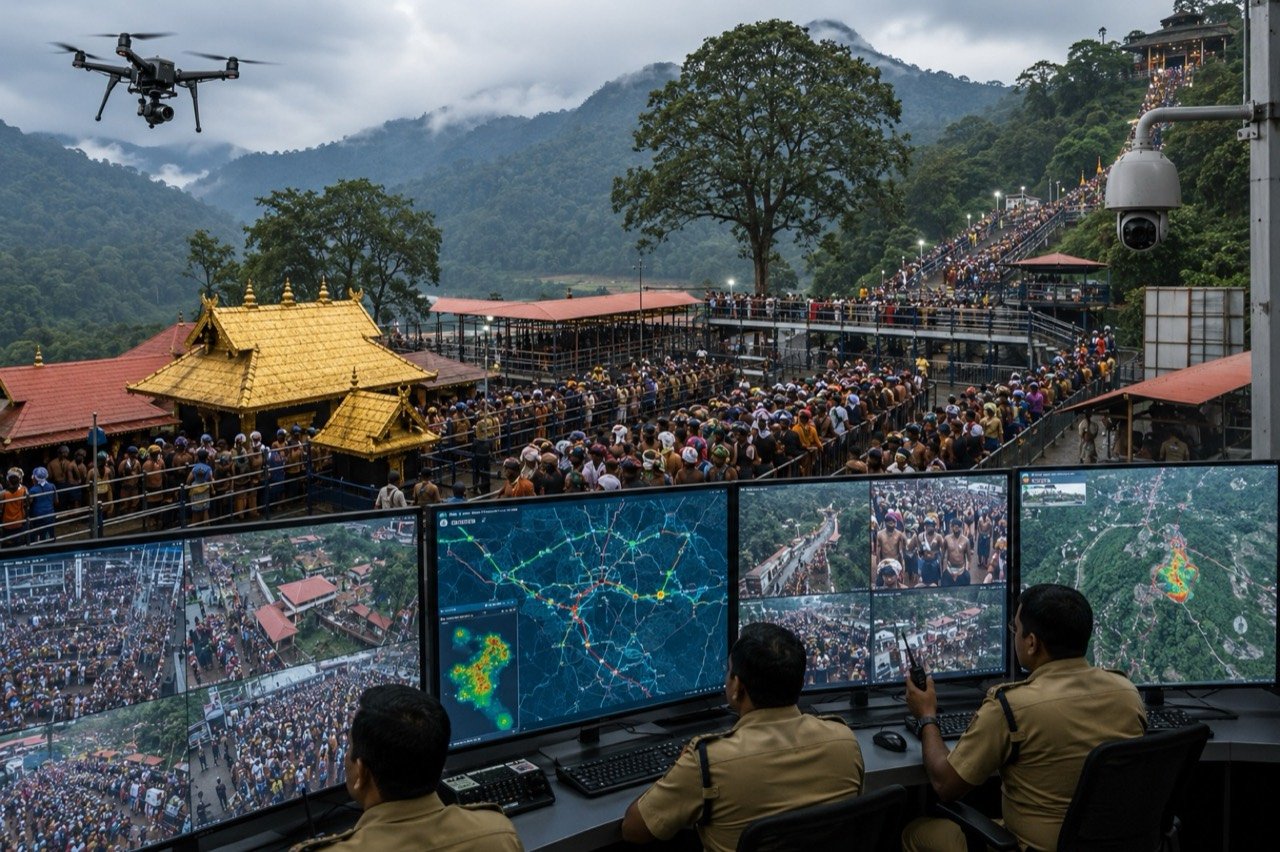
Kerala's temple authorities are preparing an artificial-intelligence-enabled crowd management system for Sabarimala ahead of the 2026 pilgrimage season, an attempt to bring real-time technology to bear on one of the country's largest seasonal religious gatherings. The plan blends AI cameras, drones and geographic information system (GIS) mapping to track the movement of devotees across the hill shrine's most crowded points.
How the system will work
The system is designed to monitor the flow of pilgrims at Sannidhanam, Pampa and Nilakkal, the three nerve centres of the Sabarimala journey. AI cameras will feed live video into analytical software that estimates crowd density, while drones provide aerial views of areas that are hard to cover from the ground. GIS mapping ties the data to specific locations, giving authorities a layered picture of where pressure is building.
Officials say the platform will analyse these video feeds to forecast congestion before it becomes dangerous, then push alerts to control rooms and field teams through digital devices. The aim is to move from reactive policing of crowds to anticipatory management, where bottlenecks are eased before they form rather than dispersed after they have already caused delays or risk.
Why scale makes it necessary
The scale of Sabarimala explains the investment. The shrine draws millions of devotees during the season, with reports estimating crowds running into the tens of lakhs, concentrated along narrow forest paths and steep approaches. In such conditions, even small surges can translate into queues that stretch for hours and, in the worst cases, into safety hazards.
Real-time information can help prevent those outcomes by improving queue management, smoothing the pace at which pilgrims are admitted to the most sensitive zones and supporting faster emergency responses when medical or security incidents occur. Authorities have framed the technology as a safety and logistics tool that does not alter the religious character of the pilgrimage itself.
Promise and the practical tests
Deploying such a system at a remote hill shrine carries its own challenges, from reliable connectivity and power in forested terrain to staffing control rooms with personnel trained to act on AI alerts. The value of predictive analytics depends entirely on whether field teams can respond quickly enough to make a difference on the ground.
- AI cameras, drones and GIS mapping will monitor Sannidhanam, Pampa and Nilakkal.
- Software will estimate crowd density and forecast congestion in real time.
- Control rooms and field teams will receive alerts on digital devices.
- The system targets better queue management and faster emergency response.
- Officials say it will not change the religious character of the pilgrimage.
“The system will help us anticipate congestion and respond faster, without changing the experience of the pilgrimage.”
— Temple administration official
If it performs as intended, the Sabarimala deployment could become a reference point for technology-assisted crowd safety at India's large religious congregations, where managing sheer numbers remains a perennial challenge. The coming season will offer the first real measure of whether AI-driven prediction can be matched by action on the ground.
The NE Times View
After deadly stampedes elsewhere, deploying smart cameras, drones and GIS mapping at Sabarimala is a welcome shift from reaction to prediction. Technology can flag dangerous congestion, but it does not move people, that still requires trained marshals, clear exits and the discipline to halt entry when limits are breached. The pilot is worth backing if authorities treat the data as a trigger for action, not a dashboard for show. Execution, not procurement, will decide whether lives are saved.
This article is original commentary and analysis by The NE Times. Background facts were referenced from The Indian Express and Moneycontrol.
You may also like to read
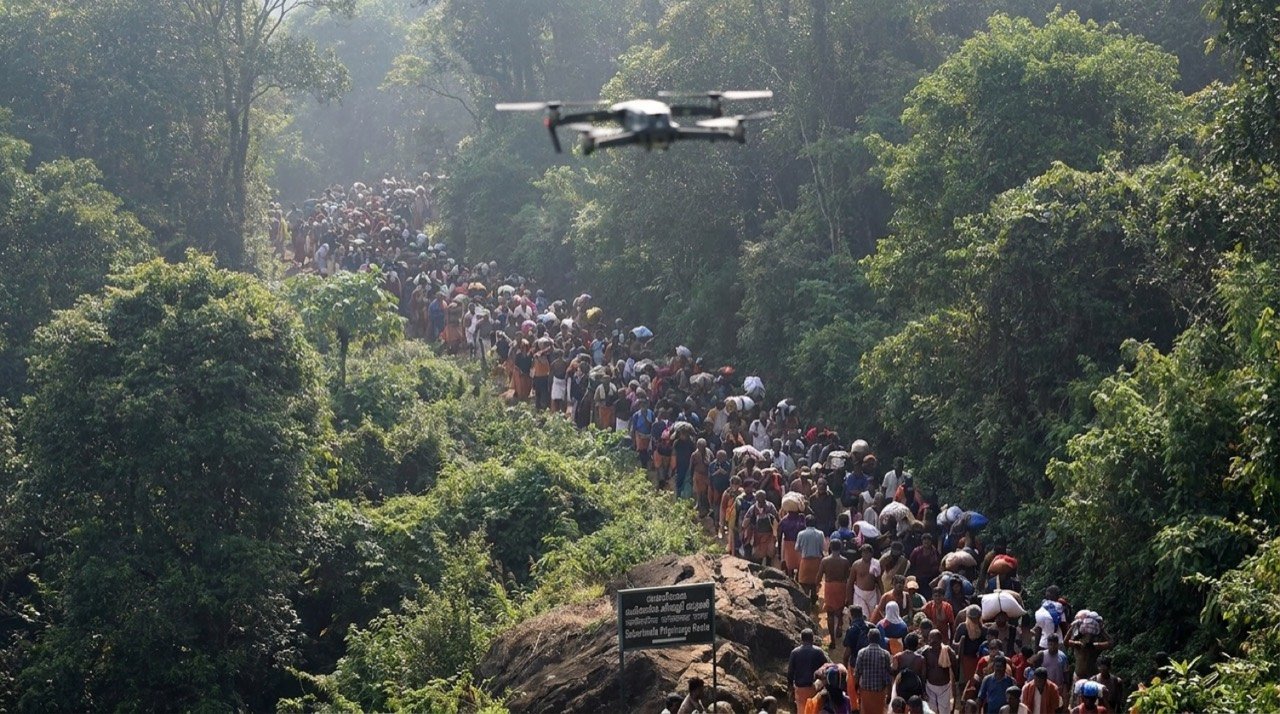
Sabarimala Plans Drones and AI Systems for Pilgrimage Crowd Safety
Kerala's Sabarimala temple administration is preparing to deploy artificial intelligence, drones and predictive systems to manage pilgrim crowds and improve safety during the coming pilgrimage season.
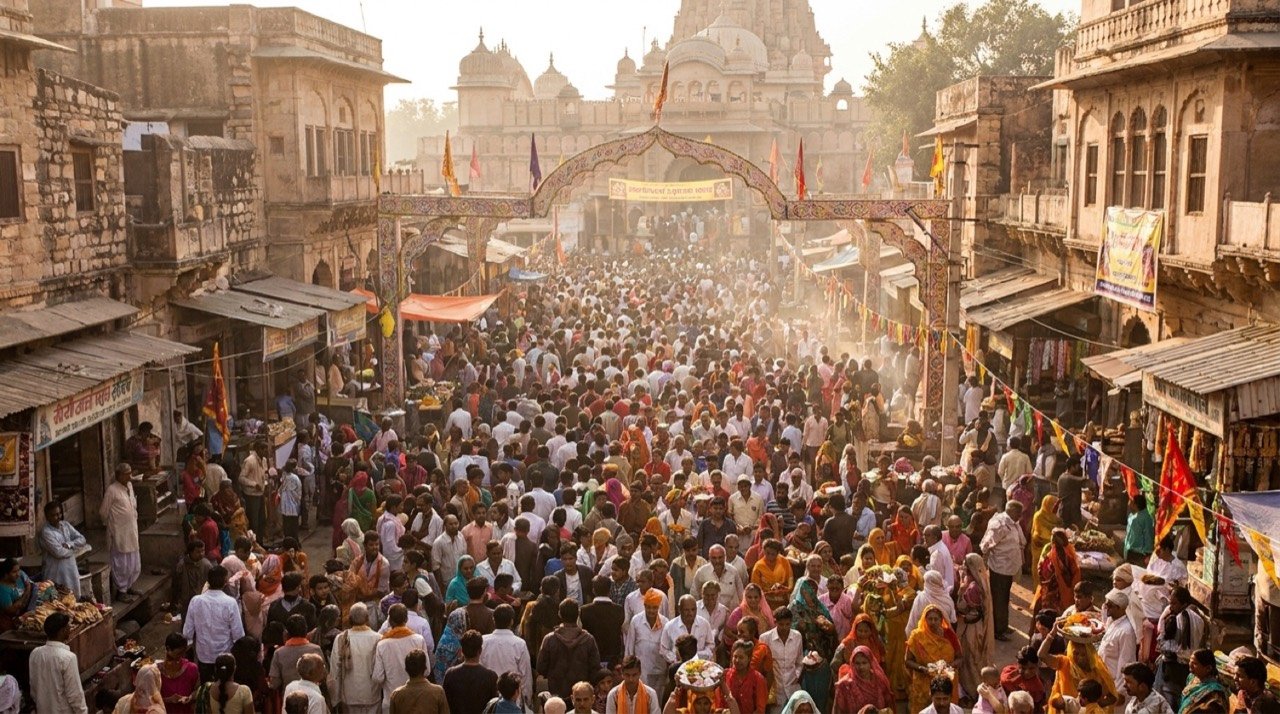
Khatu Shyamji Rail Connectivity Plan Could Ease Rajasthan Pilgrimage Pressure
A rail-connectivity push for Rajasthan's high-footfall Khatu Shyamji could reshape how pilgrims travel, easing road congestion and supporting local businesses if delivered well.
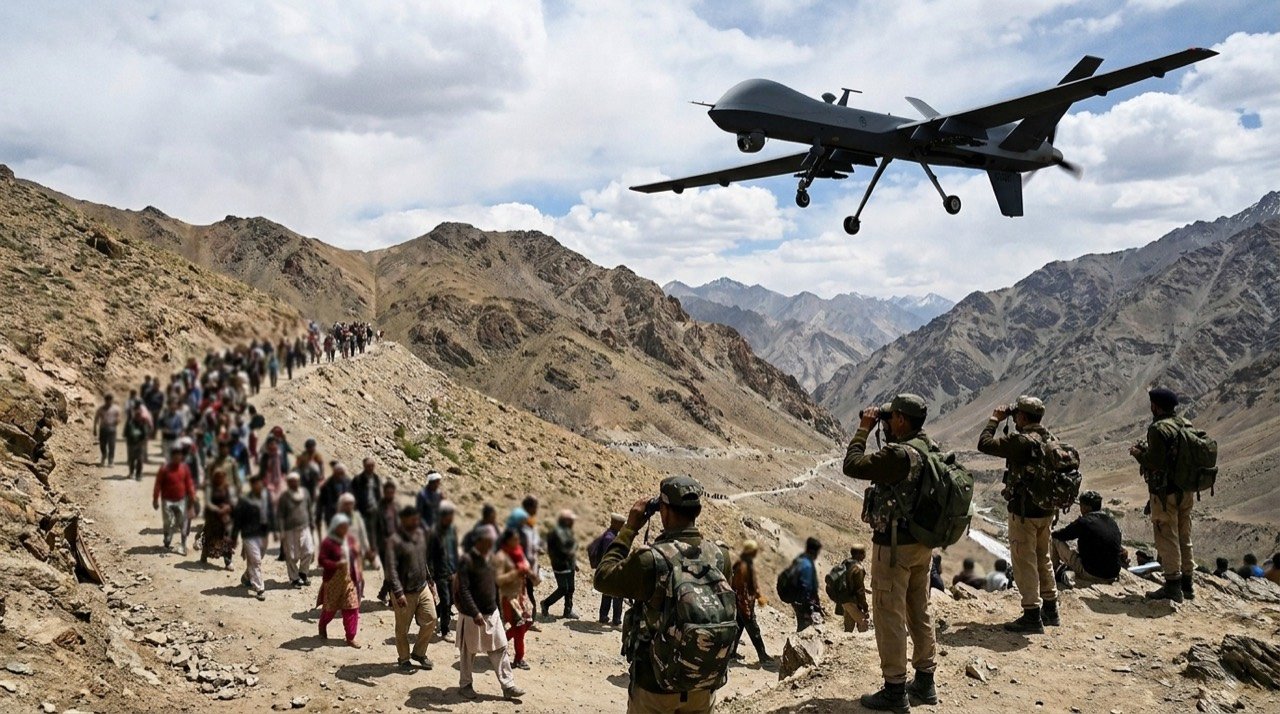
Project Hawk Eye: AI, Drones and Snipers to Guard the Amarnath Yatra
Anantnag police have unveiled Project Hawk Eye, a layered surveillance net of drones, facial recognition, hundreds of CCTV cameras and sniper teams to secure the 2026 Amarnath Yatra beginning 3 July.
General Dwivedi's Tenure Puts Drones and New Battle Formations in Focus
As Army Chief General Upendra Dwivedi nears the end of his tenure on June 30, his legacy is being weighed through accelerated doctrine, drones and reorganised battle formations.
More from this section
More
AICTE Industry Fellowship 2026: Rs 1.5 Lakh Scheme Closes July 5
The AICTE Industry Fellowship Programme 2026, which places technical-education faculty inside leading companies on a Rs 1.5 lakh monthly stipend, reached its application deadline on July 5.
Bay of Bengal Low Pressure System Revives Monsoon Over Western India
A low-pressure system over the Bay of Bengal has pushed the monsoon back into an active phase, bringing steady heavy rain to Kerala, coastal Karnataka and Maharashtra, and putting Mumbai and Pune on preparedness watch.
Bishnoi Gang Suspects Injured in Haryana Encounter as Police Tighten Net
A joint Haryana-Delhi Police operation in Bahadurgarh left two suspected Lawrence Bishnoi gang members injured, spotlighting the multi-state coordination now central to India's fight against organised crime networks.