Pakistan Unveils Record Defence Budget While Bowing to IMF Targets
Islamabad's 18.77 trillion-rupee budget pushes military spending past three trillion rupees for the first time, even as the government holds the line on fiscal targets set by the International Monetary Fund.
Commentary & Analysis ·
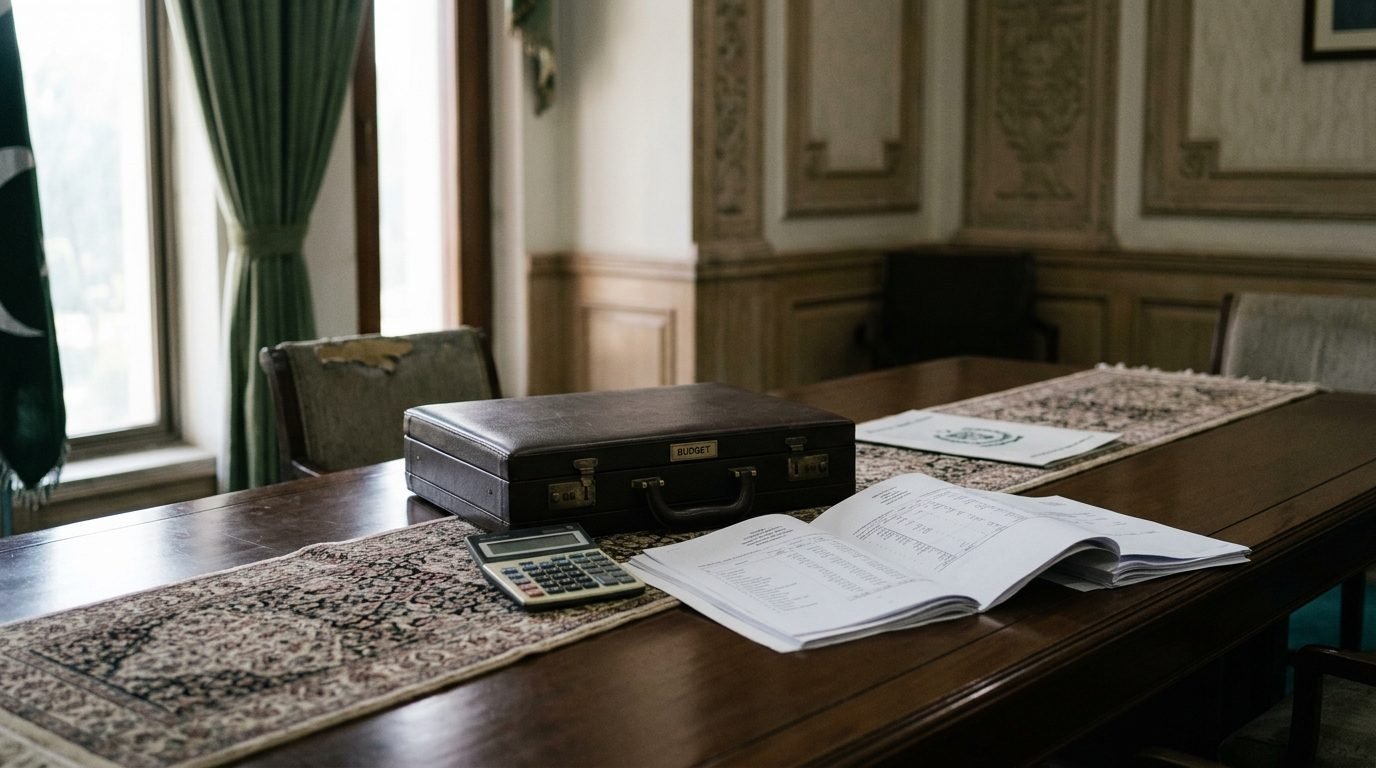
Pakistan has unveiled a federal budget for the 2026-27 financial year that lifts defence spending past three trillion rupees for the first time, while pledging to meet the strict fiscal targets agreed with the International Monetary Fund. Finance Minister Muhammad Aurangzeb presented the 18.77 trillion-rupee package, framing it as an attempt to balance security needs, economic recovery and the demands of the country's international lenders.
The budget arrives at a delicate moment for Pakistan, which has been navigating a fragile recovery under an IMF programme after years of acute economic stress. With foreign exchange reserves rebuilding and inflation easing from earlier peaks, the government is seeking to project stability while managing a heavy debt burden and rising regional tensions.
A historic jump in military spending
Defence allocations rose from around 2.55 trillion rupees the previous year to roughly three trillion rupees, an increase of about 18 percent and the first time the figure has crossed that threshold. Military expenditure now accounts for around 16 percent of total federal spending, reflecting heightened security concerns following last year's military confrontation with India.
The surge is expected to fund procurement programmes including advanced fighter aircraft, submarines and air-defence systems, according to analysts tracking the allocations. The scale of the increase has drawn attention across the region, given the rupee's strain and the competing demands on the national exchequer.
Holding to IMF discipline
Despite the rise in defence outlays, the government left untouched the core targets set by the IMF earlier in the year. Aurangzeb confirmed the budget would aim to:
- Keep the fiscal deficit contained at around 3.6 percent of GDP.
- Achieve a primary surplus of about 2 percent of GDP.
- Maintain the Federal Board of Revenue tax collection target of 15.26 trillion rupees.
- Target economic growth of around 4 percent with inflation projected near 8.2 percent.
The budget also offered relief to overseas Pakistanis and adjusted property and transaction taxes, while providing some easing for salaried workers. Analysts described the package as prioritising stability over stimulus, a cautious approach designed to keep the IMF programme on track.
Pressures beneath the numbers
Pakistan's economy remains under strain, with a large share of the population living below the poverty line and climate-related disasters inflicting heavy damage in recent years. The government has been advancing reforms under the IMF's Resilience and Sustainability Facility, including climate-focused planning ahead of the monsoon season.
The country has also committed to longer-term structural changes, including a roadmap towards an interest-free economy and the regulation of virtual assets, reflecting both domestic political pressures and the conditions attached to external financing.
Implications for India and the region
For Indian readers, the budget is closely watched given the two countries' tense relationship and the prominence of defence spending in Pakistan's fiscal choices. The record military allocation, set against constrained public finances, underscores how security priorities continue to shape economic policy across South Asia.
Whether Islamabad can sustain both its expanded defence commitments and its fiscal discipline will be a central question in the months ahead, as the IMF reviews progress and global economic conditions, including volatile energy prices, weigh on an economy still working to find firmer footing.
The NE Times View
Record military spending paired with IMF-mandated austerity is the central contradiction of the Pakistani state laid bare in a single document: guns prioritised while citizens absorb the squeeze. For India this is worth watching coolly, not gloating over, since a fiscally cornered neighbour is rarely a stable one. The IMF's willingness to fund a budget tilted so heavily toward defence also deserves harder questions than it usually gets.
This article is original commentary and analysis by The NE Times. Background facts were referenced from Dawn and Reuters.
You may also like to read
Central Bank 'Super Week' Exposes Deep Rift in Global Monetary Policy
Five major central banks set rates within eight days as an oil shock pushes the ECB to hike, the Fed to hold amid dissent and the Bank of Japan toward a defensive move.
US Clears $482 Million Apache and M777 Sustainment Package for India
Washington has notified a roughly $482 million support package to keep India's Apache attack helicopters and M777 howitzers combat-ready, deepening defence ties through maintenance, spares and training rather than new weapons.
India And US Close In On First Tranche Of Trade Deal As Negotiators Call It 99 Per Cent Done
After three days of talks in New Delhi, India and the United States say the first tranche of their interim trade agreement is all but complete, with signatures expected within weeks.
India Seeks Reset With Dhaka Under Tarique Rahman As Trust Deficit And Ganga Treaty Loom
With a new elected government in Bangladesh, New Delhi is pushing to repair ties strained since 2024, but unresolved disputes over water, trade and visas continue to weigh on the relationship.
More from this section
More
India-New Zealand Ties: Visit Plans Put FTA and Diplomacy in Focus
Reports of a planned high-level India-New Zealand engagement have revived attention on free trade talks, professional mobility and Indo-Pacific cooperation between two partners with clear room to grow.

Modi Greets Trump on US 250th Independence Day, Hails Partnership
Prime Minister Narendra Modi marked America's 250th Independence Day with a message to President Trump, saying the next 250 years should lift the India-US partnership to new heights.
India Watches Dhaka's China-Backed Teesta Plan as Stakes Rise
New Delhi is closely tracking Bangladesh's proposal to develop the Teesta river with Chinese assistance, a move that revives one of South Asia's most sensitive water-sharing disputes and tests regional strategic trust.