Crude spike from West Asia conflict pins rupee near record low, widens deficit fears
Surging oil prices have revived pressure on the currency and the current account, exposing India's enduring vulnerability to energy shocks.
Commentary & Analysis ·
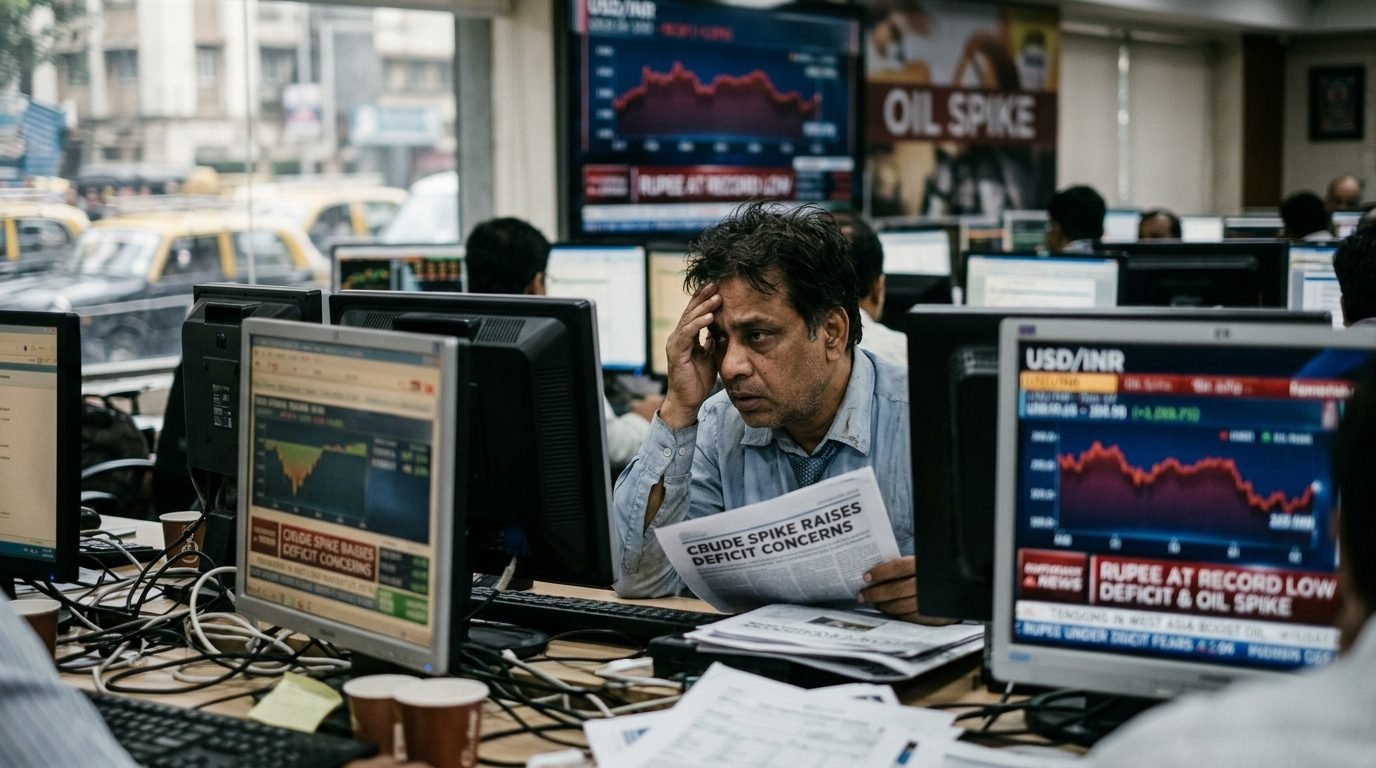
A fresh climb in global crude prices, triggered by escalating conflict between Israel and Iran, has reignited pressure on the Indian rupee and stoked fears of a wider current account deficit. The Indian crude basket has risen to around $73 a barrel in mid-June from roughly $64 a month earlier, as renewed strikes in West Asia rattled energy markets and reminded investors of India's structural exposure to oil shocks.
For an economy that imports more than 85 per cent of its crude requirement, the move is far from academic. Higher oil prices feed directly into the import bill, pressure the currency and threaten to nudge inflation higher, a chain reaction that policymakers have learned to watch closely whenever the Middle East flares. The latest bout of volatility has put those familiar vulnerabilities back at the centre of the macroeconomic debate.
The currency under strain
The rupee has been among the more visible casualties. Earlier in the year the currency slid to record lows near 95 to the dollar after Brent crude spiked, and the renewed conflict has kept it under pressure. Analysts note that every $10 increase in crude prices tends to widen India's current account deficit by an estimated 40 to 50 basis points, a sensitivity that magnifies the impact of even moderate price swings.
Compounding the strain are softer foreign portfolio flows. After foreign investors poured around $6.5 billion into Indian government bonds in 2025, inflows have cooled sharply in 2026 amid caution over geopolitics and global rates. The combination of a heavier import bill and thinner capital inflows leaves the currency with fewer cushions against external shocks.
Pressure on the current account
Economists warn that a sustained crude price around $75 a barrel could push the current account deficit toward 1.3 per cent of GDP, up from a baseline projection nearer 1.1 per cent. While still modest by historical standards, the widening underscores how quickly external balances can deteriorate when energy costs rise. The key channels of impact include:
- A larger oil import bill that swells the trade deficit
- Downward pressure on the rupee as demand for dollars to pay for imports rises
- Imported inflation as costlier energy filters through to fuel and transport
- Tighter room for monetary easing if price pressures build
The Strait of Hormuz risk
Lurking behind the price moves is the spectre of disruption to the Strait of Hormuz, the narrow waterway through which a substantial share of India's crude imports transit. Any interruption to flows through the chokepoint would amplify the supply shock dramatically, sending prices sharply higher and intensifying the strain on the rupee and the current account. For now, ratings agencies have characterised the direct hit to corporate India as limited, but the tail risk of a broader escalation keeps markets on edge.
Government officials and the central bank have tools to manage the fallout, from drawing on foreign-exchange reserves to smoothing currency volatility, but none can fully offset a sustained energy shock. The episode is a pointed reminder that, for all its growth momentum, India remains hostage to forces well beyond its borders.
Outlook
The near-term trajectory hinges on the path of the conflict and the behaviour of oil markets. A de-escalation that brings crude back toward earlier levels would relieve much of the pressure; a prolonged standoff, or any threat to Hormuz, would do the opposite. Either way, the latest scare has refocused attention on India's energy dependence and the delicate balancing act facing its policymakers in the months ahead.
The NE Times View
Every West Asian flare-up exposes the same unhealed wound: India imports the vast majority of its oil and pays in dollars, so a distant conflict lands directly on the rupee and the current account. The short-term levers, reserves and rate management, only buy time. The real answer remains the unglamorous, decade-long work of energy diversification and demand efficiency, which successive governments fund in speeches more than in budgets.
This article is original commentary and analysis by The NE Times. Background facts were referenced from Business Standard, Trading Economics and Euronews.
You may also like to read

Rupee Claws Back To 94.55 As US-Iran Deal Hopes Ease Oil Fears
The rupee recovered to around 94.55 against the dollar by mid-June 2026, rebounding from a record low near 97 as reports of a US-Iran agreement to reopen the Strait of Hormuz lifted sentiment.
Fuel Marketing Margins Rebound for Indian OMCs as Crude Eases After West Asia Shock
Petrol and diesel marketing margins at state-run oil firms BPCL, IOC and HPCL are recovering as crude prices ease, brightening the profit outlook even as inventory losses and LPG under-recoveries cloud the June quarter.
Sensex Sheds 893 Points as Global Risk and West Asia Tensions Weigh on Indian Equities
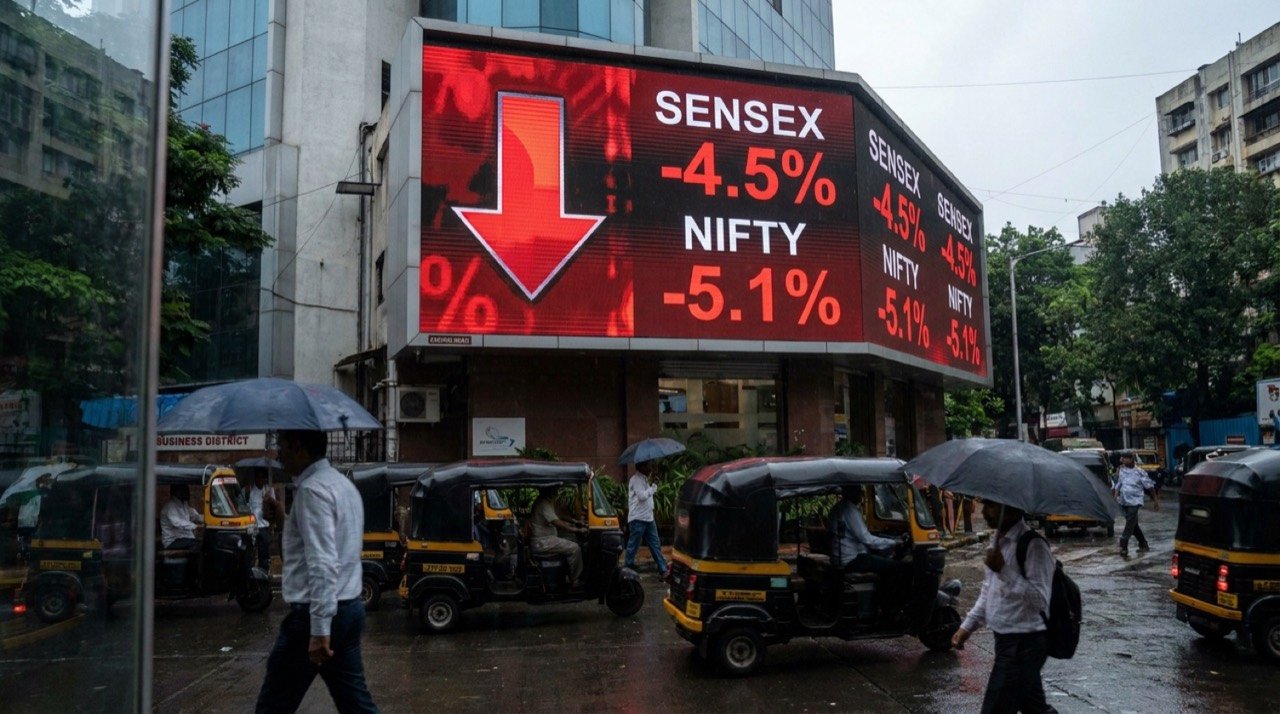
Indian benchmark indices closed sharply lower on June 23 as weak global cues and West Asian uncertainty dragged the Sensex below 76,300 and the Nifty under 23,850.

Sensex Jumps 1,695 Points as Oil Slides on Peace-Deal Hopes
Indian equities staged one of their strongest sessions of the year after crude prices fell on reports of a possible US-Iran agreement, easing pressure on the oil-importing economy.
More from this section
More
Adani Case: US DOJ Pushes for Permanent Dismissal of Charges
The US Department of Justice has urged a judge to permanently dismiss charges against Gautam Adani, calling the case legally flawed — a reversal with consequences for markets, diplomacy and cross-border enforcement.

Akasa Air Inducts 40th Aircraft in Indian Aviation Scale-Up
Akasa Air's 40th aircraft, ferried to Bengaluru via Seattle, Reykjavik and Cairo, marks a fleet milestone for the young carrier and a fresh signal that India's aviation market remains firmly in expansion mode.
BARC Ratings Suspension Leaves Indian TV Industry Flying Blind
BARC's pause on television ratings has put India's broadcast measurement system under fresh scrutiny, leaving broadcasters, advertisers and media planners without the weekly audience data that anchors the TV economy.