Arrest in Naresh Gujral Cyber Fraud Case Exposes Mule-Account Trail
Delhi Police have arrested a man in the alleged Rs 7.8 crore cyber fraud targeting former Rajya Sabha MP Naresh Gujral, as investigators trace funds through layered mule accounts.
Commentary & Analysis ·
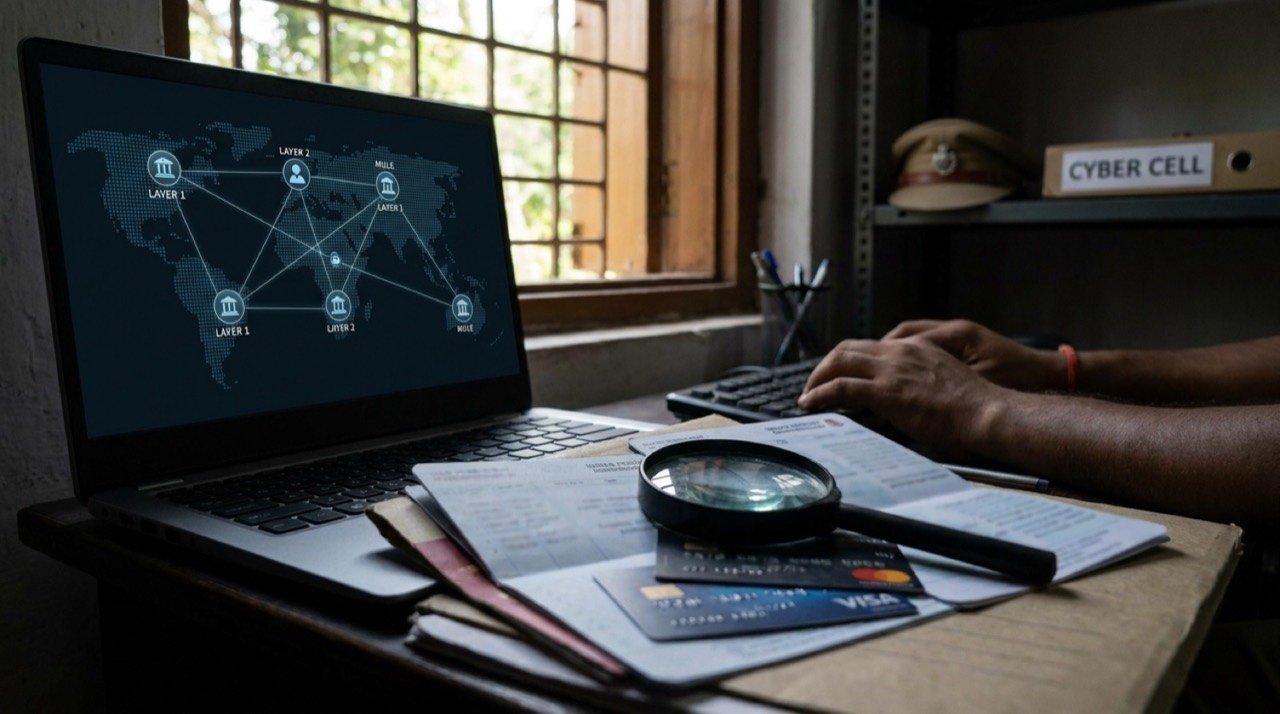
Delhi Police have arrested a man linked to the alleged cyber fraud in which former Rajya Sabha MP Naresh Gujral was reportedly cheated of Rs 7.8 crore, a case that has put the spotlight on how organised scam networks move stolen money. Investigators are focusing on the flow of funds through layered accounts, a pattern common in large online investment and impersonation frauds. The arrest is a single, useful data point in a much larger and more troubling picture, one in which the mechanics of laundering stolen money have become almost routine for organised fraud rings operating across state lines.
How the money moved
At the centre of the investigation is the movement of funds through a chain of accounts designed to obscure the trail. Such layering, where money is rapidly split and transferred across multiple accounts, is a hallmark of sophisticated cyber fraud and makes recovery difficult once transfers are complete. The logic of layering is simple but effective: the faster money is broken into smaller sums and pushed through a series of unrelated accounts, the harder it becomes for any single bank or investigator to see the full picture in real time. By the time a victim realises they have been defrauded and a complaint is registered, the money may already have passed through several hands and jurisdictions.
Police cyber cells increasingly track mule accounts, beneficiary wallets and communication logs to reconstruct the chain of cheating, working backwards from the victim's transfers to identify the people and entities that handled the proceeds. This forensic reconstruction is painstaking work. Each account in the chain typically belongs to someone who has been recruited, sometimes unknowingly, sometimes for a small fee, to receive and forward funds. Identifying the account holder is only the first step; establishing whether that person was a knowing participant, a coerced intermediary or an unwitting dupe requires further investigation, and it is this layer of complexity that so often slows prosecutions and complicates recovery of the stolen sums.
Even prominent targets are vulnerable
The case is a reminder that even prominent public figures can be targeted by sophisticated fraud networks using trust-building calls, forged digital trails and rapid transfers. The scale of the alleged loss, Rs 7.8 crore, underscores how convincing such operations can be when they combine social engineering with technical cover. Fraudsters frequently pose as officials, advisers or investment managers, building credibility over repeated contact before pressing the victim to move large sums quickly. That a former member of the Rajya Sabha, someone with decades of public life and presumably no shortage of access to sound financial advice, could be drawn into such a scheme illustrates a point that cybersecurity professionals have long made: financial fraud of this kind does not primarily exploit ignorance. It exploits trust, time pressure and the human tendency to defer to an authoritative-sounding voice on the other end of a call.
This has implications well beyond the individual case. If a person of Gujral's stature and experience can be persuaded to part with such a large sum, then the assumption that education, seniority or financial literacy offer meaningful protection against these schemes needs to be revisited. Fraud networks study their targets, tailor their scripts, and are patient enough to build rapport over multiple interactions before asking for money. The sophistication of the "forged digital trails" referenced in the investigation suggests these are not opportunistic amateurs but organised operations with defined roles: callers, technical operators who fabricate supporting documentation, and the account handlers who receive and disburse the proceeds.
What ordinary users should take away
For everyday users, the case reinforces a set of basic safeguards that apply regardless of how senior or financially experienced a target may be. Verifying claims independently and resisting urgency are the simplest defences against these schemes. Concretely, that means verifying investment claims through independent, official channels before transferring money, rather than relying solely on documents or callback numbers supplied by the person making the pitch. It means being wary of pressure tactics that demand urgent or secretive transfers, since legitimate financial institutions rarely require immediate, unquestioned action. It means treating unsolicited high-return offers and impersonation calls with suspicion by default, since the promise of unusually high or guaranteed returns remains one of the most reliable warning signs of a scam. And it means reporting suspicious transactions and contacts quickly, since speed matters enormously in these cases; the sooner a complaint is lodged, the better the chances that banks and investigators can freeze funds before they disappear into further layers of accounts. The national cybercrime reporting portal exists precisely for this purpose, and its usefulness depends heavily on victims and witnesses using it promptly rather than after the trail has gone cold.
The limits of prosecution as deterrence
As cyber cells refine their ability to follow money across mule accounts and digital wallets, prosecutions like this one offer a partial deterrent. Each arrest signals to networks that the risk of exposure is real, and each successful reconstruction of a money trail adds to the investigative playbook that police can use in future cases. But with fraud networks adapting quickly, the most reliable protection remains public awareness and prompt reporting, which can slow transfers and preserve the evidence investigators need. Arrests, in other words, are necessary but not sufficient. They punish individuals after the fact rather than preventing the underlying vulnerability, which is a financial system that still allows mule accounts to be opened, funded and drained with relative ease.
This raises an uncomfortable but unavoidable question about where responsibility should sit. Banks are required to conduct know-your-customer checks and monitor for suspicious transaction patterns, yet mule accounts continue to proliferate. Whether this reflects gaps in enforcement, the sheer volume of accounts that need monitoring, or simply the ingenuity of fraud networks in staying one step ahead of detection systems, the practical effect is the same: money keeps moving faster than the institutions meant to catch it.
The NE Times View
One arrest in a Rs 7.8 crore fraud matters less than the mule-account architecture it exposes, where layered transfers launder stolen funds faster than investigators can trace them. That a former MP was targeted shows no one is too prominent to be hit. India's anti-fraud effort will keep losing until banks face real consequences for waving through mule accounts; chasing money after the fact is no substitute for stopping the plumbing. Until account-opening and monitoring standards close the gaps that mule networks depend on, arrests will remain an after-the-fact response to a problem that is, at its root, structural rather than merely criminal in the narrow sense. Genuine progress will be measured not by the number of arrests made after the money has vanished, but by the number of mule accounts that never get opened, or get frozen, in the first place.
Key takeaways
- Delhi Police's arrest in the Naresh Gujral case, involving an alleged Rs 7.8 crore fraud, highlights how organised networks use layered mule accounts to obscure and launder stolen funds.
- The targeting of a former Rajya Sabha MP shows that seniority and financial experience offer no immunity against schemes built on trust-building calls and forged digital trails.
- Ordinary users should independently verify investment claims, resist urgency, treat unsolicited high-return offers with suspicion, and report fraud promptly via the national cybercrime reporting portal.
- Prosecutions provide only a partial deterrent; without stronger bank-level controls on mule accounts, investigators will continue chasing money that has already moved.
- Lasting progress against cyber fraud depends on stopping mule accounts from being opened and used in the first place, not merely on tracing and arresting after losses occur.
You may also like to read

Arrest in Bengaluru Daycare Case Deepens Child Safety Questions
Bengaluru police have arrested a woman connected to the daycare case at a Capgemini campus facility, sharpening scrutiny of caregiver vetting, oversight and accountability at workplace-linked childcare centres.
CBI Arrests Haryana IAS Officer Pankaj Aggarwal in IDFC FIRST Bank Fraud Case
The CBI has arrested senior Haryana IAS officer Pankaj Aggarwal in an IDFC FIRST Bank fraud case, reviving scrutiny of governance, accountability and the trail of financial investigations.
Bishnoi Gang Suspects Injured in Haryana Encounter as Police Tighten Net
A joint Haryana-Delhi Police operation in Bahadurgarh left two suspected Lawrence Bishnoi gang members injured, spotlighting the multi-state coordination now central to India's fight against organised crime networks.
Court Reserves Order on Umar Khalid Bail as Delhi Police Object
A Delhi court has reserved its order on Umar Khalid's bail plea in the 2020 riots case after the Delhi Police formally opposed his release, returning one of India's most watched legal proceedings to the national spotlight.
More from this section
More
AICTE Industry Fellowship 2026: Rs 1.5 Lakh Scheme Closes July 5
The AICTE Industry Fellowship Programme 2026, which places technical-education faculty inside leading companies on a Rs 1.5 lakh monthly stipend, reached its application deadline on July 5.

Bay of Bengal Low Pressure System Revives Monsoon Over Western India
A low-pressure system over the Bay of Bengal has pushed the monsoon back into an active phase, bringing steady heavy rain to Kerala, coastal Karnataka and Maharashtra, and putting Mumbai and Pune on preparedness watch.
Bishnoi Gang Suspects Injured in Haryana Encounter as Police Tighten Net
A joint Haryana-Delhi Police operation in Bahadurgarh left two suspected Lawrence Bishnoi gang members injured, spotlighting the multi-state coordination now central to India's fight against organised crime networks.