CBI Arrests Former RCFL and RHFL CEOs in Rs 7,623 Crore Bank Fraud Case
The Central Bureau of Investigation has arrested two former Reliance finance executives over alleged loan diversion that investigators say cost public sector banks Rs 7,623 crore.
Commentary & Analysis ·

The Central Bureau of Investigation has arrested two former senior executives of Reliance Commercial Finance Limited and Reliance Home Finance Limited in connected bank-fraud cases that investigators say inflicted combined losses of Rs 7,623 crore on public sector banks. The arrests have reopened long-running questions about lending governance, alleged diversion of funds and accountability inside India's large non-banking finance companies.
Who has been arrested
Devang Mody, the former director and chief executive of Reliance Commercial Finance Limited (RCFL), and Ravindra Sudhalkar, the former executive director and chief executive of Reliance Home Finance Limited (RHFL), have been taken into custody in separate matters, according to officials cited in news reports. Both men held key operational roles during the period under scrutiny, when the agency alleges that loans were sanctioned, routed or utilised in ways that breached banking norms.
As is standard at this stage, the accused are entitled to legal defence, and nothing has yet been established in court. The case will now proceed through remand, questioning and judicial scrutiny, where the central task will be to map the money trail and determine intent.
Scale of the alleged losses
According to reports citing investigators, the RCFL case involves an alleged loss of Rs 4,097 crore to 13 public sector banks, while the RHFL case involves an alleged loss of Rs 3,526 crore to 10 public sector banks. Together the two figures account for the headline Rs 7,623 crore exposure that has drawn renewed regulatory and public attention.
The probe has centred on whether credit was extended to related or thinly capitalised entities and whether funds were subsequently diverted, a pattern that has surfaced in other high-profile NBFC failures over the past decade.
Why it matters for the financial system
Bank-fraud cases of this magnitude reach far beyond a single balance sheet. Public sector banks ultimately steward household savings, government capital infusions and credit lines that small and large businesses depend on. When such institutions absorb losses, the cost is distributed across depositors and taxpayers alike.
- Establish the money trail and trace where sanctioned funds eventually flowed.
- Identify the decision-makers who approved or oversaw the disputed loans.
- Separate ordinary managerial failure from deliberate criminal conduct.
- Test whether internal controls and board oversight functioned as designed.
- Assess the adequacy of inter-bank coordination on shared exposures.
“Strong internal controls, independent boards and transparent lending are not optional safeguards but the foundation of trust in India's financial sector.”
— The NE Times analysis
For now, the arrests serve as a reminder that accountability in big-ticket lending is judged not only when loans are made but when they sour. How quickly investigators can substantiate the alleged trail in court, and whether systemic lessons translate into tighter governance, will shape the lasting significance of the case.
The NE Times View
A Rs 7,623 crore hole in public sector banks is ultimately a tax on every depositor, and the arrests are welcome if overdue. The recurring pattern of alleged loan diversion at large corporate borrowers points to a credit appraisal system that keeps failing upstream. Punishing executives matters, but recovering the money matters more. Watch whether asset recovery follows the headlines, because past frauds suggest the cash vanishes long before the cuffs arrive.
This article is original commentary and analysis by The NE Times. Background facts were referenced from Rediff/PTI and The Economic Times.
You may also like to read

CBI Arrests Former Reliance Finance CEOs in Multi-Crore Bank Fraud Probe
The arrests of ex-RCFL and RHFL chief executives mark a sharp escalation in probes into alleged losses of more than Rs 7,600 crore to public sector banks.
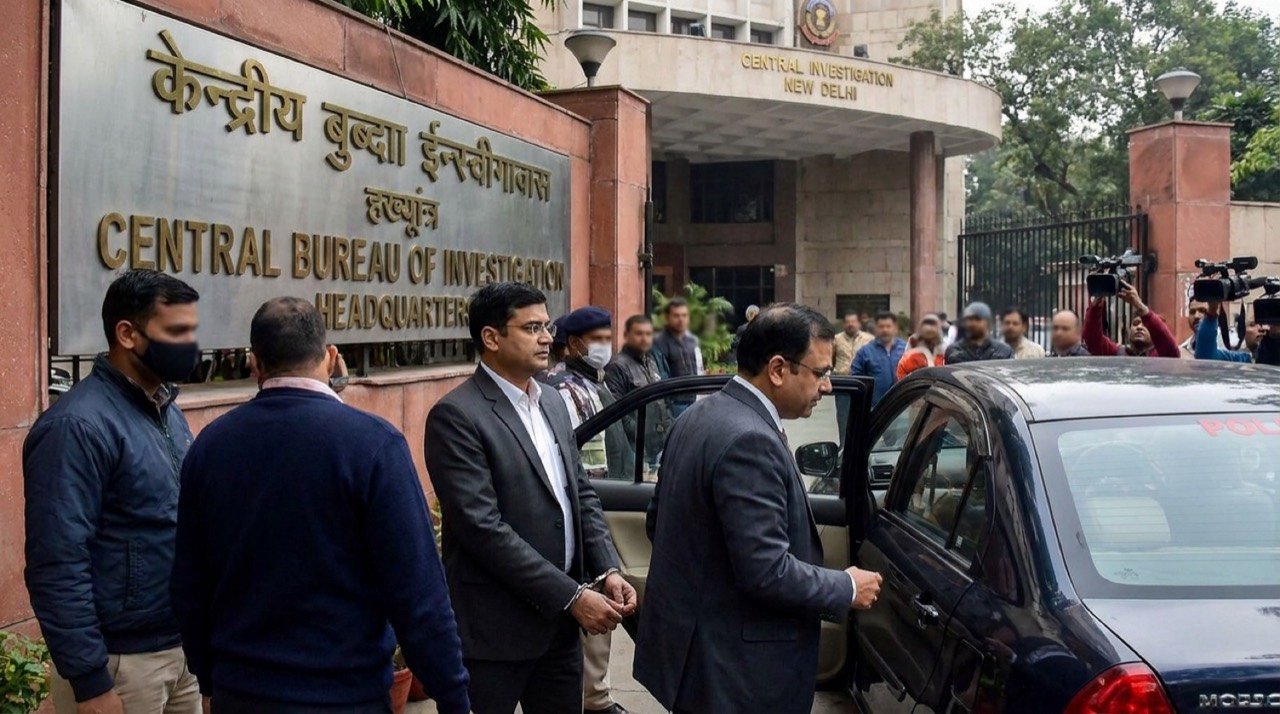
CBI Arrests Two Former Reliance ADAG CEOs in Bank-Loss Loan Probes
The CBI has arrested former chief executives of two Reliance ADAG finance firms over alleged loan irregularities that the agency says caused public sector banks losses running into thousands of crores.
CBI Arrests Haryana IAS Officer Dhirendra Khadgata in Rs 60-Crore IDFC First Bank Fund Case
The CBI has arrested Haryana IAS officer Dhirendra Khadgata over alleged diversion of around Rs 60 crore in government funds linked to an IDFC First Bank branch, reviving questions of governance and banking oversight.
CBI Arrests Haryana IAS Officer Pankaj Aggarwal in IDFC FIRST Bank Fraud Case
The CBI has arrested senior Haryana IAS officer Pankaj Aggarwal in an IDFC FIRST Bank fraud case, reviving scrutiny of governance, accountability and the trail of financial investigations.
More from this section
More
Adani Case: US DOJ Pushes for Permanent Dismissal of Charges
The US Department of Justice has urged a judge to permanently dismiss charges against Gautam Adani, calling the case legally flawed — a reversal with consequences for markets, diplomacy and cross-border enforcement.

Akasa Air Inducts 40th Aircraft in Indian Aviation Scale-Up
Akasa Air's 40th aircraft, ferried to Bengaluru via Seattle, Reykjavik and Cairo, marks a fleet milestone for the young carrier and a fresh signal that India's aviation market remains firmly in expansion mode.
BARC Ratings Suspension Leaves Indian TV Industry Flying Blind
BARC's pause on television ratings has put India's broadcast measurement system under fresh scrutiny, leaving broadcasters, advertisers and media planners without the weekly audience data that anchors the TV economy.