Kheer Bhawani Mela Draws Kashmiri Pandit Pilgrims to Tulmulla
Thousands of Kashmiri Pandits gathered at the Kheer Bhawani temple in Ganderbal for the annual Zyeshtha Ashtami mela, a pilgrimage of faith, memory and a wider message of coexistence in the Valley.
Commentary & Analysis ·
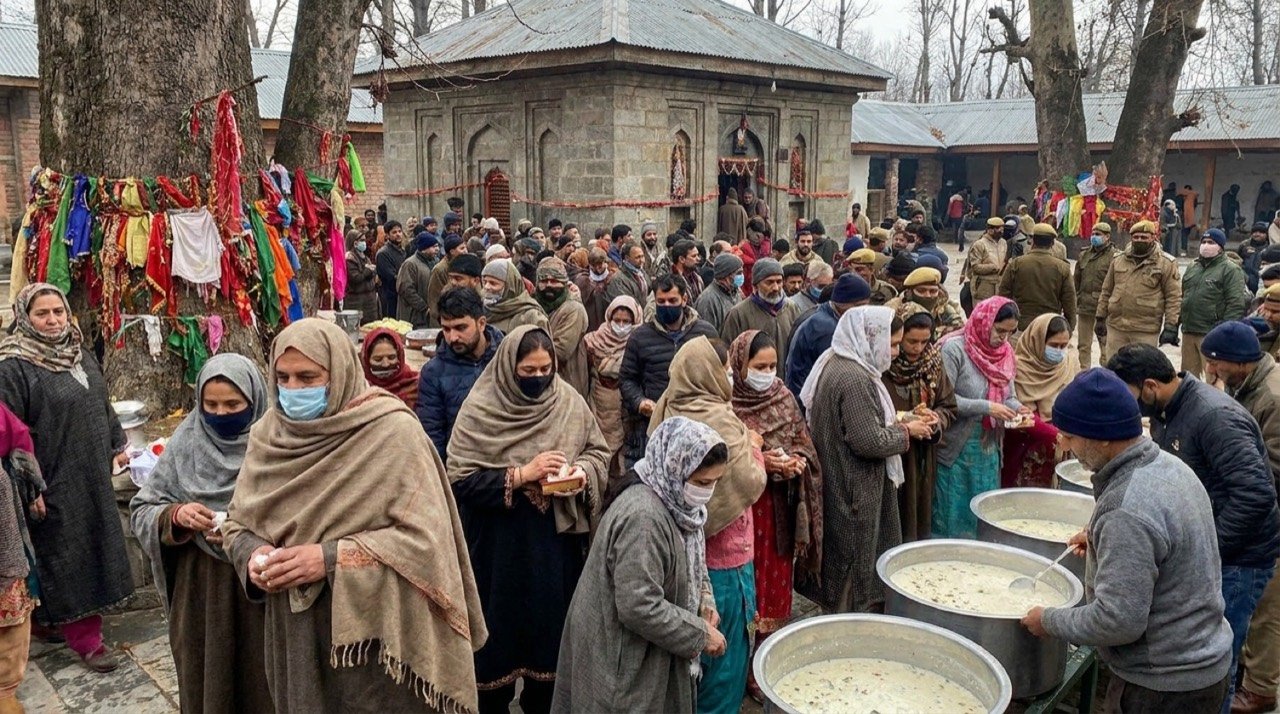
Kashmiri Pandit pilgrims converged on the Kheer Bhawani temple at Tulmulla in Ganderbal for the annual Zyeshtha Ashtami mela, one of the community's most cherished religious gatherings. Local residents lined the route to welcome devotees, and political leaders across the spectrum extended greetings, lending the occasion a resonance that reached well beyond the temple precinct. That such a modest shrine in a single Ganderbal village can command attention from the highest offices of the Union Territory, from opposition leaders and from separatist-linked religious figures alike, says something about how deeply this pilgrimage is woven into the wider story of Kashmir itself.
A shrine of deep significance
The temple is dedicated to Goddess Ragnya Devi and is associated with a sacred spring whose changing hues are the subject of long-held belief among the faithful. For Kashmiri Pandits, Kheer Bhawani is among the holiest sites linked to their cultural and spiritual identity. The spring's reputed colour changes have, over generations, acquired a near-mythic status within the community, read by many devotees as portents or blessings tied to the wellbeing of the Valley. Whatever one makes of such beliefs, their persistence matters: they signal that the site is not merely a place of worship but a repository of collective memory, a fixed point to which a dispersed community can still orient itself.
Each year, the Zyeshtha Ashtami mela brings devotees back to Tulmulla to offer prayers, light lamps and partake in rituals that have been observed for generations. For many displaced families, the journey is as much about belonging as it is about worship. This distinction is worth dwelling on. A pilgrimage of this kind is rarely only a religious transaction between devotee and deity; it is also a reaffirmation of identity, a reconnection with ancestral soil, and, for those who now live far from the Valley, a rare occasion to physically stand where their forebears once lived and prayed.
Leaders extend greetings
Reports said Jammu and Kashmir Lieutenant Governor Manoj Sinha, former chief minister Mehbooba Mufti and other leaders visited or greeted devotees during the mela. Mirwaiz Umar Farooq also conveyed his wishes to the gathering. The participation of figures from different political and religious backgrounds underscored the event's symbolic weight, framing it not merely as a religious occasion but as a shared moment for the Valley's composite heritage. That the Lieutenant Governor's office, a former chief minister associated with regional Kashmiri politics, and a prominent religious authority within the Valley's Muslim community would all choose to publicly mark the occasion suggests a rare point of convergence in a political landscape otherwise defined by division. Each greeting, of course, carries its own calculus and constituency, yet the cumulative effect is to place Kheer Bhawani above the ordinary fray of Kashmir's contested politics, at least for the duration of the mela.
It is worth considering why this particular gathering draws such cross-cutting attention when so much else in Kashmir's public life remains sharply contested. Part of the answer lies in the fact that the Kashmiri Pandit exodus is one of the most painful chapters in the Valley's recent history, and gestures of welcome towards returning pilgrims allow local Muslim residents and political leaders to signal, in a low-cost but symbolically potent way, that the idea of a shared Kashmiri identity has not been entirely extinguished. For leaders navigating a delicate political environment, associating with a moment of communal warmth carries little risk and some reputational benefit, whatever their deeper motivations.
Memory, belonging and coexistence
For a community that endured displacement, the pilgrimage carries layered meaning. It is an act of faith, a renewal of ties to ancestral land, and a quiet assertion that cultural bonds can endure conflict and separation. The annual Zyeshtha Ashtami mela at the Kheer Bhawani temple, the shrine dedicated to Goddess Ragnya Devi and its sacred spring, the greetings from the Lieutenant Governor, Mehbooba Mufti and other leaders, the good wishes conveyed by Mirwaiz Umar Farooq, and the welcome extended by local Ganderbal residents to visiting pilgrims together form a composite picture of a single day standing in contrast to decades of separation.
As one reflection on the mela put it, for many displaced families, the pilgrimage is a moment of memory, belonging and hope that cultural ties can survive conflict and displacement. This captures something essential about why such occasions matter well beyond their ritual content. Displacement does not simply remove people from a place; it also risks eroding, generation by generation, the lived familiarity with that place, its geography, its neighbours, its rhythms. An annual pilgrimage, however brief, works against that erosion. It gives grandparents the chance to walk their grandchildren through streets and lanes that exist otherwise only in family stories, and it gives the Valley's residents who remained the chance to demonstrate, in practical terms, that the welcome has not lapsed.
As the mela drew to a close, the gathering at Tulmulla offered a reminder of the Valley's plural traditions and the enduring pull of faith. For Kashmiri Pandits scattered far from home, the annual return to Kheer Bhawani remains a thread connecting them to a landscape and a community they refuse to forget, and a hope that such ties can be sustained.
What such gatherings can and cannot resolve
It would be a mistake to read too much permanence into a single day of goodwill. The mela is, by its nature, an annual and time-bound event: pilgrims arrive under heightened security, complete their rituals, receive their greetings from political dignitaries, and then disperse again to homes scattered across India and beyond. The warmth on display at Tulmulla does not, by itself, alter the underlying conditions that led to displacement in the first place, nor does it resolve the practical questions that would need to be addressed before large numbers of Kashmiri Pandit families could contemplate permanent return: housing, security, employment, and the restoration of a genuinely lived, everyday coexistence rather than a once-a-year reunion.
At the same time, dismissing the mela as mere symbolism would understate its value. Symbols carry weight precisely because they are visible, repeated and cross-community. The optics of local Ganderbal residents welcoming pilgrims, and of leaders from across the political and religious spectrum extending greetings, are not incidental; they are part of how a fractured society signals to itself, and to a national audience, what kind of future it might still be capable of building. For policymakers, the challenge is to treat such moments not as an endpoint but as evidence of an underlying possibility, one that needs sustained investment to become anything more durable.
The NE Times View
The annual return to Tulmulla is more than ritual; it is a quiet assertion that the Valley's plural memory survives displacement. Pilgrim crowds and local Muslim hosts together send a message that policy rarely can. But coexistence celebrated once a year must be matched by year-round conditions for return. The mela's real worth lies in whether it points toward homecoming, not nostalgia. Those who greet the pilgrims each Zyeshtha Ashtami, whether from Raj Bhavan, from regional political parties or from the Valley's religious establishment, would do well to treat the occasion as a standing invitation to translate goodwill into the harder work of enabling genuine, sustained return, rather than allowing it to remain a well-intentioned annual gesture.
Key takeaways
- The Zyeshtha Ashtami mela at the Kheer Bhawani temple in Tulmulla, Ganderbal, drew large numbers of Kashmiri Pandit pilgrims to a shrine dedicated to Goddess Ragnya Devi and its sacred spring.
- Jammu and Kashmir Lieutenant Governor Manoj Sinha, former chief minister Mehbooba Mufti and Mirwaiz Umar Farooq were among the leaders who extended greetings or visited during the mela, alongside a welcome from local Ganderbal residents.
- For displaced Kashmiri Pandit families, the pilgrimage functions as an act of faith, a renewal of ties to ancestral land, and a marker of memory and belonging.
- The cross-community participation in the mela underscores the Valley's plural heritage, but such symbolism has limits unless matched by sustained conditions supporting actual return.
- The mela's lasting significance will depend on whether it serves as a step towards homecoming for displaced communities rather than remaining an annual expression of nostalgia.
You may also like to read
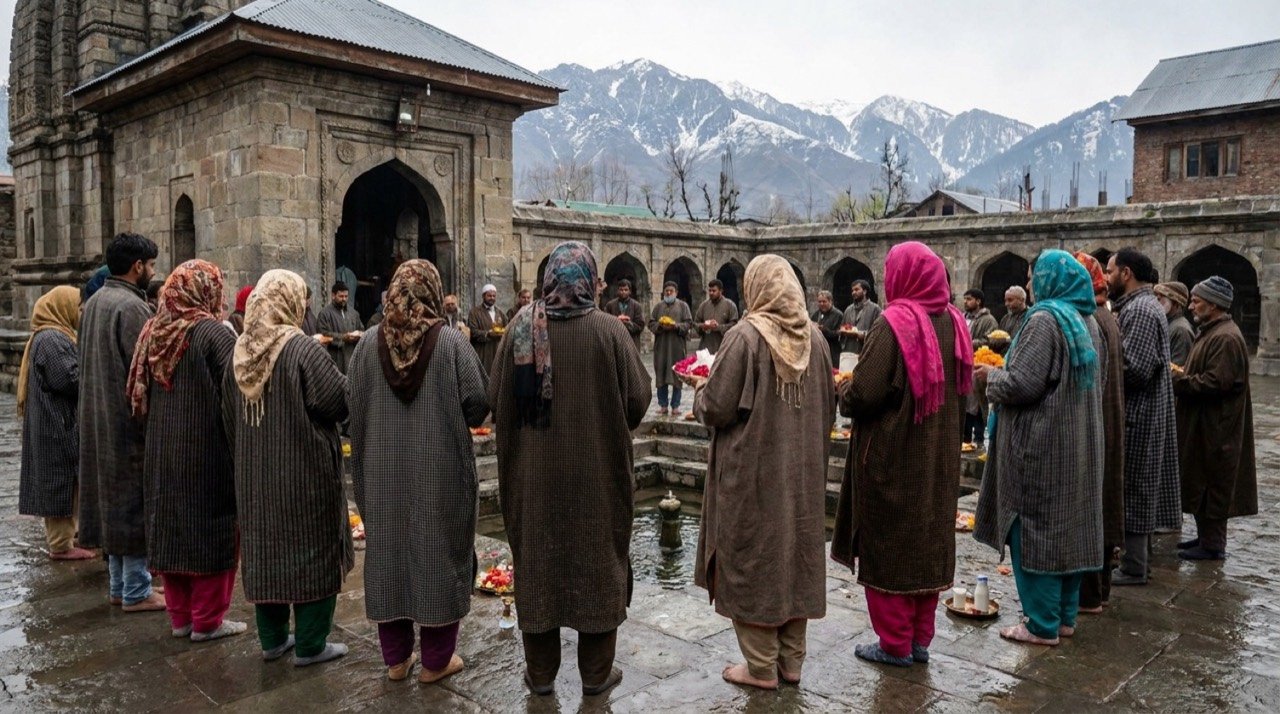
Kheer Bhawani Mela Draws Thousands of Kashmiri Pandits Back to Tulmulla
Thousands of Kashmiri Pandits gathered at the Kheer Bhawani temple in Ganderbal for Zyeshtha Ashtami, in a pilgrimage that carries a powerful message of return, memory and communal harmony.
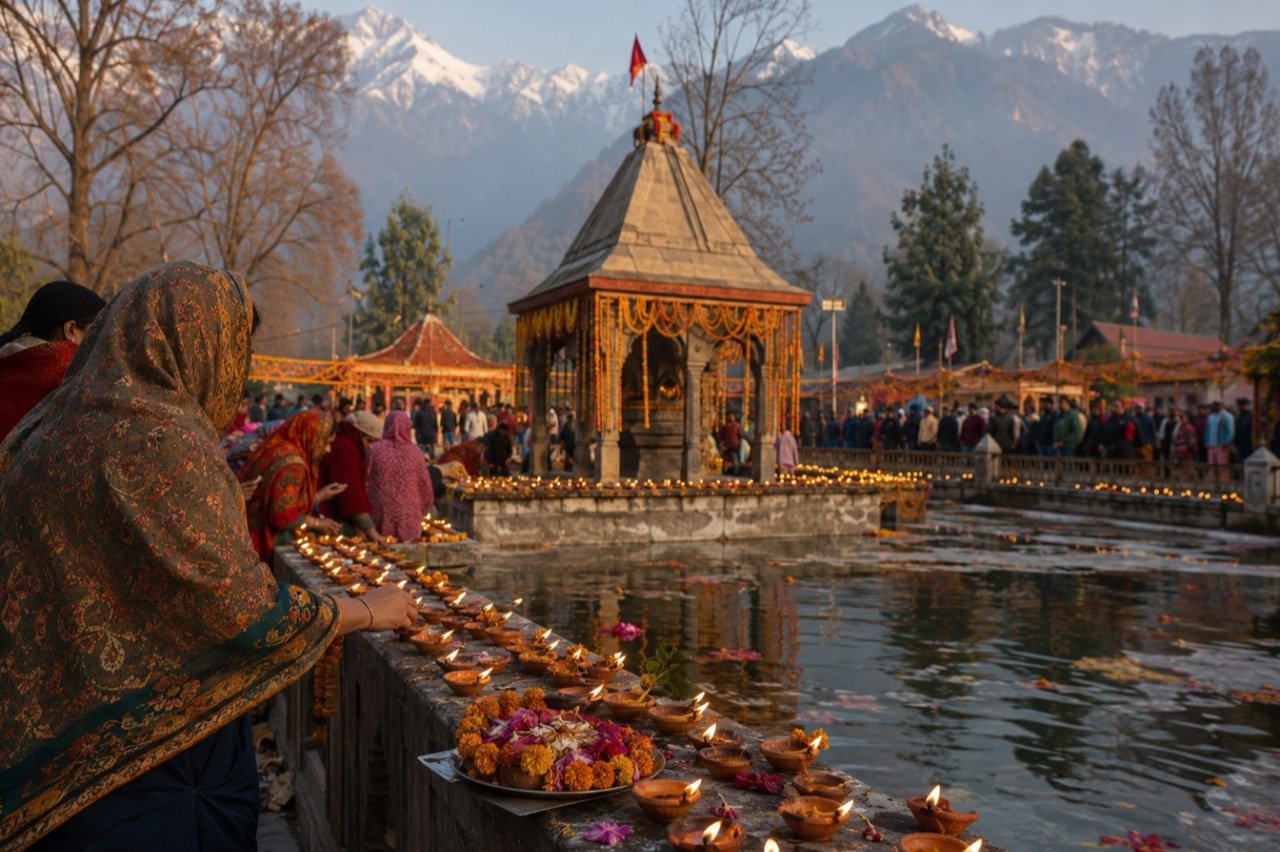
Kheer Bhawani Mela Returns to Public Focus as a Marker of Kashmir's Shared Life
The annual Kheer Bhawani Mela has again drawn devotees and attention to Kashmir, read by many as a barometer of confidence, continuity and coexistence in the Valley's public life.
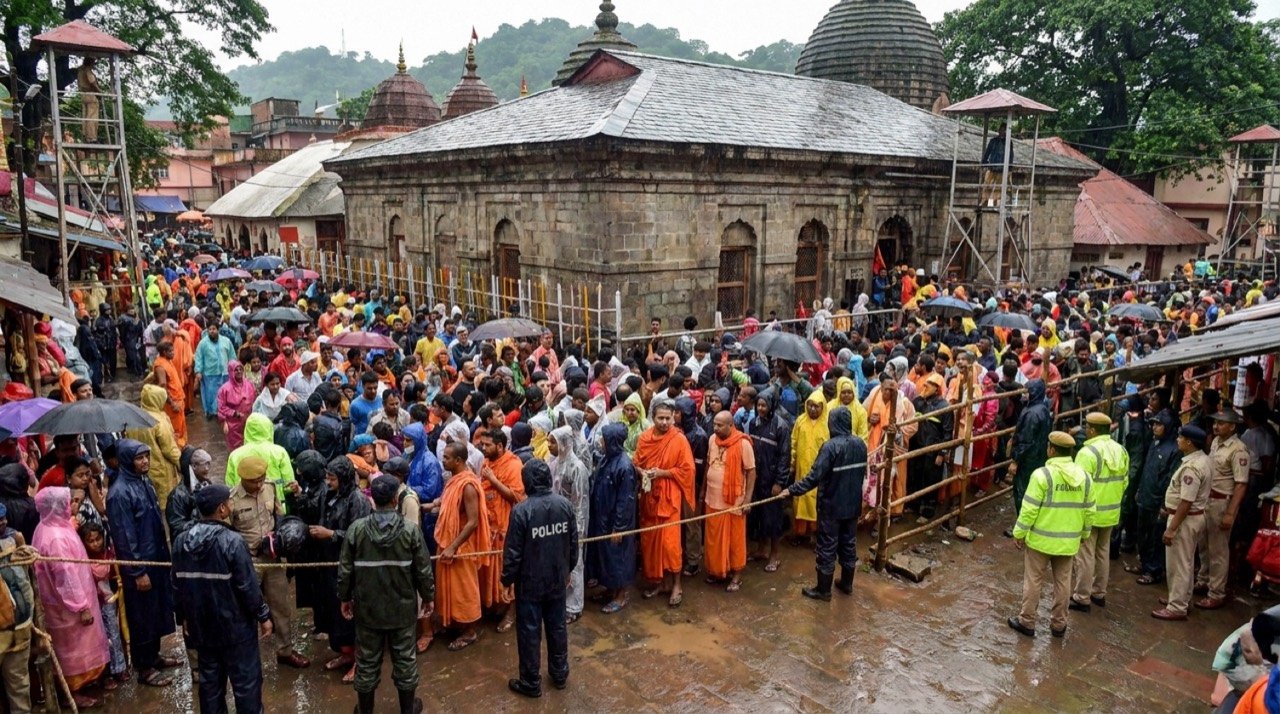
Ambubachi Mela Opens at Kamakhya Temple as Guwahati Braces for Monsoon Crowds
The annual Ambubachi Mela at Kamakhya Temple has drawn large crowds of devotees, putting crowd management, transport, health support and monsoon readiness at the centre of Guwahati's planning.
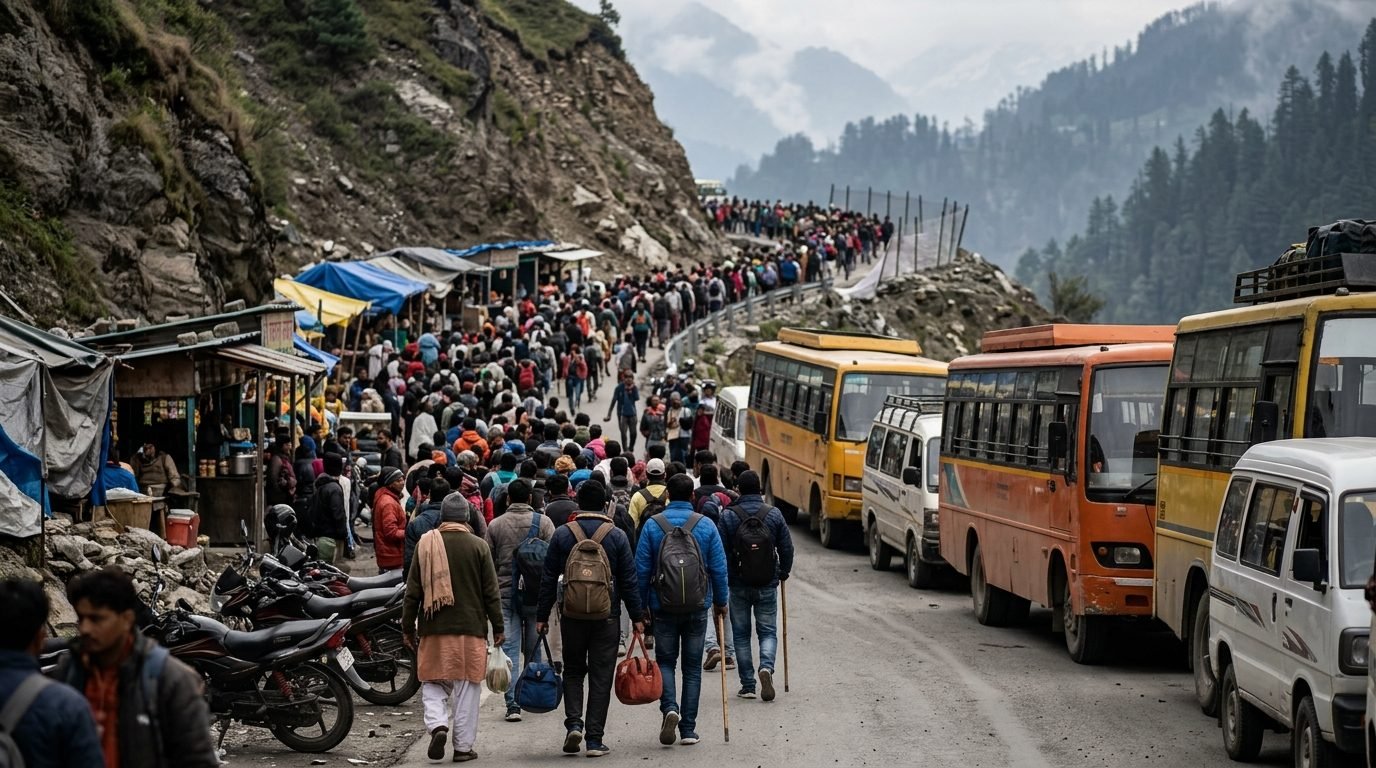
Char Dham Yatra Crosses 20 Lakh Pilgrims as Kedarnath Rush Sets Records
Uttarakhand's high-altitude shrine circuit has drawn an unprecedented turnout this season, prompting crowd-control measures and helicopter booking curbs as June footfall climbs.
More from this section
More
AICTE Industry Fellowship 2026: Rs 1.5 Lakh Scheme Closes July 5
The AICTE Industry Fellowship Programme 2026, which places technical-education faculty inside leading companies on a Rs 1.5 lakh monthly stipend, reached its application deadline on July 5.
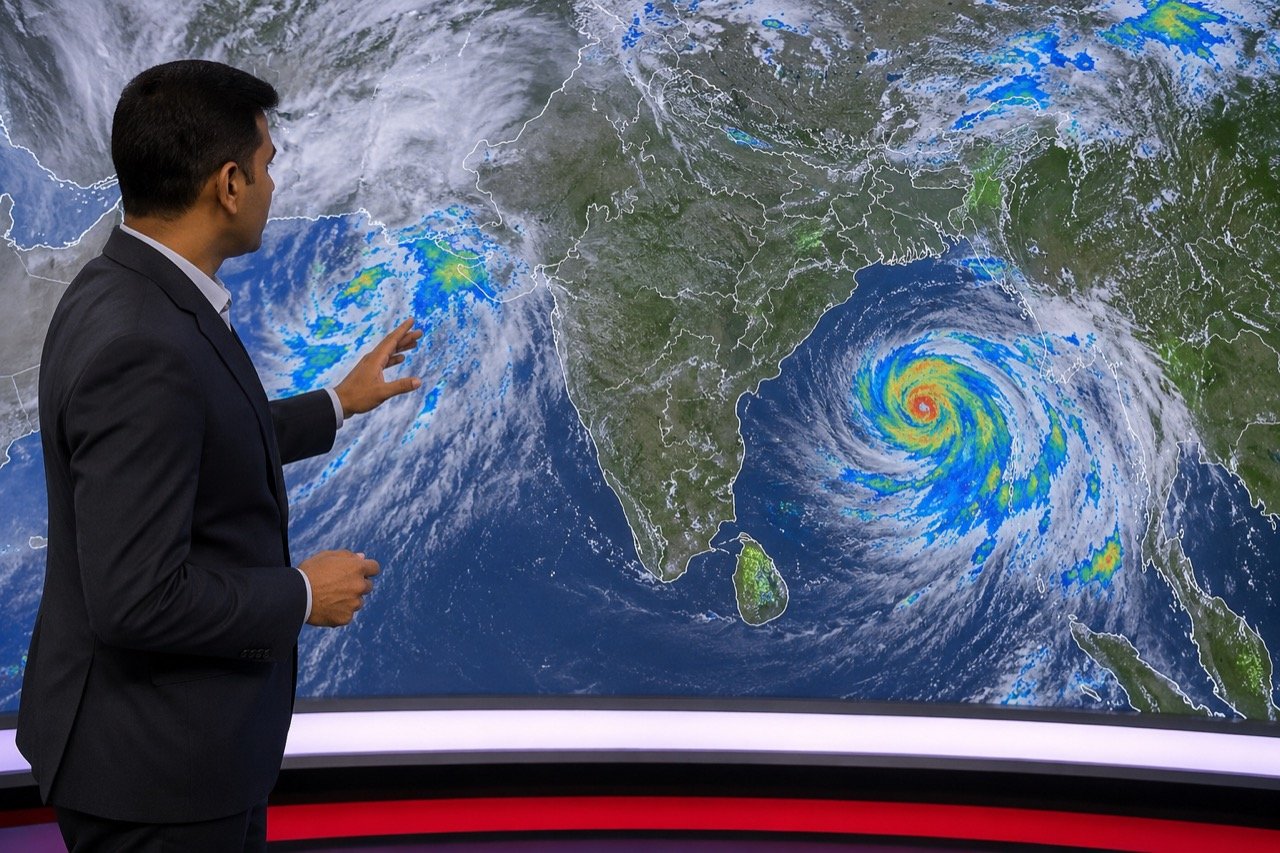
Bay of Bengal Low Pressure System Revives Monsoon Over Western India
A low-pressure system over the Bay of Bengal has pushed the monsoon back into an active phase, bringing steady heavy rain to Kerala, coastal Karnataka and Maharashtra, and putting Mumbai and Pune on preparedness watch.
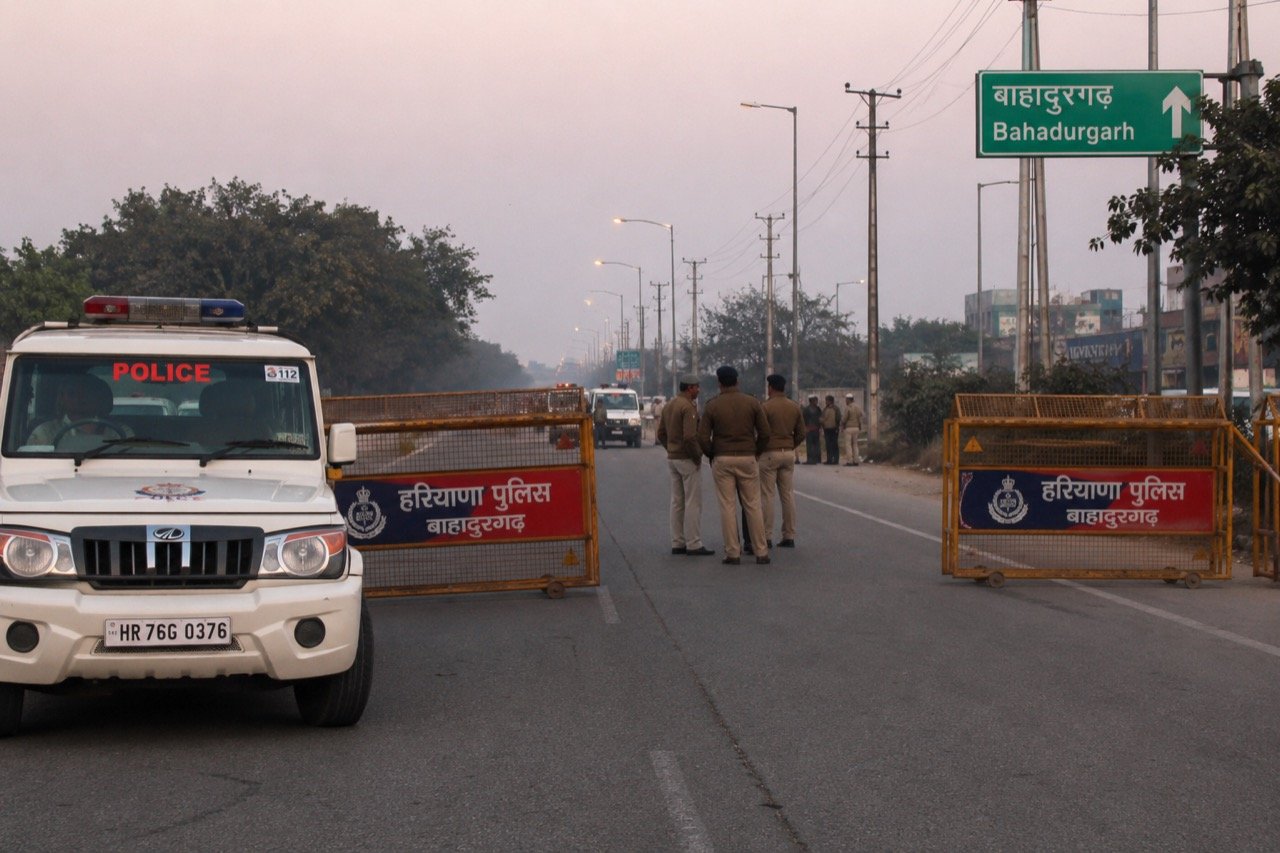
Bishnoi Gang Suspects Injured in Haryana Encounter as Police Tighten Net
A joint Haryana-Delhi Police operation in Bahadurgarh left two suspected Lawrence Bishnoi gang members injured, spotlighting the multi-state coordination now central to India's fight against organised crime networks.