Basmati Export Rivalry Returns to Gulf Markets as Hormuz Shipping Fears Ease
As shipping anxiety around the Strait of Hormuz eases, Indian basmati exporters face renewed competition from Pakistan's 1121 varieties in Iran, the UAE and Saudi Arabia, with farm prices at home in the balance.
Commentary & Analysis ·
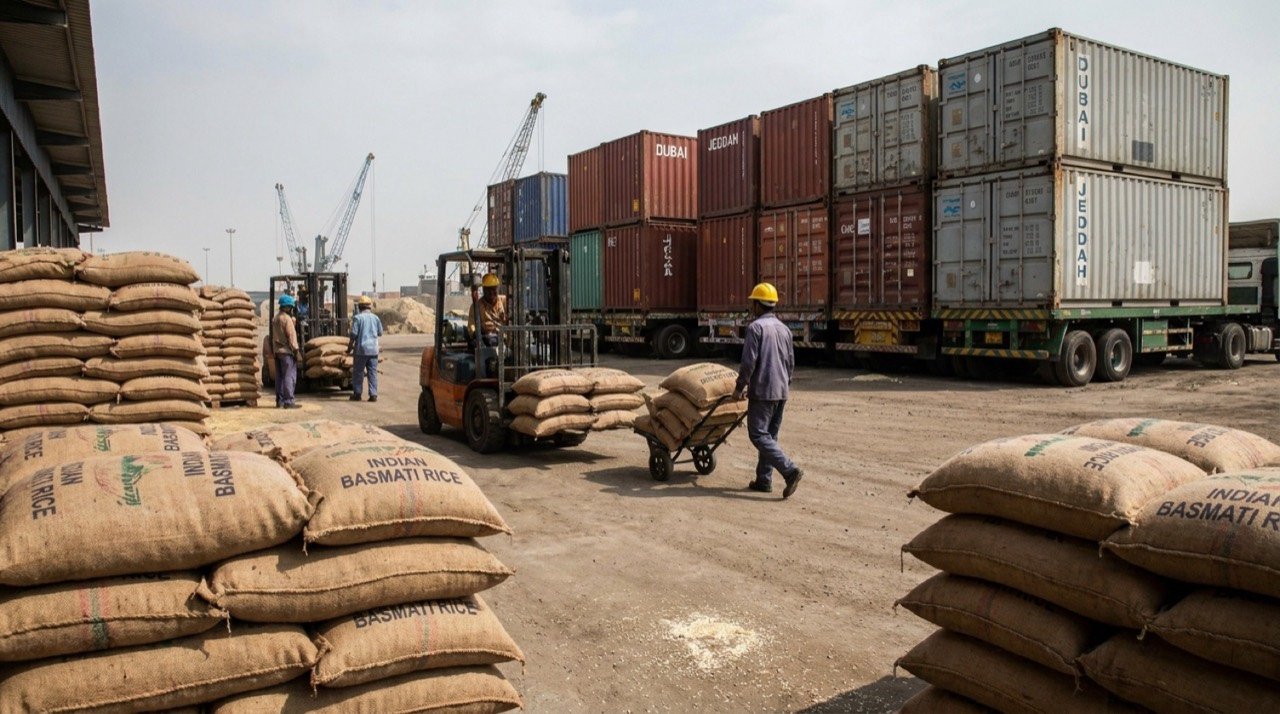
India's basmati exporters are watching Gulf markets closely as shipping anxiety around the Strait of Hormuz begins to ease, reviving a long-running rivalry with Pakistan over premium rice. With freight conditions normalising, Pakistan's 1121 basmati varieties may regain a price edge in Iran, the UAE and Saudi Arabia, sharpening competition for one of India's most valuable agricultural exports. The episode is a reminder of how tightly the fortunes of an entire agricultural export chain can be tied to events in a maritime chokepoint thousands of kilometres away, and how quickly commercial advantage can move between two neighbouring, competing suppliers of the same crop.
More than a shipping story
For Indian mills, the contest is about far more than a single waterway. It turns on price, aroma, long-standing buyer relationships, reliable payment channels and the ability to deliver consistently even during geopolitical stress. The recent easing of Hormuz-related fears simply resets the terms of an old competition. This is worth dwelling on, because it is tempting to read the Hormuz story purely as a logistics update. In practice, it is a stress test of the underlying competitiveness of two rice-exporting nations that have effectively contested the same premium-quality basmati market for decades. When shipping risk rises, freight costs and insurance premiums rise with it, and the calculus facing Gulf buyers shifts. When that risk recedes, as appears to be happening now, the underlying fundamentals of price and availability reassert themselves, and it is precisely those fundamentals where Pakistan's 1121 variety has, at various points, been able to undercut Indian basmati.
Exporters say Indian basmati remains strong in premium segments, where its grain length, fragrance and brand recognition command loyalty. But they acknowledge that buyers can shift quickly when currency movements, freight costs or availability change the arithmetic. This dual reality, strength at the premium end but vulnerability on price, is the crux of the entire debate. It suggests that Indian basmati is not simply competing on a like-for-like basis with Pakistani rice, but occupies a somewhat different, higher-value niche that is nonetheless not immune to being eroded if the price gap becomes too wide or persists for too long.
Why Gulf buyers matter so much
Iran, the UAE and Saudi Arabia are anchor markets for South Asian basmati, and their procurement decisions carry outsized weight. A swing in price competitiveness can redirect large volumes between Indian and Pakistani suppliers within a single season, making market share unusually volatile. The reopening of normal shipping routes through Hormuz removes a constraint that had temporarily blunted Pakistan's cost advantage, putting Indian exporters on notice. It is worth appreciating why these three markets in particular carry such weight. They are large-volume, price-sensitive but quality-conscious buyers with established import infrastructure and trading relationships on both sides of the India-Pakistan divide. Unlike some Western markets, where switching suppliers can involve lengthy requalification and certification processes, Gulf basmati procurement can pivot with comparative speed when the commercial terms change, which is exactly what makes this contest so responsive to short-term shocks like a shipping-lane disruption.
This volatility cuts both ways. It means Indian exporters cannot afford complacency even when they hold a temporary advantage, since Pakistani suppliers are only ever one freight-cost shift away from clawing back share. Equally, it means any current Indian gains made while Hormuz-related fears were elevated should be regarded as provisional rather than structural, unless they are reinforced by the durable factors of quality, branding and reliability that Indian exporters say set them apart.
The stakes for Indian farmers
The competition reaches directly into the fields of Punjab, Haryana and western Uttar Pradesh, the heartland of Indian basmati cultivation. Export demand strongly influences procurement prices, so any loss of Gulf share can soften the rates farmers receive for their paddy. This is the part of the story that risks being lost in discussions of freight rates and shipping lanes, but it is arguably the most consequential. Basmati cultivation in these regions is not a peripheral cash crop; it is central to household incomes across a wide belt of northern India, and procurement prices at the mill gate are shaped in no small part by how competitively Indian exporters are able to sell into markets like Iran, the UAE and Saudi Arabia. When Gulf buyers switch a portion of their orders to Pakistani 1121 rice, the effect is not confined to trade statistics; it can ripple back through the mandi system to the price a farmer is offered for the season's harvest.
As exporters themselves have put it, Indian basmati remains strong in premium segments, but buyers often shift quickly when currency, freight or availability changes. That single observation captures the fragility at the heart of the sector: a reputation for quality can coexist with real exposure to short-term commercial swings, and it is farmers, several rungs removed from the export contracts and freight negotiations, who ultimately absorb some of that volatility.
What the coming weeks will test
The next few weeks will test whether Indian suppliers can defend their Gulf share through quality, branding and timely shipments rather than price alone. The outcome will be felt not just in trade ledgers but in the procurement rates reaching growers across India's rice bowl. This is a useful frame for anyone trying to judge how the rivalry will unfold from here. If Indian exporters can maintain buyer confidence through consistent delivery schedules and clearly differentiated branding even as freight costs normalise and Pakistan's price advantage returns, that would suggest the premium positioning Indian basmati has built over time is durable. If, instead, Gulf buyers pivot meaningfully towards Pakistani 1121 rice on price grounds alone, it would indicate that the loyalty exporters describe is more conditional than they might like to believe, contingent on Pakistan's rice remaining at a temporary disadvantage rather than reflecting a settled preference for Indian grain.
Either way, the coming period offers a genuine natural experiment in what actually drives Gulf procurement decisions, price, quality, reliability, or some blend of the three, and the answer will matter well beyond this particular season.
The NE Times View
As Hormuz fears ease, the basmati contest reminds us that India's export edge rests on quality and reliability, not price alone. Losing Gulf share to Pakistan's 1121 rice would hurt farmers from Punjab to Haryana directly. The NE Times argues policy should focus on branding, traceability and stable export rules, rather than the erratic bans that have repeatedly ceded ground to rivals. There is a broader lesson here for policymakers as well as exporters: a premium reputation, however well earned, is not self-sustaining. It has to be actively defended through consistent, predictable trade policy that gives both exporters and Gulf buyers confidence that Indian basmati will be available on stable terms, season after season. Sudden export restrictions or ad hoc interventions, however well intentioned, tend to do more long-term damage to India's standing in these markets than any single freight-cost disadvantage, because they introduce precisely the kind of unpredictability that price-sensitive but quality-conscious buyers are least willing to tolerate.
Key takeaways
- Pakistan's 1121 basmati may regain a price advantage in Gulf markets as fears over Strait of Hormuz shipping disruptions ease.
- Iran, the UAE and Saudi Arabia are the pivotal buyers whose procurement choices can swing market share between India and Pakistan within a single season.
- Indian basmati retains an edge in premium segments through grain quality, aroma and brand recognition, but this edge is vulnerable to shifts in currency, freight and availability.
- Farmers in Punjab, Haryana and western Uttar Pradesh are directly exposed, since weaker export demand can translate into softer procurement prices for paddy.
- The coming weeks will show whether Indian exporters can hold Gulf share on quality and reliability alone, a test with implications reaching from trade ledgers to village mandis.
You may also like to read

Fertiliser Ships Clear Strait of Hormuz, Easing India's Kharif Supply Worries
Four India-bound vessels carrying urea, DAP and sulphur have safely transited the Strait of Hormuz, offering short-term relief to kharif sowing plans amid West Asia tensions.

Rupee Claws Back To 94.55 As US-Iran Deal Hopes Ease Oil Fears
The rupee recovered to around 94.55 against the dollar by mid-June 2026, rebounding from a record low near 97 as reports of a US-Iran agreement to reopen the Strait of Hormuz lifted sentiment.

Tripura Takes Its Queen Pineapple to Delhi With Global Pineapple Festival 2026
Tripura will host the Global Pineapple Festival 2026 in New Delhi from June 27 to 29, spotlighting its prized Queen pineapple alongside farmer groups, food processors, tourism and fresh investment opportunities.
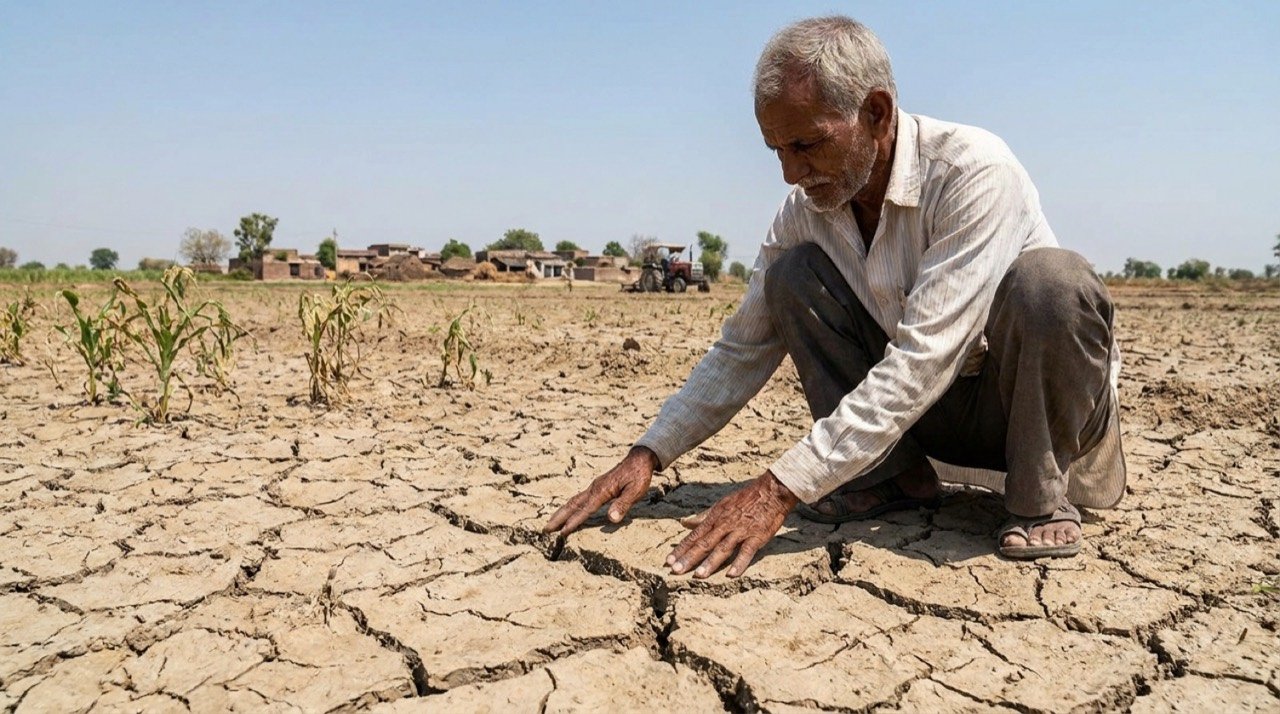
El Nino Risk Flags 111 Districts for Monsoon Deficit Worry
A fresh assessment has identified 111 districts as highly vulnerable to an El Nino-linked monsoon deficit, with Maharashtra and Madhya Pradesh accounting for a large share and farm incomes at stake.
More from this section
More
Adani Case: US DOJ Pushes for Permanent Dismissal of Charges
The US Department of Justice has urged a judge to permanently dismiss charges against Gautam Adani, calling the case legally flawed — a reversal with consequences for markets, diplomacy and cross-border enforcement.

Akasa Air Inducts 40th Aircraft in Indian Aviation Scale-Up
Akasa Air's 40th aircraft, ferried to Bengaluru via Seattle, Reykjavik and Cairo, marks a fleet milestone for the young carrier and a fresh signal that India's aviation market remains firmly in expansion mode.

BARC Ratings Suspension Leaves Indian TV Industry Flying Blind
BARC's pause on television ratings has put India's broadcast measurement system under fresh scrutiny, leaving broadcasters, advertisers and media planners without the weekly audience data that anchors the TV economy.