Fairfax India's $1 Billion Government Bond Purchase Puts IDBI Stake Bid in Focus
Fairfax India has reportedly bought nearly $1 billion in Indian government bonds, a capital move widely read as positioning ahead of a possible bid for a stake in IDBI Bank.
Commentary & Analysis ·
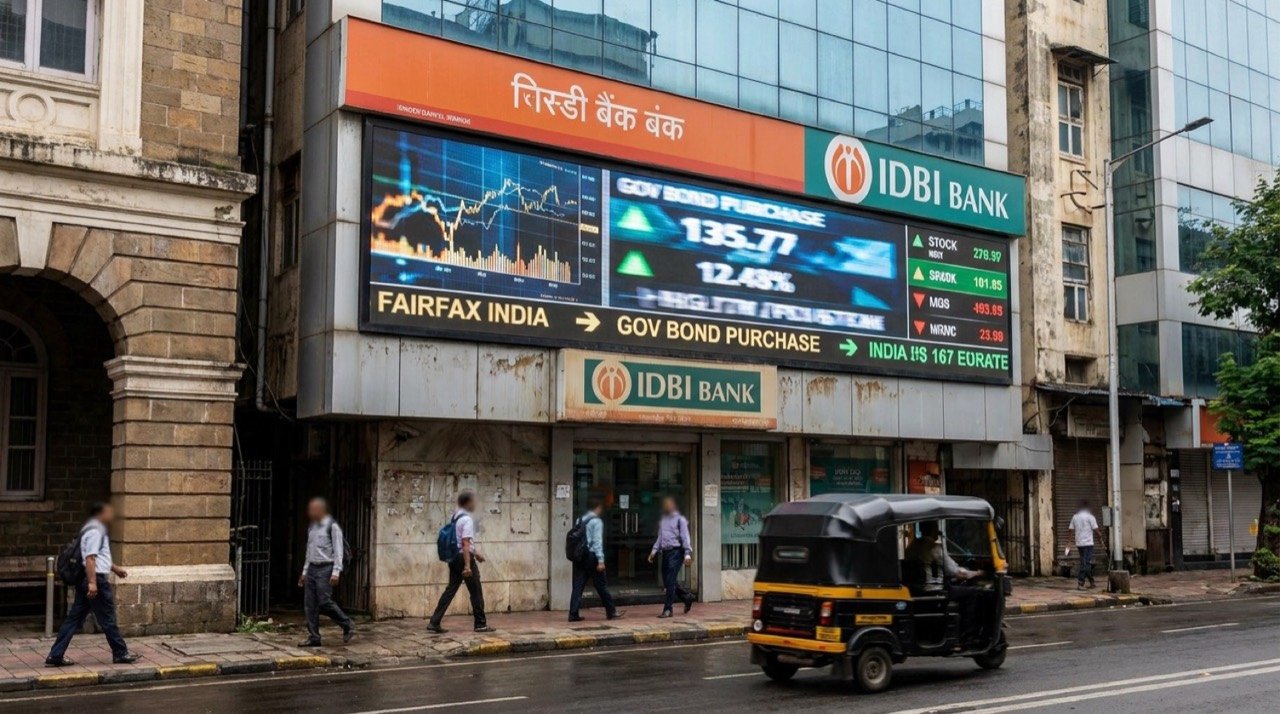
Fairfax India Holding Corp has reportedly bought nearly $1 billion in Indian government bonds, a transaction that market watchers see less as a routine debt-market play and more as a signal of intent. The timing has drawn particular attention, coming as the long-delayed privatisation of IDBI Bank inches forward and Fairfax is viewed as a potential bidder for a stake in the lender.
Inside the bond purchase
Citing Reuters, NDTV Profit reported that the company picked up around Rs 60 billion of the 6.03 percent 2029 government bond, supplemented by smaller positions in a 2027 bond and in treasury bills. The structure of the buy, anchored in a benchmark medium-tenure security with shorter-dated additions, points to a deliberate effort to build a sizeable rupee position rather than a one-off trade.
A recent policy change is reported to have made the move especially attractive: an exemption granting foreign investors in Indian government bonds relief from capital gains tax. That concession lowers the effective cost of holding sovereign debt and helps explain why a large allocation made commercial sense at this moment.
The IDBI connection
The reason the purchase resonates beyond the bond desk is its perceived link to IDBI Bank. Bringing close to a billion dollars of capital into India is exactly the kind of preparatory step an investor might take before a major domestic acquisition, ensuring rupee funds are in place and positioned within the country ahead of a bid.
The IDBI stake sale has been one of the more closely tracked privatisation processes in the Indian financial sector, repeatedly delayed but never abandoned. Any sign that a credible investor is marshalling resources is read as a marker of continued interest in the eventual transaction.
Why the story matters
The episode neatly ties together three threads of Indian economic policy: the design of the debt market, the appetite of foreign capital, and the slow grind of bank privatisation. Each on its own is significant; together they show how a single large trade can illuminate the direction of all three.
- Scale: a purchase of close to $1 billion in Indian government bonds.
- Composition: around Rs 60 billion of the 6.03% 2029 bond, plus a 2027 bond and T-bills.
- Incentive: a capital gains tax exemption for foreign bond investors.
- Strategic read: capital positioned ahead of a possible IDBI Bank stake bid.
- Context: the IDBI privatisation has faced repeated delays.
“Moving capital into the country ahead of a large acquisition is a classic preparatory step for a strategic bidder.”
— The NE Times Markets and Finance Desk
For now, the bond purchase is just that, an investment in sovereign debt that benefits from a favourable tax regime. But coming when it does, it sharpens the focus on whether the IDBI stake sale will finally move from announcement to execution, and on whether Fairfax intends to be at the centre of it when it does.
The NE Times View
A near-billion-dollar bond buy is rarely just a parking spot for capital; it reads as positioning before an IDBI bid. The deal would test India's appetite for foreign-backed ownership of a once-public bank, and how cleanly the long-delayed privatisation finally lands. Markets like the signal of patient capital. The public interest, however, lies in price discovery, governance terms and whether taxpayers recoup value from a bank they once rescued.
This article is original commentary and analysis by The NE Times. Background facts were referenced from NDTV Profit and Reuters.
You may also like to read
Government to Sell Up to 2% IRFC Stake Through Offer for Sale
The Centre will sell up to 2% in Indian Railway Finance Corporation via an offer for sale, opening to non-retail investors on Wednesday and retail bidders the next day, under its disinvestment programme.

Marc Faber Warning Puts Indian Market Valuations Back in Focus
Veteran market commentator Marc Faber says Indian equities could correct by up to 20 percent, reviving debate over stretched valuations, profit growth and investor risk management.

Iran's Crude Outreach Puts Indian Refiners Back in Market Focus
Tehran's renewed pitch to oil buyers has pulled Indian refiners into fresh talks, but sanctions, payment channels, insurance and freight still stand between exploratory contact and confirmed cargoes.

US Trade Chief Greer's India Visit Puts First Tranche of Trade Deal in Focus
USTR Jamieson Greer's New Delhi talks with Piyush Goyal have pushed the long-stalled India-US trade agreement into a decisive phase, with tariffs, market access and an early package on the table.
More from this section
More
Adani Case: US DOJ Pushes for Permanent Dismissal of Charges
The US Department of Justice has urged a judge to permanently dismiss charges against Gautam Adani, calling the case legally flawed — a reversal with consequences for markets, diplomacy and cross-border enforcement.

Akasa Air Inducts 40th Aircraft in Indian Aviation Scale-Up
Akasa Air's 40th aircraft, ferried to Bengaluru via Seattle, Reykjavik and Cairo, marks a fleet milestone for the young carrier and a fresh signal that India's aviation market remains firmly in expansion mode.
BARC Ratings Suspension Leaves Indian TV Industry Flying Blind
BARC's pause on television ratings has put India's broadcast measurement system under fresh scrutiny, leaving broadcasters, advertisers and media planners without the weekly audience data that anchors the TV economy.