RBI Sells Nearly $9 Billion in April as Rupee Faces Sustained Pressure
The central bank's net dollar sales in the spot forex market signal another month of intervention to smooth volatility, with importer demand and West Asia uncertainty weighing on the rupee.
Commentary & Analysis ·
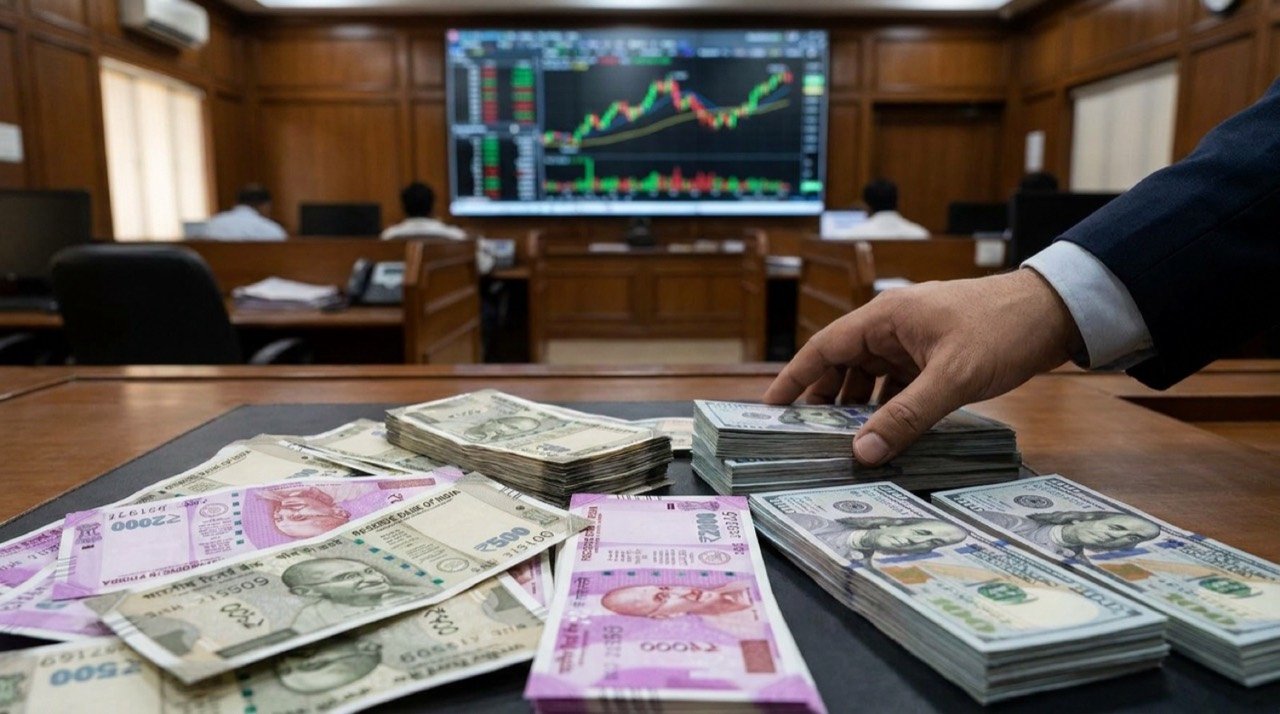
The Reserve Bank of India sold nearly $8.944 billion net in the spot foreign exchange market in April, according to reports based on central-bank data. The figure marks another month of intervention as the rupee continued to face pressure from a strong dollar and external uncertainty. For an economy that runs a persistent trade deficit and depends heavily on imported energy, this scale of dollar-selling is a reminder of how much quiet, continuous work goes into keeping the currency market orderly, even when there is no dramatic headline event forcing the central bank's hand.
What the data shows
The April sale followed another month of active RBI presence in the market. A separate report noted that the rupee had weakened amid dollar strength, steady importer demand for foreign currency and uncertainty linked to developments in West Asia. Each of these pressures compounds the others: a strong dollar globally makes the rupee weaker in relative terms even before domestic factors are considered, while importers rushing to cover their foreign-currency needs add further demand-side pressure on an already stretched currency. Add to this the unpredictability stemming from West Asia, a region whose stability has an outsized bearing on oil prices and shipping costs, and the case for the RBI stepping in becomes clearer.
Importantly, such intervention does not imply that the central bank is defending a fixed exchange-rate target. India abandoned any pretence of a pegged currency decades ago, and the RBI has been consistent in messaging that it does not target a particular level for the rupee. Instead, intervention of this kind usually signals an effort to smooth volatility and prevent disorderly moves, allowing the currency to adjust without sharp, destabilising swings. The distinction matters enormously for how markets interpret RBI behaviour: a central bank smoothing volatility is behaving very differently, and signalling something very different about its intentions, than one trying to hold a line in the sand.
Why a weaker rupee matters
For businesses and households, a weaker rupee feeds directly into import bills, fuel costs and overseas education expenses, and it complicates hedging decisions for firms with foreign-currency exposure. The effects ripple from corporate balance sheets to everyday budgets. A household planning to send a child abroad for higher studies suddenly finds its budget stretched further; a company that imports raw materials or components sees its costs rise even if its rupee revenues stay flat; and any business with foreign-currency loans or payables must think harder about hedging positions it may otherwise have left unhedged.
Exporters may gain some price advantage when the rupee softens, but sharp currency moves can still disrupt planning and pricing. A gradual, predictable depreciation can be absorbed into pricing strategies and contracts over time, whereas an abrupt lurch forces companies to react defensively rather than strategically. This is precisely why stability, more than direction, is often what businesses value most. Few complain about a rupee that depreciates steadily and predictably; what unsettles markets and corporate treasuries alike is volatility that cannot be planned around.
The balancing act for the central bank
The pressures facing the RBI are genuinely multi-directional, and they do not all point in the same policy direction. Higher import bills, including for fuel, are one consequence of a weaker rupee, and given India's dependence on imported crude, this has knock-on effects for inflation and the current account. Rising costs for overseas education and foreign travel are a more visible, household-level manifestation of the same pressure. Companies with foreign-currency exposure face more complex hedging decisions, needing to weigh the cost of hedging against the risk of leaving exposure open. On the other side of the ledger, a softer rupee offers exporters potential pricing gains, making Indian goods more competitive abroad. And running through all of this is the planning risk created by sharp, sudden currency swings, which unsettle decision-making across the board regardless of which side of the trade a business sits on.
Market commentary has characterised this kind of intervention as an effort "to smooth volatility and prevent disorderly market moves, not to defend a fixed level." That framing captures the essential tension the RBI must manage. The central bank's challenge is to balance its reserves, inflation risk and market confidence while avoiding the impression that any single level of the rupee is being defended at all costs. If markets came to believe the RBI was committed to defending a specific level, that would itself become a target for speculative pressure and would constrain the central bank's flexibility in ways that ultimately serve no one.
What this signals for the months ahead
With global cues uncertain, how the central bank calibrates future interventions will shape both currency expectations and the broader cost environment for the economy. The scale of April's dollar sales, at nearly nine billion dollars, is large enough to suggest the RBI judged the pressure on the rupee to be significant, but the framing of such action as volatility management rather than level defence leaves the door open for further gradual adjustment. Observers will be watching whether subsequent months show a similar pattern of intervention, an easing as external pressures subside, or an escalation if dollar strength and West Asian uncertainty persist or intensify.
There is also a reserves dimension to consider. The RBI has built up a substantial stock of foreign exchange reserves over the years precisely to give itself room to intervene during periods of pressure, but that room is not infinite. Every dollar sold to support the rupee is a dollar that reduces the buffer available for future shocks, which is why sustained heavy intervention, even when well justified in the moment, eventually raises questions about how long such a pace can be maintained without depleting reserves to less comfortable levels.
The NE Times View
Nearly nine billion dollars sold in a month shows the RBI defending the rupee's orderliness rather than a fixed level, a sensible stance amid importer demand and West Asian uncertainty. But intervention buys time, not immunity; reserves are finite and a persistently weak rupee reflects structural trade gaps that dollar sales alone cannot fix. The RBI's approach of smoothing rather than resisting is the right one in principle, since it preserves credibility and flexibility while still cushioning the shock of sudden moves. The signal to watch is whether the central bank continues to smooth volatility or, under sustained pressure, ends up quietly resisting a necessary adjustment that the rupee's underlying fundamentals demand. That distinction, subtle as it may seem from month to month, will matter a great deal for how the currency, and the wider economy, absorb the pressures still building from global oil markets and dollar strength.
Key takeaways
- The RBI sold nearly $8.944 billion net in the spot forex market in April amid sustained rupee pressure from dollar strength, importer demand and West Asian uncertainty.
- Such intervention is aimed at smoothing volatility rather than defending a fixed exchange-rate level, preserving RBI credibility and flexibility.
- A weaker rupee raises import bills, fuel costs and overseas education expenses, while offering exporters some pricing advantage.
- Businesses generally value currency stability more than any particular direction of movement, since sharp swings disrupt planning and pricing.
- Reserves used for intervention are finite, and persistent rupee weakness points to structural trade gaps that dollar sales alone cannot resolve.
You may also like to read
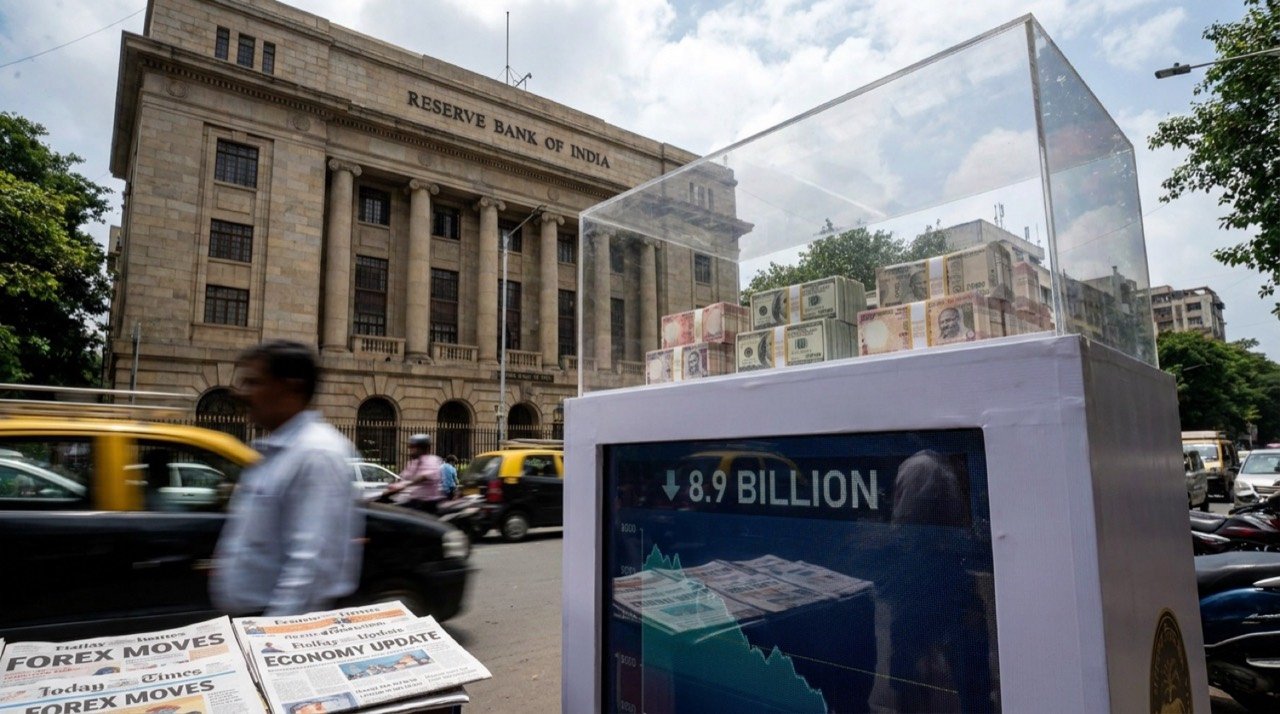
RBI Sold $8.9 Billion in April as Rupee Pressure Persisted
India's central bank sold a net $8.9 billion in the spot foreign-exchange market in April, RBI data showed, underlining how it manages currency volatility while balancing reserves and liquidity.

Rupee Claws Back To 94.55 As US-Iran Deal Hopes Ease Oil Fears
The rupee recovered to around 94.55 against the dollar by mid-June 2026, rebounding from a record low near 97 as reports of a US-Iran agreement to reopen the Strait of Hormuz lifted sentiment.
RBI Calls Rate-Hike Talk Premature, Rolls Out Liquidity Support As Rupee Steadies
The Reserve Bank moved to calm nerves in late June 2026, signalling that interest-rate hikes were premature and unveiling liquidity measures even as the rupee drew comfort from a softer crude outlook.
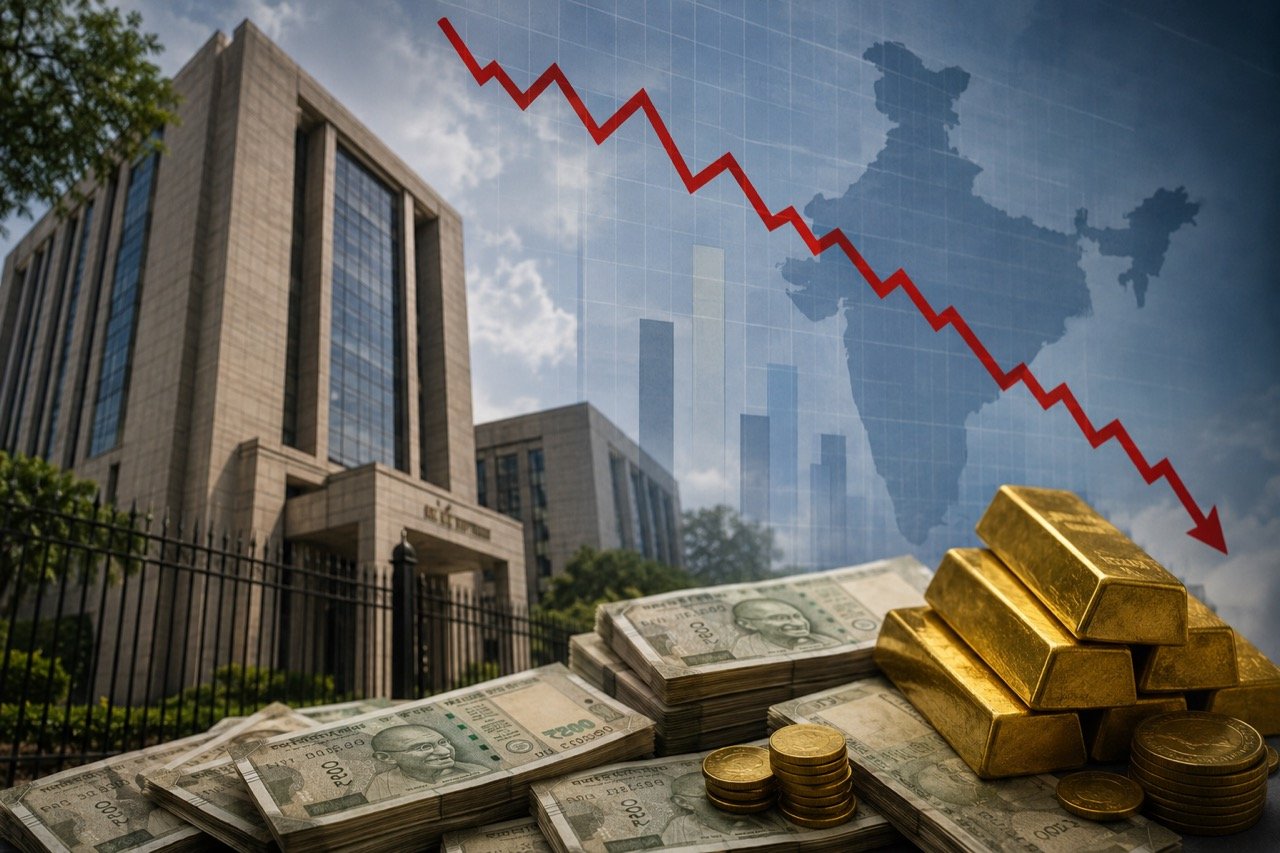
India's Forex Reserves Slip to 15-Month Low: Why the Buffer Matters
India's foreign exchange reserves have dropped to their lowest level in 15 months, narrowing the external buffer the RBI relies on to steady the rupee and reassure markets.
More from this section
More
Adani Case: US DOJ Pushes for Permanent Dismissal of Charges
The US Department of Justice has urged a judge to permanently dismiss charges against Gautam Adani, calling the case legally flawed — a reversal with consequences for markets, diplomacy and cross-border enforcement.

Akasa Air Inducts 40th Aircraft in Indian Aviation Scale-Up
Akasa Air's 40th aircraft, ferried to Bengaluru via Seattle, Reykjavik and Cairo, marks a fleet milestone for the young carrier and a fresh signal that India's aviation market remains firmly in expansion mode.

BARC Ratings Suspension Leaves Indian TV Industry Flying Blind
BARC's pause on television ratings has put India's broadcast measurement system under fresh scrutiny, leaving broadcasters, advertisers and media planners without the weekly audience data that anchors the TV economy.