Delhi High Court Refuses to Waive 30-Day Special Marriage Act Notice Period
The Delhi High Court has declined to waive the mandatory 30-day notice under the Special Marriage Act, ruling that courts cannot direct authorities to bypass an express statutory requirement.
Commentary & Analysis ·
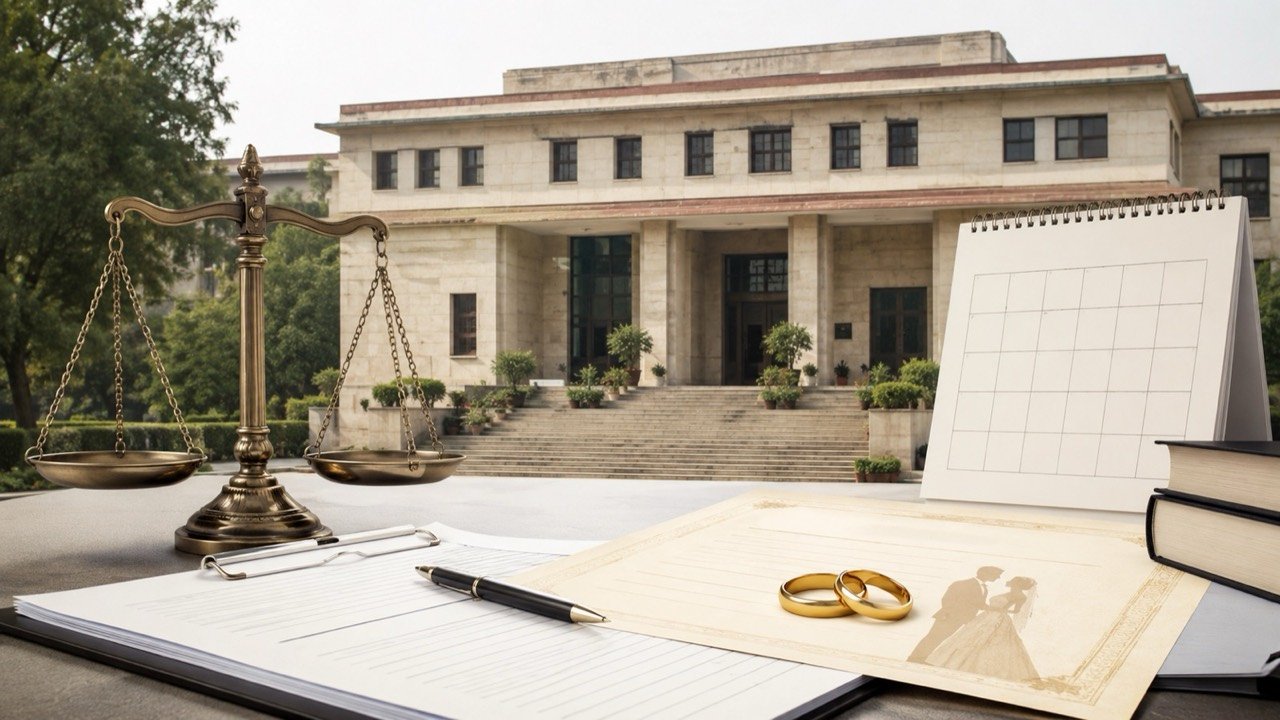
The Delhi High Court has refused to waive the mandatory 30-day notice period under the Special Marriage Act for a couple seeking urgent solemnisation, holding that the court cannot direct statutory authorities to bypass an express legal requirement. The ruling, delivered by Justice Purushaindra Kumar Kaurav, draws a clear line between personal hardship and a legislative mandate, and in doing so reaffirms a recurring theme in Indian constitutional adjudication: that sympathy for an individual's circumstances, however genuine, cannot be allowed to override a provision Parliament has written in plain terms.
What the couple sought and why it mattered to them
The petitioners approached the court because one of them faced an overseas employment deadline and wanted the marriage solemnised without waiting out the statutory notice period. Their argument was straightforward and, on its face, sympathetic: there was no legal impediment to the union, both parties were consenting adults free to marry under the Special Marriage Act, and the only obstacle was a procedural waiting period that threatened to derail a job opportunity abroad. For many couples in similar situations, an unyielding calendar can mean the difference between starting a new life together and postponing it indefinitely, or worse, having to marry under a different, more hurried arrangement simply to meet a visa or relocation deadline.
Justice Kaurav's response was that Section 16 of the Act permits solemnisation only after the notice period has expired, and that this is not a matter of judicial discretion. The court's reasoning suggests that however compelling the underlying facts, a judge sitting in writ jurisdiction is not empowered to instruct a marriage officer or any other statutory authority to disregard an explicit legislative command. That distinction, between what a court might personally think is a fair outcome and what the law as written actually permits, is central to understanding why the petition failed.
The purpose behind the 30-day notice
The 30-day notice under the Special Marriage Act is intended to give public visibility to a proposed civil marriage and to allow objections to be raised before the union is solemnised. In principle, this serves a protective function: it creates a window in which any person with a lawful objection, such as an existing marriage, a case of underage marriage, or another legal impediment, can bring the matter to the attention of the marriage officer. In an ideal setting, it operates as a modest safeguard rather than an obstacle.
In practice, however, the provision has long been contested, particularly in cases involving privacy, interfaith couples and families seeking to intervene. Because the notice is published and made accessible to the public, it has, in numerous documented instances, become a mechanism through which families opposed to a match are alerted and given time to intervene, sometimes through pressure, sometimes through worse. What was designed as a transparency measure has, for a certain class of couples, become a vulnerability. The Delhi High Court's ruling does not engage with reforming that balance; it simply holds that recalibrating it is not the judiciary's job.
A consistent judicial position on statutory timelines
This case fits into a broader and fairly consistent judicial pattern. Indian courts, across various contexts, have repeatedly held that statutory timelines, even when they produce inconvenient or harsh results in individual cases, remain binding until they are amended through the legislative process. Judges are generally reluctant to read exceptions into a statute that Parliament did not itself provide for, particularly where the language of the provision, as with Section 16, is unambiguous. The Delhi High Court's decision here does not break new ground so much as it reaffirms an established institutional boundary: courts interpret and apply the law, they do not rewrite it, however outdated or ill-fitting a provision may appear in a modern context.
For couples relying on the Special Marriage Act, the practical takeaway from this ruling is unambiguous: the notice requirement must be factored into planning well in advance. A job offer, a visa deadline, or a travel commitment will not, on its own, persuade a court to compress the statutory timeline. Couples who anticipate needing to marry under the Special Marriage Act, particularly those planning international relocation, would be well advised to initiate the notice process at the earliest possible opportunity rather than assuming that urgency alone will move a court.
Stakeholder perspectives and the interfaith dimension
The ruling will be read differently by different constituencies. For statutory authorities and marriage officers, it offers welcome clarity: they are not exposed to conflicting judicial directions instructing them to bypass procedure in hardship cases, and can continue to apply Section 16 uniformly. For couples in urgent circumstances, particularly those with overseas commitments, it is a reminder that the law offers no shortcut, however reasonable their situation might seem.
The more difficult stakeholder group is interfaith and inter-caste couples, for whom the notice period is not merely an inconvenience but, in some cases, a genuine safety concern. Advocacy groups and legal commentators have for years flagged that the public notice mechanism can expose couples to family or community pressure precisely during the period when they are most vulnerable, before the marriage has been formally solemnised and while family members still retain leverage to object or intervene. The Delhi High Court's ruling, while legally unremarkable, does nothing to address that underlying tension, and by design it was never intended to.
What to watch next
The debate over the notice period is unlikely to end with this ruling. Similar petitions, brought by couples facing their own version of urgent personal circumstances, are likely to continue reaching the courts, and it is probable that judges will continue to apply the same reasoning: that Section 16 is mandatory and that hardship, however real, does not amount to a legal impediment justifying a waiver. Separately, and more significantly, this case adds to a body of judicial commentary suggesting that reform of the provision, if it is to come, must come from Parliament rather than from case-by-case judicial relaxation. Whether lawmakers take up that invitation, particularly given the provision's colonial-era origins and its documented use as a tool of family interference, remains an open question. For now, the Delhi High Court has signalled clearly that the statute, not judicial discretion, governs the timeline for civil marriages in India.
The NE Times View
The court has chosen statutory discipline over individual convenience, holding that judges cannot rewrite an express legislative requirement however outdated it feels. That is constitutionally tidy, but it leaves a real problem untouched: the 30-day notice exposes interfaith and inter-caste couples to family interference. The NE Times View is that the fix lies with Parliament, not the bench, and lawmakers should revisit a colonial-era provision that, in practice, often endangers the very couples it claims to formalise. Judicial restraint of the kind shown in this ruling is appropriate and, indeed, necessary to preserve the separation of powers; but restraint from the bench should not be mistaken for indifference to the underlying problem. If anything, rulings like this one ought to sharpen the case for legislative attention, precisely because they confirm that no judicial fix is coming.
Key takeaways
- The 30-day notice under Section 16 of the Special Marriage Act remains mandatory before solemnisation, and courts will not order authorities to bypass it.
- Personal hardship, including overseas work deadlines, does not qualify as a legal impediment justifying a waiver.
- Any change to the waiting period must come through legislative amendment, not judicial discretion.
- Interfaith and inter-caste couples remain particularly exposed to family interference during the public notice period, a concern the ruling does not address.
- Couples relying on the Special Marriage Act should plan well in advance around the notice requirement, as urgency alone will not move a court to compress the timeline.
You may also like to read
Delhi High Court Clears Way for Proposed CAG Audit of BSES Discoms
The Delhi High Court has dismissed BSES petitions against a proposed CAG audit, calling the June 6 notice a show-cause communication and keeping scrutiny of power distribution finances alive.

Kerala High Court Limits Family Court Powers Over Marital Status After a Spouse's Death
The Kerala High Court has ruled that family courts cannot decide marital-status disputes once a spouse has died, redrawing the line between family and civil jurisdiction in inheritance, pension and property cases.
Supreme Court Issues Notice on Bail Plea in Zubeen Garg Death Case
The Supreme Court has issued notice on a bail plea tied to the probe into singer Zubeen Garg's death, reviving an emotionally charged case that has gripped Assam for months.
Bombay High Court Says Clean Drinking Water Is a Fundamental Right
The Bombay High Court has held that access to clean, potable drinking water is a fundamental right, questioning why Maharashtra citizens must still approach courts for a basic service decades after Independence.
More from this section
More
AICTE Industry Fellowship 2026: Rs 1.5 Lakh Scheme Closes July 5
The AICTE Industry Fellowship Programme 2026, which places technical-education faculty inside leading companies on a Rs 1.5 lakh monthly stipend, reached its application deadline on July 5.

Bay of Bengal Low Pressure System Revives Monsoon Over Western India
A low-pressure system over the Bay of Bengal has pushed the monsoon back into an active phase, bringing steady heavy rain to Kerala, coastal Karnataka and Maharashtra, and putting Mumbai and Pune on preparedness watch.
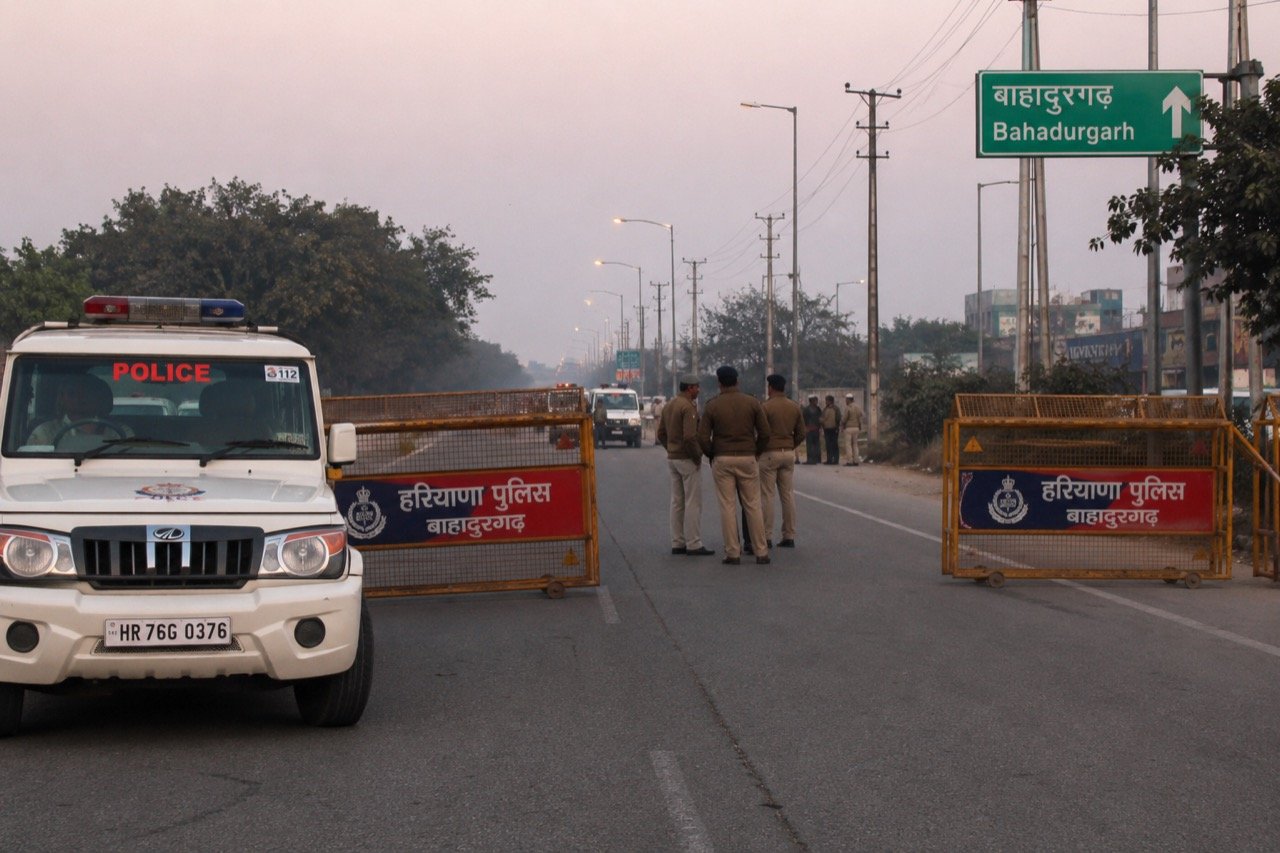
Bishnoi Gang Suspects Injured in Haryana Encounter as Police Tighten Net
A joint Haryana-Delhi Police operation in Bahadurgarh left two suspected Lawrence Bishnoi gang members injured, spotlighting the multi-state coordination now central to India's fight against organised crime networks.