Anakapalli Pharma-City Fire Puts Andhra Pradesh Industrial Safety Back Under the Lens
A deadly fire at a unit in Andhra Pradesh's Anakapalli pharma-city has reignited scrutiny of industrial safety, compliance and worker protection across one of the state's key manufacturing belts.
Commentary & Analysis ·
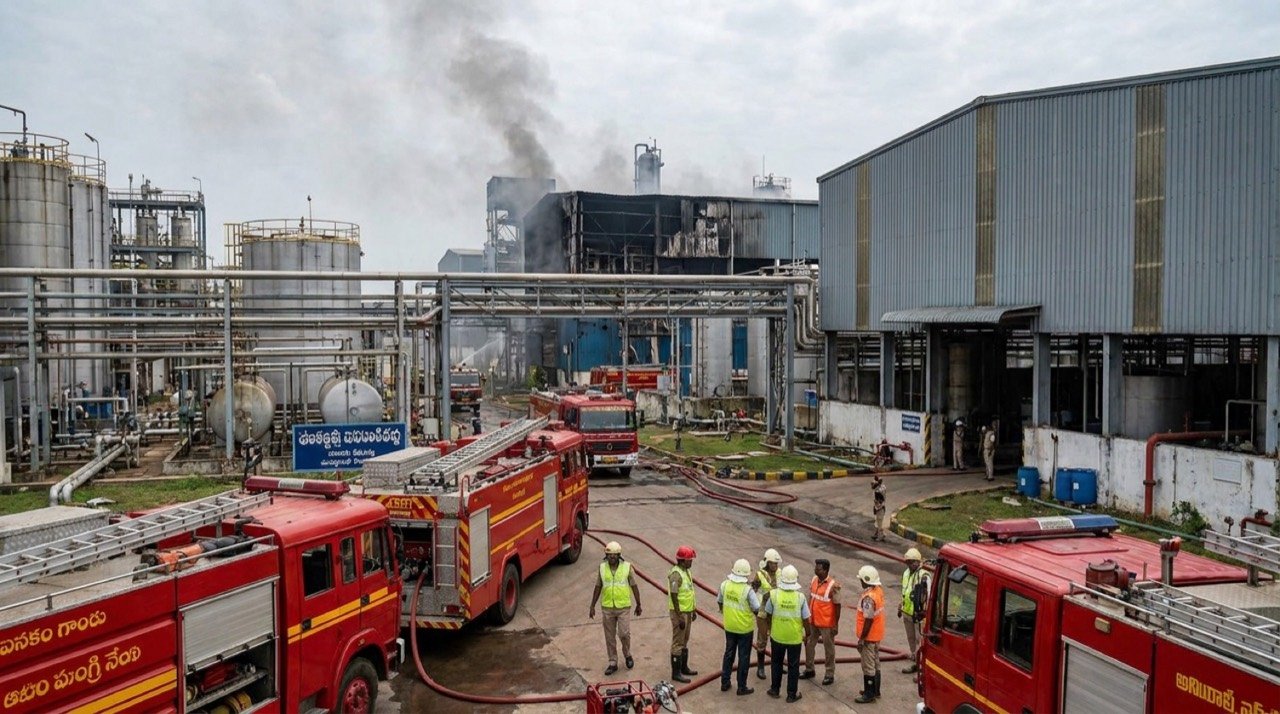
A fire at a unit in the Anakapalli pharma-city area of Andhra Pradesh has killed workers and injured others, thrusting industrial safety back into focus in one of the state's most important manufacturing belts. The incident has renewed familiar but urgent questions about whether safety systems in pharmaceutical and chemical clusters are keeping pace with the risks they carry. Coming as it does in a region that has built its economic identity around pharmaceutical and chemical manufacturing, the fire is unlikely to be treated as an isolated mishap. It will instead be read, fairly or not, as a test of whether the state's regulatory apparatus has learned anything from previous industrial accidents in similar clusters across India.
What is known so far
Early reports said emergency teams reached the site and officials began examining the cause, including whether lapses in safety protocols, storage practices or equipment failure played a role. As with many industrial accidents, a clear picture is likely to emerge only after a formal inquiry establishes the sequence of events. Until that inquiry is complete, it would be premature to assign blame to any single factor, whether that is a mechanical fault, a breakdown in storage discipline, or a failure of human oversight. What is not in doubt, however, is the human cost, which is immediate and irreversible for the families involved.
The human cost is immediate. Families of the victims will look for compensation and accountability, while injured workers face recovery and uncertain livelihoods. For many workers in industrial clusters of this kind, employment in a pharma-city unit represents a hard-won escape from less secure, lower-paying work elsewhere. An accident of this nature does not simply cause physical harm; it also destabilises the economic footing of entire households that had come to depend on a single wage-earner's continued health and continued employment.
Why it matters beyond one factory
The significance extends well past a single unit. Pharma and chemical clusters depend on strict compliance, regular worker training, functioning alarms and accessible emergency exits. A failure in any one of these layers can turn a routine process into a fatal event. These are not abstract requirements; they are the operational backbone of any facility that handles volatile chemicals, solvents or pressurised systems at scale. When any one of these layers is neglected, even briefly, the margin for error narrows sharply, and what might otherwise have been a contained incident can escalate into a fatal one within minutes.
Anakapalli sits within a dense manufacturing zone, meaning regulators now face pressure to inspect comparable units and verify that safety standards are being met in practice, not merely on paper. Density itself is part of the risk calculus here. Clusters that concentrate multiple chemical and pharmaceutical units within a small geographic footprint create the possibility that a lapse at one facility could have implications, whether through shared infrastructure, workforce movement or simple proximity, for neighbouring operations as well. That is precisely why a single fire tends to trigger scrutiny of the wider belt rather than of just the site where it occurred.
The accountability question
The recurring public-interest concern is whether safety reviews triggered by such accidents produce lasting enforcement or fade once initial attention subsides. This is the crux of the matter, and it is a pattern with a long and familiar history in India's industrial landscape. An accident occurs, inspectors are dispatched, statements are issued promising thorough review, and for a period of weeks or months, compliance efforts genuinely intensify. Then, as media attention moves on to other stories, the intensity of enforcement tends to recede as well, until the next incident restarts the cycle.
Sustained inspection regimes, transparent inquiry findings and visible penalties for violations are what distinguish genuine reform from a cycle of brief outrage. Each of these three elements serves a distinct function. Sustained inspections remove the incentive to treat safety compliance as a performance staged only when regulators are watching. Transparent inquiry findings allow the public, and crucially, the workers themselves, to understand exactly what went wrong and whether it has genuinely been fixed. And visible penalties ensure that the cost of cutting corners on safety exceeds any savings a unit might realise by doing so. Absent any one of these three, the deterrent effect of an inquiry tends to be short-lived.
What workers and families are left carrying
As the inquiry proceeds, attention will turn to whether Andhra Pradesh's regulators convert this tragedy into durable change across its manufacturing hubs. For the workers who keep these units running, the difference between rhetoric and enforcement is measured in lives. It is worth pausing on that framing, because it captures something that can be lost in the procedural language of inquiries and compliance reports. The workers on the factory floor are not abstract stakeholders in a policy debate; they are the ones whose physical safety depends entirely on whether alarms are tested, exits are kept clear, and storage protocols are actually followed rather than merely documented.
For the families of those killed, compensation and accountability are separate but related demands. Compensation addresses the immediate financial shock of losing a wage-earner or dealing with a serious injury. Accountability, by contrast, is about ensuring that the same failure, whatever the inquiry ultimately determines it to have been, cannot recur at the same unit or at comparable ones nearby. Both demands are legitimate, and neither should be allowed to substitute for the other in the public response that follows.
The NE Times View
Another industrial fire, another round of condolences and inspections that will fade before the next blaze. The NE Times insists the pattern itself is the scandal: pharma clusters built for output with safety treated as a box-ticking afterthought. Workers' lives cannot keep subsidising lax compliance. Andhra Pradesh owes the dead more than an inquiry; it owes the living enforceable standards that actually bite. Genuine reform will be visible not in the statements issued this week but in the inspection schedules, penalty records and enforcement actions of the months that follow, long after this particular fire has faded from the headlines.
Key takeaways
- A fire at an Anakapalli pharma-city unit killed and injured workers, with officials probing protocols, storage practices and equipment failure as possible causes.
- Pharma and chemical clusters depend on layered safety systems, including training, alarms and accessible exits, and a failure in any one layer can prove fatal.
- Regulators face pressure to inspect comparable units across the dense Anakapalli manufacturing belt, not just the site of the fire.
- The lasting public-interest test is whether safety reviews produce sustained enforcement or fade once initial attention subsides.
- Victims' families are seeking both compensation and accountability, and the two should not be treated as substitutes for one another.
You may also like to read
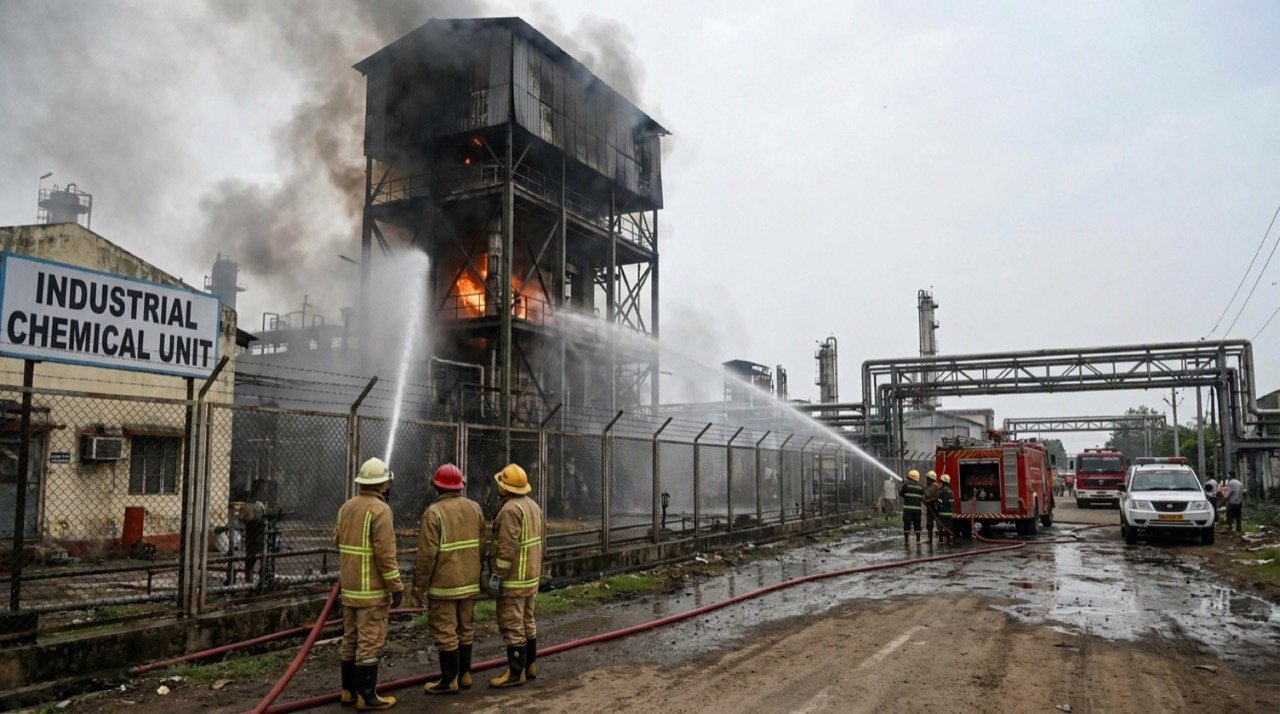
Anakapalle Industrial Fire Kills Two Workers and Raises Hard Safety Questions
A major fire at Dakshin Energy's plant in Paravada, Anakapalle, killed two workers and left others feared trapped, reigniting concern over industrial safety and inspections in Andhra Pradesh's pharma city.
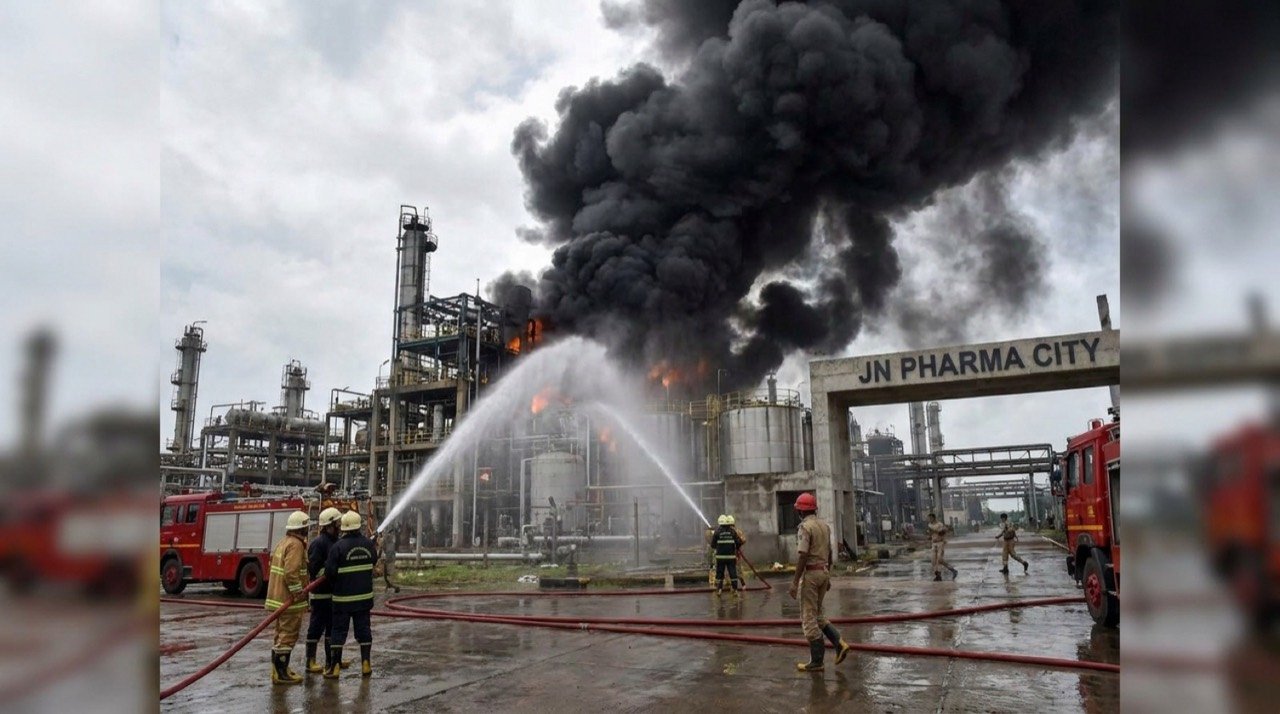
Two Workers Killed in Anakapalli Pharma City Fire at Dakshin Energy Plant
A blaze at a plastic pyrolysis unit in Andhra Pradesh's Jawaharlal Nehru Pharma City has killed two workers, reviving hard questions about safety audits in the Visakhapatnam industrial belt.
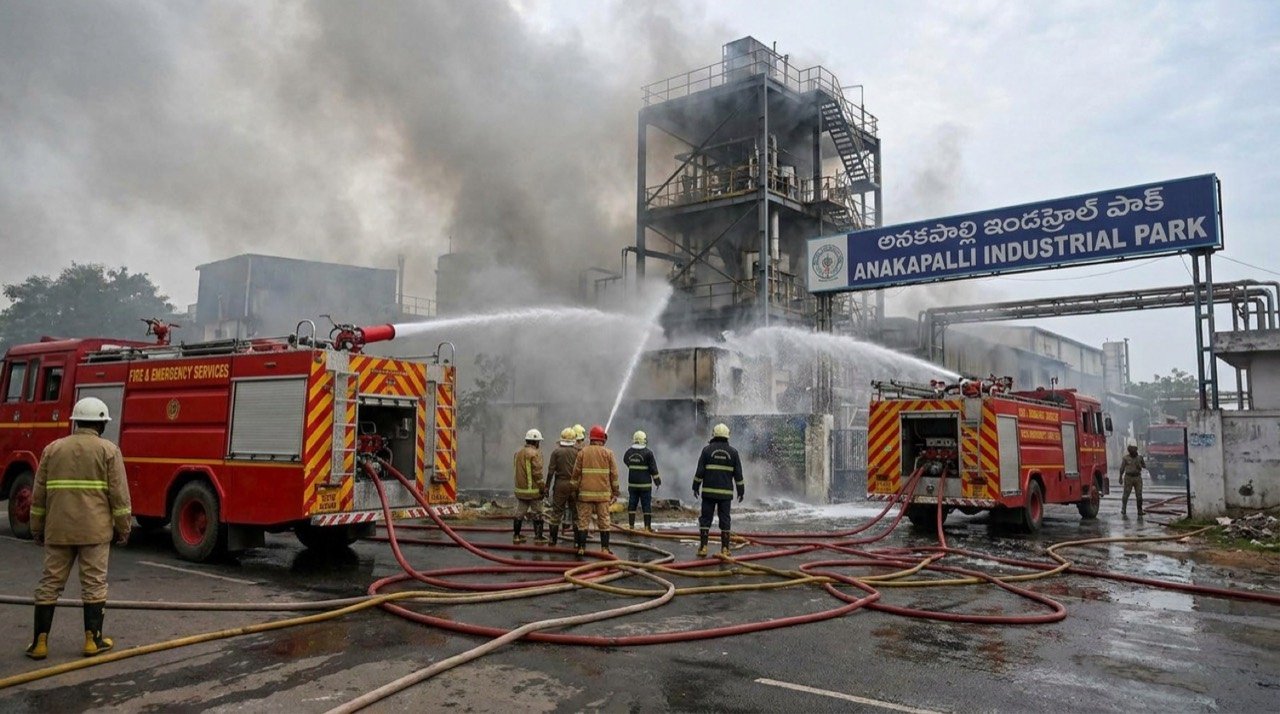
Anakapalli Pharma City Fire at Dakshin Energy Kills Two Workers, Reignites Safety Concerns
A fire at Dakshin Energy Industries in Anakapalli's Jawaharlal Nehru Pharma City killed two workers on June 23, with others feared trapped, putting Andhra Pradesh's industrial safety record back in focus.
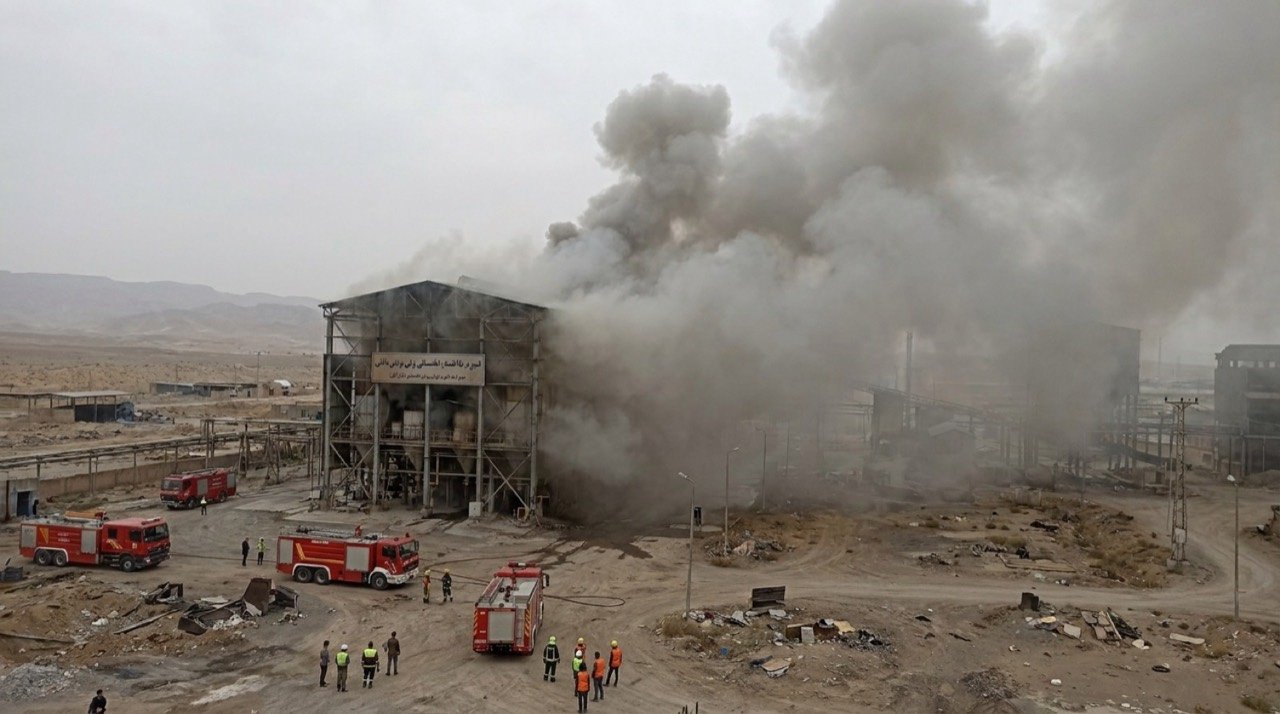
Two Workers Killed in Fire at Andhra Pradesh Pharma City Recycling Unit
A blaze at the Dakshin Energy plastic-waste recycling plant in Anakapalli's Jawaharlal Nehru Pharma City has killed two workers, reviving questions over industrial safety in Andhra Pradesh's chemical corridor.
More from this section
More
AICTE Industry Fellowship 2026: Rs 1.5 Lakh Scheme Closes July 5
The AICTE Industry Fellowship Programme 2026, which places technical-education faculty inside leading companies on a Rs 1.5 lakh monthly stipend, reached its application deadline on July 5.

Bay of Bengal Low Pressure System Revives Monsoon Over Western India
A low-pressure system over the Bay of Bengal has pushed the monsoon back into an active phase, bringing steady heavy rain to Kerala, coastal Karnataka and Maharashtra, and putting Mumbai and Pune on preparedness watch.
Bishnoi Gang Suspects Injured in Haryana Encounter as Police Tighten Net
A joint Haryana-Delhi Police operation in Bahadurgarh left two suspected Lawrence Bishnoi gang members injured, spotlighting the multi-state coordination now central to India's fight against organised crime networks.