The Economics of Reality: Why Indian Broadcasters Can’t Stop Making These Shows
To understand why Indian television in 2026 looks the way it does, you have to stop thinking about entertainment and start thinking about arithmetic.
Commentary & Analysis ·

To understand why Indian television in 2026 looks the way it does, you have to stop thinking about entertainment and start thinking about arithmetic. Reality programming has taken over the schedule not because audiences demanded it above all else, but because for broadcasters and streamers, the numbers are close to unbeatable.
The cost structure
Begin with what a reality show does not need. There is no writing room. There are no scripts to develop through multiple drafts. There are no lead actors commanding film-scale fees, no elaborate sets rebuilt each season, no location shoots for every scene. What there is, typically, is a single fixed environment — a house, a kitchen, a studio — rigged with cameras that run continuously.
Once that infrastructure exists, it amortises. A Bigg Boss house can generate daily content for months from the same capital investment. A cooking-show kitchen produces episode after episode from one build. Compared with scripted drama, where every episode incurs fresh creative and production cost, the marginal cost of an additional reality episode is remarkably low.
The content volume
This is the crucial multiplier. A reality format can produce enormous quantities of programming from a modest base. Daily episodes over a months-long season generate a volume of inventory that scripted television simply cannot match at comparable cost. Alliance runs roughly 42 episodes across six weeks. Bigg Boss editions run daily for months. That volume fills schedules, feeds streaming catalogues, and creates advertising inventory in bulk.
For a broadcaster with hours to fill and a finite budget, this is not a close call.
The revenue side
Now consider what comes back. A successful non-fiction show delivers the two things advertisers value most: mass reach and sustained, habitual engagement over a long run. Laughter Chefs has climbed to the top of the non-fiction ratings and at points reportedly out-rated dominant fiction shows. Bigg Boss Malayalam 7 posted a season-topping TVR of 12.1 and a record finale rating of 22.00, reportedly outperforming the Hindi and Telugu editions.
Those numbers translate into premium advertising rates across months of programming. Add sponsorship integration — brands woven into tasks, prizes and set design in ways scripted drama cannot easily accommodate — and voting revenue where applicable, and the commercial case compounds.
The talent bargain
Then there is the labour equation, which is the genre’s quiet engine. Reality contestants are not paid like film stars, and many participate for reasons that have little to do with the fee. A single season can dramatically grow a social following, reset a public image, unlock brand deals while the show is still airing, or revive a career that had stalled.
In an attention economy where visibility is the scarcest commodity, months of guaranteed national exposure is an extraordinarily efficient trade for a participant — and an extraordinarily efficient acquisition for a producer. The result is a deep, self-replenishing talent pool spanning television actors, YouTubers, comedians, athletes and influencers, all willing to supply the raw material.
The clip dividend
The final economic advantage is structural fit with the modern internet. Reality content is composed of self-contained, high-emotion moments — a confrontation, a collapse, a triumph, an absurdity — that travel perfectly as clips. Every viral fragment is free marketing that drives viewers back to the source.
Scripted drama does not clip nearly as well; its pleasures are cumulative and contextual. Reality’s pleasures are instantaneous. In an ecosystem where discovery happens on social feeds, that is a decisive advantage, and it is why streaming platforms have moved so aggressively into original non-fiction.
Why streamers joined the rush
The economics explain broadcasters, but streaming platforms operate on different logic — subscriptions rather than advertising — so their enthusiasm for non-fiction requires a separate explanation. It comes down to three things.
First, retention. Long-running reality seasons give subscribers a recurring reason to return, week after week, which is precisely the behaviour a subscription business needs. Second, discovery. Reality clips travel on social platforms in a way scripted drama cannot, functioning as continuous free marketing that pulls new viewers toward a paid product. Third, local specificity. Global streamers competing in India need programming that feels unmistakably Indian, and non-fiction formats rooted in language, region and local celebrity deliver exactly that at a fraction of the cost of prestige drama.
Put together, reality TV solves several of streaming’s hardest problems at once — which is why platforms have moved into the genre with such speed.
The hidden cost
The bill comes due elsewhere. When a genre proves it can dominate ratings cheaply, the incentive to fund riskier, costlier scripted work weakens. Every slot filled by a low-cost reality format is a slot not filled by a drama that might have failed — or might have been remarkable. The opportunity cost is invisible on any balance sheet, which is exactly why it tends to be ignored.
There is a human cost too, borne by contestants inside formats engineered around confinement, conflict and humiliation, and it is not one the economics captures.
The takeaway
Reality television dominates Indian screens because it is cheap to make, prolific in output, rich in advertising value, staffed by participants who pay themselves in exposure, and natively optimised for the internet. That is not a trend. That is a business model, and a very good one. Which is why, whatever else changes, the off-season is not coming back.
You may also like to read
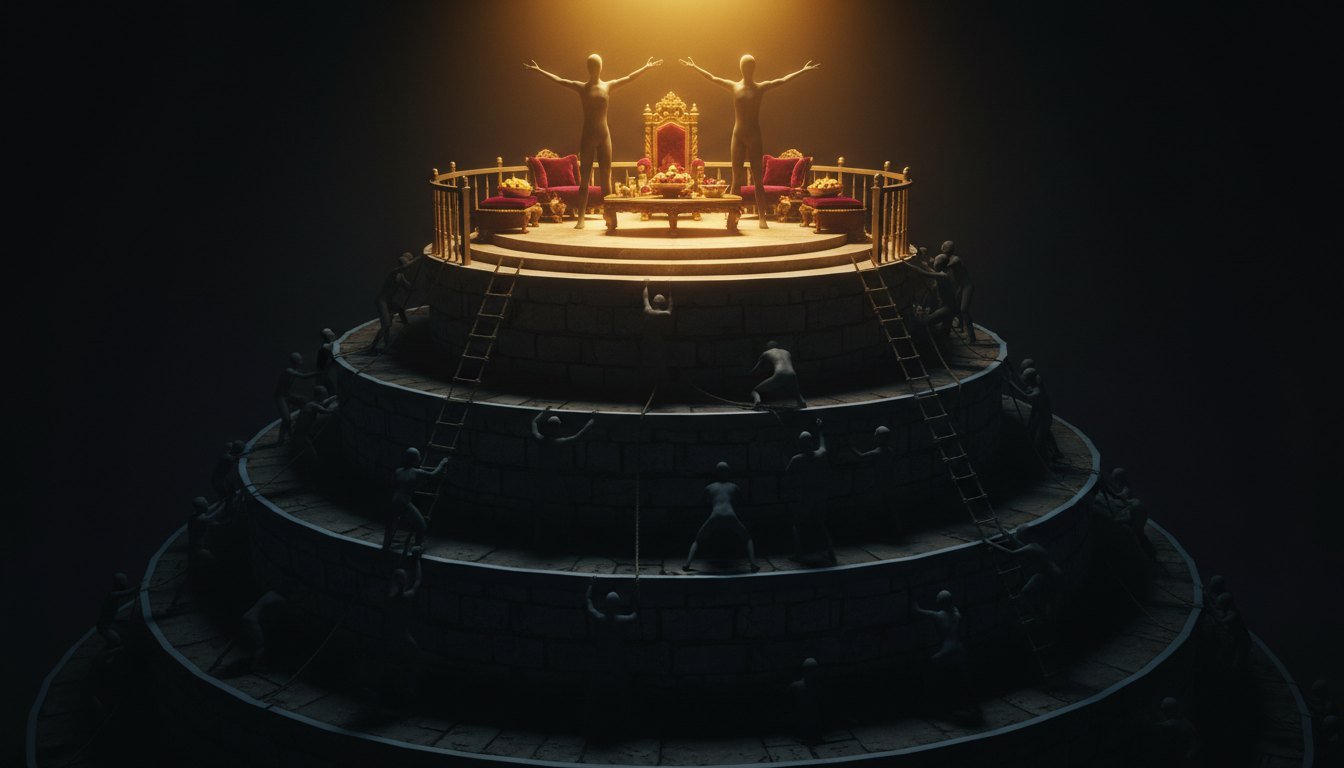
‘Rise and Fall’: Ashneer Grover’s Hierarchy Game Is Reality TV as Class Warfare
Most reality shows pretend everyone starts equal.
Inside ‘Alliance’: How Prime Video’s New Mind-Games Reality Show Actually Works
Indian reality television has stunts, it has cooking, it has houses full of shouting.

Superstar Singer and the Delicate Business of Putting Children on Reality TV
There is no reality format that requires more care than one built around children — and few that generate more genuine emotion when they get it right.

There Is No Off-Season: Why Reality TV Took Over Indian Entertainment in 2026
Something has shifted in Indian entertainment, and the numbers make it hard to argue with. Reality television is no longer a genre that occupies a slot in the schedule — it is the schedule.