‘Rise and Fall’: Ashneer Grover’s Hierarchy Game Is Reality TV as Class Warfare
Most reality shows pretend everyone starts equal.
Commentary & Analysis ·
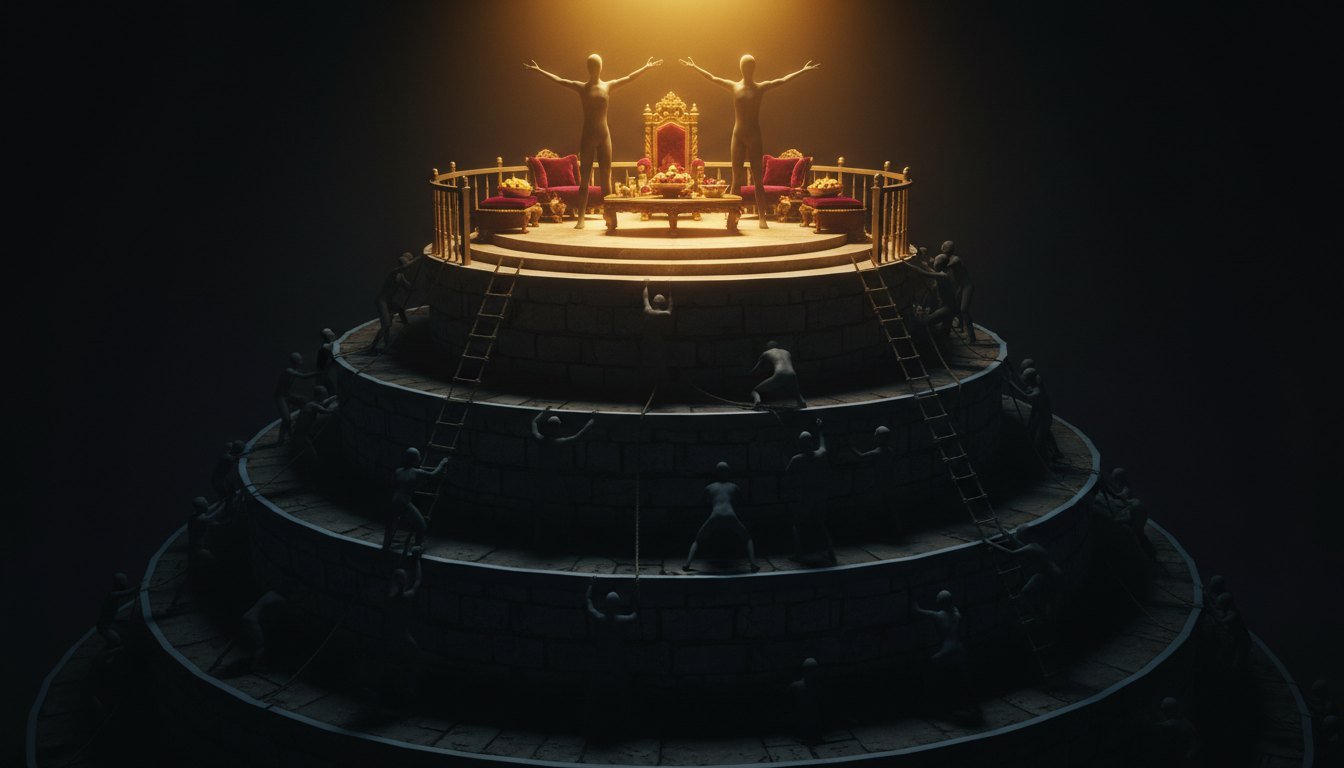
Most reality shows pretend everyone starts equal. Rise and Fall, streaming on Amazon MX Player and fronted by entrepreneur Ashneer Grover, does the opposite — it builds inequality into the architecture and then invites you to watch people claw their way up or tumble down. It may be the most conceptually pointed reality format on Indian screens right now.
The premise
Rise and Fall pits contestants against a shifting power structure, where status is not a byproduct of the game but the entire point. Players occupy different tiers, and the season’s drama flows from the scramble to ascend and the humiliation of descent. It leans into status, strategy and social manoeuvring rather than pure physical challenge — a game of who’s up, who’s down, and who’s willing to do what to change that.
The result is a show whose central tension isn’t survival in the traditional reality sense. It’s mobility.
The host, and why he fits
Ashneer Grover fronting the show is casting as commentary. Grover built his public profile as a blunt, combative business figure and became a household name through his time on India’s startup-pitching reality circuit, where his no-nonsense candour made him both celebrated and controversial. He is, in short, a man the audience associates with hierarchy, ambition and the brutal arithmetic of winners and losers.
Putting him in charge of a show explicitly about rising and falling gives the format a coherent voice. Where other hosts play referee or father figure, Grover’s persona suggests something colder — the boss whose approval must be earned and whose verdicts sting.
The cast strategy
The show blends reality-TV regulars, content creators and sports names. That mix is deliberate and increasingly standard in 2026: creators bring their own audiences and internet fluency, reality veterans bring an understanding of how to play to cameras, and sportspeople bring competitive instinct and a fanbase that crosses over from a different world entirely.
It also serves the format’s theme. A cast drawn from genuinely different spheres — with different levels of fame, different skills and different social capital — makes the show’s hierarchy feel less like a game mechanic and more like a real contest over status.
Why the format is timely
There’s something knowing about a hierarchy game landing now. Indian reality TV in 2026 is saturated with formats built on conflict, but Rise and Fall is unusually explicit about what most of them are really about: the competition for status, visibility and the right to matter. By making that competition the literal rulebook, the show turns the subtext of the entire genre into text.
It also arrives amid a broader diversification of reality programming, as streamers invest in strategy-driven formats — mind-games shows, deception formats and negotiation-based competitions — that ask for cunning rather than courage. Rise and Fall fits squarely into that wave, with a distinctly Indian, distinctly aspirational spin.
The psychology of the climb
What gives the format its bite is how accurately it models something people actually experience. Almost everyone has been in a room where status was unevenly distributed and quietly contested — an office, a family, a friend group, a social feed. Rise and Fall simply removes the pretence and makes the ladder visible.
That visibility does interesting things to human behaviour. When people know exactly where they stand relative to everyone else, cooperation becomes conditional, generosity becomes strategic, and resentment finds a target. Contestants near the top must decide whether to consolidate or share; those near the bottom must decide whether to grind upward or burn the whole structure down. The show’s most revealing moments will likely come not from the tasks but from these calculations — the small betrayals and unexpected kindnesses that emerge when status is on the line and the cameras are running.
What to watch
The storylines will write themselves: the contestant who rockets up the hierarchy and becomes a target, the fallen player scheming for a comeback, the alliances forged across tiers, and the inevitable moment someone at the top discovers how lonely it is. There’s also the question of tone — whether the show handles its status games with wit and self-awareness, or whether the humiliation of the “fall” curdles into something meaner than audiences want. Formats built on degradation have a habit of testing the limits of viewer sympathy, and the line between compelling and cruel is thinner than producers often assume.
The takeaway
Rise and Fall is reality television with its thesis stated out loud. With a shifting power ladder, a cast spanning creators, athletes and reality veterans, and a host whose entire brand is the ruthlessness of ambition, Amazon MX Player has built a show about the one thing every reality contestant is actually chasing: the climb. Whether audiences find that exhilarating or uncomfortably close to the bone may be the most interesting result of all.
You may also like to read
Inside ‘Alliance’: How Prime Video’s New Mind-Games Reality Show Actually Works
Indian reality television has stunts, it has cooking, it has houses full of shouting.

Superstar Singer and the Delicate Business of Putting Children on Reality TV
There is no reality format that requires more care than one built around children — and few that generate more genuine emotion when they get it right.

There Is No Off-Season: Why Reality TV Took Over Indian Entertainment in 2026
Something has shifted in Indian entertainment, and the numbers make it hard to argue with. Reality television is no longer a genre that occupies a slot in the schedule — it is the schedule.

Reality TV in 2026: A Viewer’s Guide to Every Major Show on Air
The Indian reality landscape has become genuinely difficult to navigate.