Famine Tightens Its Grip on Sudan as War Enters Its Fourth Year
UN-backed assessments confirm famine conditions in parts of Darfur and Kordofan, with 21 million people facing acute hunger as the Rapid Support Forces consolidate control of the west.
Commentary & Analysis ·
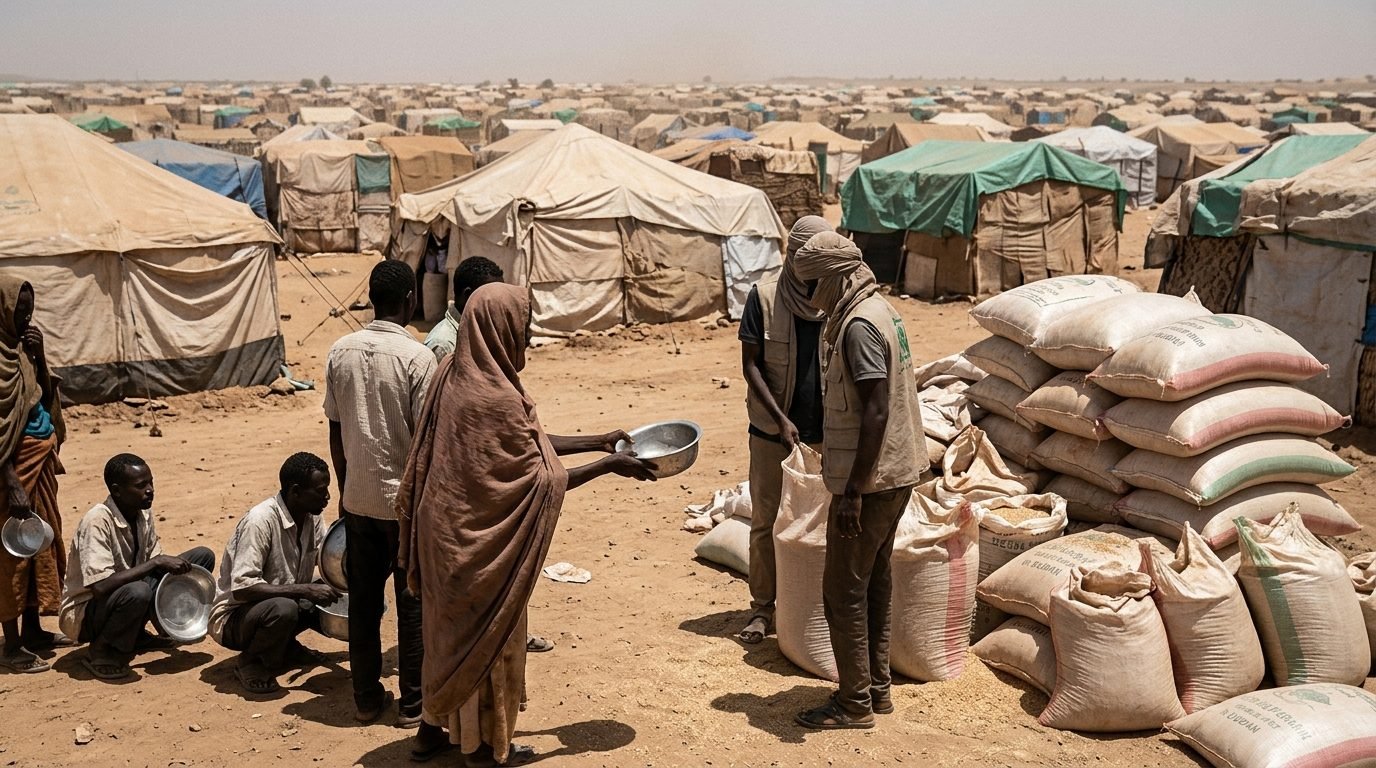
Sudan's catastrophic civil war has pushed swathes of the country into famine, with United Nations-backed assessments confirming that two areas are now experiencing famine conditions and that roughly 21 million people, close to half the population, face acute levels of food insecurity. As the conflict grinds into its fourth year, aid agencies warn that the world's worst humanitarian crisis is being compounded by dwindling funds and fading international attention.
The war, which erupted in 2023 between the Sudanese Armed Forces and the paramilitary Rapid Support Forces (RSF), has displaced millions, shattered the health system and severed supply routes for food and medicine. Nowhere is the suffering more acute than in Darfur, where the RSF's capture of the North Darfur capital El Fasher has cut off entire communities from relief.
The scale of the hunger crisis
The Integrated Food Security Phase Classification, the global benchmark used to declare famine, has confirmed famine in displacement camps in and around El Fasher and in parts of South Kordofan. UN agencies project that more than 33 million people in Sudan will require humanitarian assistance during 2026, a staggering figure that underscores the depth of the collapse.
Child malnutrition has reached what relief workers describe as catastrophic levels in the worst-affected districts, with severe acute malnutrition driving up child mortality in areas that aid convoys cannot reach. The World Food Programme has repeatedly warned that famine is likely to spread further unless access improves and funding gaps are closed.
Allegations of genocide in El Fasher
The fighting has been marked by grave atrocities. A UN Independent Fact-Finding Mission concluded that the RSF committed genocide against non-Arab Indigenous communities during the siege and capture of El Fasher, citing mass killings of fleeing civilians and widespread sexual violence. The mission found that the destruction bore the 'hallmarks of genocide', a characterisation the RSF has rejected.
El Fasher had been the last major city in Darfur under army control before it fell after a prolonged siege, leaving the RSF in command of most of Sudan's western region. The loss tightened the encirclement of displacement camps where famine had already taken hold.
A crisis slipping from view
Humanitarian organisations have grown increasingly alarmed that global attention and funding are being drawn elsewhere, including towards energy-market turmoil and conflicts in other regions. The factors driving the deepening emergency include:
- Blocked or restricted aid access to besieged areas, particularly across Darfur and Kordofan.
- The collapse of agricultural production and markets after years of fighting.
- Mass displacement that has uprooted millions internally and across borders.
- A widening shortfall between humanitarian appeals and actual donor contributions.
Why it matters beyond Sudan
The crisis carries regional and global consequences. Sudan's instability has sent refugees into neighbouring Chad, Egypt and South Sudan, straining fragile states and migration routes. Disruption to one of the world's most acute hunger emergencies also tests the credibility of the international humanitarian system at a moment when multiple crises are competing for finite resources.
For India and other states across the Global South, Sudan is a reminder of how protracted conflict can reverse decades of development gains and destabilise an entire region. Indian nationals and diaspora communities across East Africa and the Gulf have followed the crisis closely, while New Delhi has joined calls for humanitarian access.
Aid officials say the immediate priority is securing safe corridors to reach famine-stricken populations before the situation deteriorates further. Without a durable ceasefire and a surge in funding, they warn, the death toll from hunger alone could climb sharply in the months ahead, even as the guns continue to fire.
The NE Times View
Sudan is the world's largest hunger crisis and among its least watched, a moral indictment of a global system that rations attention by geopolitics. With 21 million facing acute hunger, this is engineered starvation, not natural disaster. India, which prizes its voice in the Global South, should match that rhetoric with humanitarian weight here. Famines are political failures first; pretending otherwise lets the architects off the hook.
This article is original commentary and analysis by The NE Times. Background facts were referenced from UN News and Al Jazeera.
You may also like to read
Fighting Persists in Eastern Congo Despite Fragile Peace Framework
Clashes around the strategic Rubaya mining area and a deadly insurgency in Ituri are testing a US- and Qatar-brokered peace process between the Democratic Republic of Congo, Rwanda and M23 rebels.

Zelenskyy Presses Putin for Ceasefire Talks as Strikes Continue
Ukraine's president called for direct negotiations in an open letter, winning backing from European leaders, even as drone attacks and shelling persisted across the front.
UN Warns Gaza Risks 'Permanent Limbo' As Transition Plan Stalls
A senior UN envoy has told the Security Council that delays in the Council-backed Gaza transition plan are deepening suffering, with fuel and water shortages crippling relief efforts.
WHO Declares Global Emergency as Ebola Spreads in Central Africa
An outbreak of the Bundibugyo strain of Ebola in the Democratic Republic of Congo and Uganda has surpassed previous records, with hundreds of cases and a mounting death toll prompting an international response.
More from this section
More
India-New Zealand Ties: Visit Plans Put FTA and Diplomacy in Focus
Reports of a planned high-level India-New Zealand engagement have revived attention on free trade talks, professional mobility and Indo-Pacific cooperation between two partners with clear room to grow.

Modi Greets Trump on US 250th Independence Day, Hails Partnership
Prime Minister Narendra Modi marked America's 250th Independence Day with a message to President Trump, saying the next 250 years should lift the India-US partnership to new heights.
India Watches Dhaka's China-Backed Teesta Plan as Stakes Rise
New Delhi is closely tracking Bangladesh's proposal to develop the Teesta river with Chinese assistance, a move that revives one of South Asia's most sensitive water-sharing disputes and tests regional strategic trust.