'Time Has Come to Remove This Government': Rahul Gandhi Claims Students' Victory, Opposition Eyes Parliament
Rahul Gandhi called Dharmendra Pradhan's resignation a students' victory, demanded a Modi apology and accountability, as the opposition moves the paper-leak fight to Parliament's Monsoon Session.
Commentary & Analysis ·
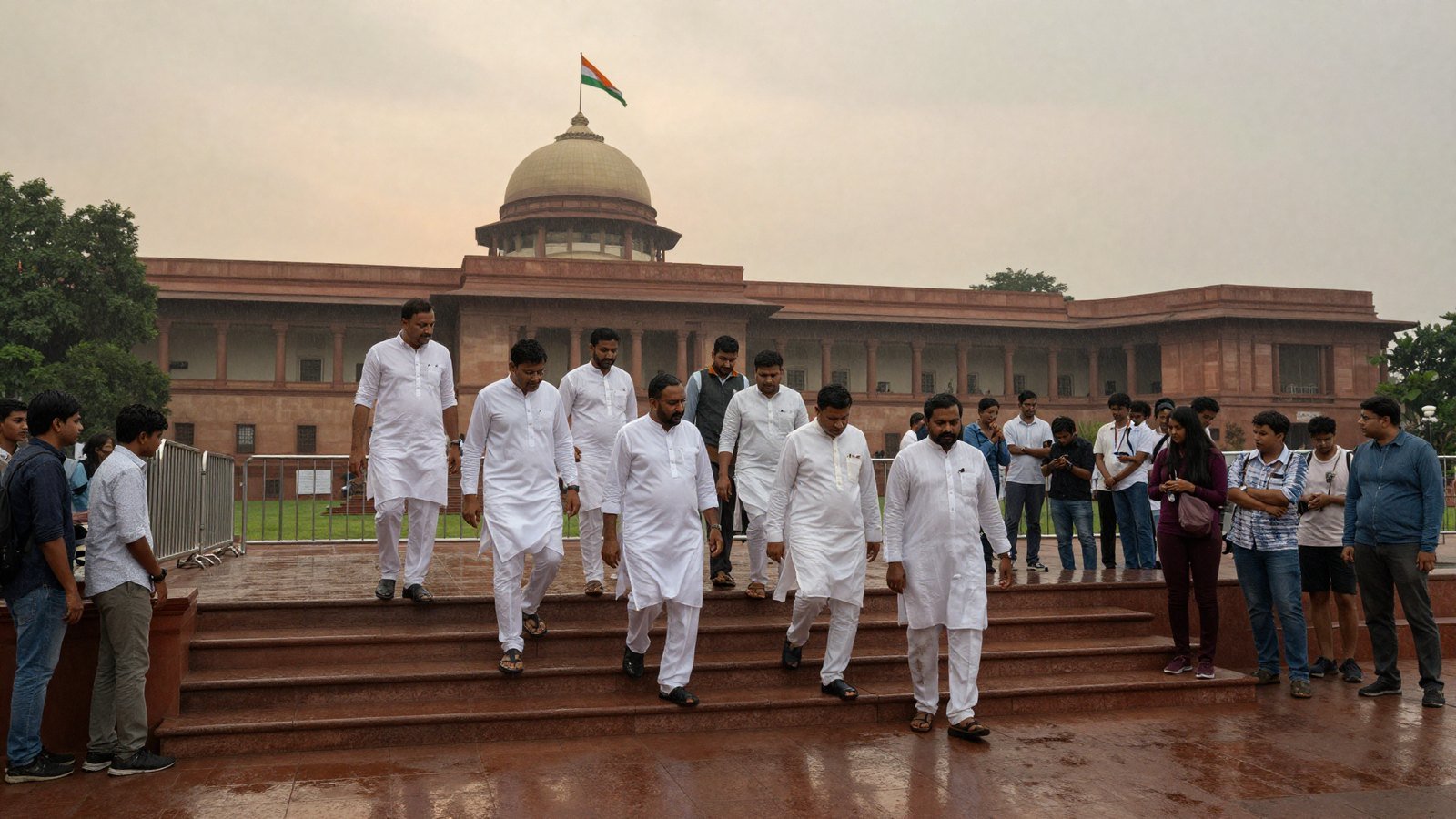
Key facts
- Rahul Gandhi on 25 July 2026 called Dharmendra Pradhan's resignation a students' victory and said the 'time has come to remove this government'
- Gandhi demanded an apology from PM Modi and punishment for those who beat and fired on protesting students, as reported by IANS
- AAP's Manish Sisodia said Pradhan 'did not voluntarily submit his resignation' and cited 22 student suicides linked to the NEET leak, per ANI
- The Cockroach Janta Party ended its Jantar Mantar protest after the government accepted all three demands, including Rs 1 crore compensation for bereaved families
- CNBC and other international outlets framed the 25 July resignation as a major win for India's youth protesters
A Resignation Everyone Wants to Own
Dharmendra Pradhan's exit from the education ministry on 25 July was announced in a few sober lines on X. What followed was anything but sober. Within hours, virtually every opposition party had claimed a share of the outcome, while the youth movement that had camped at Jantar Mantar since early June declared the struggle its own. The Cockroach Janta Party's founder, Abhijeet Dipke, told cheering protesters 'we have done it', and international coverage, CNBC among others, framed the resignation as a major win for India's young demonstrators.
Rahul Gandhi, the Leader of the Opposition, set the tone for the political response. In a video message, he called the resignation 'a huge step towards rebuilding our education system' and congratulated every student who came out on the streets, according to reports of his remarks. The competition to own this moment, and to define what it means, is now the real story.
Two Versions of One Escalation
Two news agencies carried Gandhi's sharpest line in slightly different forms, and the difference is worth being precise about. ANI headlined his remark as 'time has come to remove this government', framing Pradhan's exit as a step towards wider change. IANS, in copy carried by Prokerala, quoted him as saying 'daro mat', don't be afraid, before urging: 'Let's get rid of this regime that is attacking India, destroying our Constitution and capturing all our institutions.'
These are not rival accounts of a single sentence; they appear to be separate lines from the same 25 July remarks, one a declaration, the other an exhortation. Read together, they mark a deliberate escalation. Gandhi was no longer asking for a minister's head; that had been delivered. He was converting a sectoral grievance about examinations into a general indictment of the government's hold over institutions, the core theme of his politics since 2024.
Apology, Accountability, Punishment
Beyond the rhetoric, Gandhi attached specific demands to his response. He asked Prime Minister Narendra Modi to apologise to students and the country for the failures of the examination system. He also demanded action over the police crackdown on protesters, saying, as reported, that anyone who raised a finger against students, beat them or fired at them must be held accountable, and that both those who ordered the action and those who carried it out should be punished.
Congress colleagues amplified the claim of credit. MP Pramod Tiwari called the resignation 'a victory for the youth' and congratulated the entire opposition, while the party's Telangana unit went further, attributing the outcome to Gandhi's personal struggle, an early sign that the Congress intends to fold the students' win into its own narrative.
Sisodia's Sharper Claim: A Resignation Extracted, Not Offered
The Aam Aadmi Party pushed a subtly different line. Manish Sisodia argued that Pradhan 'did not voluntarily submit his resignation'; the country's students, he said, took it from him. Had the resignation been genuinely voluntary, Sisodia contended, it would have come when the NEET paper leak first surfaced, not after weeks of protest. He cited the deaths by suicide of 22 students in connection with the scandal, according to ANI's account of his remarks.
Sisodia also called for a 'massive education revolution', a phrase that positions AAP, which built its Delhi brand on government schools, to compete with the Congress for ownership of the education issue. The distinction matters: where Gandhi generalised the moment into a case for removing the government, Sisodia kept the focus on education policy, friendlier terrain for a party that must show delivery in the states it governs.
The Government's Counter-Framing
The BJP's immediate response was notably restrained, and the most substantive counter-framing came from Pradhan himself. In his resignation letter, as reported, he said he had accepted responsibility and never shied away from the situation, while expressing the hope that anti-national forces would not exploit the mood at Jantar Mantar and across the country. That language seeks to draw a line between legitimate student grievance and political capitalisation of it.
Reports earlier in the day had suggested the government was weighing a portfolio change for Pradhan rather than an exit, an option opposition leaders publicly rejected. The sequence suggests the government looked for a softer landing and did not find one. Its challenge now is to present the resignation as accountability delivered, before the opposition cements the rival reading: accountability extracted.
From Jantar Mantar to the Monsoon Session
With the Cockroach Janta Party winding down its protest after the government accepted its three demands, the resignation, compensation of Rs 1 crore for families of students who died by suicide, and no action against protesters, the confrontation now shifts venue. The Monsoon Session of Parliament is under way, and opposition parties have signalled they intend to keep the paper-leak issue alive on the floor.
Expect three lines of attack: demands for a full discussion on examination integrity and the National Testing Agency's functioning; pressure over the use of force on protesters, including calls for an inquiry into who authorised it; and scrutiny of whoever succeeds Pradhan. None of this threatens the government's majority. The NDA's numbers are intact, and removing the government is not a parliamentary possibility in 2026. Gandhi's line is mobilisation rhetoric aimed at future elections, not a description of floor arithmetic.
The Risk in Claiming a Street Victory
There is a hazard in the opposition's rush to own the moment. The Cockroach Janta Party built its appeal precisely on standing outside party politics: satirical in style and pointedly unaffiliated, working alongside student organisations rather than parties. Movements of this kind have historically resisted adoption. The anti-corruption agitation of 2011 damaged the government of the day, but the electoral beneficiary was a new party formed from the movement, not the established opposition that cheered it on.
The Telangana Congress crediting Gandhi for an outcome the students bled for illustrates the tension. If opposition parties convert the students' victory into a partisan trophy too quickly, they risk alienating a young constituency that has just demonstrated it can mobilise, and win, without any party's permission. That is a lesson with implications for every party, not only the BJP.
What to Watch Next
The next fortnight will show whether 25 July was a climax or a beginning. The markers to track are concrete.
The resignation has closed one chapter. The contest over what it meant, a students' triumph, an opposition scalp or a government's tactical retreat, has only just opened.
- The choice of the next education minister, and whether the portfolio goes to a reformer or a caretaker.
- Whether any inquiry is announced into the use of force against protesters, the opposition's central accountability demand.
- The conduct and credibility of the NEET retest, which reports say affects roughly two million candidates.
- Whether the movement re-mobilises if the compensation or amnesty commitments slip, and how it treats the parties now claiming its victory.
Sources
- ANI - Rahul Gandhi's 'time has come to remove this government' remarks and call for wider education reform (25 July 2026)
- IANS via Prokerala - 'Let's get rid of this regime' quote, demands for a Modi apology and accountability for violence against students (25 July 2026)
- ANI - Manish Sisodia's statement that Pradhan 'did not voluntarily submit his resignation' and call for an education revolution (25 July 2026)
- CNBC - India's education minister resigns in win for Indian youth protesters; retest affecting two million candidates (25 July 2026)
- Outlook India live updates - government accepted all three CJP demands; opposition rejected a reported portfolio shuffle for Pradhan (25 July 2026)
This article is original news analysis and commentary by The NE Times, based on reporting from the sources listed above.
You may also like to read
Opposition Parties and the Student Protest: Support in Parliament, Strategy on the Street
Opposition backing increased parliamentary pressure and media reach, while organisers tried to preserve an identity larger than conventional party
Dharmendra Pradhan Resignation Demand After Government Concessions: Has the Political Question Changed?
Government concessions reduced some immediate pressure but did not eliminate the argument that ministerial responsibility is distinct from criminal
From Students to Parents and Professionals: How the Protest Coalition Expanded
The movement's growth beyond exam candidates transformed it from a sectoral grievance into a broader argument about fairness, employment and trust in
From Fast to Floor: How the NEET Leak Crisis Becomes a Monsoon Session Flashpoint
As Sonam Wangchuk ends his fast over the NEET-UG 2026 paper leak, the crisis moves to Parliament. A look at what opposition motions can and cannot achieve.
More from this section
More
One Week On: A Scorecard for the Government's NEET Protest Promises
Sonam Wangchuk ended his fast on written government assurances. One week on, here is a benchmark-by-benchmark scorecard of what is delivered, pending and rhetorical.
Dharmendra Pradhan Resigns as Education Minister, Handing India's Student Movement Its Biggest Victory
Dharmendra Pradhan's resignation as Union Education Minister on 25 July 2026, announced on X after weeks of NEET paper leak protests, is only the second ministerial exit under Modi in 12 years.
Prime Minister Modi's First Major Response to the Exam-Leak Protests: What He Announced and What He Did Not
The prime minister's intervention shifted the official response from silence or departmental statements to a national political commitment, while