The three-language policy is right in theory, reckless in its rollout
CBSE's own court filings show fewer than half its schools are actually ready for compulsory trilingual teaching — proof the reform's substance is sound but its timing has outrun the classroom.
Opinion & Analysis ·
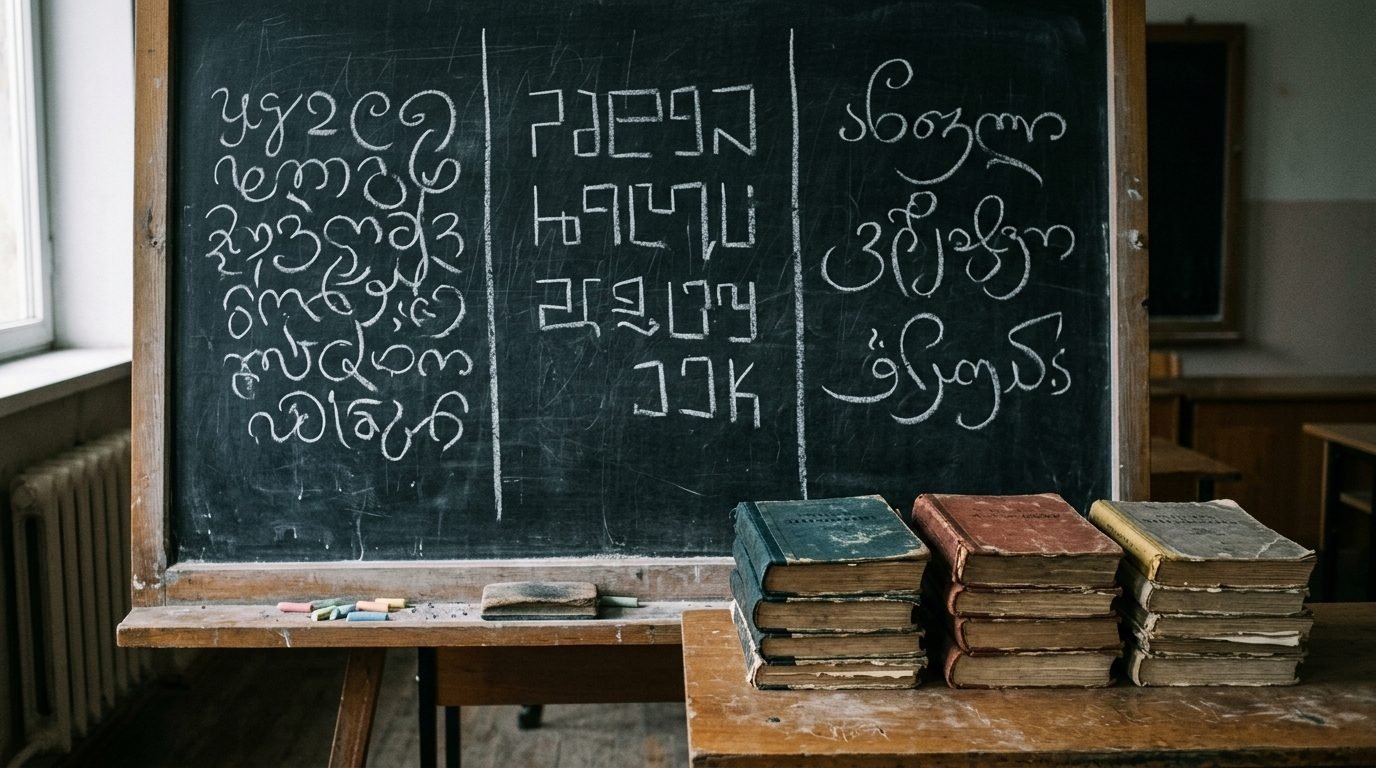
A country that cannot say, with a straight face, exactly which teacher will stand in front of which Class 9 student to teach which language has no business making that language compulsory this September. That is the uncomfortable truth sitting beneath the Supreme Court's hearing on CBSE's three-language policy, and it is a truth CBSE's own numbers, oddly, help to prove.
A good idea, delivered badly, is still a bad policy
We should say plainly what we believe: multilingualism is a genuine public good, and CBSE's instinct is not the villain of this story. Requiring Class 9 students to study three languages, two of them Indian, could in principle widen a student's world rather than narrow it, easing movement between states, deepening access to literature and correcting the old assumption that ambition requires distance from one's mother tongue. But a policy is not merely its intention. It is also its delivery date, its staffing, its textbooks and its exam mechanics. On all four of those, CBSE has rushed ahead of itself, and the Supreme Court is now doing the job that should have been done before the circular was issued rather than after it.
CBSE's own defence is also the strongest case against it
Consider the numbers CBSE placed before the court in its own defence: 47.3 per cent of its 28,848 affiliated schools already offer two or more native Indian languages to Class 9 students, and 99.19 per cent have at least one Indian-language teacher. CBSE presents this as proof of readiness. Read the same figures the other way and they say something rather more alarming — that a majority of schools in the country's largest board do not yet offer the choice the policy demands, and that having "at least one" language teacher on staff tells you nothing about whether that teacher can realistically deliver a second or third Indian language to an entire cohort. A national average is a comfortable thing to cite in an affidavit. It is a much less comfortable thing to be the parent of a child in the school sitting on the wrong side of that average, in a smaller town, a modest private school or a rural institution outside the reach of urban resourcing.
The petitioners are not obstructing multilingualism, they are asking for order
The strongest objection to our position, and it deserves to be taken seriously rather than waved away, is that endless caution is itself a policy failure — that India has spent decades wringing its hands over language reform while doing very little, and that CBSE at least is moving. There is something to that. But look at what the petitioners are actually asking for. They are not demanding that the three-language idea be abandoned. They are pointing out that the National Education Policy envisaged a slower runway than CBSE has allowed, that students may want a language for family, regional or employment reasons only to discover their school offers just one easy option, and that foreign-language teachers now fear for their jobs as combinations are reshuffled overnight. The Supreme Court's assurance that dismissed teachers could approach it individually is a humane gesture, but it is no substitute for a transition policy. Nobody should have to sue their way into job security because a curriculum circular arrived without a staffing plan attached.
Choice, not compulsion, is what makes multilingualism work
India's linguistic map does not flatten into a single formula, and treating it as though it does is where good intentions curdle into resentment. A student in Chennai, Delhi, Noida or Gurugram carries a different home language, a different migration story and a different sense of what a third language is even for. A rule requiring two Indian languages can serve national inclusion, but only if schools resist the temptation to make one language the default answer everywhere simply because it is the only one on hand. And here is the deeper point: a third language taught without contact hours, without proper materials, purely to satisfy a marksheet requirement, does not produce multilingual citizens. It produces another subject for rote memorisation and expensive private tuition — the very outcome the reform claims to be against. Judged by that standard, a policy succeeds not when three languages appear on a timetable, but when a student can actually read, speak and think in the second and third one.
What must happen before September, not after
None of this requires waiting for a verdict. Schools can map their actual staff, actual enrolment and actual student preference now, rather than announcing changes they cannot yet support, and they should publish, plainly, which languages they can teach immediately versus which require recruitment. Teachers' associations should bring the court real vacancy and workload data rather than let national percentages stand in for local reality. CBSE, for its part, could earn a great deal of trust simply by issuing model timetables, a phased compliance option and a genuine grievance process — the same instinct, in fact, that AICTE showed when it built its industry fellowship on a defined application window and a portal rather than vague encouragement; process and clarity are what turn a worthy scheme into a workable one. Most of all, no Class 9 student should be penalised, marked down or shuffled into an unsuitable option because their particular school was never actually equipped to deliver what the circular promised. The 22 July hearing matters, but the real test will be measured in classrooms, not courtrooms.
The bottom line
- CBSE's own figures — fewer than half its schools already offering two-plus Indian languages, and merely "at least one" language teacher in 99.19 per cent — are evidence of a gap, not proof of readiness.
- The petitioners' objections are about timing, staffing and choice, not opposition to multilingual education itself, and deserve a transition plan rather than a courtroom-by-courtroom fix for displaced teachers.
- A third language taught without real contact hours or materials becomes another memorised subject, undermining the very goal the policy claims to serve.
- Success should be judged by whether students gain usable language ability, not by whether three subjects appear on a timetable — and that requires model timetables, published staffing data and a genuine grievance process before, not after, implementation.
You may also like to read

Five Golds Prove India Can Build Excellence. They Also Prove It Chooses Not To, Broadly
India's clean sweep at the Physics Olympiad shows a world-class talent pipeline works brilliantly for five students a year — the real test is whether it reaches millions more.

Samay Raina's Rs 3 Lakh Fine Is a Fee for Growing Up, Not a Fine for Joking
The Supreme Court's rebuke of Samay Raina, Ranveer Allahbadia and Ashish Chanchlani was never about comedy — it was about broken undertakings, and the creator economy should take note.

Faith Disputes Need Courts to Act Early, Not Just Clean Up Later
The Bhojshala prayer order shows courts intervening early to keep faith disputes out of the street; the Ayodhya donation scandal shows the cost when no one intervenes at all.
Monsoon Readiness Is Not a Weather Problem. It Is a Governance Failure
IMD's forecasts are sharp enough to save lives; what killed two children in Mukhmelpur was not bad weather but nobody owning the hazard before the rain came.