Monsoon Readiness Is Not a Weather Problem. It Is a Governance Failure
IMD's forecasts are sharp enough to save lives; what killed two children in Mukhmelpur was not bad weather but nobody owning the hazard before the rain came.
Opinion & Analysis ·
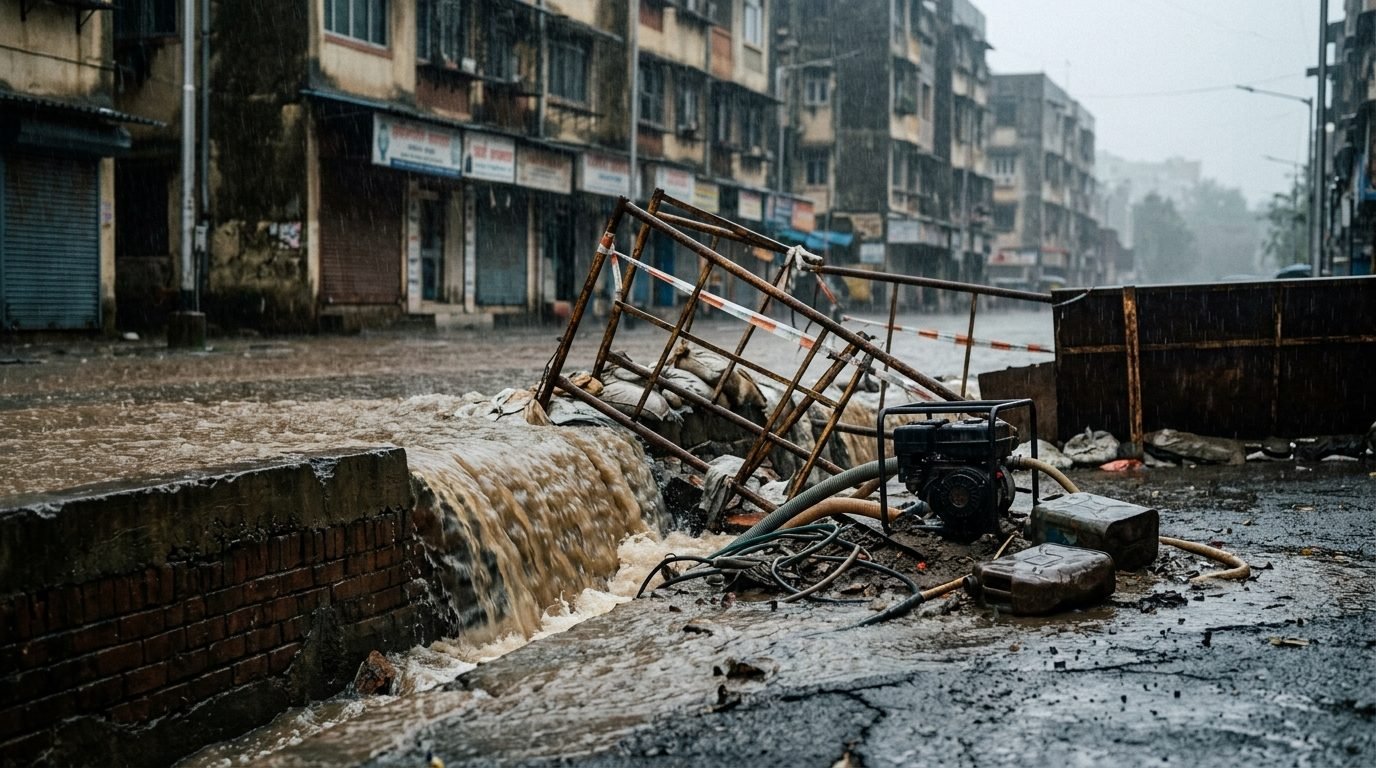
Every July, India relearns the same lesson, and every July, it acts surprised. The India Meteorological Department's 15 July release forecasting heavier rain over east and northeast India, eastern Uttar Pradesh and the western Himalayas is not an emergency in itself. It is a routine weather bulletin. But set beside the deaths of two children in a rain-filled pit in Mukhmelpur and the search for four more missing in the Yamuna near Hiranki, that bulletin becomes something else entirely: a scorecard. Monsoon readiness is not a meteorological problem India has failed to solve. It is a governance problem, and this week's news shows exactly where the failure sits.
A forecast is only useful if someone acts on it
IMD's forecasting apparatus, on the evidence of its own 15 July release, is doing its job with some sophistication. It distinguishes east and northeast India, eastern Uttar Pradesh and the western Himalayan region as zones of rising risk over the next seven days, while flagging subdued activity over west-central and south peninsular India and the northwest plains. It layers in short-duration alerts for thunderstorms, lightning and gusty winds across multiple states. This is not a blunt instrument. It is a genuinely uneven, geographically specific risk map. The trouble is that a sophisticated forecast delivered into a governance vacuum accomplishes very little. Knowing that a district faces a seven-day window of elevated rain risk is only valuable if drainage has been cleared, if hazardous pits and excavations have been fenced, and if local administrations have translated a subdivision-level bulletin into ward-level action. The forecasting has outpaced the follow-through.
Two children in Mukhmelpur expose the real failure point
The deaths of Ayush, eight, and Nitesh, ten, in a rainwater-filled pit in Mukhmelpur village were not caused by an unpredictable weather event. They were caused by an unfenced pit that filled with rain, in a jurisdiction where responsibility for that hazard was evidently unclear enough that nobody had secured it before the monsoon arrived. This is the least excusable kind of monsoon death, because it required no forecasting breakthrough to prevent. It required only that whoever controlled that land in Outer North Delhi treat monsoon season as a known, recurring hazard rather than an act of God. When responsibility for excavations and rainwater pits is scattered across landowners, contractors, municipal bodies and development agencies, as it plainly is in the National Capital Region, each authority can assume the hazard belongs to someone else. That is not bad luck. That is a governance design flaw, and it has now cost two children their lives.
The Yamuna search shows preparedness cannot just mean plumbing
The parallel search for four children missing near Hiranki after they went to bathe in the Yamuna makes the same point from a different angle. Monsoon readiness discourse in India tends to fixate on drainage capacity and pumping stations, as though the entire challenge were keeping city roads dry. But river currents change rapidly after upstream rainfall, submerging sandbars and debris that were visible days earlier at a bathing spot residents have used for years without incident. Deploying police, fire services, disaster-management teams and the National Disaster Response Force to search for missing children is precisely the kind of high-cost, high-anguish response that a functioning early-warning and access-restriction system is supposed to make rare. When it becomes routine, that is a sign the system is managing consequences rather than preventing them.
The strongest counterargument, and why it does not hold
The fair rebuttal here is that India is an enormous country with genuinely fragmented terrain risk, and that no administration can fence every pit or patrol every riverbank in a nation with monsoon rain falling unevenly across dozens of states simultaneously. There is real force to this. IMD's own bulletin shows a monsoon that behaves differently in the Northeast than in the northwest plains, differently in hill districts prone to landslides than in low-lying plains prone to waterlogging. Expecting uniform, centralised readiness across such variation may be an unrealistic standard. But this argument, taken seriously, is actually a case for better local governance, not an excuse for its absence. A country that cannot secure every hazard nationally can still insist that each ward, each municipal zone, each river-adjacent village maintains its own hazard map and its own accountable owner for every known pit, drain and bathing point. Fragmented terrain is a reason to decentralise responsibility clearly, not to let it fall through the cracks between agencies. The Mukhmelpur pit did not need a national solution. It needed one identifiable authority to fence it before July.
What governance readiness should actually look like
If monsoon season is treated as the recurring, predictable event it is, several things should already exist and plainly do not everywhere they are needed. Every ward should have a physical hazard map, built by police beat teams and resident groups, identifying pits, uncovered drains and accessible water bodies before the rains intensify, not after a tragedy. Every hazardous site should have a single, publicly named responsible agency, with fencing that cannot be trivially moved and a repair deadline that is enforced rather than aspirational. River-adjacent settlements with a history of bathing at particular points need active patrols and plain-language warnings during high-flow periods, not warning boards that residents have learned to ignore because the water has looked safe for years. None of this requires new meteorological capability. IMD is already producing forecasts granular enough to support it. What is missing is the administrative discipline to turn a seven-day rainfall bulletin into a seven-day action list at the ward level, every single year, before the first pit fills and the first child goes missing.
The bottom line
- IMD's 15 July forecast shows genuinely sophisticated, region-specific risk assessment; the failure is not in the forecasting but in what local authorities do with it.
- The deaths in Mukhmelpur and the search near Hiranki were preventable through routine hazard management, not through any advance in weather prediction.
- Fragmented responsibility among landowners, contractors and municipal bodies is a governance design flaw that becomes lethal every monsoon season, and naming a single accountable authority per hazard would close much of the gap.
- India does not need to reinvent monsoon forecasting. It needs to hold local administrations to the same standard of preparedness that its meteorologists already meet.
You may also like to read
Delhi's Monsoon Wait Stretches On as IMD Flags Slow Advance
The India Meteorological Department says the southwest monsoon is unlikely to reach Delhi over the next five days, prolonging heat stress in the capital even as Mumbai is drenched by intense showers.

Delhi's Expired Food Racket Shows Why a Raid Is Not a System
A 40,000-pack seizure in Okhla proves FSSAI can catch fraud after the fact — but without traceability reform, enforcement will always be one step behind.
Delhi Rain Alert: Monsoon Travel and Civic Readiness Under Watch
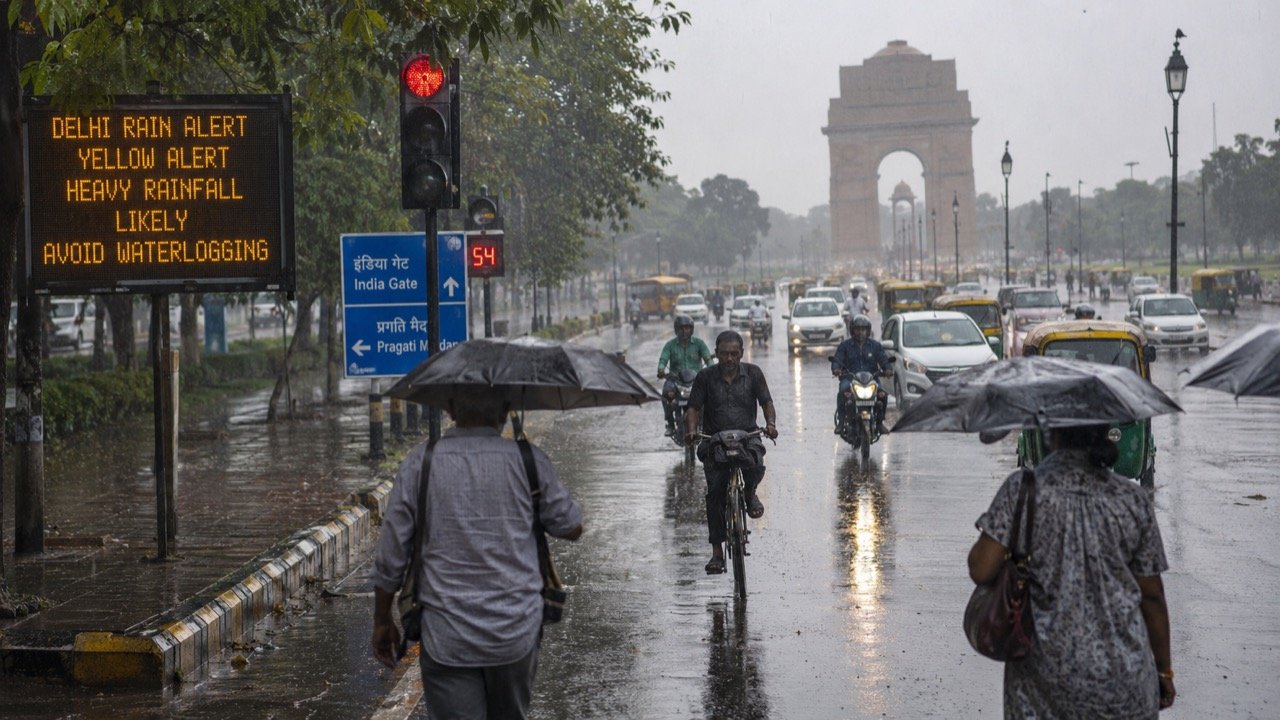
Delhi's monsoon rain watch has residents tracking weather alerts and traffic advisories, as even moderate showers test the capital's drainage, underpasses and last-mile travel networks.
Monsoon Surges Into Central India as Heatwave Grips the East: A Split Weather Map
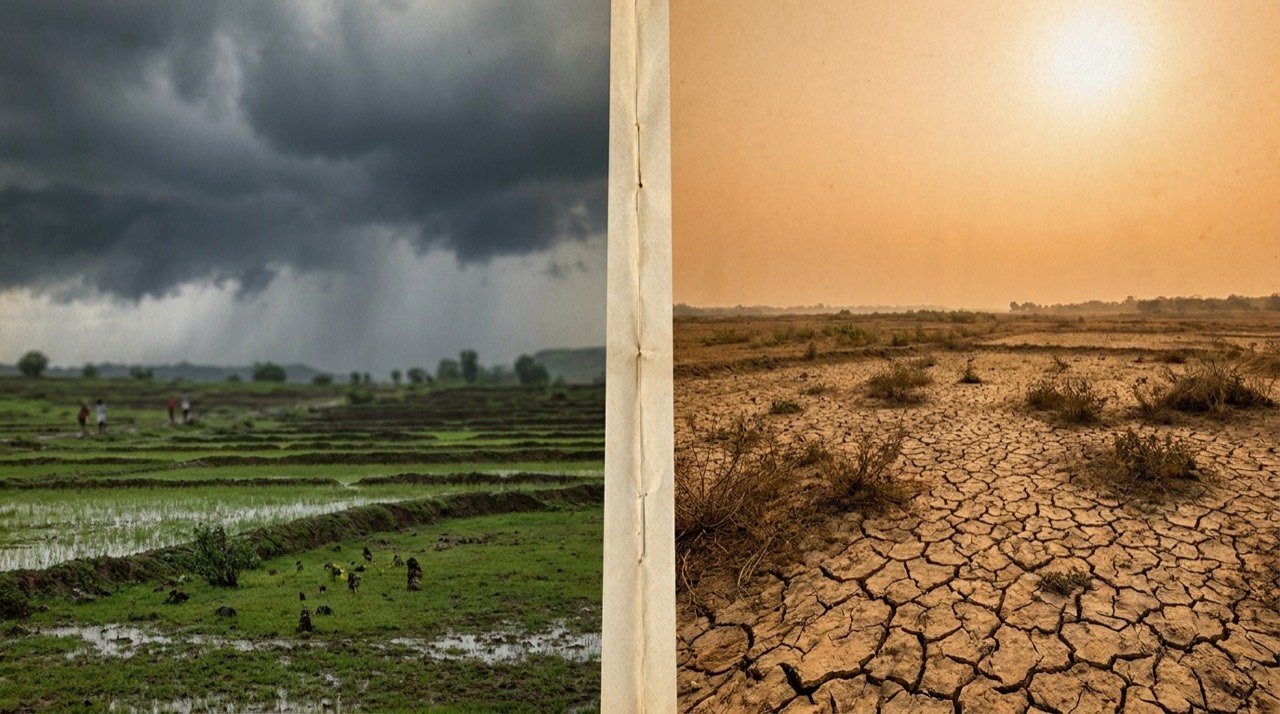
The India Meteorological Department reported the monsoon advancing into Gujarat and central India on 24 June even as severe heat scorched the east, leaving the country under a sharply divided weather pattern.