Opposition Leaders Rally Around Sonam Wangchuk: Support, Strategy and the Politics of the Hunger Strike
Opposition leaders have visited or backed Sonam Wangchuk’s protest, increasing pressure on the Centre while competing to define the education-accountability agenda
Commentary & Analysis ·
Key facts
- Arvind Kejriwal visited the protest and called for Wangchuk to replace Dharmendra Pradhan as education minister.
- Congress representatives expressed concern for Wangchuk’s health and support for accountability demands.
- Omar Abdullah urged the Centre to take a humanitarian view.
- Uddhav Thackeray and other opposition figures had earlier backed the CJP agitation.
Why opposition support is growing
The protest offers opposition parties a combination of issues that are politically attractive: youth anger, examination failure, ministerial accountability and concern for a respected activist. Supporting Wangchuk allows leaders to criticise the Centre while appearing to defend students rather than merely seeking partisan advantage. The worsening health situation also makes silence difficult. However, every new endorsement raises a question for the movement: can it accept political support without becoming controlled by established parties? CJP’s appeal has partly come from presenting itself as a youth-driven force outside conventional structures.
Kejriwal’s high-impact intervention
Arvind Kejriwal’s suggestion that Wangchuk should replace the education minister was designed for maximum attention. It praised Wangchuk’s reputation as an innovator and sharpened the demand for Dharmendra Pradhan’s removal. The proposal is not a practical appointment process; ministers are chosen through political and constitutional mechanisms, and Wangchuk has not presented himself as seeking the job. Its function was rhetorical. It reframed the dispute as a choice between bureaucratic failure and education reform. Supporters saw bold solidarity, while critics could dismiss it as political theatre.
Congress and the humanitarian argument
Congress leaders have combined support for the resignation demand with appeals that Wangchuk protect his health. This dual position is strategically useful because it avoids glorifying physical decline. It also places responsibility on the government to open talks. Visits by party representatives can bring media attention and parliamentary follow-up, but the party will be judged on whether it proposes concrete exam reforms rather than only attacking the minister. Opposition credibility depends on explaining what it would do differently if it controlled the relevant institutions.
Omar Abdullah and Wangchuk’s Ladakh identity
Omar Abdullah’s appeal for a humanitarian approach carries an additional regional dimension. Wangchuk is closely associated with Ladakh’s political and environmental demands, while Jammu and Kashmir and Ladakh have shared a complex constitutional history. Abdullah’s support therefore speaks both to the current education protest and to broader concerns about how the Centre engages Himalayan regions. Accurate reporting should not assume that his statement changes the official demands of the Jantar Mantar campaign. It adds political context rather than replacing the education focus.
The danger of competitive endorsement
When several parties arrive at a protest, leaders may compete for the strongest quote or most visible photograph. That can crowd out students and organisers. CJP needs clear rules for political visits: who speaks, how long, and whether party flags are allowed. A movement gains leverage from broad support but loses credibility if it appears to become a stage for election campaigns. Opposition parties, meanwhile, should respect the protest’s leadership and avoid promising outcomes they cannot deliver.
How support could become substantive
Political backing matters most when it produces parliamentary questions, committee hearings, requests for investigation records and draft legislation. Opposition MPs can seek a debate on exam security, press for candidate compensation and demand a timeline for institutional reform. State governments controlled by opposition parties can also demonstrate better recruitment and examination practices. Such steps would move the story beyond symbolic visits. The hunger strike has created an opening; the test for political leaders is whether they use their formal powers to pursue the issues they praise at Jantar Mantar.
What readers and publishers should monitor
Readers following this angle should track parliamentary questions, joint opposition statements, party participation on July 20, whether CJP limits partisan branding, and specific reform proposals from opposition parties. Because this is a fast-moving protest, every figure and procedural claim should carry a date. Health information should come from doctors or court records; protest logistics should come from organisers and police; legal conclusions should be tied to the actual order; and allegations about examination wrongdoing should remain attributed until established by investigation or judgment. The primary keyword should appear naturally in the headline, introduction, one subheading, image alt text and conclusion. Secondary terms should be used only where they answer a genuine reader question. Repeating a phrase mechanically can reduce readability and search quality. The strongest publication strategy is to update the article rather than create a misleading new headline for every minor development. Add a timestamp, preserve the earlier context, explain what has changed and correct outdated numbers visibly. That approach serves readers, protects credibility and prevents the hunger strike from being reduced to a stream of disconnected viral claims.
A final editorial perspective
A final point is that the issue should be covered as a democratic accountability story rather than a contest of personal endurance. The policy questions concern secure examinations, public responsibility, student welfare and the state’s response to peaceful dissent. The human question concerns how to protect a protester’s life without erasing autonomy or turning medical risk into spectacle. Good reporting keeps both dimensions visible. It presents competing arguments fairly, marks uncertainty, uses precise dates and returns repeatedly to the people most affected: students and families who need a trustworthy system. The article should also explain what would count as evidence of progress, which institution has authority to act, and how readers can distinguish an official update from a political claim. That additional context makes the piece useful after the immediate search spike fades.
Sources
- Times of India, July 17, 2026, report on Kejriwal’s visit and statement.
- Times of India and Telegraph India reports on Omar Abdullah and Congress appeals.
- Indian Express and Telegraph reports on Uddhav Thackeray’s support for CJP.
This article is original news analysis and commentary by The NE Times, based on reporting from the sources listed above.
You may also like to read
Opposition Parties and the Student Protest: Support in Parliament, Strategy on the Street
Opposition backing increased parliamentary pressure and media reach, while organisers tried to preserve an identity larger than conventional party
What Happens Next in Sonam Wangchuk’s Hunger Strike? Five Scenarios After the July 20 Mobilisation
The next phase could involve talks, hospitalisation, a mass Parliament march or prolonged stalemate. Each scenario carries different risks for Wangchuk, CJP and the government
What Did the Centre Promise Sonam Wangchuk? A Clause-by-Clause Guide to the Assurances
The settlement that ended the fast is best understood by separating broad political language from specific commitments that students can monitor
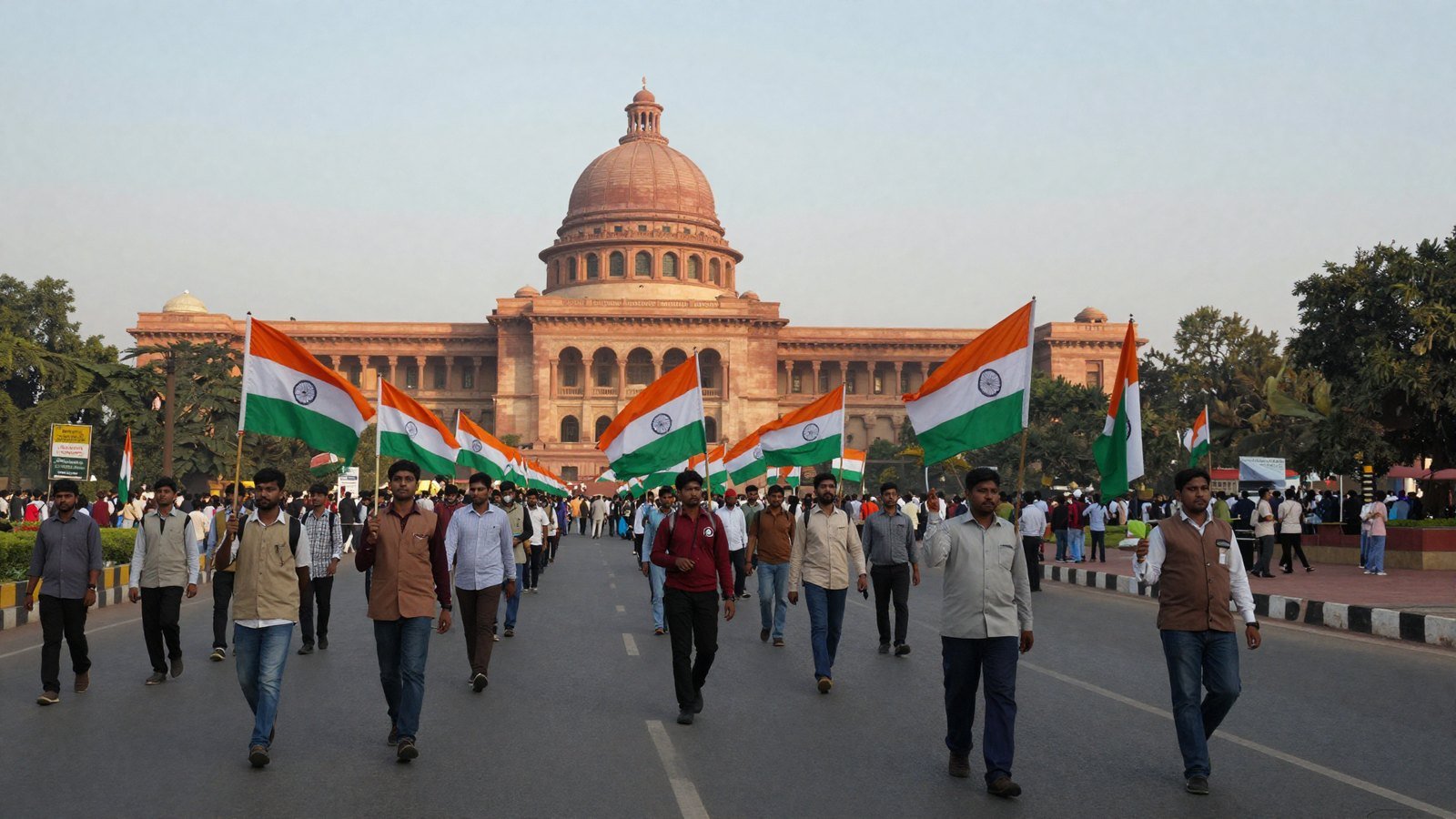
July 20 Parliament March: What Sonam Wangchuk and CJP Are Planning, Demanding and Risking
Organisers have called students and parents to a peaceful Parliament march on July 20, turning the hunger strike into a major test of mobilisation and public-order management
More from this section
More
Prime Minister Modi's First Major Response to the Exam-Leak Protests: What He Announced and What He Did Not
The prime minister's intervention shifted the official response from silence or departmental statements to a national political commitment, while
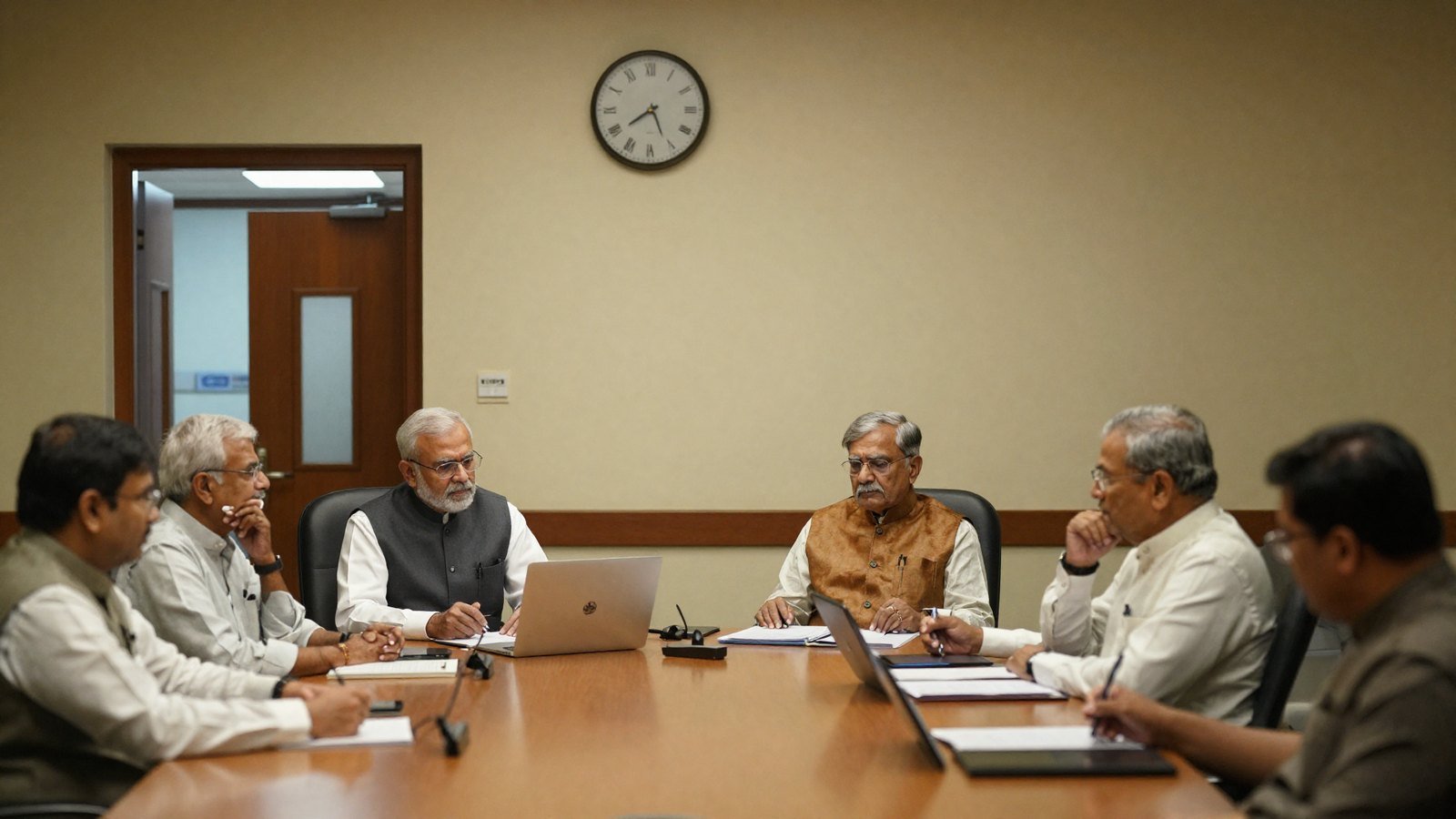
Inside the High-Level Talks That Ended the Fast: Amit Shah, JP Nadda and Jitendra Singh's Roles
A reported high-level meeting became the turning point in a confrontation that had combined medical danger, street pressure and a widening political cost
A Stronger Anti-Paper-Leak Law: Penalties, Prevention and the Questions Parliament Must Answer
A tougher statute will be judged not only by maximum penalties but by whether it prevents insider compromise, protects evidence and gives candidates