July 20 Parliament March: What Sonam Wangchuk and CJP Are Planning, Demanding and Risking
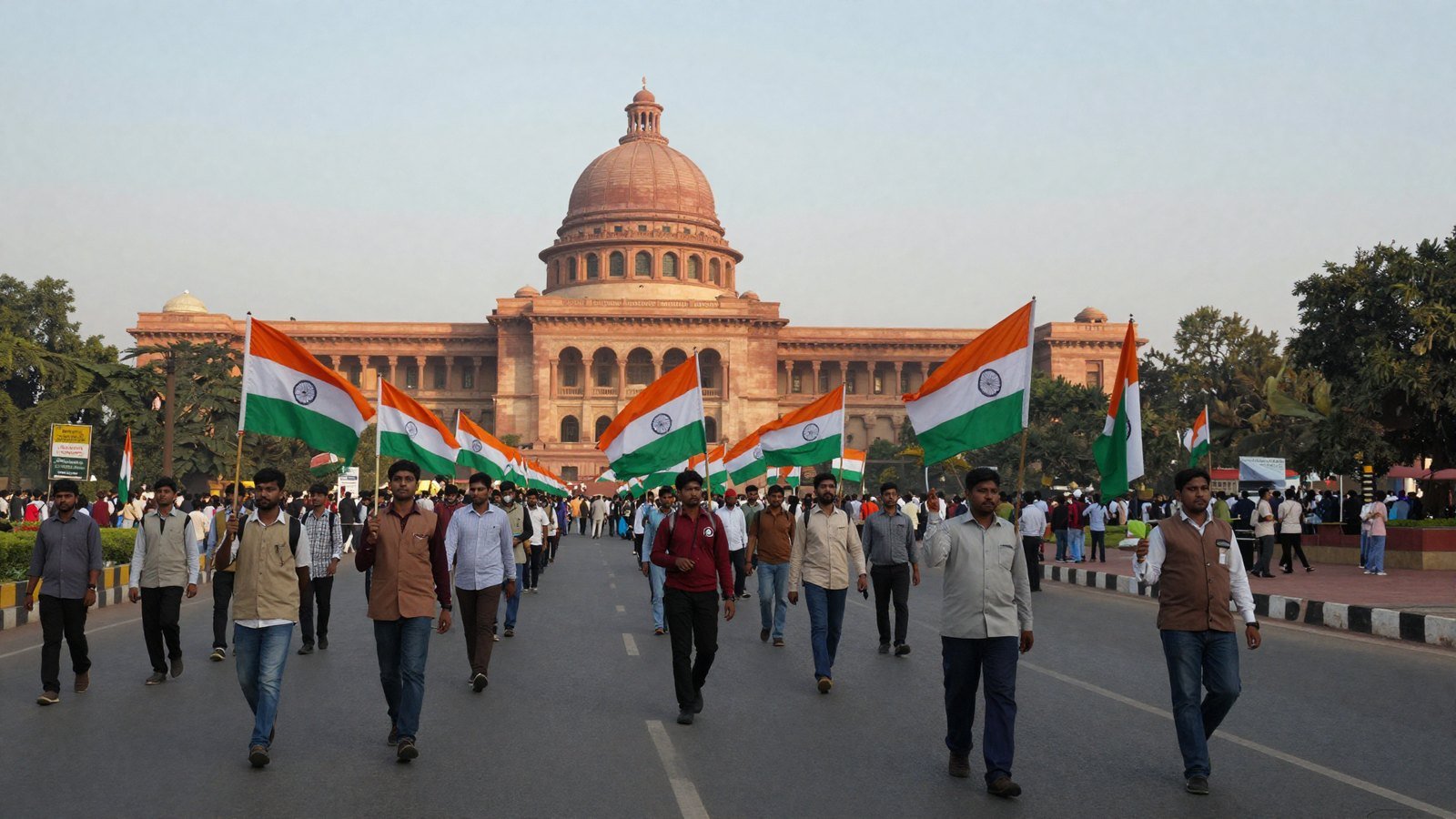
Organisers have called students and parents to a peaceful Parliament march on July 20, turning the hunger strike into a major test of mobilisation and public-order management
Commentary & Analysis ·
Key facts
- CJP announced a proposed peaceful march toward Parliament on July 20.
- The date coincides with the beginning of Parliament’s Monsoon Session.
- Organisers have appealed to students, parents and supporters to participate.
- Final route, permission and crowd-management arrangements must be confirmed with authorities before publication.
Why July 20 was chosen
The date gives the movement maximum political visibility. Parliament’s Monsoon Session brings ministers, MPs and national media into the same institutional space. By marching on that day, organisers aim to transform a protest at Jantar Mantar into an issue lawmakers must confront. The timing also creates a clear deadline for dialogue. If the government engages before July 20, the march could become a show of support for negotiations. If no engagement occurs, organisers can present the turnout as evidence that official silence has failed to contain public anger.
What organisers want from participants
Public appeals have focused on students, parents and citizens concerned about examination integrity. That audience is strategically important because it presents the movement as a family and governance issue rather than a narrow party confrontation. Parents can speak about financial and emotional costs; students can describe preparation and uncertainty; educators can propose reforms. A diverse turnout would strengthen the campaign’s claim to represent a national constituency. Organisers must also communicate practical safety rules, especially because many participants may be attending their first major protest.
Permissions and the difference between a call and a confirmed route
A march toward Parliament involves security restrictions that do not apply to a static demonstration at Jantar Mantar. Roads may be barricaded, assembly zones limited and routes changed. Until Delhi Police or another competent authority confirms arrangements, articles should not publish precise directions as settled fact. Doing so could mislead participants and create safety problems. The responsible formulation is that CJP has called for a peaceful march and is seeking mass participation, while official permissions and route details remain subject to confirmation.
The health question surrounding Wangchuk’s participation
Wangchuk has said he intends to remain alive for the July 20 mobilisation and has continued appealing for support. His physical ability to take part cannot be assumed. Doctors and the High Court’s monitoring process may recommend hospital care or limits on movement. Organisers need a plan that does not make the march dependent on a medically fragile person walking at its head. The cause can be represented by students, families and a delegation even if Wangchuk must remain under care. Treating his participation as essential could create unsafe pressure.
Public order and proportional policing
Authorities have a legitimate duty to protect Parliament, manage traffic and prevent violence. Protesters have a legitimate interest in being seen and heard near the institution they seek to influence. Proportionate policing means communicating restrictions clearly, providing an alternative assembly area where necessary and avoiding unnecessary escalation. Organisers should train volunteers to de-escalate, document incidents and keep emergency access open. The behaviour of both police and demonstrators will shape national perception more than the number of slogans.
Three possible outcomes
A successful peaceful march could produce formal talks, parliamentary questions and a detailed reform timetable. A restricted march could lead to litigation and debate over assembly rights. A confrontation could overshadow the education demands and expose participants to injury or arrest. The movement’s strategic goal should therefore be more than reaching a physical barrier. It should define what delegation will submit, which lawmakers it seeks to meet and what written response would count as progress. A march is most powerful when it ends with a clear next step.
What readers and publishers should monitor
Readers following this angle should track police permission, confirmed assembly points, Wangchuk’s medical clearance, parliamentary questions on NEET, and a written memorandum of demands. Because this is a fast-moving protest, every figure and procedural claim should carry a date. Health information should come from doctors or court records; protest logistics should come from organisers and police; legal conclusions should be tied to the actual order; and allegations about examination wrongdoing should remain attributed until established by investigation or judgment. The primary keyword should appear naturally in the headline, introduction, one subheading, image alt text and conclusion. Secondary terms should be used only where they answer a genuine reader question. Repeating a phrase mechanically can reduce readability and search quality. The strongest publication strategy is to update the article rather than create a misleading new headline for every minor development. Add a timestamp, preserve the earlier context, explain what has changed and correct outdated numbers visibly. That approach serves readers, protects credibility and prevents the hunger strike from being reduced to a stream of disconnected viral claims.
A final editorial perspective
A final point is that the issue should be covered as a democratic accountability story rather than a contest of personal endurance. The policy questions concern secure examinations, public responsibility, student welfare and the state’s response to peaceful dissent. The human question concerns how to protect a protester’s life without erasing autonomy or turning medical risk into spectacle. Good reporting keeps both dimensions visible. It presents competing arguments fairly, marks uncertainty, uses precise dates and returns repeatedly to the people most affected: students and families who need a trustworthy system. The article should also explain what would count as evidence of progress, which institution has authority to act, and how readers can distinguish an official update from a political claim. That additional context makes the piece useful after the immediate search spike fades.
Sources
- Economic Times, July 2026, report announcing the July 20 march.
- Hindustan Times and Telegraph India reports on Wangchuk’s appeal to supporters.
- AP report on the planned Parliament mobilisation.
This article is original news analysis and commentary by The NE Times, based on reporting from the sources listed above.
You may also like to read
What Happens Next in Sonam Wangchuk’s Hunger Strike? Five Scenarios After the July 20 Mobilisation
The next phase could involve talks, hospitalisation, a mass Parliament march or prolonged stalemate. Each scenario carries different risks for Wangchuk, CJP and the government
What Did the Centre Promise Sonam Wangchuk? A Clause-by-Clause Guide to the Assurances
The settlement that ended the fast is best understood by separating broad political language from specific commitments that students can monitor
Opposition Leaders Rally Around Sonam Wangchuk: Support, Strategy and the Politics of the Hunger Strike
Opposition leaders have visited or backed Sonam Wangchuk’s protest, increasing pressure on the Centre while competing to define the education-accountability agenda
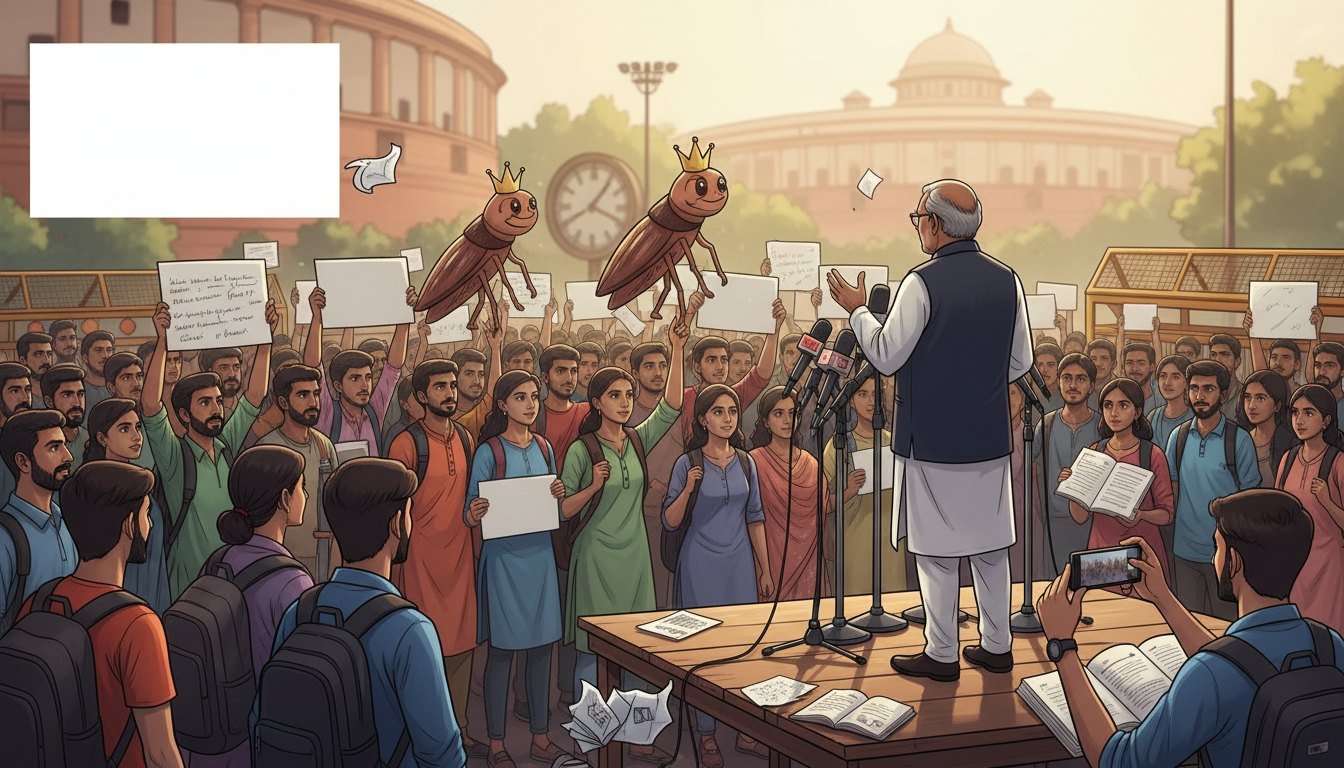
Uddhav Thackeray Backs Cockroach Janta Party Protest as Youth Movement Plans 20 July Parliament March
A satirical online formation has grown into a wider campaign over examination accountability, drawing support from established political leaders while testing whether digital anger can sustain organised action.
More from this section
More
Prime Minister Modi's First Major Response to the Exam-Leak Protests: What He Announced and What He Did Not
The prime minister's intervention shifted the official response from silence or departmental statements to a national political commitment, while
A Stronger Anti-Paper-Leak Law: Penalties, Prevention and the Questions Parliament Must Answer
A tougher statute will be judged not only by maximum penalties but by whether it prevents insider compromise, protects evidence and gives candidates
Opposition Parties and the Student Protest: Support in Parliament, Strategy on the Street
Opposition backing increased parliamentary pressure and media reach, while organisers tried to preserve an identity larger than conventional party