The Hormuz crisis has exposed India's biggest energy blind spot
A tanker attack and a Qatar gas blast both killed mostly Indians in weeks apart — proof that New Delhi's energy security has never been more than a workforce security problem in disguise.
Opinion & Analysis ·
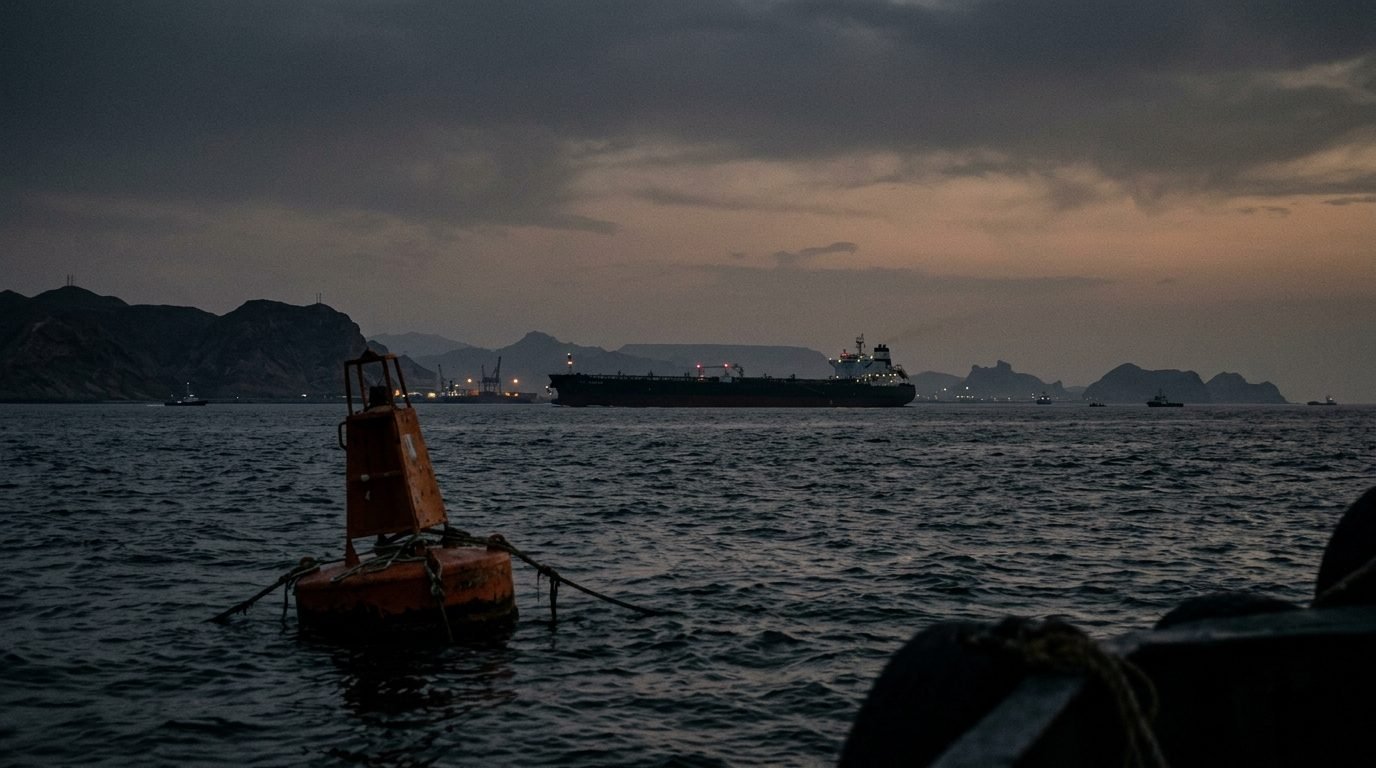
India does not have an energy security policy worthy of the name until it has a workforce security policy to match it. That is the uncomfortable truth exposed twice over in recent months: first when an explosion at Qatar's Ras Laffan LNG complex killed twelve Indian nationals among thirteen dead, and again when attacks on the tankers MT Al Bahiyah and MT Mombasa in the Strait of Hormuz killed one Indian seafarer and injured ten others, two seriously. We keep discussing the Gulf as a matter of barrels, cargoes and freight rates. We should be discussing it as a matter of Indian lives, because that is what is actually on the line every time a ship enters that strait or a plant runs a shift at Ras Laffan.
Two incidents, one exposed nerve
It would be a mistake to treat the Ras Laffan blast and the Hormuz attacks as unrelated news items from different desks. One was, by Qatar's own account, a technical accident at an energy facility. The other was an act of war-adjacent violence in an international waterway. But both landed on the same exposed nerve: the sheer number of Indian citizens whose bodies stand between India's economy and the Gulf's energy infrastructure. Twelve of thirteen dead at Ras Laffan were Indian. Thirty of the forty-six crew on the two attacked tankers were Indian. When the casualty lists of an industrial accident and a military strike both read overwhelmingly Indian, that is not coincidence. That is what dependency looks like when it is finally forced to show its face.
The dashboard is necessary, but it is not a strategy
To its credit, New Delhi has not been passive. Shipping Minister Sarbananda Sonowal has ordered the Directorate General of Shipping to build a real-time, vessel-by-vessel dashboard tracking every ship carrying Indian seafarers through the Persian Gulf, the Strait of Hormuz and the Gulf of Oman, regardless of flag, covering position, cargo, crew welfare, threat assessment and the availability of food, fuel, medicine and communications. Reports indicate seven Indian-flagged ships with 148 Indian seafarers were being tracked west of the strait alone. The Ministry of External Affairs summoned Iran's deputy chief of mission and lodged a formal protest. In Qatar, the Embassy activated consular support and Jaishankar offered condolences and assured assistance to families. None of this was wrong. All of it was overdue, and all of it is reactive. A dashboard tells you where your citizens are after the missile has already been fired or the blast has already happened. It does nothing to stop the next one. Welcome the tracking system as triage, not prevention.
The number that should worry policymakers more than any other
Indian seafarers work overwhelmingly on vessels flagged to other nations, employed by companies headquartered elsewhere, insured by underwriters who answer to no Indian regulator. That is precisely why the dashboard has to look past the Indian flag to track foreign-flagged ships as well: the state's duty to its citizens does not stop at the edge of registration. This is the structural weakness that both incidents lay bare. India supplies the labour that keeps Gulf energy and shipping running, but it does not set the safety standards, does not sit on the insurance boards, and had no seat at the table when whichever technical fault caused the Ras Laffan explosion went undetected. We export people into risk we do not get to price, regulate or veto. A nation that sends this many workers into hazardous infrastructure has more leverage than it has been using, and it is time that leverage showed up in enforceable terms rather than in sympathy calls after the funerals.
The honest counterargument, and why it does not hold
The fair objection here is that India cannot dictate safety codes inside sovereign Qatari plants, cannot police Iranian or any other actor's conduct in the Strait of Hormuz, and cannot simply withdraw a workforce that sustains remittances and shipping employment on this scale. All true. New Delhi has also, sensibly, avoided being pulled into regional military blocs, preferring quiet diplomacy to confrontation. But none of that is an argument against building harder guarantees into the relationships that already exist. Qatar called the Ras Laffan blast a technical accident and insisted energy supplies were unaffected — an assurance aimed at markets as much as at grieving families. That instinct to reassure the world before fully reassuring India's own citizens is exactly the imbalance that needs correcting. Sovereignty over a plant does not exempt a host state from being pressed, consistently and unglamorously, on the safety standards and insurance terms attached to the Indians working inside it. Diplomacy and leverage are not opposites; the quiet approach only works if it is backed by quiet insistence.
What should happen next
First, the dashboard must be resourced as permanent infrastructure, not a crisis-response gesture, with the promised liaison officers actually appointed and empowered to give families a single verified contact for medical updates, repatriation, wages and compensation, rather than leaving them to piece together the truth from employers and social media. Second, shipping companies must be held to their existing duty: no charter schedule should override a master's judgement on entering a danger zone, and firms must confirm medicine, fuel and emergency communications before departure, not improvise afterward. Third, India should use its position as the largest source of Gulf labour and seafaring manpower to negotiate binding safety and insurance commitments with host governments and shipowners alike, treating each incident as evidence for the next negotiation rather than a fresh occasion for condolence. Fourth, hazard pay, insurance coverage and recruitment-agency obligations need to be settled in writing before the next posting, not debated again after the next tragedy.
The bottom line
- Twelve Indian dead at Ras Laffan and thirty Indian crew aboard the two tankers attacked in the Strait of Hormuz are not separate stories; they are the same dependency showing up in two different forms.
- India's new ship-tracking dashboard and liaison-officer plan are welcome but reactive; they manage a crisis after it starts rather than reducing the odds of the next one.
- The state's duty to its workers does not end at the flag on the ship or the fence around the plant; India must convert its scale as a labour supplier into enforceable safety and insurance terms.
- Consular assurances and condolence calls are not a policy. Until binding standards exist, every tanker transit and every Gulf shift carries a risk that Indian families, not Indian regulators, are left to absorb.
You may also like to read

4.38% Inflation Isn't a Crisis, But the Kitchen Table Doesn't Read Averages
June's CPI print stayed inside the RBI's tolerance band, but food inflation at 5.32% shows the burden falls hardest on those least able to bear it.
Monsoon Readiness Is Not a Weather Problem. It Is a Governance Failure
IMD's forecasts are sharp enough to save lives; what killed two children in Mukhmelpur was not bad weather but nobody owning the hazard before the rain came.

The three-language policy is right in theory, reckless in its rollout
CBSE's own court filings show fewer than half its schools are actually ready for compulsory trilingual teaching — proof the reform's substance is sound but its timing has outrun the classroom.

Five Golds Prove India Can Build Excellence. They Also Prove It Chooses Not To, Broadly
India's clean sweep at the Physics Olympiad shows a world-class talent pipeline works brilliantly for five students a year — the real test is whether it reaches millions more.