The green capex boom is real. The real test is whether India can deliver, not just announce
Adani Green's billion-dollar loan bid and Ambuja's cement pilot in Kutch prove India can raise green capital and start hard projects; converting either into cheap, durable, decarbonised output is the harder unfinished business.
Opinion & Analysis ·
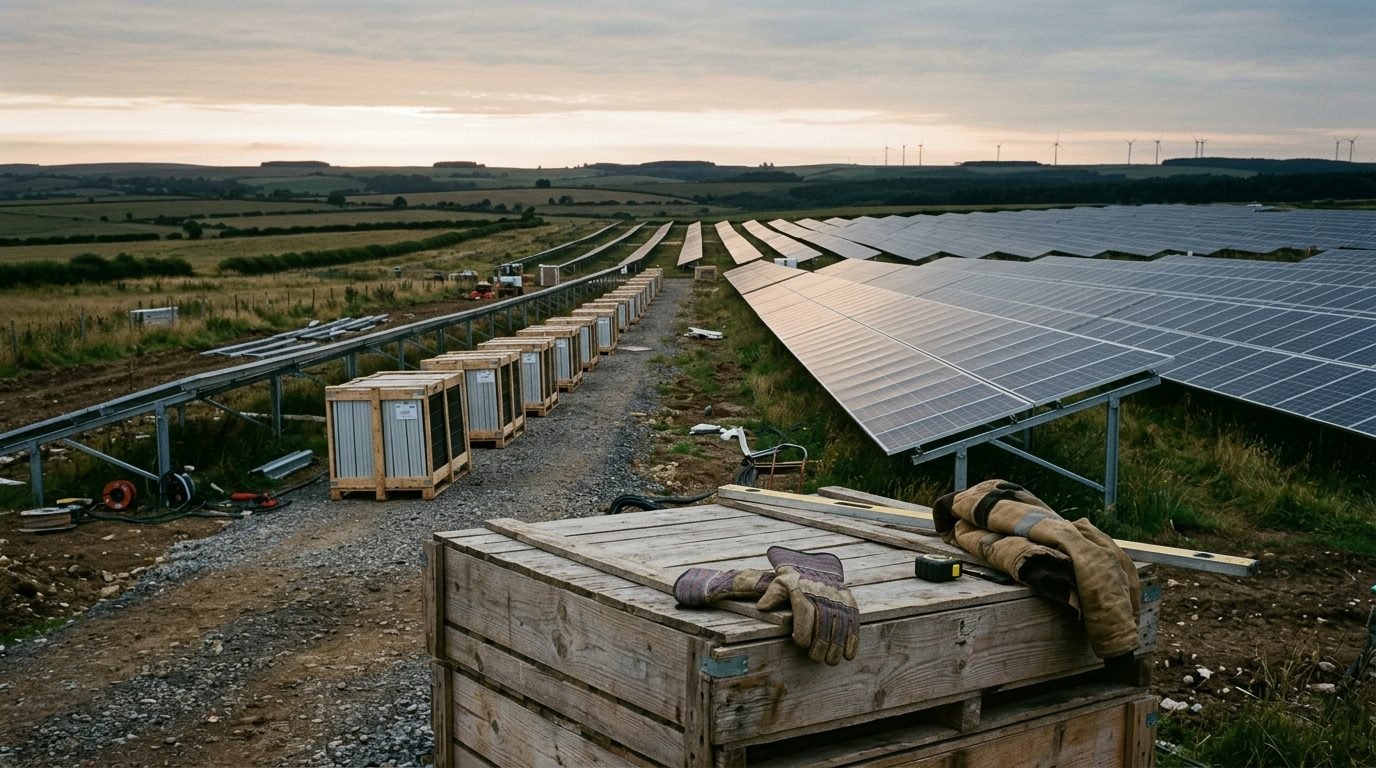
India is suddenly rich in green capital commitments, and that ought to be good news without qualification. It is not, quite. Adani Green Energy is seeking up to $1 billion in offshore debt for a renewables build-out that has already carried it past 12,000 MW, part of a group-wide FY26 capex cycle billed as the highest ever mounted by any Indian corporate. Ambuja Cements, meanwhile, has signed with Britain's Leilac to attempt something harder: a commercial-scale, low-carbon route through one of the most stubbornly polluting materials on earth. Set the two stories side by side and a pattern emerges that should worry us as much as it cheers us. India's green transition is very good at raising money and announcing capacity; it has not yet proven, at the scale that matters, that it can convert either into durable, affordable, decarbonised output. That gap between capex and delivery is the real story, and it deserves more scrutiny than the megawatt press releases usually invite.
The financing story is genuinely encouraging
Adani Green returning to international lenders for a billion-dollar facility, its first offshore borrowing since the group's US legal troubles eased, is a meaningful vote of confidence from banks that do not extend money lightly. Syndicating a loan this size requires several institutions to independently sign off on the credit, and that matters beyond Adani Green's own balance sheet, since the company sits near the centre of India's renewables pipeline. Around 5.1 GW of capacity came online across the Adani portfolio in FY26 alone, and cheaper offshore capital compresses the cost of every gigawatt still to come, giving more certainty in sequencing years of land acquisition, grid connection and commissioning that cannot be rushed. This is what a maturing renewables sector should look like: capital chasing scale, and scale lowering the cost of power.
But cheap capital is not the same as sound capital
A billion dollars of dollar-denominated debt raised to fund a multi-year expansion is not a free lunch. It is a bet that rupee depreciation and refinancing conditions over the loan's life will not erode the advantage of a lower headline rate. When a company describes its capex cycle as the largest of its kind in Indian corporate history, the stakes on execution discipline rise in proportion. A renewables portfolio financed on unsustainable terms is not a stronger asset for being bigger; it is more fragile, and the fragility shows only once conditions turn, by which point the capacity is built and the debt outstanding. This is not an argument against the loan, only against treating installed megawatts as the only number worth watching. Who lends, on what terms, and how currency risk is managed will decide whether this expansion is an asset or a liability.
Cement is the harder, more honest test
If Adani Green's story is about financing a transition that is already technically straightforward, solar and wind are mature technologies, the Ambuja-Leilac partnership at Sanghipuram in Kutch is about something harder: whether India can decarbonise a sector where the emissions are not simply a matter of switching fuels. Cement is indispensable to the roads, housing and infrastructure India's growth depends on, and one of the most carbon-intensive materials in the economy, because turning limestone into clinker releases carbon dioxide directly from the chemistry, not just the fuel heating the kiln. That is what makes it genuinely hard to abate rather than a public-relations exercise dressed up as one.
Sanghipuram is explicitly a test of whether Leilac's approach to capturing that process carbon can work at commercial scale rather than in a laboratory, and Ambuja deserves credit for choosing a plant-scale demonstration over a token pilot. But a successful trial answers only the first of three questions: whether it can also run at the volumes Indian construction demands, and, most often glossed over in announcements like this, whether the economics survive once someone must pay the full cost of storing or using the captured carbon.
The honest counterargument
The fair objection is that both projects are still in progress, and it is unreasonable to judge a financing round and a pilot-scale demonstration by the standard of finished outcomes. That is true as far as it goes; nobody should expect Adani Green's loan to be fully priced, or Ambuja's captured carbon to have found a permanent home, before either project runs its course. But intent is precisely where scrutiny is most useful, because it is also where terms get set. A loan's pricing is locked in at syndication, not renegotiated later. A capture pathway's viability is decided now, not discovered retroactively once built. Waiting for finished outcomes before asking hard questions means asking only after the money is spent, which is another way of asking too late.
What should happen next
Three things would turn today's headlines into a durable transition rather than an expensive experiment. Adani Green's syndication terms, not just its headline size, should be transparent enough for analysts to judge whether the group's rehabilitation with global lenders is complete or merely partial. Sanghipuram's economics, what the captured carbon actually costs to store or use once demonstration funding ends, need publishing rather than staying implicit in an announcement. And policy needs to catch up with ambition: a low-carbon cement pathway will not become the standard through pilots and goodwill alone, it needs carbon pricing and real demand for green cement, just as the renewables pipeline needs disciplined leverage management to keep cheap capital durable rather than a rolling risk.
None of this is an argument for pessimism, only against complacency dressed as good news. A country that can attract a billion dollars in offshore renewables financing and attempt a serious industrial decarbonisation pilot in the same fortnight has real momentum. Momentum is not a finished transition, though, and the difference is measured in the boring details, hedging ratios, offtake economics, carbon prices, that rarely make the headline but always decide the outcome.
The bottom line
- Adani Green's $1 billion offshore loan bid and its passage beyond 12,000 MW, backed by roughly 5.1 GW added group-wide in FY26, signal real lender confidence, but the record capex cycle raises the stakes on currency and leverage discipline.
- Cheap capital is not safe capital; dollar debt funding a record-scale expansion carries refinancing and rupee risk deserving as much scrutiny as installed capacity figures.
- Ambuja's Leilac project at Sanghipuram tackles the harder problem, cement's unavoidable process emissions, but a technical demonstration is not yet proof of commercial viability at scale.
- The transition becomes durable only once financing terms and carbon-capture economics are made transparent, and carbon pricing and real demand for green cement replace pilots as the mechanism doing the work.
You may also like to read

Delimitation's Real Test Isn't the Seat Count, It's the Formula Behind It
Supriya Sule's 50% expansion condition is a smart opening bid, but a bigger Lok Sabha means nothing without a transparent formula, and Odisha's 20 lakh deletions show why the underlying count must be trusted too.

Faith Disputes Need Courts to Act Early, Not Just Clean Up Later
The Bhojshala prayer order shows courts intervening early to keep faith disputes out of the street; the Ayodhya donation scandal shows the cost when no one intervenes at all.

4.38% Inflation Isn't a Crisis, But the Kitchen Table Doesn't Read Averages
June's CPI print stayed inside the RBI's tolerance band, but food inflation at 5.32% shows the burden falls hardest on those least able to bear it.
The Semiconductor Bet: India's Sanand Plant Is a Beginning, Not an Arrival
CG Semi's Sanand launch converts India's chip ambitions into real capacity for the first time, but the country must judge this bet by years of execution, not one ribbon-cutting.