Delimitation's Real Test Isn't the Seat Count, It's the Formula Behind It
Supriya Sule's 50% expansion condition is a smart opening bid, but a bigger Lok Sabha means nothing without a transparent formula, and Odisha's 20 lakh deletions show why the underlying count must be trusted too.
Opinion & Analysis ·
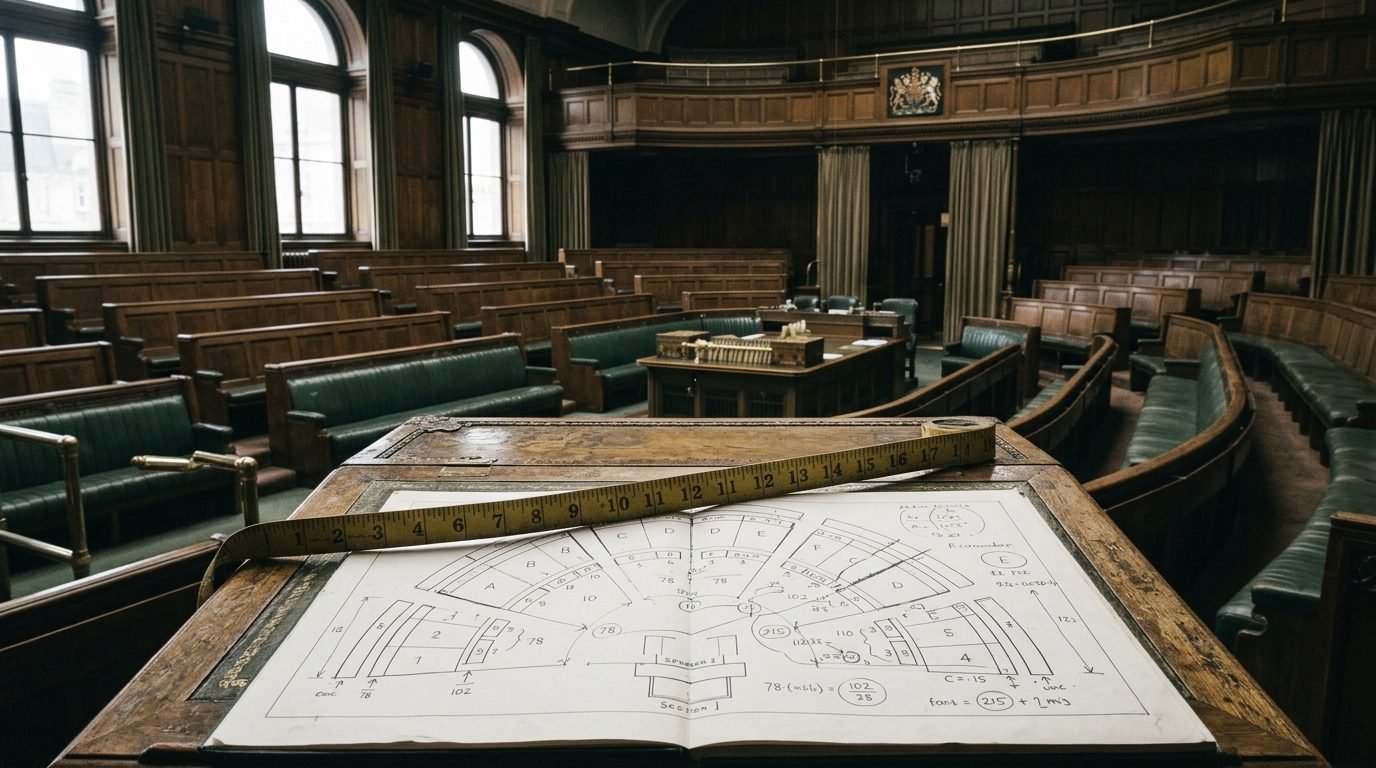
Delimitation and the special intensive revision of voter rolls are being discussed in Indian politics as if they belong to separate conversations, one about the architecture of Parliament, the other about the mechanics of a single state's electoral list. We think that is a mistake. Both are arguments about who gets counted and whose voice is weighted more heavily, and neither can be resolved by arithmetic alone. Supriya Sule's conditional offer to back the Centre's delimitation plan if Lok Sabha seats rise by 50 per cent across every state is a serious, workable idea. But it is also a warning: representation reform that focuses only on the size of the pie will fail if nobody agrees how the slices are cut, or whether everyone at the table has actually been counted.
An expansion formula is not a fairness formula
Sule's proposal has an obvious appeal. Rather than reallocating a fixed number of seats and forcing some states to lose ground while others gain, a uniform 50 per cent increase lets every state grow. Populous northern states get more seats to match their populations; southern and other lower-fertility states, which spent decades investing in health and education to stabilise their populations, do not see existing seats taken away. It sounds like it splits the difference. But a uniform percentage increase does not freeze relative shares, it raises the base while leaving the proportional shift in place. A state that gains a larger share of the increase still gains relative power; a state that gains less still loses ground, just more slowly. Expansion can soften the politics without changing the substance, and that is worth doing, since visible losses provoke backlash in a way diffuse relative decline does not. But nobody should mistake a bigger Lok Sabha for a solved federal problem.
The unanswered questions are where the real argument lives
What has not yet been settled, and what actually determines whether this reform is fair, is the formula, the census base, the timetable, and how Scheduled Caste and Scheduled Tribe reservations plus the Women's Reservation framework interact with a redrawn map. A written commitment to expand is a headline; a bill text with a state-wise modelling annexure is a policy. A government that publishes a number, roughly 850 seats floated in some reports, before publishing the method of distribution, is asking for trust it has not yet earned. Delimitation reshapes political power for decades, not one election cycle, and deserves modelling made public before the vote, not defended after the numbers lock in.
Why every cross-party gesture gets read as betrayal
Sule's intervention lands inside an atmosphere thick with suspicion, and that suspicion is itself part of the problem. Her comments arrived amid speculation that sections of the NCP (SP) were drifting toward the BJP-led NDA, and she felt compelled to deny that conditional support for a bill amounted to an alliance switch. We think she is right to draw that line, and right to be irritated at having to draw it. A fragmented opposition cannot evaluate policy on its merits if every vote is repackaged as proof of defection. Maharashtra's post-split politics makes this especially acute, but the dynamic is not unique to one party. If parties can only oppose or capitulate, the incentive is to reject everything reflexively. Sule's approach, state your price in writing before you decide, is a healthier model for how opposition parties should treat constitutional change, and others should follow it rather than rubber-stamping the government's number or dismissing it outright.
The counterargument, and where it falls short
The strongest case against treating delimitation as urgent is that the process is still developing, no official bill text existed as of the most recent reporting, and premature alarm serves nobody. That is fair as far as it goes. Responsible commentary should distinguish sourced reports about an 850-seat figure from enacted policy, and it would be wrong to declare a settled outcome before cabinet consideration, all-party consultation and drafting run their course. But caution about timeline is not complacency about substance. Precisely because the details are still being written, this is the moment to demand conditions, not after a bill is tabled and political capital already committed.
What the Odisha rolls teach us about counting people honestly
A quieter version of this same argument is playing out in Odisha, where the special intensive revision of the electoral roll has produced roughly 20 lakh deletions, attributed by officials to deceased voters, relocation, absence during verification and duplicate entries. Officials describe these as standard categories, and there is no reason to assume bad faith as a default. But opposition parties are right to ask how each case was verified, since the voters most likely wrongly swept up, migrant workers, the elderly, people who missed one verification visit through illness, are also least equipped to notice the error and contest it before the claims-and-objections window closes. Any seat-allocation formula is only as fair as the population count feeding it, and any exercise that revises who is counted deserves the same transparency delimitation demands: publish category-wise data, publicise the correction window, and make restoration simple rather than a bureaucratic ordeal. A representation debate over Parliament seats while voter rolls are trimmed by the lakh with only generic explanations is built on a shaky foundation.
What should happen next
The government should publish the bill text, the statement of objects and the state-wise modelling well before any vote, not merely a written assurance of a 50 per cent uplift. Opposition parties should follow Sule's example and attach specific, published conditions rather than blanket resistance or quiet acquiescence. The Election Commission should treat roll accuracy, in Odisha and elsewhere, as inseparable from the representation question. Delimitation is being negotiated in public, in instalments. That is not a flaw in the process; it is the only way a change this consequential should be made.
The bottom line
- A uniform 50 per cent seat increase, as floated by Supriya Sule, would ease the politics of delimitation but does not by itself guarantee that no state's relative voice is diminished.
- The formula, census base, reservation adjustments and timetable matter more than the headline seat number, and the government should publish them before any vote, not after.
- Conditional, publicly stated support, as opposed to reflexive rejection or silent alignment, is the more honest way for opposition parties to engage with constitutional change of this scale.
- Representation reform is only as credible as the voter rolls beneath it; Odisha's roughly 20 lakh deletions show why transparency in roll revision must keep pace with the ambition of delimitation itself.
You may also like to read
The green capex boom is real. The real test is whether India can deliver, not just announce
Adani Green's billion-dollar loan bid and Ambuja's cement pilot in Kutch prove India can raise green capital and start hard projects; converting either into cheap, durable, decarbonised output is the harder unfinished business.

Samay Raina's Rs 3 Lakh Fine Is a Fee for Growing Up, Not a Fine for Joking
The Supreme Court's rebuke of Samay Raina, Ranveer Allahbadia and Ashish Chanchlani was never about comedy — it was about broken undertakings, and the creator economy should take note.

Faith Disputes Need Courts to Act Early, Not Just Clean Up Later
The Bhojshala prayer order shows courts intervening early to keep faith disputes out of the street; the Ayodhya donation scandal shows the cost when no one intervenes at all.
Aadhaar's 31 Million Downloads Are the Quiet Engine of India's Payments Ambition
India's digital payments push is really an identity project in disguise, and the country is scaling it faster than it is building the privacy guardrails to match.