NHAI Plans Puncture and Repair Facilities Along National Highways and Expressways
The National Highways Authority of India is moving to add tyre-puncture support, basic vehicle repair and emergency services along highways, aiming to cut breakdown delays and improve road safety.
Commentary & Analysis ·
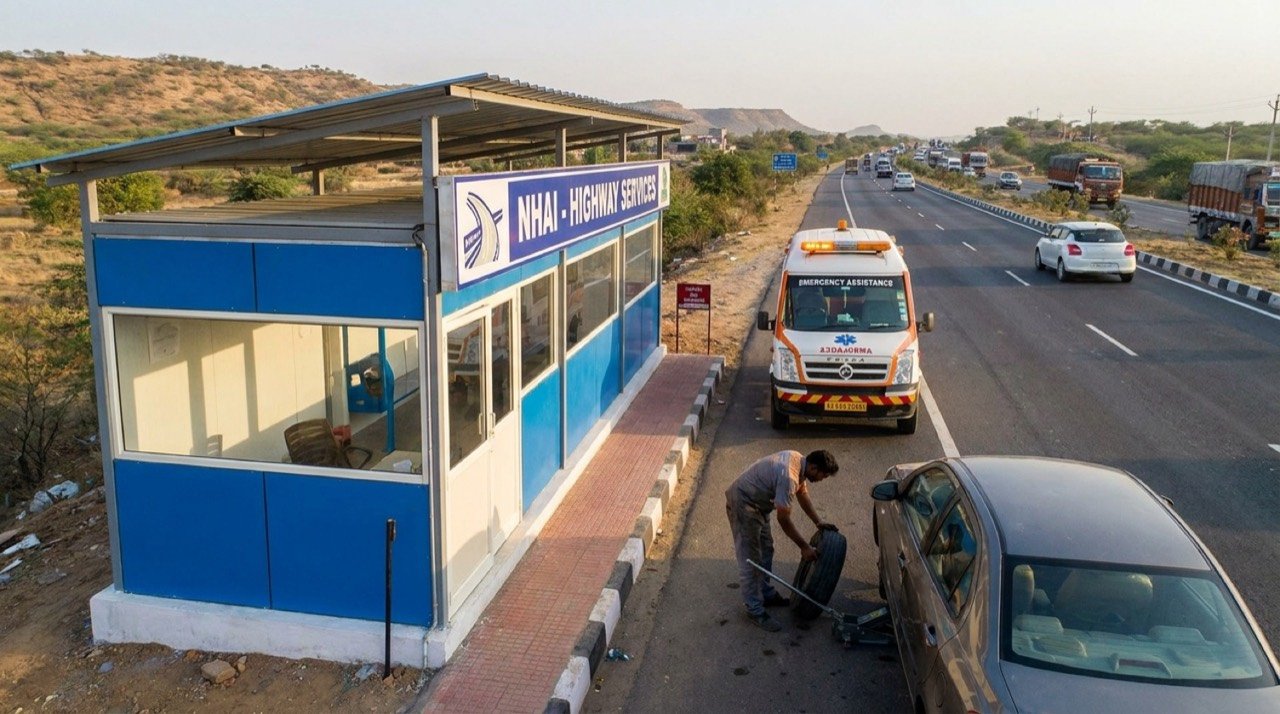
The National Highways Authority of India is moving to plug a long-standing gap in the country's fast-expanding road network: what a stranded motorist is supposed to do when a vehicle breaks down far from any help. NHAI plans to add basic vehicle repair, tyre-puncture support and emergency service facilities along national highways and expressways. It is a modest-sounding proposal, but one that speaks to a problem every long-distance Indian driver has encountered at some point, the sinking realisation that a flat tyre or a stalled engine has left them exposed on a road built for speed, not for stopping.
Solving a Familiar Roadside Problem
On a controlled-access expressway, a simple flat tyre is not a minor nuisance. Vehicles cannot easily pull off, traffic moves at high speed, and the nearest mechanic may be many kilometres away. A routine breakdown can quickly escalate into a genuine safety risk, both for the occupants of the stricken vehicle and for other motorists forced to swerve around it in the dark or in poor visibility. The proposal responds directly to that reality. By placing repair and emergency facilities at regular intervals, NHAI aims to ensure that motorists are not left exposed on the shoulder of a high-speed corridor while waiting for distant assistance. The logic is straightforward: the faster a stranded vehicle can be attended to and moved off the carriageway, the smaller the window in which a minor mechanical failure can turn into a secondary collision.
Why It Matters for a Growing Network
India's expressway network has been growing faster than the roadside services that should accompany it. In many corridors, the tarmac has arrived well ahead of the support infrastructure, leaving long stretches without reliable help for travellers. This is a pattern familiar to anyone who has tracked India's infrastructure build-out more broadly, the headline achievement of new lanes and shorter travel times tends to draw attention first, while the quieter, less photogenic layer of services that make those roads genuinely safe and usable often lags behind. Closing that gap could make long-distance road travel markedly more dependable. Properly placed kiosks, trained mechanics, towing links and clear signage would reduce delays, improve safety and give drivers confidence to undertake long journeys, including families travelling with children, first-time expressway users, and commercial operators who depend on predictable transit times.
There is also a economic dimension worth noting, even though it goes beyond what NHAI has specifically detailed. Reliable roadside assistance reduces the hidden costs of breakdowns, towing charges that spike when providers are scarce, lost working hours for freight operators, and the insurance and liability costs that accumulate when breakdowns turn into accidents. A highway network that offers dependable support at the roadside is not just safer, it is also more efficient as an economic corridor, which is presumably part of the calculus behind treating this as core infrastructure rather than an optional add-on.
What the Plan Covers
As outlined, the initiative would bring together several elements that currently exist only patchily, if at all, along many stretches of national highway. These include tyre-puncture and basic vehicle repair support along corridors, emergency service facilities for breakdowns and incidents, trained mechanics and reliable towing links, clear signage so motorists can find help quickly, and regular monitoring paired with enforceable service standards. Each of these pieces addresses a distinct failure point in the current system. Signage matters because a facility that exists but cannot be found in time is nearly as useless as no facility at all. Towing links matter because not every breakdown can be fixed roadside, some vehicles simply need to be moved. And monitoring matters because infrastructure of this kind tends to degrade quietly unless someone is accountable for keeping it functional.
Execution Will Decide the Outcome
A sound plan on paper is only as good as its delivery on the ground. Much will depend on the concessionaires who run highway stretches, the service standards they are held to, and whether facilities are monitored and maintained over time rather than left to decay. India's highway system operates under a mix of public and concessionaire management, and experience elsewhere in infrastructure delivery suggests that the gap between announcement and sustained operation is often where good intentions falter. A kiosk built once and never restocked, a mechanic post that goes unstaffed on night shifts, a towing contract that is never renewed, any of these could quietly undermine the initiative long after the launch announcements have faded from the news cycle.
As one highway safety perspective put it, a breakdown on a controlled-access road can become a safety risk in minutes when help is far away, and placement, standards and monitoring will decide whether this plan works. That is really the crux of the matter. The concept is not novel, comparable roadside assistance networks exist in many countries with extensive expressway systems, but the durability of such networks depends entirely on institutional follow-through: consistent spacing so no stretch is left uncovered, contractually binding response times, and an audit mechanism that catches decay before it becomes a crisis.
What to Watch Next
For the millions who rely on these corridors, the real test will be whether help is genuinely there when a journey goes wrong. If implemented well, the initiative could reset expectations for what a national highway offers, treating roadside assistance as core infrastructure rather than an afterthought, alongside toll plazas, lighting and lane markings. Attention should now turn to how NHAI translates the plan into binding requirements, whether concession agreements are amended to mandate these facilities, whether spacing follows a fixed and published interval rather than being left to discretion, and whether there is a public-facing mechanism, a helpline, an app, or clear highway signage, that lets a stranded motorist know exactly how far away help is. Independent audits or periodic public reporting on facility uptime would also go some way towards reassuring sceptics that this is being treated as a genuine service commitment rather than a one-time press announcement.
The NE Times View
A sensible, unglamorous idea, and the unglamorous ones often save the most lives. Stranded vehicles on high-speed expressways are a real hazard, and basic puncture and repair support could cut both delays and secondary accidents. The execution risk is familiar: will these facilities be staffed, maintained and uniformly spaced, or announced and abandoned? Pair this with reliable emergency response and India's highway-safety record could meaningfully improve. Infrastructure announcements of this kind are easy to make and comparatively harder to sustain, and the difference between the two will be measured not in press releases but in whether a motorist with a flat tyre on a lonely stretch of expressway at midnight actually finds help within a reasonable time. That is the only metric that will ultimately matter.
Key takeaways
- NHAI plans to add tyre-puncture support, basic vehicle repair and emergency service facilities at regular intervals along national highways and expressways.
- The move addresses a real safety gap: breakdowns on controlled-access roads can escalate quickly into hazards given high speeds and limited ability to pull off safely.
- India's expressway network has expanded faster than its roadside support infrastructure, leaving many corridors without reliable help for travellers.
- Success will depend on concessionaires' service standards, consistent facility spacing, trained staffing, and ongoing monitoring rather than one-time installation.
- The real test lies ahead: whether help is reliably available when a journey goes wrong, not merely whether the plan is announced.
You may also like to read
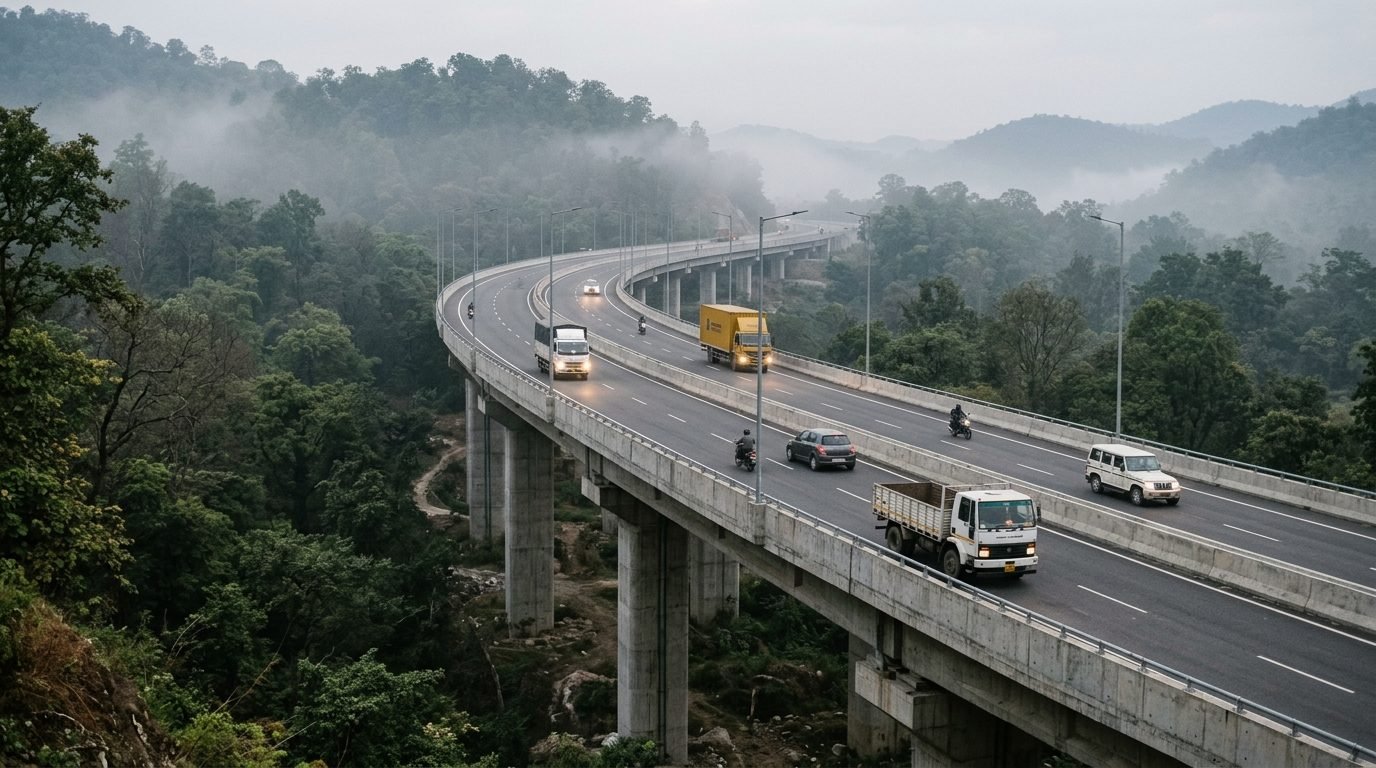
Delhi-Dehradun Expressway Opens In Phases As NHAI Pushes Highway Timelines
Sections of the access-controlled Delhi-Dehradun Expressway are opening in stages in 2026, the latest milestone in a national highway push that has repeatedly tested NHAI's construction deadlines.
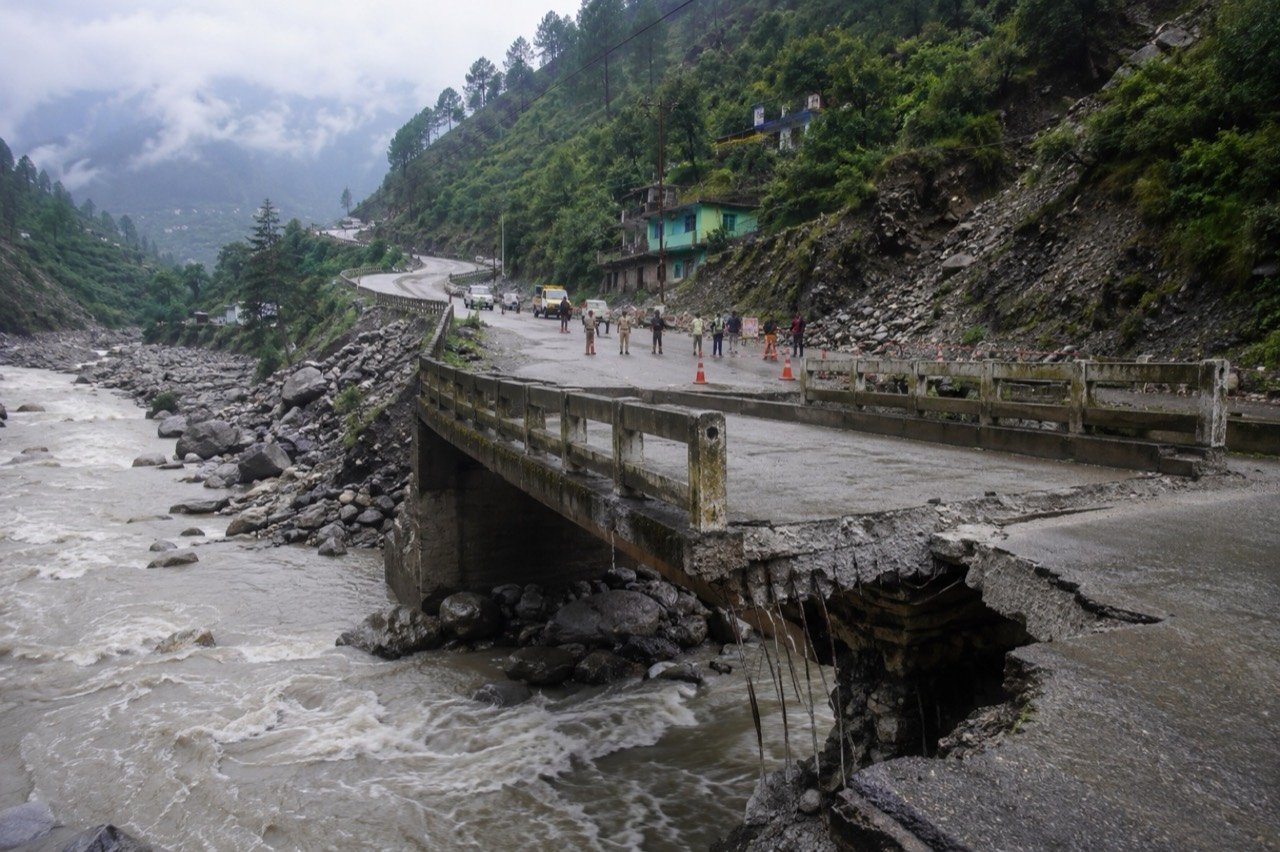
Himachal Bailey Bridge Collapse Sends Truck Into Sutlej, Renewing Hill-Road Safety Fears
A Bailey bridge on National Highway 5 in Himachal's Kinnaur district gave way under a passing truck, plunging it into the Sutlej, with the driver surviving and questions over mountain-road maintenance resurfacing.
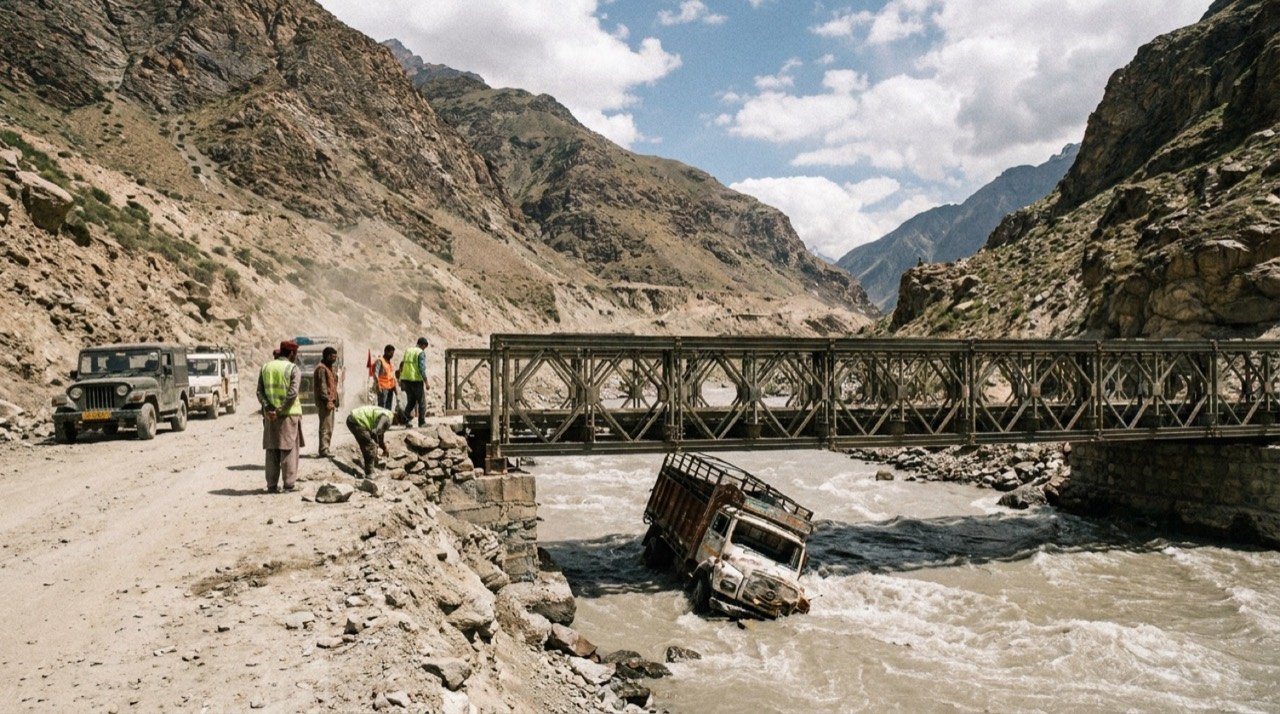
Kinnaur Bridge Collapse Sends Truck Into River as Driver Survives
A temporary bridge in Himachal Pradesh's Kinnaur district gave way under a crossing truck, plunging the vehicle into the river below, yet the driver escaped, averting a fatal mountain tragedy.
Uttar Pradesh Doubles Down On Roads And Airports With Record Rs 9 Lakh Crore Budget
From the Ganga Expressway to the Jewar airport and a wave of new city projects, the Yogi Adityanath government is pouring capital into infrastructure as it pitches Uttar Pradesh as one of India's fastest-growing state economies.
More from this section
More
AICTE Industry Fellowship 2026: Rs 1.5 Lakh Scheme Closes July 5
The AICTE Industry Fellowship Programme 2026, which places technical-education faculty inside leading companies on a Rs 1.5 lakh monthly stipend, reached its application deadline on July 5.
Bay of Bengal Low Pressure System Revives Monsoon Over Western India
A low-pressure system over the Bay of Bengal has pushed the monsoon back into an active phase, bringing steady heavy rain to Kerala, coastal Karnataka and Maharashtra, and putting Mumbai and Pune on preparedness watch.
Bishnoi Gang Suspects Injured in Haryana Encounter as Police Tighten Net
A joint Haryana-Delhi Police operation in Bahadurgarh left two suspected Lawrence Bishnoi gang members injured, spotlighting the multi-state coordination now central to India's fight against organised crime networks.